Best Spots for Offshore Fishing Out of Miami
The sheer expanse of the Atlantic Ocean off Miami can feel daunting when you're trying to figure out where to drop a line for that trophy catch. It’s easy to feel overwhelmed by the endless blue, wondering if you're even in the right zip code for some serious offshore action. This guide is here to cut through the confusion, pinpointing the best spots for offshore fishing out of Miami and giving you the insider knowledge to make your next trip a resounding success.
Miami's Unrivaled Offshore Fishing Access
Miami isn't just known for its vibrant nightlife and beautiful beaches; it's also a world-class offshore fishing destination. What makes it truly special is the incredible proximity to deep water and the mighty Gulf Stream. Unlike many other coastal cities where you might spend hours just getting to productive offshore grounds, Miami offers remarkably quick access, often putting you over prime fishing spots within minutes of leaving the inlet.
The Immediate Advantage of Deep Water
One of the biggest benefits of fishing out of Miami is how quickly the continental shelf drops off. You don't have to motor for miles and miles just to find significant depths. This means less travel time and more fishing time, which is something every angler appreciates. Within just a few miles offshore, you can find yourself in hundreds of feet of water, a stark contrast to some other areas of Florida where the shelf extends much further. This unique geological feature creates a highway for pelagic species and provides diverse habitats for bottom dwellers, making Miami an incredibly versatile fishing ground. It’s not uncommon to be catching mahi-mahi in 300 feet of water and then switch to bottom fishing for snapper in similar depths just a short run away.
The Influence of the Gulf Stream
The Gulf Stream is essentially a superhighway of warm, nutrient-rich water that flows northward just off the coast of South Florida. For Miami anglers, this powerful current is a game-changer. It brings with it an abundance of baitfish, which in turn attracts larger predators like sailfish, tuna, wahoo, and marlin. The "edge" of the Gulf Stream, where the current meets cooler, shallower waters, creates a distinct temperature break that acts as a natural feeding zone. Understanding how to find and fish this edge is crucial for consistent offshore success. Experienced captains often look for color changes in the water, temperature breaks on their fish finders, and even weed lines that form along the current, all indicators of prime fishing territory. For more insights on this powerful current, explore our guide on Florida Offshore Fishing Techniques.
Prime Offshore Fishing Grounds Near Miami
Miami's offshore waters offer a rich tapestry of fishing opportunities, from the fast-paced action of pelagic species to the steady pull of bottom dwellers. Knowing where to focus your efforts is key to success.
The Legendary Gulf Stream Edge
As mentioned, the Gulf Stream's proximity is Miami's golden ticket for offshore fishing. The "edge" can be anywhere from a few miles to about 20 miles offshore, depending on the day and the specific currents. This is the primary hunting ground for numerous highly sought-after species. When you're targeting fish here, think about trolling baits or lures along the breaks, looking for current eddies and floating debris. This is where the magic happens for species like:
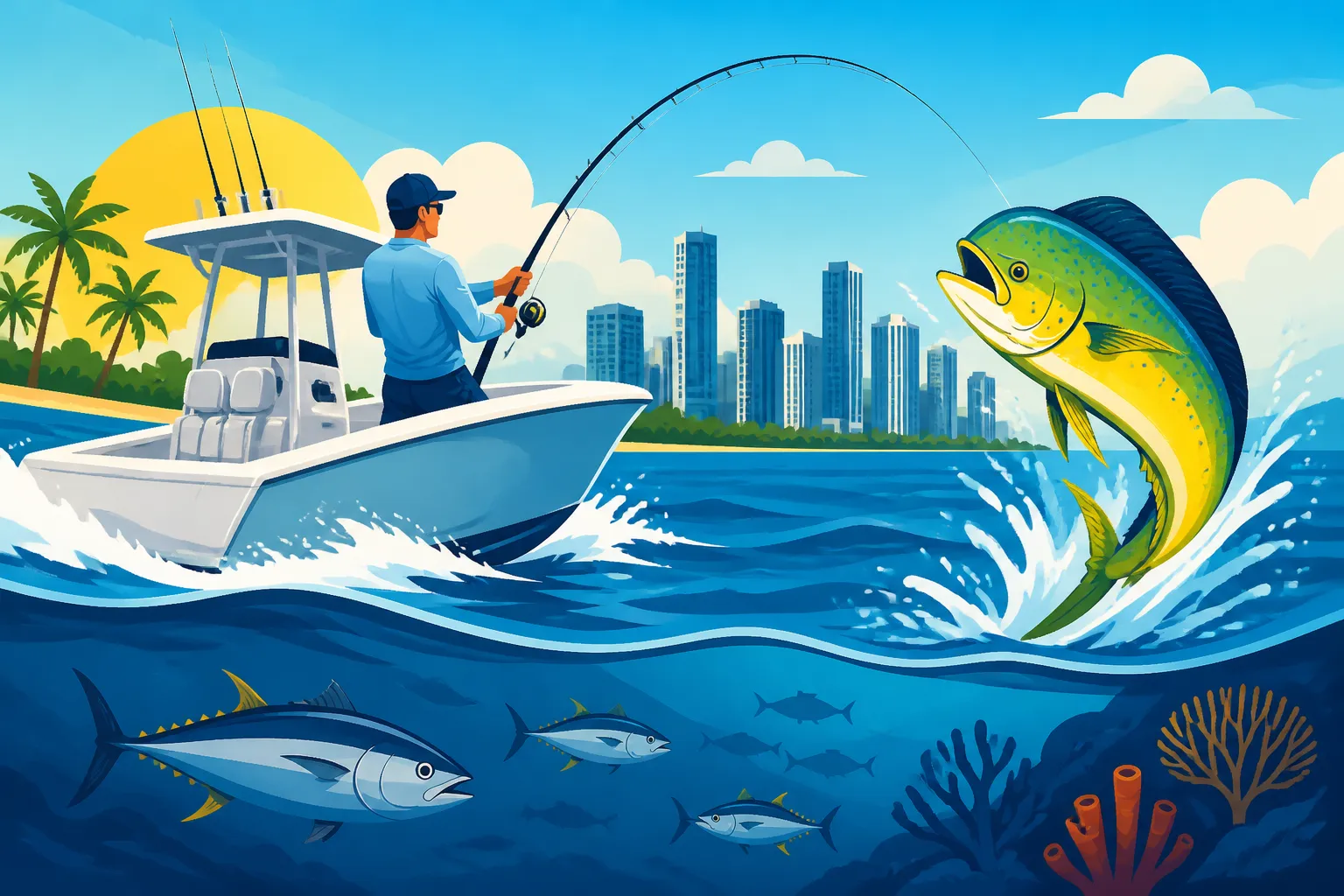
- Mahi-Mahi (Dolphin Fish): Often found under floating debris, weed lines, or current rips. They are aggressive and provide exhilarating fights, making them a favorite for anglers. Knowing How Far Offshore Do You Need to Go for Mahi Mahi? can greatly improve your chances.
- Sailfish: Miami is famous for its winter sailfish bite. These acrobatic billfish are often caught kite fishing or slow trolling live baits along the edge.
- Wahoo: These speedy predators lurk on the edges and can be caught high-speed trolling or with planer fishing techniques.
- Tuna: Blackfin tuna are common year-round, especially around offshore humps and current breaks. Larger yellowfin tuna can also be encountered further offshore.
Many local captains specializing in offshore pelagics will focus almost exclusively on this area, constantly monitoring conditions to find the most productive zones. You can often find excellent charters specializing in these types of trips through platforms like FishingBooker, where captains share their local knowledge and target species.
Deep Water Wrecks and Reefs
Beneath the surface, Miami's offshore landscape is dotted with natural and artificial reefs, as well as numerous shipwrecks. These structures provide essential habitat for a diverse array of fish, offering shelter and feeding grounds in the otherwise open ocean. Fishing these spots often requires different techniques than trolling the Gulf Stream.
- Natural Reefs: These limestone formations run parallel to the coast and hold various snapper and grouper species, including red grouper, gag grouper, and mutton snapper. Deeper sections of these reefs can also hold amberjack and even larger pelagics passing through.
- Artificial Reefs and Wrecks: Deliberately sunk ships, bridge rubble, and other structures create fantastic fishing opportunities. The Orion, Mercy, and various other identified wrecks off Miami are magnets for large amberjack, grouper, snapper, and even barracuda. These spots are also popular for king mackerel, especially during their migratory seasons. Deep dropping around these structures for snowy grouper or tilefish can also be incredibly productive. Make sure to check out our detailed Florida Grouper Fishing Guide for specific regulations and tips when targeting these impressive bottom dwellers.
When fishing wrecks and reefs, you'll typically use live or cut bait on bottom rigs, or employ jigging techniques. Strong currents can make fishing these spots challenging, often requiring heavy lead and precise boat positioning.
FADs and Seabuoys
Fish Aggregating Devices (FADs) are man-made floating objects deployed in offshore waters to attract pelagic fish. While not as prevalent as natural structures directly off Miami, offshore buoys and other floating debris often act as natural FADs, concentrating baitfish and drawing in larger predators. Keep an eye out for floating sargassum weed lines, discarded pallets, or even large logs. These can hold incredible numbers of mahi-mahi, wahoo, and even triple-tail. Approaching these carefully and casting lures or live baits around them can result in explosive strikes. While not permanent "spots" in the traditional sense, understanding their role in concentrating fish is vital for a successful offshore trip.
Target Species and Seasonal Considerations
The beauty of Miami offshore fishing is its year-round appeal, though the specific target species and techniques will shift with the seasons. Understanding these patterns is critical for planning a productive trip.
Year-Round Opportunities
Some species are reliably present in Miami's offshore waters throughout the year, offering consistent action regardless of the calendar. These include:
- Mahi-Mahi (Dolphin Fish): While their numbers peak in spring and summer, mahi can be caught offshore any time of year, especially if you find good weed lines or current breaks. They are often the most common target for offshore trolling and always a welcome sight. Our Florida Mahi Mahi Fishing Guide has even more insights into chasing these vibrant fish.
- Blackfin Tuna: These powerful, delicious tuna are a staple in Miami's offshore fishery. They are often found over humps, wrecks, and along the Gulf Stream edge. They readily hit trolled lures, live baits, and jigs.
- King Mackerel (Kingfish): Known for their blistering runs and sharp teeth, kingfish are present year-round, with peak seasons in spring and fall during their migrations. They are often caught trolling baits or lures, or slow-trolling live pilchards or threadfins. For more on these incredible fish, check out our Florida King Mackerel Fishing Guide.
- Bottom Fish (Snapper & Grouper): Various snapper species (mutton, yellowtail, lane) and grouper (gag, red, black) can be found on reefs and wrecks throughout the year, though specific seasons and bag limits apply. Always check current Florida Fishing Regulations and Bag Limits before heading out.
Seasonal Hot Species
Miami truly shines when specific seasonal migrations bring particular species within striking distance. Timing your trip for these peaks can lead to unforgettable fishing experiences.
| Species | Primary Season | Common Techniques | Key Locations |
|---|---|---|---|
| Sailfish | Winter (Nov-March) | Kite fishing, live bait trolling | Gulf Stream edge, 90-200 ft |
| Wahoo | Winter/Early Spring (Dec-April) | High-speed trolling, planer fishing | Gulf Stream edge, deep wrecks |
| Mahi-Mahi | Spring/Summer (April-Aug) | Trolling, casting to weed lines, FADs | Gulf Stream, floating debris |
| Snapper (Mutton, Yellowtail) | Spring/Summer (April-Sept) | Bottom fishing with cut/live bait | Natural reefs, deep wrecks |
| Grouper (Gag, Red) | Spring/Summer (May-Dec) | Bottom fishing, jigging | Natural reefs, deeper wrecks |
| Swordfish | Year-round (best nights) | Deep dropping | Offshore seamounts, deep canyons |
During the winter months, from November through March, Miami becomes the "Sailfish Capital" as these magnificent billfish migrate along the coast. It's a fantastic time for action, often seeing multiple hookups in a single day. Spring and summer bring robust mahi-mahi fishing, especially when the sargassum weed lines form. These periods also offer great opportunities for various snapper and grouper species, though specific regulations for these bottom dwellers can vary significantly by season. Make sure to consult the most current rules before you go.
Planning Your Offshore Miami Fishing Trip
A successful offshore fishing trip isn't just about knowing where the fish are; it's about preparation, having the right gear, and making informed decisions.
Choosing the Right Vessel and Crew
Unless you have your own offshore-capable boat, an experienced fishing charter is often the best way to tackle Miami's deep waters. Look for captains who specialize in the type of fishing you're interested in, whether it's trolling for pelagics, bottom fishing for snapper and grouper, or even deep dropping for swordfish. Many excellent charters operate out of Miami's various marinas, like Haulover Inlet, Dinner Key Marina, and Crandon Park Marina.
When searching for a charter, don't be afraid to ask about their experience, what species they typically target, and what's included in the price. Websites like FishingBooker provide a great resource for comparing different charter options, reading reviews from other anglers, and seeing what various captains offer. A good captain will have top-notch equipment and an intimate knowledge of the local fishing grounds and seasonal patterns. They’ll also handle the necessary Florida Fishing License Requirements for Boat Captains, meaning you generally won't need to purchase your own license when fishing on a licensed charter.
Essential Gear and Safety Considerations
Offshore fishing in Miami demands robust gear. For trolling or live baiting for pelagics, you'll typically use conventional reels paired with heavy-duty rods, spooled with 30-80 lb test line, often with fluorocarbon leaders. For bottom fishing on wrecks and reefs, heavier setups capable of handling large fish and strong currents are necessary. Don't forget specialized tackle like wire leaders for wahoo and kingfish, or kite fishing setups for sailfish. If you're wondering what to bring, our guide on Best Rod and Reel Setup for Florida Offshore Fishing can provide more details.
Safety is paramount on any offshore trip. Always check the marine weather forecast before heading out. Conditions can change rapidly, and a calm morning can quickly turn into a bumpy afternoon. Ensure your boat (or your charter) is equipped with all necessary safety gear, including life jackets, flares, a VHF radio, and an EPIRB or satellite messenger for emergencies. Staying hydrated and protected from the sun are also crucial, so pack plenty of water, sunscreen, and appropriate clothing. Our What to Pack for a Florida Offshore Fishing Trip article offers a comprehensive checklist to help you prepare.
Best Practices for Maximizing Your Catch
Beyond just knowing the spots, applying sound fishing techniques will significantly boost your success rate. For pelagic species, trolling is a highly effective method. This involves dragging multiple baits or lures at varying depths and distances behind the boat. Using planers or downriggers can get your baits into the strike zone for wahoo and kingfish. For sailfish and mahi-mahi, keeping an eye out for bait schools, diving birds, or floating debris can indicate where the action is. When you encounter a school of mahi, keep one fish in the water while others are being reeled in; this often keeps the school around the boat, allowing for multiple hookups.
For bottom fishing, precise boat positioning over wrecks or reefs is key. A good fish finder is invaluable for identifying structure and marking fish. Use strong leader material to prevent abrasion on rough bottom, and be ready for a powerful fight as fish try to dive back into the structure. Using fresh, lively bait is almost always more effective than frozen bait. Whether it's pilchards, goggle-eyes, or sardines for surface dwellers, or squid and pinfish for bottom fish, quality bait makes a difference.
Disclaimer
Please note that fishing regulations, seasons, and bag limits are subject to change. Always consult the latest rules and guidelines from the Florida Fish and Wildlife Conservation Commission (FWC) before engaging in any fishing activities. This guide is for informational purposes only and does not constitute legal advice.