Best Spots to Catch Cobia Near Bridges
You can spend a whole spring morning idling past bridge pilings, staring at brown shadows that turn out to be sheepshead, while somebody on the next boat lands a 40-pound cobia. Bridges are some of the best cobia structure in Florida, but only certain spans, tides and months produce. This guide shows you which bridges to fish, when to be there, and how to work them.
Why Cobia Love Florida Bridges
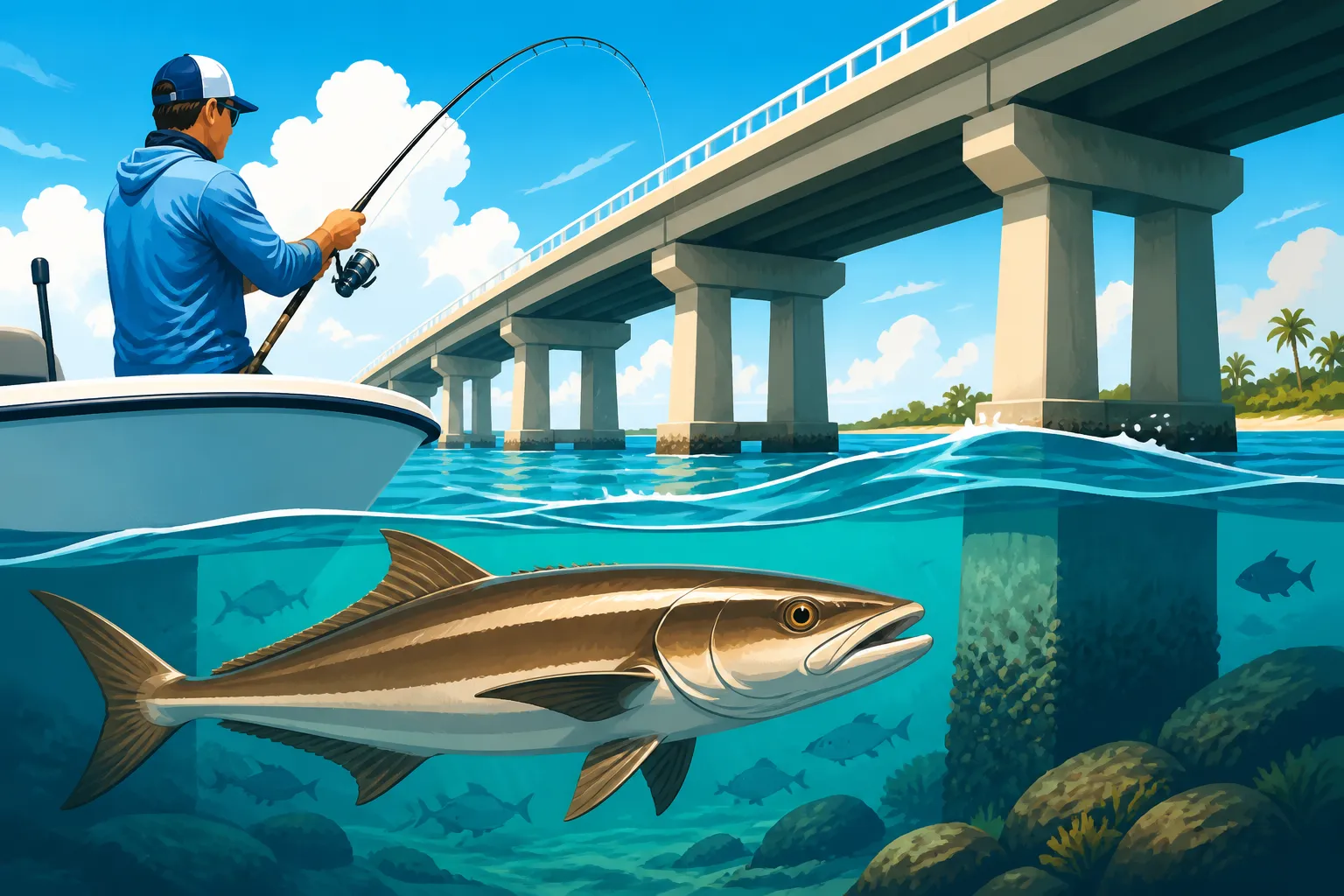
Cobia are curious, structure-oriented fish. They spend a lot of their lives shadowing larger animals such as manta rays, sea turtles and sharks, and when nothing big is swimming by, they settle in around anything that breaks up open water. A bridge is the perfect version of that: dozens of pilings, current breaks, shade lines and a constant food supply of crabs, pinfish, grunts and eels hiding in the barnacle growth.
If you are brand new to the species, start with our Florida Cobia Fishing Guide for the basics on tackle and fish behavior. Here we are focused on one very specific job: finding the bridges where cobia actually stack up and figuring out how to fish them without losing every fish to the pilings.
What Makes One Bridge Better Than Another
Not every span is equal. After years of watching the same bridges produce while others stay empty, a few patterns stand out:
- Deep water close to the pilings. Cobia like 15 to 40 feet of water near the structure. Low causeways over two-foot flats rarely hold them.
- Strong tidal flow. Bridges over passes and channels that connect a bay to the Gulf or Atlantic funnel bait and scent past the pilings on every tide.
- Proximity to a migration route. Cobia travel along the coast in spring and fall. Bridges near inlets and passes intercept those traveling fish.
- Old, heavily encrusted pilings. Crustacean growth means crabs, and crabs mean cobia.
- Fender systems and rubble. Collapsed old bridge sections or rock rubble at the base give fish even more to hold on.
The Seasonal Pattern Around the State
Florida is long, and cobia timing changes a lot depending on where you are. The general rhythm looks like this:
| Region | Peak Bridge Months | What Drives the Bite |
|---|---|---|
| Florida Keys | December through March | Fish move south in cooler months and hold on channel bridges |
| Southwest Florida and Tampa Bay | March through May, with a smaller fall push | Spring migration north along the Gulf coast, then fish return in fall |
| Big Bend and Nature Coast | April and May | Migrating fish pass through and hold on markers and bridges near passes |
| Panhandle | March through May | The famous spring run along the beaches, with stragglers at bay bridges |
| Atlantic coast | Winter around Port Canaveral and south, spring further north | Fish follow rays and bait up and down the coast |
For a deeper look at timing by month, see Best Month to Catch Cobia Near Florida Bridges. The short version: water temperature in the high 60s to low 70s is the trigger. When the water climbs into that range, cobia start showing up on structure.
The Best Florida Bridges for Cobia
Here is where to focus your time. These bridges have a long track record, deep water, good current and solid access from public ramps.
Florida Keys Bridges
The Keys are cobia central in winter. When a cold front pushes through and the water near the mainland drops, cobia slide south and settle around the long channel bridges along the Overseas Highway.
Seven Mile Bridge. The channels under the Seven Mile Bridge, including Moser Channel, have deep water, constant current and a steady stream of bait. Cobia cruise the shade lines and often follow sharks and rays through the channel. Look for them up high in the water column on calm, sunny days.
Bahia Honda Bridge. The old and new Bahia Honda spans sit over some of the deepest water in the Middle Keys. The old bridge sections create a ton of shade and rubble. Expect strong current here, so plan your drift carefully.
Long Key Viaduct and Channel Five. Both hold cobia on cooler winter days, and they are within easy reach of ramps around Layton and Islamorada. Channel Five in particular gets heavy tidal flow that sweeps shrimp and crabs past the pilings.
Channel Two and Tom’s Harbor bridges. Smaller than the big spans but often less crowded. If the Seven Mile is a parking lot of boats, these can be your quiet backup.
For more on the islands in general, our Florida Keys Fishing Guide covers ramps, seasons and other species you can target on the same trip.
Tampa Bay and Southwest Florida Bridges
When spring arrives, cobia move north along the Gulf coast, and the bridges around Tampa Bay and Charlotte Harbor turn on.
Sunshine Skyway Bridge. The Skyway is the headline spot on the west coast. The main shipping channel runs well over 40 feet deep in places, the pilings are massive, and the rubble from the old bridge creates excellent habitat. Cobia cruise the pilings and the nearby channel markers through March, April and May. Remember that the main span is over a busy shipping lane, so stay alert for freighters and keep clear of the security zone around the channel.
Gandy, Howard Frankland and Courtney Campbell bridges. The upper bay bridges hold fewer fish than the Skyway, but cobia do push in on warm springs. They often hang around the deeper sections where the channels pass under the spans.
Boca Grande and Gasparilla Pass. The trestle and causeway bridges near Boca Grande are better known for tarpon, but cobia move through the pass in spring and will hold around the structure.
Sanibel Causeway. The spans over San Carlos Bay see cobia in spring, especially around the deeper channel near the main bridge.
Our Tampa Bay Fishing Guide goes deeper on the bay itself, including ramps and the best tides for each section.
Panhandle and Big Bend Bridges
The Panhandle is famous for the spring sight-fishing run along the beaches, but the bay bridges hold fish too, especially when wind keeps boats off the beach.
Pensacola Bay Bridge. The long bridge from Pensacola to Gulf Breeze has deep sections and heavy structure. Cobia move into the bay in spring and hold around pilings and nearby navigation markers.
Bob Sikes Bridge. This bridge crosses Santa Rosa Sound to Pensacola Beach. It is close to Pensacola Pass, so migrating fish slide past it on their way into the bay.
Marler Bridge in Destin. The bridge over East Pass sees enormous tidal flow and heavy boat traffic. Cobia follow rays through the pass in spring, and the bridge pilings are a natural stopping point.
Hathaway Bridge in Panama City. Spanning West Bay and St. Andrew Bay, the Hathaway has deep water and good access. Cobia often hold here during the spring run.
Navarre Bridge. Cobia pass through Santa Rosa Sound, and the Navarre span is a good place to intercept them on the way.
Atlantic Coast Bridges
The east coast pattern is less tied to bridges, because many Atlantic cobia hang around offshore structure, buoys and rays. Still, bridges near inlets can produce, especially in spring.
Port Canaveral and the Banana River. Cobia winter off the Cape and follow rays and turtles close to shore. The bridges and channel markers near the port are worth checking on calm days.
Jupiter and Palm Beach inlets. The bridges near these inlets see cobia passing through, often in winter and early spring.
St. Johns River near Mayport. In spring and early summer, cobia move along the northeast coast. The jetties and nearby bridges see fish when bait is thick.
If you prefer to fish from land, check Best Bridges for Shore Fishing in Florida and the license notes in Bridge Fishing License Rules in Florida before you set up on a catwalk.
Quick Comparison of Top Bridges
| Bridge | Region | Best Months | Water Depth Near Pilings | Main Challenge |
|---|---|---|---|---|
| Seven Mile Bridge | Middle Keys | December to March | Deep channel sections | Strong current and boat traffic |
| Bahia Honda Bridge | Lower Keys | December to March | Very deep | Fast current |
| Sunshine Skyway | Tampa Bay | March to May | Very deep main channel | Shipping traffic and security zone |
| Pensacola Bay Bridge | Panhandle | March to May | Moderate to deep | Wind and chop |
| Marler Bridge | Destin | March to May | Deep pass | Heavy boat traffic |
| Hathaway Bridge | Panama City | March to May | Moderate to deep | Busy ramps on weekends |
| Sanibel Causeway | Southwest Florida | March to May | Moderate | Shallow sections nearby |
How to Fish a Bridge for Cobia
Knowing where to go is half the battle. The other half is fishing the structure so you hook fish and actually land them.
Choosing Bait and Tackle
Cobia are not picky, which is good news. Live bait is king around bridges:
- Live crabs. Blue crabs and pass crabs are cobia candy. Clip off the claws and hook them through the corner of the shell.
- Live eels. Classic cobia bait in the Panhandle. Eels swim down toward the pilings and draw strikes.
- Pinfish and grunts. Easy to catch around the same bridges you are fishing. See How to Catch Pinfish for Bait for tips.
- Threadfin herring and pilchards. Great in spring when the bait schools show up.
- Bucktail jigs. A heavy bucktail in white, chartreuse or pink, tipped with a soft plastic, is a reliable artificial option for sight casting.
For more on bait choices, see Best Live Bait for Florida Inshore Fishing.
Tackle needs to be stout. A 7-foot medium-heavy or heavy spinning rod with a 6000 to 8000 size reel and 40 to 50-pound braided line is a good starting point. Add 3 to 5 feet of 50 to 60-pound fluorocarbon leader. Some anglers go heavier when fishing tight to the pilings.
Step-by-Step Bridge Approach
Here is the process I follow every time I pull up to a cobia bridge:
- Check the tide. Moving water is critical. Plan to fish the hours on either side of peak flow.
- Idle in slowly. Stay well off the pilings and approach from down current. Cobia often hang near the surface, so a loud approach can push them deeper.
- Scan the shade lines and pilings. Wear polarized glasses and look for brown shapes near the surface.
- Pitch a live bait or jig. If you see a fish, put the bait a few feet in front of it. Cobia are curious and will often swim right over.
- If no fish are visible, anchor or drift. Set up so your baits sweep past the pilings with the current. A float or free-lined bait works well.
- Use chum to bring fish up. A small chum slick can pull cobia off the structure. See How to Chum for Fish From a Boat for the details.
- Set the hook and steer the fish away. Once a cobia eats, turn its head away from the pilings immediately.
- Bring the fish in carefully. Do not rush a green cobia into the boat. They are known for thrashing hard on deck.
Keeping Fish Away From the Pilings
The biggest frustration on a bridge is getting cut off. A few tips:
- Position the boat so the current pulls the hooked fish away from the structure.
- Keep a firm drag and apply side pressure as soon as the fish eats.
- If a fish wraps a piling, back off the pressure briefly. Sometimes they swim back out on their own.
- Watch your leader and line for abrasion after each fish, and retie often.
Cobia Rules You Need to Know
Florida cobia regulations have tightened in recent years, and the rules can differ between Gulf and Atlantic waters. The statewide standard has been a 36-inch fork length minimum and a one-fish-per-person bag limit, with vessel limits set by region. Always check the latest rules before your trip. Our pages on Florida Bag Limit for Cobia and Minimum Size for Keeping a Cobia in Florida break down the details.
A few practical points:
- Measure fork length, from the tip of the snout to the fork of the tail.
- Decide before you gaff. If a fish looks close to the limit, measure it in the water or on a wet surface.
- Release short fish quickly and keep them in the water as much as possible.
Getting Help and Planning Your Trip
Not everyone has a boat or the local knowledge to fish bridges in strong current, and that is fine.
Hiring a Charter
A local guide who fishes the same bridges every week can shorten your learning curve dramatically. Booking platforms such as FishingBooker list inshore and nearshore guides around Tampa Bay, Destin, Pensacola and the Keys who target cobia in season. When you browse on FishingBooker, read reviews that mention cobia specifically, because some guides focus mostly on snook or tarpon.
Prices vary by area, trip length and boat size, so compare trips on FishingBooker and check each guide’s own listing for current rates and what is included.
Safety Around Bridges
Bridges create some of the most dangerous water you will fish.
- Never tie off to a bridge piling. Current can swing your boat into the structure.
- Watch for falling objects and lines from anglers on catwalks above.
- Be careful of other boats, especially in busy passes.
- Know the rules for shipping channels and security zones near large bridges.
- Wear a life jacket when the current is strong.
Final Tips for Bridge Cobia
- Go early in the season before the fish get pressured.
- Bring both live bait and jigs.
- Be patient and work multiple bridges in a day.
- Keep a log of water temperature, tide and fish sightings.
Cobia around bridges are a challenge, but that is half the fun. Find the right structure, show up at the right time, and you could be the one landing that 40-pound fish while everyone else watches.
Disclaimer
This article is for general informational purposes only and does not constitute professional advice. Laws, prices and regulations vary by location and change over time. Consult a qualified professional for guidance on your specific situation.