Best Spots to Catch Flounder in Florida
Trying to target flounder in Florida can feel like a game of hide-and-seek with a master of disguise. These flat, ambush predators are experts at blending into the seafloor, making them notoriously tricky to locate for the uninitiated. But don't let their camouflage fool you – once you understand their habits and where they prefer to lurk, you can significantly increase your chances of reeling in one of these delicious bottom dwellers. This comprehensive guide will illuminate the best spots across Florida to catch flounder, along with the techniques that will make your efforts much more fruitful.
Understanding Florida Flounder Habits and Habitats
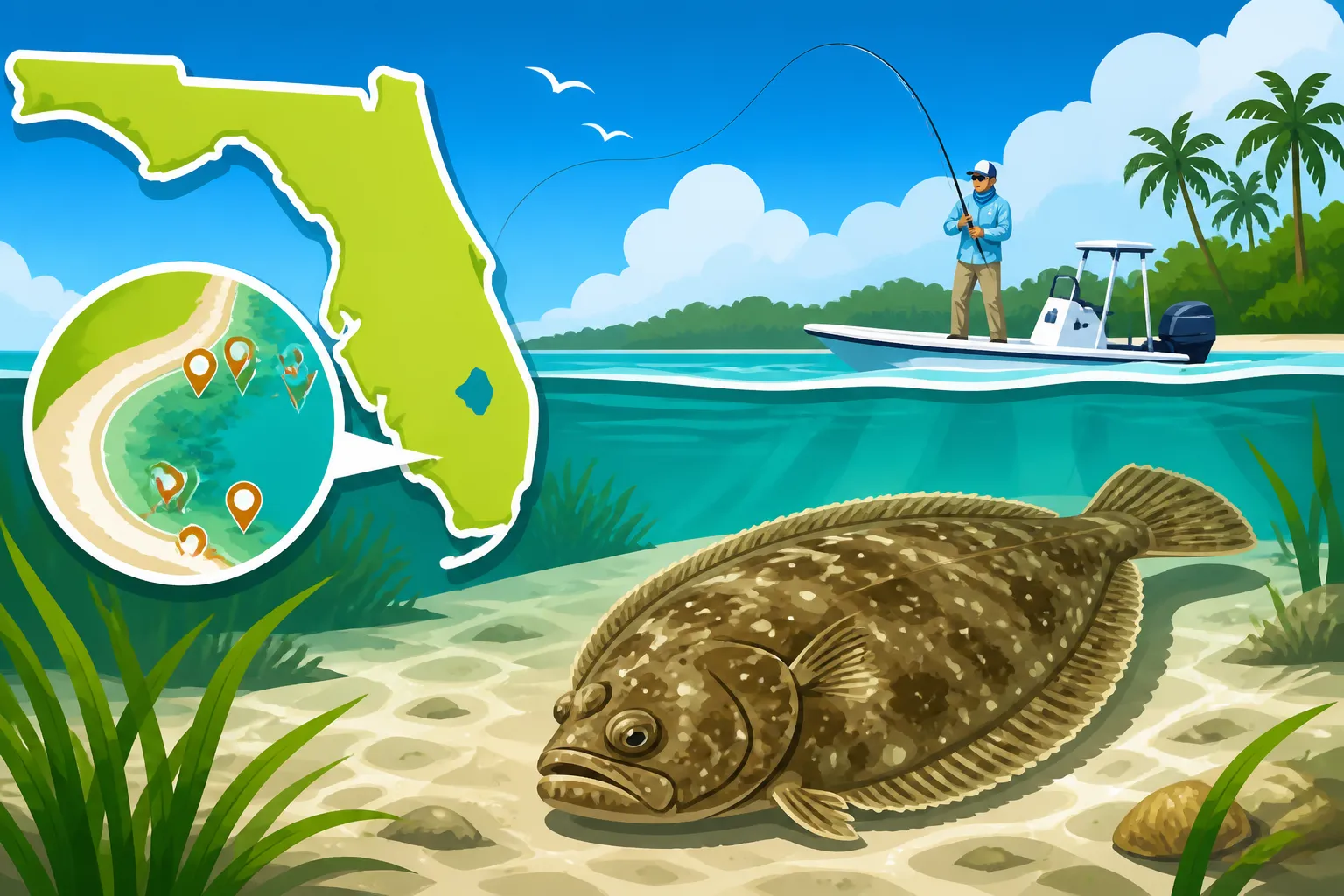
Before you even cast a line, knowing a bit about flounder behavior can give you a significant edge. These fish aren't schooling like mackerel; they're solitary hunters that rely on stealth and surprise. Their flat bodies and camouflaged skin allow them to disappear against sandy, muddy, or shell-laden bottoms, waiting patiently for an unsuspecting meal to swim by.
Flounder Preferences for Bottom Structure
Flounder are masters of ambush, and their habitat preferences reflect this predatory style. They love areas where they can lie in wait, perfectly camouflaged, ready to dart out and snatch prey. Think about places that offer a combination of cover and a good feeding lane. This often means sandy or silty bottoms adjacent to structures like oyster bars, rock piles, submerged debris, or even bridge pilings. They'll hug these structures, using them as ambush points.
You'll often find them near the edges of channels or drop-offs, especially where current creates natural food funnels. Areas with grass beds are also prime real estate, as flounder will often position themselves at the sand pockets within the grass, or along the edges where the grass meets open bottom. These are classic flounder holding patterns because baitfish and crustaceans are frequently dislodged by the current or tide in such transition zones. Without these features, flounder are more exposed and less effective hunters, so they seek them out diligently.
Tidal Movements and Flounder Positioning
Tides play an absolutely crucial role in flounder fishing. Unlike many fish that might be active throughout a tidal cycle, flounder tend to be most active and predictable during specific parts of the tide. As water moves, it creates currents that stir up the bottom and dislodge baitfish, shrimp, and crabs – all prime flounder forage.
An outgoing tide is often considered the holy grail for flounder anglers, especially when water is receding from tidal creeks, estuaries, and flats. As the water drains, it sweeps baitfish out of these shallow areas and concentrates them into deeper channels and inlets, right into the waiting "mouths" of hungry flounder. Look for flounder to set up at choke points, channel mouths, and the down-current side of structure where bait is funneled past them. Conversely, an incoming tide can also be productive, particularly as it floods over oyster bars and flats, bringing new food sources to the flounder's shallow water ambush points. However, the most consistent bite is often found during the stronger movements of the tide, whether incoming or outgoing, rather than during slack tide when the water is still and bait dispersal is minimal. Understanding how to read a tide chart for fishing can significantly impact your success.
Top Flounder Fishing Locations Across Florida
Florida's extensive coastline offers a plethora of flounder opportunities, from the Panhandle down to the southwest coast. While they aren't typically found in the super clear waters of the Florida Keys in large numbers, the vast majority of Florida's estuaries and nearshore Gulf and Atlantic waters hold flounder.
Northwest Florida Panhandle Hotspots
The Panhandle is legendary for its flounder fishing, particularly during the fall months when these fish migrate and fatten up. Places like Destin, Pensacola, and Panama City Beach are prime destinations.
- Destin's East Pass and Choctawhatchee Bay: East Pass, connecting Choctawhatchee Bay to the Gulf of Mexico, is a classic flounder highway. The jetties, bridge pilings, and the sandy edges of the pass are excellent places to target. Anglers often fish the deep grass flats within Choctawhatchee Bay as well, looking for sand pockets or channel edges. Local fishing charters often focus on these areas because of their consistent productivity. The calmer bay waters also provide ideal conditions for flounder to thrive.
- Pensacola Bay and Santa Rosa Sound: Pensacola Bay is another fantastic flounder fishery. The numerous bayous, such as Bayou Grande and Bayou Chico, as well as the deeper channels and the area around the Bob Sikes Bridge, are known flounder producers. Santa Rosa Sound, with its mixture of grass flats, sandbars, and residential docks, also offers plenty of ambush points for flounder. When fishing around these areas, pay close attention to any current breaks or changes in bottom composition, as these are exactly where flounder will be camouflaged and waiting. You can even find redfish in Pensacola, often sharing similar habitats with flounder, making for a diverse fishing trip.
Northeast Florida's Productive Estuaries
Moving to Florida's Atlantic coast, the northeastern part of the state also boasts excellent flounder fishing, particularly in its large river systems and inlets.
- St. Johns River and its Tributaries: The lower St. Johns River, especially around Jacksonville, is a fantastic spot. The many docks, bulkheads, and bridges offer countless ambush points. Flounder will often hold tight to these structures, particularly during strong outgoing tides. The tidal creeks and marsh areas that feed into the St. Johns are also highly productive. You can even find flounder venturing a good distance upriver into less salty waters, as long as there's a good food source.
- Matanzas Inlet and St. Augustine Area: South of Jacksonville, Matanzas Inlet near St. Augustine is another renowned flounder hotspot. The strong currents, oyster beds, and sandy ledges within the inlet and along the Intracoastal Waterway are ideal. Anglers often target the jetty rocks at the mouth of the inlet, the bridge pilings, and the numerous sloughs and cuts that dot the surrounding tidal flats. These areas concentrate bait and provide perfect cover for flounder. Exploring the surrounding marsh creeks by kayak or small boat can also reveal hidden flounder gems.
West Central Florida's Bays and Inlets
The Gulf Coast of West Central Florida, known for its expansive bays and fertile estuaries, provides extensive habitat for flounder.
- Tampa Bay's Diverse Ecosystems: Tampa Bay is a massive fishery with abundant flounder opportunities. Look for them around the myriad of residential docks, the Gandy Bridge and Courtney Campbell Causeway pilings, and the edges of the shipping channels. The bay's numerous grass flats also hold flounder in their sandy potholes, particularly during cooler months. Any structure or depth change that creates a current break is a potential flounder hideout. Remember that Tampa Bay is also one of the best spots in Tampa Bay for snook, which share some of the same baitfish.
- Charlotte Harbor and Surrounding Passes: Further south, Charlotte Harbor is another prime location. The passes connecting the harbor to the Gulf, like Boca Grande Pass and Gasparilla Pass, are famous, not just for tarpon, but also for flounder as they migrate. Within the harbor, the vast grass flats, oyster bars, and deeper channels of the Peace and Myakka Rivers offer prime flounder habitat. The mangrove shorelines and small feeder creeks are also worth exploring, especially on a falling tide.
Southwest Florida's Gulf Coast Gems
While often overshadowed by the big game offshore or the famed snook and tarpon of the Everglades, Southwest Florida still offers consistent flounder action for those who know where to look.
- Naples and Marco Island Backwaters: The intricate network of mangrove estuaries and backwater creeks around Naples and Marco Island provides excellent ambush territory. Target the mouths of these creeks, especially where they drain into larger bays or the Gulf. Residential canals and docks are also productive, particularly in areas with good tidal flow and sandy bottoms. The local artificial reefs and nearshore wrecks can also hold larger flounder. Many guides listed on platforms like FishingBooker specialize in navigating these complex backwater systems to find flounder.
- Big Hickory Pass and Estero Bay: Between Naples and Fort Myers, Big Hickory Pass is a known producer, as are the extensive grass flats and sandy channels within Estero Bay. The area around Lovers Key State Park offers good access to these flounder-rich waters. Focus on the edges of channels, sandbars, and any structure that breaks the current, providing a perfect ambush point for these camouflaged predators.
Essential Techniques for Targeting Florida Flounder
Catching flounder isn't about power or speed; it's about subtlety, patience, and knowing how to present your offering correctly. Flounder are ambush predators, so your presentation needs to mimic their natural prey moving slowly across the bottom. If you're interested in honing your skills, checking out general Florida inshore fishing techniques can greatly improve your understanding of the local waters and fish behavior.
Best Baits and Lures for Flounder
Flounder are opportunistic feeders, but they do have their favorites. The key is to present something that looks natural and moves slowly enough for them to intercept.
- Live Bait: This is often the most effective choice. Small mud minnows, finger mullet, and live shrimp are absolute flounder candy. A frisky live bait swimming near the bottom is irresistible. Pinfish and small croakers can also be excellent, especially for larger flounder. When using live bait, remember that the flounder often "thumps" it first to stun it before fully engulfing it. Patience is key!
- Artificial Lures: Soft plastic jigs are incredibly effective. Paddle tails, grub tails, and Gulp! shrimp or swimming mullet imitations rigged on a jig head are top choices. Colors like white, chartreuse, natural shrimp, or baitfish patterns work well. The goal is to imitate a baitfish or crustacean slowly moving or scurrying along the bottom. Spoons can also attract flounder, particularly when retrieved slowly with an occasional twitch. Many anglers also find success with bucktail jigs tipped with a piece of cut bait or a soft plastic trailer.
Rigging Strategies for Success
Your rigging strategy is paramount to getting your bait or lure in the flounder's strike zone. Since they live on the bottom, your presentation needs to stay there.
- Carolina Rig: This is perhaps the most popular and effective rig for live bait flounder fishing. It consists of a sliding egg sinker (1/2 to 1 oz, depending on current), followed by a swivel, a leader (18-30 inches of 20-30 lb fluorocarbon), and a sharp, sturdy hook (1/0 to 3/0 circle or J-hook). This rig allows the bait to swim freely on the leader while the weight holds it near the bottom. It's similar in principle to how you might rig a live shrimp for trout, but often with a heavier weight for current and a larger hook.
- Jig Head: For artificial lures and sometimes live shrimp, a simple jig head is hard to beat. Match the weight of the jig head (1/8 to 1/2 oz typically) to the current and depth to ensure it ticks along the bottom. A properly weighted jig head allows for a natural fall and bottom contact, which is crucial for flounder. You want it to occasionally bounce off the bottom, creating puffs of sand that mimic fleeing prey. The best rod and reel setup for Florida inshore fishing often involves a medium-light spinning rod, perfect for presenting these lighter rigs.
- Drop Shot Rig: While less common for flounder, a drop shot can be effective in certain situations, especially when precise depth control is needed around structure. The weight is at the bottom, and the hook is tied above it on a short leader, suspending the bait just off the bottom. This can be great for static presentations when you know flounder are holding in a specific spot.
Patient Presentation and Hook Setting
Flounder fishing is not a fast-paced, high-adrenaline affair; it's a game of patience and finesse. You need to allow the flounder time to find and eat your bait.
- Slow Retrieve: Whether using live bait or artificials, a slow, deliberate retrieve is key. For jigs, cast it out, let it sink to the bottom, then slowly hop or drag it, allowing it to contact the bottom frequently. For live bait on a Carolina rig, cast it out and let the current do most of the work, occasionally reeling in just enough slack to feel for bites. You want to present the bait in a way that suggests an easy meal, not a fleeing one that they have to chase far.
- The Flounder "Thump": Flounder often don't hit aggressively. Instead, you'll feel a distinctive "thump" or a sudden heaviness on your line. This is the flounder grabbing the bait. Resist the urge to set the hook immediately! Give them a few seconds, sometimes up to 10-15 seconds for larger baits, to fully engulf the offering. If using a J-hook, a slow, steady sweep of the rod tip is best for setting the hook. If you're using circle hooks, just slowly reel in, and the fish will typically hook itself in the corner of the mouth, making for a cleaner, safer release if you're not keeping it.
Keep an eye on Florida fishing regulations and bag limits, as they can change based on species and season. It's crucial to stay informed to ensure you're fishing responsibly.
Here's a quick reference table for some prime flounder fishing spots and techniques:
| Location Category | Specific Hotspot / Area | Best Time of Year | Recommended Baits/Lures | Key Technique |
|---|---|---|---|---|
| NW Florida Panhandle | Destin's East Pass, Pensacola Bay, Santa Rosa Sound | Fall, Spring | Live Mud Minnows, Finger Mullet, Gulp! Shrimp | Carolina Rig, Slow Jigging along structure |
| NE Florida Estuaries | St. Johns River (Jacksonville), Matanzas Inlet (St. Augustine) | Fall, Winter | Live Shrimp, Small Croakers, Paddle Tail Jigs | Drifting with Carolina Rig, Bottom Bouncing jigs |
| West Central Florida | Tampa Bay (Bridges, Channels), Charlotte Harbor (Passes) | Fall, Spring | Live Pinfish, Finger Mullet, Soft Plastic Grubs | Slow Dragging Jigs, Carolina Rig in current |
| SW Florida Gulf Coast | Naples/Marco Island Backwaters, Big Hickory Pass | Fall, Winter | Live Shrimp, Mud Minnows, Bucktail Jigs | Sight Fishing sand pockets, Structure fishing |
While flounder are available year-round in Florida, you'll generally find the best fishing during the cooler months of fall, winter, and early spring. This is when they are most active and often in shallower, more accessible waters. Whether you choose to go it alone or book a trip with an experienced guide through platforms like FishingBooker, the thrill of landing a flounder is well worth the effort.
Disclaimer
Fishing conditions and regulations in Florida are subject to change based on seasons, environmental factors, and management decisions by the Florida Fish and Wildlife Conservation Commission (FWC). Always check the latest FWC regulations before heading out on the water. This guide is for informational purposes only and does not constitute legal advice.