How Many People Can a Florida Charter Boat Legally Carry?
It can be incredibly frustrating when you're planning an exciting fishing trip in Florida with a group of friends or family, only to realize that you're not entirely sure how many people can legally fit on a charter boat. You might assume a bigger boat means more room for everyone, but the reality is far more complex, governed by strict regulations designed for safety above all else. This guide is here to untangle the legalities of charter boat passenger limits in the Sunshine State, helping you understand the rules so you can book your next fishing adventure with confidence and avoid any last-minute disappointments.
The Core Rules: Why Passenger Limits Exist
When you step onto a commercial fishing charter in Florida, you're not just hopping on someone's personal boat for a joyride. These vessels operate under stringent federal regulations, primarily enforced by the U.S. Coast Guard (USCG). These rules aren't arbitrary; they are the backbone of maritime safety, designed to prevent accidents, overcrowding, and ensure that every passenger has a safe and enjoyable experience. The captain isn't just concerned with catching fish; they're responsible for the lives of everyone on board, and violating passenger limits can lead to severe penalties, including fines, suspension of their license, and even imprisonment. It's a serious business, and for good reason.
Understanding USCG Regulations: What Every Angler Should Know
The U.S. Coast Guard sets specific standards for vessels that carry paying passengers, differentiating them significantly from private recreational boats. For charter operations, these regulations dictate everything from the boat's construction and safety equipment to the captain's licensing and, yes, passenger capacity. The goal is to ensure that the vessel is seaworthy, equipped for emergencies, and operated by a competent professional.
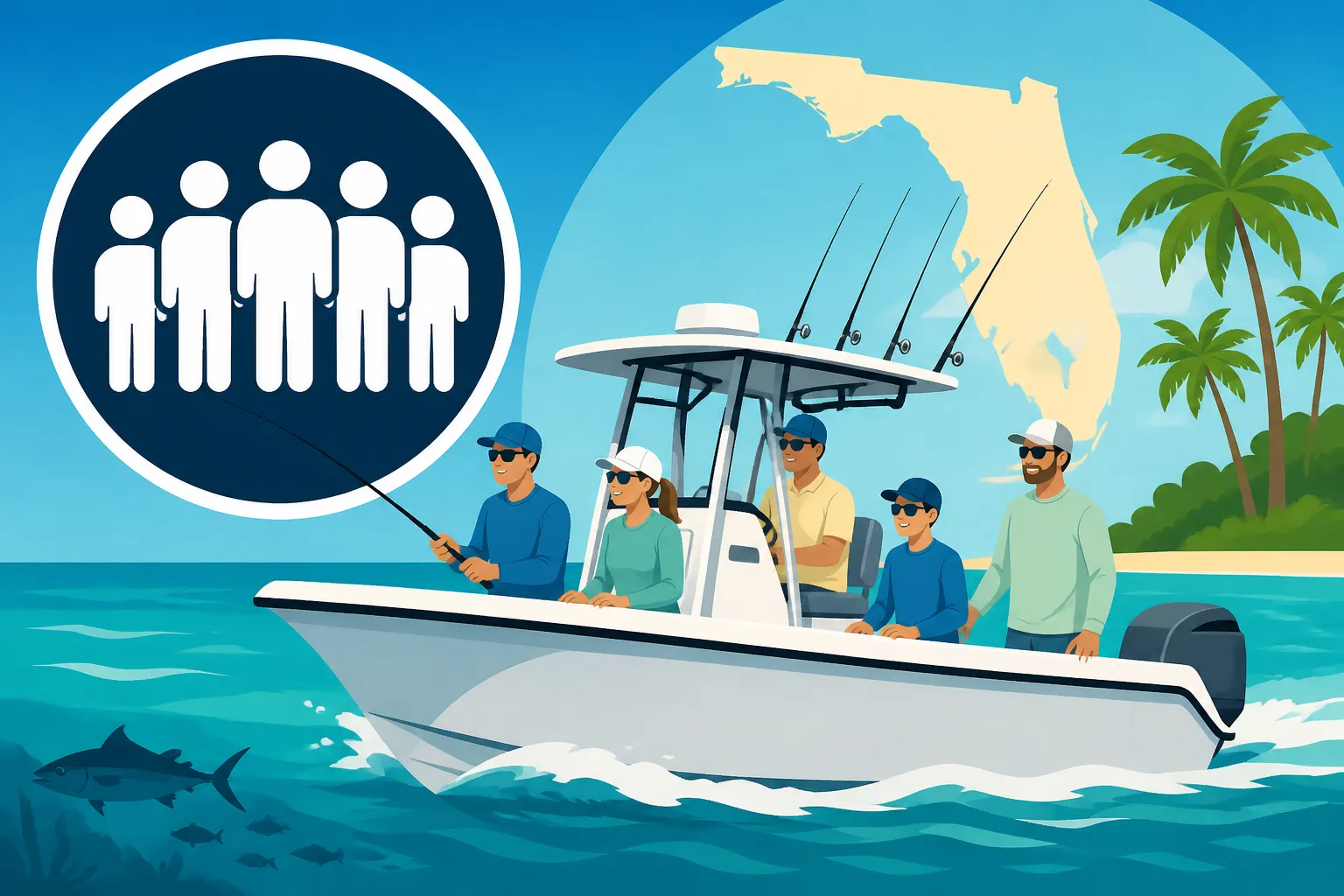
For most smaller charter operations that are common in Florida, the most significant USCG regulation you'll encounter is often related to the "six-pack" rule. This refers to a specific type of USCG Captain's License, officially called an Operator of Uninspected Passenger Vessels (OUPV) license. A captain holding this license is legally permitted to carry no more than six paying passengers on an uninspected vessel. "Uninspected" doesn't mean unsafe; it simply means the vessel hasn't undergone the more extensive, periodic USCG inspections required for larger passenger ships. Instead, its safety equipment and operational standards are still strictly defined, and the captain is responsible for adhering to them. Understanding this helps you appreciate why your group of seven might suddenly need two boats. Florida Fishing License Requirements for Boat Captains delves deeper into these licensing requirements.
Recreational vs. Commercial Vessels: A Crucial Distinction
It's vital for anglers to understand the difference between a private recreational boat and a commercial charter vessel. If you're out on your buddy's boat, the rules are different. Your friend isn't carrying paying passengers, and while they still have a responsibility for safety, their vessel isn't subject to the same strict USCG commercial passenger-carrying regulations.
A commercial charter boat, on the other hand, is specifically set up and legally sanctioned to transport people for hire. This includes not just fishing charters but also dive boats, sightseeing tours, and ferry services. Because money is changing hands, the government steps in to ensure consumer safety. This distinction means that even if a private boat physically looks like it could hold ten people comfortably, a similar-sized commercial charter might be limited to six passengers due or fewer to its specific USCG certification. This safeguard is in place to ensure that commercial operations prioritize safety and professional standards above all else.
Common Charter Boat Types and Their Capacities
Florida's diverse fishing opportunities mean there's a wide array of charter boats available, each suited for different styles of fishing and group sizes. Knowing the general capacities for each type can help you set realistic expectations when planning your trip.
Small Bay Boats and Flats Skiffs: Intimate Adventures
For those looking to explore the shallow, inshore waters of Florida—targeting species like snook, redfish, and trout in the mangroves or across expansive grass flats—small bay boats and flats skiffs are the vessels of choice. These boats are typically designed for stealth and maneuverability in skinny water.
Due to their size and the nature of sight fishing on the flats, these charters almost universally fall under the "six-pack" rule. Often, they carry even fewer passengers to enhance the fishing experience. A flats skiff, for instance, might be ideal for one or two anglers, perhaps three at a squeeze, allowing the guide to pole quietly and give each person ample casting room. Bay boats might comfortably accommodate three to four anglers, maximizing comfort and casting space. Trying to cram five or six people onto a small flats skiff would not only be uncomfortable but also impractical for effective fishing, let alone potentially unsafe. It's about optimizing the experience for the conditions and the fish you're targeting. How Many People Can Fit on a Florida Keys Flats Boat? provides more specific details on these smaller vessels.
Center Consoles and Mid-Sized Offshore Vessels: The Workhorses
When you want to head out into the Gulf or the Atlantic for some deeper water action—chasing grouper, snapper, or perhaps even mahi-mahi—you'll likely find yourself on a center console or a similar mid-sized offshore vessel. These boats are built for speed, stability, and handling rougher seas, ranging anywhere from 25 to 40 feet or more in length.
Many of these vessels also operate under the "six-pack" rule, meaning they are licensed to carry a maximum of six paying passengers, even if they physically appear capable of holding more. This is a crucial point that often surprises people. The extra space on a larger center console isn't necessarily for more people, but for comfort, gear, and safety at sea. It allows for more room to fight a big fish, spread out tackle, or just enjoy the ride without feeling cramped. However, some larger, more robust offshore vessels may have undergone additional USCG inspections and hold a Certificate of Inspection (COI), which permits them to carry more than six passengers. These are less common for typical private charters but do exist for bigger operations. When booking, always confirm the specific vessel's capacity. For general information on booking, check out our Florida Fishing Charter Guide.
Party Boats and Headboats: Fishing with a Crowd
If your group is larger than six, or you're looking for a more budget-friendly option where you don't mind sharing the rail with other anglers, a party boat (also known as a headboat) is your answer. These are significantly larger vessels, often exceeding 50 feet, and sometimes even over 100 feet.
Party boats are specifically designed and inspected by the USCG to carry a much higher number of passengers, sometimes upwards of 50 to 100 people. They are equipped with restrooms, sometimes a galley, and ample deck space to accommodate many anglers simultaneously. These boats have undergone rigorous USCG inspections and hold a Certificate of Inspection (COI) that specifies their exact maximum passenger capacity. Because you're sharing the cost with many others, the per-person price is often lower, making it an accessible option for many. It's a different kind of fishing experience, often focused on bottom fishing for snapper and grouper, but it's a fantastic way to get out on the water with a big group or on a smaller budget. Party Boat Fishing Cost in Florida can give you an idea of what to expect financially for these larger group excursions.
Here's a quick reference table outlining typical capacities based on vessel type:
| Vessel Type | Typical Passenger Capacity | USCG Classification (Common) | Primary Fishing Style | Ideal Group Size |
|---|---|---|---|---|
| Flats Skiff / Micro Skiff | 1-2 passengers | OUPV (6-pack) | Shallow water, sight fishing, fly fishing | 1-2 anglers |
| Bay Boat | 2-4 passengers | OUPV (6-pack) | Inshore, nearshore, estuary | 2-4 anglers |
| Standard Center Console | 4-6 passengers | OUPV (6-pack) | Inshore, nearshore, offshore | 4-6 anglers |
| Larger Offshore Center Console | 6 passengers | OUPV (6-pack) | Offshore, deep sea | 6 anglers |
| Larger Inspected Charter Boat | 7-20+ passengers | COI Inspected | Offshore, deep sea (specialized) | Larger family/corporate groups |
| Party Boat / Headboat | 20-100+ passengers | COI Inspected | Offshore, bottom fishing, reef | Large groups, individual tickets |
Note: Capacities are typical and can vary greatly based on specific vessel design, USCG certification, and captain's preference.
Factors Affecting a Boat's Legal Capacity
The passenger number isn't just a random choice; it's a meticulously calculated figure based on a range of safety and regulatory factors. It's not simply about how many seats are on the boat, but about what the vessel is designed and certified to safely handle under various conditions.
Vessel Documentation and Certification
Every commercial passenger-carrying vessel in the United States must have proper documentation and certification from the U.S. Coast Guard. This isn't just a piece of paper; it's the result of inspections, calculations, and adherence to construction standards. For smaller charters (often called "six-pack" charters), the captain holds an OUPV license, allowing them to carry up to six paying passengers on an uninspected vessel. The vessel itself is still subject to certain safety equipment requirements, but it doesn't undergo the same periodic structural inspections as larger passenger vessels.
For larger operations, such as party boats or bigger private charters designed for more than six passengers, the vessel must hold a Certificate of Inspection (COI). This document is issued after the boat has passed extensive USCG inspections that cover structural integrity, stability, fire suppression, lifesaving equipment, and more. The COI explicitly states the maximum number of passengers the vessel is allowed to carry. This is why a charter boat listed on a platform like FishingBooker will almost always specify its maximum capacity, as it's a legal requirement.
Crew Requirements and Their Role in Safety
The crew on a charter boat also plays a critical role in safety, and the number of required crew members can indirectly influence how many passengers a boat can carry. On a "six-pack" charter, the captain is usually the sole licensed crew member. They are responsible for navigation, safety, and sometimes even baiting lines and untangling knots.
For vessels carrying more than six passengers (those with a COI), the USCG typically mandates additional crew members, depending on the vessel's size and passenger count. These crew members are not just deckhands; they are often trained in first aid, emergency procedures, and passenger assistance. The presence of adequate, trained crew ensures that in an emergency, there are enough hands to manage the situation, deploy safety equipment, and assist all passengers. So, when you see a larger boat with a higher passenger capacity, rest assured that the regulatory framework also accounts for the human element necessary to keep everyone safe.
The "Six-Pack" Rule and Beyond
The "six-pack" rule is arguably the most common and often misunderstood aspect of charter boat capacity in Florida. It's not a suggestion; it's a hard legal limit for captains holding an OUPV license. This means a captain cannot legally take a seventh paying passenger, even if that seventh person is a small child, an infant, or someone who "won't be fishing." Every person on board counts towards that limit, regardless of age or fishing activity, if they are a paying passenger.
If you have a group larger than six, your options are typically:
- Book multiple "six-pack" charters: This is a popular choice for larger groups, allowing everyone to fish comfortably.
- Book an "inspected" vessel: These are the larger boats with a COI, like party boats or specialized private charters, that are certified to carry more than six passengers.
- Consider party boats/headboats: These are specifically designed for large groups and are regularly inspected for high passenger counts.
It's crucial to be honest about your group size when booking. Don't try to sneak an extra person on board. Not only does this put the captain's license and the entire operation at risk, but it also creates a significant safety hazard for everyone on the boat. A reputable charter, often found on platforms like FishingBooker, will always clearly state their capacity.
What This Means for Your Fishing Trip
Understanding charter boat capacities isn't just about avoiding legal trouble; it's about ensuring you have the best possible fishing experience. Planning ahead with this knowledge will save you headaches and help you make the most of your time on the water.
Planning Your Group Size
The first step in a successful charter booking is to know your group size accurately. This isn't just the number of anglers, but the total number of people, including any non-fishing companions, children, or infants. Once you have that number, you can then align it with the types of charters available.
- For groups of 1-6: You have the most options! You can choose from intimate flats skiffs for a specialized experience, bay boats for inshore action, or center consoles for nearshore and offshore adventures.
- For groups of 7 or more: You'll need to think differently. Your choices will narrow down to either booking multiple "six-pack" charters or seeking out larger "inspected" vessels like party boats or those few private charters certified for more than six. Keep in mind that securing multiple boats might require more advance planning, especially during peak seasons. You might also want to explore How to Choose a Florida Fishing Guide to help you pick the right captain for your group size and fishing goals.
Asking the Right Questions When Booking
When you're reaching out to captains or browsing listings on sites like FishingBooker, don't hesitate to ask direct questions about passenger capacity. A good captain will appreciate your diligence and be transparent about their vessel's limits.
Here are some key questions to ask:
- "What is the maximum number of paying passengers your boat is legally certified to carry?"
- "Does that number include children or infants?" (The answer is almost always yes for commercial charters.)
- "If our group is [X number of people], what are our options?" (They might suggest a second boat or a different type of charter.)
- "Are there any additional fees for extra passengers up to the legal limit?" (While unlikely for the maximum, it's good to clarify.)
Remember, clearer communication upfront prevents confusion and disappointment later. This is particularly important if you're looking at Florida Fishing Charter Cost Guide and trying to understand what's included.
Why Honesty About Headcount Matters
Trying to circumvent the passenger limits by being less than truthful about your group size is never a good idea. Firstly, it puts you, your group, and the captain in a precarious legal position. If the USCG were to conduct a spot check and find more passengers than the vessel is certified for, the consequences for the captain could be severe, including hefty fines and the immediate suspension of their license. This could end their livelihood.
Beyond the legal ramifications, overcrowding creates significant safety risks. Life rafts, life jackets, and other safety equipment are sized and stocked based on the certified capacity. Overload a boat, and you reduce its stability, increase the risk of capsizing, and put more people at risk than the safety equipment can handle. Good captains are professionals who prioritize safety above all else, which means they will strictly adhere to their certified capacity. Respecting these limits ensures a safe, enjoyable, and legal fishing trip for everyone. If you're planning for multiple people, you'll also want to consider What to Bring on a Florida Fishing Charter to ensure everyone has what they need.
Disclaimer
This article is for general informational purposes only and does not constitute professional advice. Laws, prices and regulations vary by location and change over time. Consult a qualified professional for guidance on your specific situation.