Florida Bag Limit for Amberjack
Oh, the mighty amberjack! These powerful fish are a true thrill to catch in Florida, offering up an incredible fight that’ll leave your arms burning and your heart pounding. But let's be real, figuring out the specific regulations for them can feel like navigating a labyrinth, especially with species distinctions, size limits, and those ever-changing seasons. It’s frustrating when you just want to enjoy your time on the water without worrying about breaking a rule. This guide is here to untangle all that confusion, giving you a clear picture of Florida's bag limits for amberjack so you can fish with confidence.
Understanding Amberjack Species in Florida
Before we dive into the nitty-gritty of bag limits, it's really important to know which amberjack you're targeting. Florida waters are home to a few different species, and the rules are typically focused on the most sought-after one. Misidentification can lead to inadvertent violations, and no one wants that after a great day of fishing.
Greater Amberjack – The Trophy Catch
When most anglers talk about "amberjack," they're almost certainly referring to the Greater Amberjack (Seriola dumerili). These are the giants of the family, known for their brute strength and hard-fighting nature. You'll find them lurking around offshore structures like wrecks, reefs, and ledges, often in depths ranging from 60 to several hundred feet. They have a distinctive dark stripe that runs from their nose through their eye to the front of their dorsal fin, and often a faint amber-colored stripe along their sides. They are also characterized by their tall, blunt heads.
Catching a Greater Amberjack is a bucket-list item for many offshore anglers. They hit hard, run strong, and will test your tackle and your stamina. Because of their popularity and their tendency to congregate in certain areas, they are heavily managed to ensure sustainable populations for future generations of anglers. This is why their regulations, including bag limits and seasons, tend to be more stringent than those for other, less targeted species. If you're heading out to target these offshore heavyweights, make sure your gear is up to the task; you can find robust rods and reels suitable for offshore species on sites like Amazon.
Lesser Amberjack and Other Lookalikes
While Greater Amberjack steal the spotlight, Florida waters also host other, smaller species like the Lesser Amberjack (Seriola fasciata) and sometimes the Banded Rudderfish (Seriola zonata). These species are often mistaken for juvenile Greater Amberjack, which can cause real problems if you're not paying close attention. Lesser Amberjack typically have a larger eye relative to their head size and a deeper body, along with vertical bars on their sides when they are young. They don't grow nearly as large as their greater cousins. Banded Rudderfish are similar, with pronounced vertical bands that usually fade as they mature.
It's absolutely critical to be able to tell the difference. If you accidentally keep a juvenile Greater Amberjack thinking it's a Lesser Amberjack, and it's under the legal size limit for Greater Amberjack, you could face penalties. Always take the time to positively identify your catch. Carrying a good fish identification guide or having a reliable app on your phone can be a huge help. When in doubt, it's always best to release the fish to fight another day, especially if you're unsure of its species or size.
The Nitty-Gritty: Florida's Bag Limits for Greater Amberjack
Now, let's get down to what you really need to know: the specific rules for keeping Greater Amberjack in Florida. These regulations are designed to protect the species from overfishing, balancing angler opportunity with long-term conservation. Remember, these rules can be complex because they often depend on where you're fishing (state vs. federal waters) and the time of year. Always double-check the latest regulations with the Florida Fish and Wildlife Conservation Commission (FWC) or the Gulf of Mexico Fishery Management Council before you head out, as they are subject to change. For a broader overview of state rules, you might find our Florida Fishing Regulations and Bag Limits guide helpful.
Recreational Angler Bag Limits
For recreational anglers targeting Greater Amberjack, the FWC sets specific limits on how many fish each person can keep per day, as well as a vessel limit. This means that even if you have several anglers on board, the total number of amberjack kept by everyone on that boat cannot exceed a certain number.
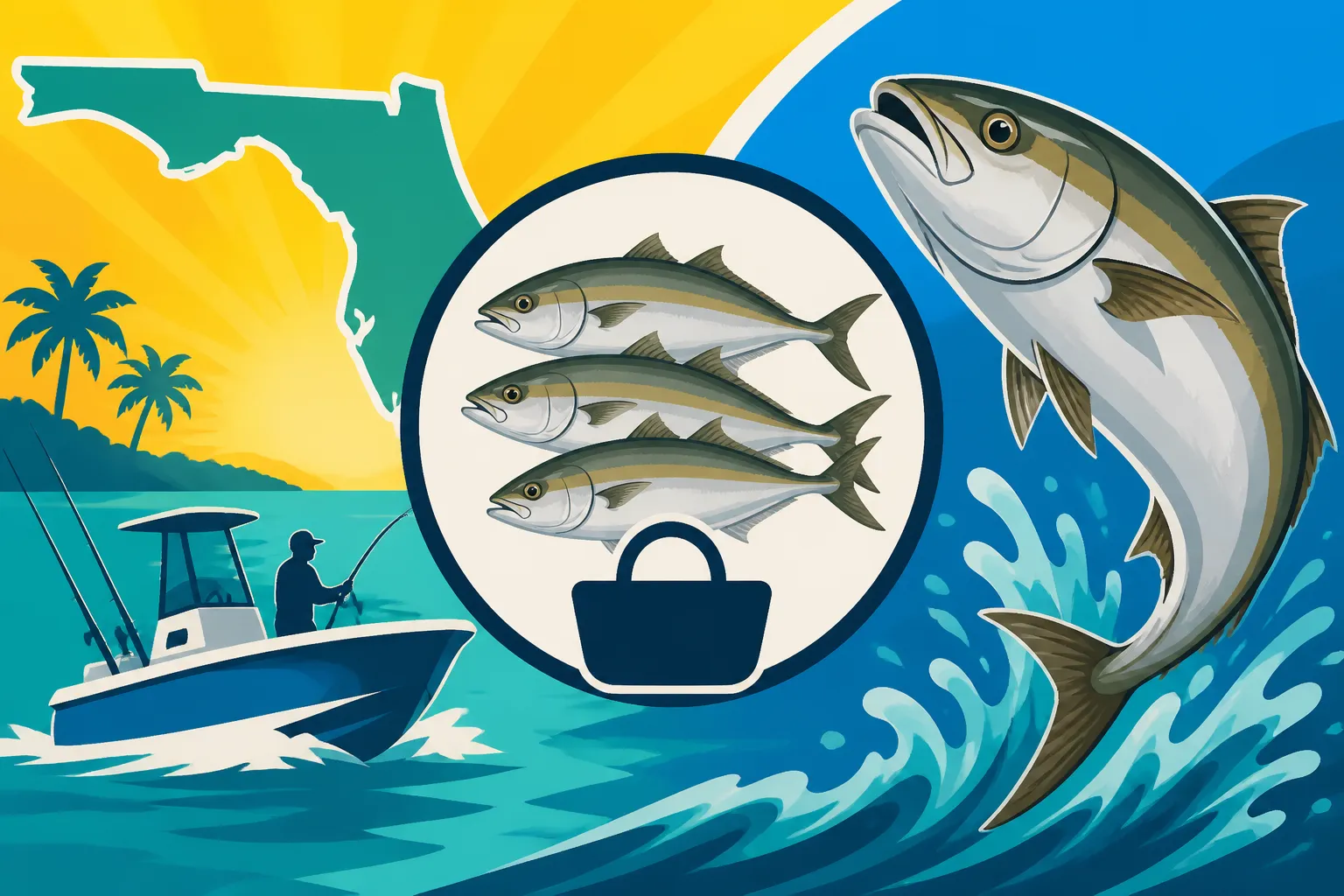
Typically, the recreational bag limit for Greater Amberjack in Florida waters is one fish per person, per day. This is a fairly common and straightforward rule. However, it's also paired with a vessel limit which means that a boat, regardless of the number of licensed anglers on board, can only keep a certain number of amberjack per day. This vessel limit is often one Greater Amberjack per vessel. This particular rule is put in place to prevent larger groups from exploiting the per-person limit and taking too many fish, ensuring a more even distribution of the catch among anglers.
| Rule Type | Limit | Notes |
|---|---|---|
| Bag Limit | 1 Greater Amberjack per person | Applies to individual anglers. |
| Vessel Limit | 1 Greater Amberjack per vessel | The total number of Greater Amberjack on board a vessel, regardless of the number of anglers, cannot exceed this limit. This is especially important for Florida Charter Boat Fishing License Rules. |
| Minimum Size Limit | 28 inches fork length (in state waters) | Fish must meet or exceed this length. |
| Minimum Size Limit | 34 inches fork length (in federal waters) | Fish must meet or exceed this length. |
| Season | Variable and subject to closure | Always check current FWC and NOAA Fisheries regulations. Open seasons are often very short and can close unexpectedly. |
Remember, these limits are for Greater Amberjack specifically. Always confirm that the fish you're keeping is indeed a Greater Amberjack and not a smaller lookalike before placing it in the cooler.
Minimum Size Requirements
Beyond the number of fish you can keep, there's also a minimum size requirement for Greater Amberjack. This is crucial for conservation, as it allows the fish to reach maturity and spawn at least once before being harvested, contributing to future populations. The minimum size is usually measured by fork length. Fork length is measured from the tip of the fish's snout to the fork in its tail. It’s not the overall length to the tip of the tail, which is a common mistake.
For Greater Amberjack, the minimum size limit can actually vary depending on whether you are fishing in state or federal waters. In Florida state waters (typically out to 3 or 9 nautical miles, depending on the coast), the minimum size for Greater Amberjack is often 28 inches fork length. However, in federal waters (beyond those state boundaries), the minimum size is frequently 34 inches fork length. This difference can be a real headache if you're not aware, so always have a reliable measuring device on hand. Many anglers keep a soft measuring tape or a rigid bump board readily accessible on their boat for quick and accurate measurement. You can find excellent, durable fish rulers that are perfect for this on Amazon.
Seasonality and Closures
Perhaps the most challenging aspect of fishing for Greater Amberjack is their highly variable and often short fishing seasons. Amberjack populations have faced significant pressure in the past, leading to very conservative management strategies. This means that open seasons for recreational harvesting can be quite short, and they are subject to emergency closures if catch limits are met sooner than expected.
Historically, Greater Amberjack seasons have often been open for only a few months, or even just a few weeks, out of the year. For example, there might be a short spring season and then a brief fall season, but these dates shift and are subject to change annually by both the FWC and federal authorities like NOAA Fisheries. It's not uncommon for anglers to plan a trip, only to find out the season has closed the day before. This dynamic nature underscores the importance of checking the absolute latest regulations just before you leave the dock. Relying on old information can lead to fines and a lost catch. Our general guide on Florida Fishing Seasons Explained can give you a broader idea of how seasons work in Florida, but for amberjack, always go straight to the official sources.
Federal vs. State Waters – Why It Matters for Amberjack
Understanding the distinction between state and federal waters is absolutely paramount when it comes to amberjack fishing. The rules, including bag limits and minimum sizes, can differ significantly once you cross that invisible line, and ignorance of the law is never an excuse.
Defining State and Federal Waters
Florida's coastline is divided into state waters and federal waters. This boundary isn't always obvious, but it's legally defined:
- Florida State Waters on the Atlantic Coast: Generally extend 3 nautical miles offshore from the coastline.
- Florida State Waters on the Gulf Coast: Generally extend 9 nautical miles offshore from the coastline.
Beyond these respective boundaries, you enter federal waters, which are managed by federal agencies, primarily the National Oceanic and Atmospheric Administration (NOAA) Fisheries and the Gulf of Mexico Fishery Management Council. Most Greater Amberjack fishing, particularly for larger fish, occurs in federal waters because that's where the deeper wrecks and reefs they inhabit are found. This makes knowing the federal regulations just as, if not more, important for serious amberjack anglers.
Navigational charts and modern GPS units often display these boundaries, which is incredibly helpful. If you’re fishing with a charter captain, they’ll certainly know these distinctions, but if you’re heading out on your own boat, it's your responsibility to be aware of your location and the corresponding regulations. Fishing for species like Greater Amberjack often involves significant Florida Offshore Fishing Techniques, which frequently takes you into federal territory.
How Regulations Differ and What to Watch Out For
The primary reason this distinction matters so much for Greater Amberjack is that federal regulations are typically more restrictive than state regulations, especially concerning size limits and season length. This is often due to different stock assessments and management goals at the federal level, which tend to govern larger, more migratory fish populations.
For example, as mentioned earlier, the minimum size limit for Greater Amberjack in federal waters is often 34 inches fork length, which is considerably larger than the 28 inches fork length sometimes seen in state waters. This means a fish that is legal to keep just within state waters would be illegal the moment you cross into federal territory. Moreover, federal seasons can open and close independently of state seasons, and they are frequently shorter or have more complex structures. It's not uncommon for the federal season to be closed entirely while a brief state season might still be open, or vice versa.
The complexity means you have to consult two different sets of regulations if you plan to fish near or cross these boundaries. Anglers often get caught out when they catch a legal-sized fish in federal waters but unknowingly possess it when they cross back into state waters where the rules might be different, or when they fish within state waters with federal rules applying due to a federal season closure. Always consult both the FWC website for state rules and the NOAA Fisheries (specifically Gulf Council if in the Gulf) website for federal rules before every trip targeting amberjack.
Best Practices for Amberjack Anglers and Conservation
Catching amberjack is a blast, but being a responsible angler is just as important as landing that trophy fish. Adhering to regulations and practicing good conservation habits ensures these incredible fighters will be around for years to come. This also applies to other species, for instance, when learning Florida Grouper Season Guide and their limits.
Proper Identification and Measurement
We’ve touched on it, but it bears repeating: proper identification and accurate measurement are your first lines of defense against unintentional violations. Amberjack can be confusing, especially juveniles. Take the time to study the distinguishing features of Greater Amberjack versus Lesser Amberjack or Banded Rudderfish. Look for that prominent dark line through the eye on the Greater Amberjack, and pay attention to body shape and overall size.
When it comes to measuring, always measure from the tip of the jaw to the fork of the tail (fork length). Lay the fish flat on a measuring board or against a tape measure. Don’t pinch the tail; let it lie naturally. If the fish is thrashing, secure it carefully to get an accurate reading. An official FWC or NOAA Fisheries measuring device, or a good quality one you trust from Amazon, can save you a lot of grief. Remember, if it’s borderline or you’re unsure, always err on the side of caution and release the fish.
Handling and Releasing Undersized Fish
Since Greater Amberjack have strict size limits, you're inevitably going to catch fish that are too small to keep. How you handle these undersized fish is critical to their survival. Amberjack are powerful, and fighting them on heavy tackle can exhaust them quickly. When you bring one to the boat that you intend to release:
- Minimize Fight Time: Use appropriate tackle to bring the fish in quickly.
- Handle Gently: Avoid touching the fish's gills or eyes. If possible, keep the fish in the water while you de-hook it.
- Use Proper De-hooking Tools: A good pair of long-nosed pliers or a de-hooking tool will allow you to quickly remove hooks without causing unnecessary damage. Circle hooks are highly recommended for amberjack as they tend to hook in the corner of the mouth, making for easier and safer release.
- Vent If Necessary: If the fish shows signs of barotrauma (e.g., stomach protruding from mouth, distended belly) from being reeled up from deep water, it may need to be vented with a specific tool to release air from its swim bladder. Only perform this if you know how to do it correctly; improper venting can cause more harm.
- Revive Properly: Hold the fish upright in the water, facing into the current, until it regains strength and can swim away on its own. Don’t just toss it back; ensure it’s strong enough to dive down. This applies to various species, and tips for this can also be found in guides like Catch and Release Best Practices for Snook.
Essential Gear for Amberjack Fishing
To successfully target Greater Amberjack while also adhering to regulations and promoting conservation, having the right gear is non-negotiable.
- Heavy-Duty Rod and Reel: These fish are strong. A conventional reel spooled with 60-80 lb braided line and a matching heavy action rod is a good starting point. You'll need the backbone to turn their heads and pull them away from structure. Check out our guide on Best Rod and Reel Setup for Florida Offshore Fishing for more details.
- Strong Leader Material: Amberjack have abrasive mouths and will make short work of light leaders. Use 80-150 lb fluorocarbon leader material.
- Large, Strong Hooks: J-hooks or circle hooks in sizes 7/0 to 10/0 are common. Circle hooks are preferred for release-friendly fishing.
- Live Bait: Live baits like large pilchards, goggle eyes, blue runners, or even small bonitos are irresistible to amberjack. For information on bait, you might consider Best Live Bait for Florida Inshore Fishing, though amberjack prefer larger, offshore baits.
- Measuring Device and De-hooking Tools: As discussed, essential for compliance and conservation.
- Cooler with Ice: If you plan to keep a legal fish, ensure it's properly iced down immediately to preserve its quality.
Being prepared with the right tools, knowledge, and respect for the regulations will not only make your amberjack fishing trips more successful but also help ensure that future generations can enjoy the thrill of battling these "reef donkeys" in Florida's beautiful waters.
Disclaimer
This article is for general informational purposes only and does not constitute professional advice. Laws, prices and regulations vary by location and change over time. Consult a qualified professional for guidance on your specific situation.