Catch and Release Best Practices for Snook
Fishing for snook in Florida is an absolute thrill – those powerful runs and acrobatic jumps make them a premier game fish, truly a prize in our diverse waters. But the excitement of a catch can sometimes overshadow the importance of ensuring that magnificent creature swims away healthy and ready to fight another day. It's a real bummer when you see a fish struggle after release, and it often comes down to not knowing the best way to handle them. This comprehensive guide will walk you through the essential catch and release best practices for snook, helping you do your part for conservation and ensure a thriving snook population.
Understanding Snook Vulnerability and Regulations
Snook are incredible fish, but they're also quite delicate and susceptible to stress, especially after a hard fight or when exposed to air and extreme temperatures. Their unique biology, including their sensitivity to cold snaps and their need for specific habitats, means we as anglers have a huge responsibility to treat them with the utmost care. It's not just about adhering to the rules; it's about giving these fish the best possible chance of survival once they return to the water.
Why Snook Need Careful Handling
Imagine running a marathon, then being held upside down while someone takes your picture. That's a bit like what a snook experiences during and after a vigorous fight. Their bodies are built for short bursts of power and quick escapes, not prolonged stress. The lactic acid buildup from a long fight can be detrimental, leading to delayed mortality even if they swim away initially. High water temperatures also exacerbate this stress, making proper handling even more critical during warmer months. This is why understanding Florida Snook Season Guide and their closed seasons is so important – it often aligns with times when they are most vulnerable, like during spawning or cold weather.
Beyond the fight itself, physical handling can cause damage. Their scales are not as robust as some other species, and rough handling can remove their protective slime layer, making them vulnerable to infection. Internal organs can also be damaged if a fish is handled improperly or dropped. It's a cycle of stress that we, as ethical anglers, need to interrupt by minimizing their time out of the water and ensuring gentle contact.
The Impact of Improper Release
An improperly released snook might swim away, but its chances of survival can be significantly reduced. This could be due to exhaustion, physical injuries, or even increased predation risk from sharks or barracuda because they're too weakened to escape. I've seen it happen – a beautiful snook swims off, only to be found floating belly-up an hour later. It's a gut-wrenching sight and makes you re-evaluate every step of your process. This isn't just a hypothetical scenario; it's a real problem that impacts the overall health and population numbers of this prized species. Every fish we release has a role to play in the ecosystem, and a successful release is a victory for conservation.
Consider the Florida Snook Size and Slot Limits – these regulations are in place to protect the breeding stock and allow fish to reach maturity. If we're not releasing fish properly, especially those outside the slot, we're undermining the very purpose of these conservation efforts. It's a collective responsibility that falls on every angler's shoulders.
Essential Gear for Responsible Snook Release
Having the right tools for the job can make all the difference in ensuring a successful and stress-free release for both you and the snook. It’s not just about what catches them, but what helps you unhook and revive them safely. Investing in these items is a small price to pay for the health of our fisheries.
Rods, Reels, and Line Choices
While it might feel sporting to use ultra-light tackle, when it comes to catch and release, especially for snook, it’s often better to go a little heavier. The goal is to land the fish as quickly as possible without completely exhausting it. A rod and reel combo that allows you to apply firm pressure and control the fish’s runs will significantly reduce fight time. For many inshore snook situations, a medium-heavy spinning rod with a fast action, paired with a reliable 3000-5000 series reel, is a good choice. This setup allows you to turn the fish's head quickly, preventing it from burying itself in mangroves or oyster beds, which can prolong the fight unnecessarily.
Regarding line, using a braided line with a fluorocarbon leader is a popular and effective setup. Braid offers superior strength and sensitivity, allowing you to turn a fish quickly. The leader provides abrasion resistance and can be anywhere from 30-50 pound test, depending on the size of the snook you expect to encounter and the structure you're fishing around. For deeper dives into line choices, check out our guide on What Pound Test Line for Snook Fishing?. Remember, the heavier the line you can get away with, the quicker you can subdue the fish, reducing its stress and therefore its recovery time.
Hooks: The Circle Hook Advantage
If you are committed to catch and release, using circle hooks is perhaps the single most impactful change you can make. These hooks are designed to naturally hook fish in the corner of the mouth, avoiding gut hooks which are often fatal. When a fish bites, you don't set the hook with a sharp jerk. Instead, you simply start reeling, letting the line tension and the fish's movement do the work. The design minimizes injury to vital organs, significantly increasing the fish's survival rate.
I can't tell you how many times I've switched to circle hooks and seen a dramatic reduction in deep-hooked fish. They are a game-changer for conservation, especially when targeting snook with live bait. You can find a great selection of circle hooks, including brands like Gamakatsu and Owner, on Amazon or at your local tackle shop. Just make sure to match the hook size to your bait and target species. For live bait fishing, they are practically a requirement for ethical anglers.
Handling Tools: Lip Grippers and Dehookers
These tools are your best friends for minimizing direct hand contact with the fish. A good set of lip grippers allows you to securely hold a snook by its lower jaw without touching its body. This is crucial for avoiding damage to their slime coat and scales, which are their first line of defense against disease. Choose grippers that float and have a comfortable handle, as you'll be using them in potentially wet and slippery conditions.
A long-nose dehooker is equally important, especially if a fish swallows a hook deeper than anticipated, even with circle hooks. These tools allow you to reach into the fish's mouth and remove the hook quickly and safely without putting your fingers near sharp teeth or stressing the fish further. Keep these tools easily accessible on your boat or kayak; fumbling around for them wastes precious time the fish needs back in the water. I always recommend having a sturdy dehooker from a reputable brand like Baker or ARC, which can also be easily found on Amazon, right alongside your pliers. You want tools that are robust and won't fail when you need them most.
The Art of a Quick and Gentle Fight
The fight itself is where much of the stress on a snook occurs. Learning to manage the fight effectively is crucial for increasing their chances of survival post-release. It's a delicate balance between enjoying the battle and prioritizing the fish's well-being.
Minimizing Fight Time
As exhilarating as a long, drawn-out battle with a snook can be, it's detrimental to the fish's health. The longer a snook fights, the more exhausted it becomes, and the higher the lactic acid buildup in its muscles. This can lead to a phenomenon called "lactic acidosis," which can cause organ damage and even death hours after the fish is released. Your goal should always be to land the fish as quickly and efficiently as possible, typically within a few minutes for most sizes.
This means using appropriate tackle that can handle the fish you're targeting. Don't go after a potential trophy snook with a light freshwater bass setup; you’ll only prolong the fight unnecessarily. Ensure your drag is set properly – tight enough to apply pressure but loose enough to prevent line breaks when the fish makes a strong run. When the fish runs, let it take line, but when it pauses, immediately start gaining line back. This constant pressure, without horsing the fish, wears it out faster. Our guide on Florida Inshore Fishing Techniques provides more strategies for efficient fish handling during the fight.
Avoiding Exhaustion
Beyond simply shortening the fight, pay close attention to the fish's behavior during the battle. If a snook makes several powerful runs and then starts shaking its head near the surface, it might be nearing exhaustion. At this point, it’s even more critical to land it quickly and prepare for a gentle release. Avoid letting the fish wallow on the surface, especially in warm water, as this exposes them to higher temperatures and can further stress them. Hot weather conditions can significantly increase the physiological stress on snook, making swift and careful handling even more vital.
When the fish is close to the boat or shore, don't prolong the fight by trying to get the perfect photo before it's truly subdued. Get it to hand (or net) swiftly, unhook, and release. This quick transition minimizes air exposure and helps the fish conserve vital energy for recovery. Think of it like a sprint, not a marathon; the snook expends immense energy quickly, and we need to help it recover just as efficiently.
When to Reel, When to Give Line
This comes down to feel and experience, but a good rule of thumb is to maintain constant pressure. When a snook runs, let the drag do its job, smoothly peeling line. Don't clamp down on the spool; you'll likely snap your line or pull the hook. Once the fish stops running and starts to slow, that's your cue to aggressively pump the rod and reel in line. By raising the rod tip, then lowering it while reeling, you gain line with each pump. This continuous engagement keeps the fish from resting and forces it to expend energy, ultimately leading to a quicker landing.
It’s a rhythm that you'll develop over time. The key is to never have slack in your line. Slack gives the fish an opportunity to shake the hook or regain its strength. Stay engaged, anticipate its next move, and keep that rod bent. This consistent application of pressure, coupled with smart angling, contributes significantly to a successful catch and release. Even with an amazing Best Rod for Inshore Fishing in Florida, the technique is just as important as the gear itself.
Proper Handling Techniques for Snook
Once you've landed your snook, the next few moments are the most critical for ensuring its survival. How you handle the fish out of the water directly impacts its chances of making a full recovery. The less stress and physical damage, the better.
Keeping the Fish in the Water as Much as Possible
This is perhaps the golden rule of catch and release for snook. Their gills are designed to extract oxygen from water, not air. Every second a snook spends out of water is a second it's suffocating. Aim to unhook the fish while it's still in the water, or at least submerged in a net designed for fish handling. If you absolutely must bring it into the boat for hook removal, do so quickly and gently, getting it back into the water within seconds. This minimal air exposure is paramount to its survival.
For photography, try to get creative. A quick "grip and grin" shot with the fish partially submerged or held horizontally just above the water is far better than holding it vertically by the lip for an extended period. The less air time, the higher the survival rate. This applies whether you're fishing from a boat, kayak, or even wading from shore. Consider using a clear measuring board that can be placed in the water to quickly verify legal size without unnecessary handling.
Handling by the Lip and Supporting the Body
When you do need to lift a snook, always use a lip gripper or support its entire body horizontally. Never, ever hold a snook vertically by its lip alone, especially larger fish. This puts immense strain on their jaw and spine, potentially causing irreparable internal damage. Their heavy bodies are not designed to hang from their mouths; imagine the stress on your own spine if you were hung by your jaw! This mistake is unfortunately common but easily avoidable.
If you’re using lip grippers, ensure they are securely clamped to the lower jaw, but not crushing it. With your other hand, slide it underneath the fish's belly, supporting its weight from below. This distributes the pressure evenly and prevents injury. When taking a picture, keep the fish as close to the water as possible, and get the shot quickly. Think of the fish's welfare first, and the photo second. A quick pose and immediate return to the water is always the best approach.
Avoiding Gill or Eye Contact
The gills are incredibly delicate and vital for the snook’s respiration. Any contact or damage to the gill plate or filaments can be fatal. Avoid putting your fingers or tools near the gills. If the hook is deep and you can't easily reach it with a dehooker without touching the gills, it's often better to cut the line as close to the hook as possible. The hook will eventually rust out, and this is far less damaging than trying to force it out while potentially rupturing gill tissue. A cutting tool, such as high-quality braid scissors, readily available on Amazon, should always be within reach.
Similarly, avoid touching the fish's eyes. Their eyes are sensitive and can be damaged by direct contact, which can impair their ability to hunt and survive post-release. This is another reason why a good dehooker is essential – it keeps your hands away from these vulnerable areas. Remember, the goal is to leave the fish in the best possible condition to survive and thrive, just like you would for How to Handle a Redfish for Release.
Reviving and Releasing Your Snook
The release isn't just about letting go; it's about ensuring the snook is fully recovered and ready to swim away strongly. This step is just as critical as the fight and handling.
Signs of a Tired Fish
After a spirited fight, many snook will be exhausted. You'll recognize a tired fish by its lack of energy, limpness, or if it rolls over on its side when you hold it in the water. Sometimes, they'll just hang there, not trying to swim away. These are all clear indicators that the fish needs a little help to recover. Rushing a tired fish back into the current is a recipe for disaster. It's important to be patient here; this isn't the time to quickly move on to the next cast.
Even if you've been careful, the stress of the event can take its toll. Pay close attention to its gill movements – they should be strong and steady. If they are slow or erratic, the fish still needs more time to recuperate. Being patient at this stage can mean the difference between life and death for the snook, truly making your catch and release effort worthwhile.
“Tail Grabbing” and Slow Forward Motion
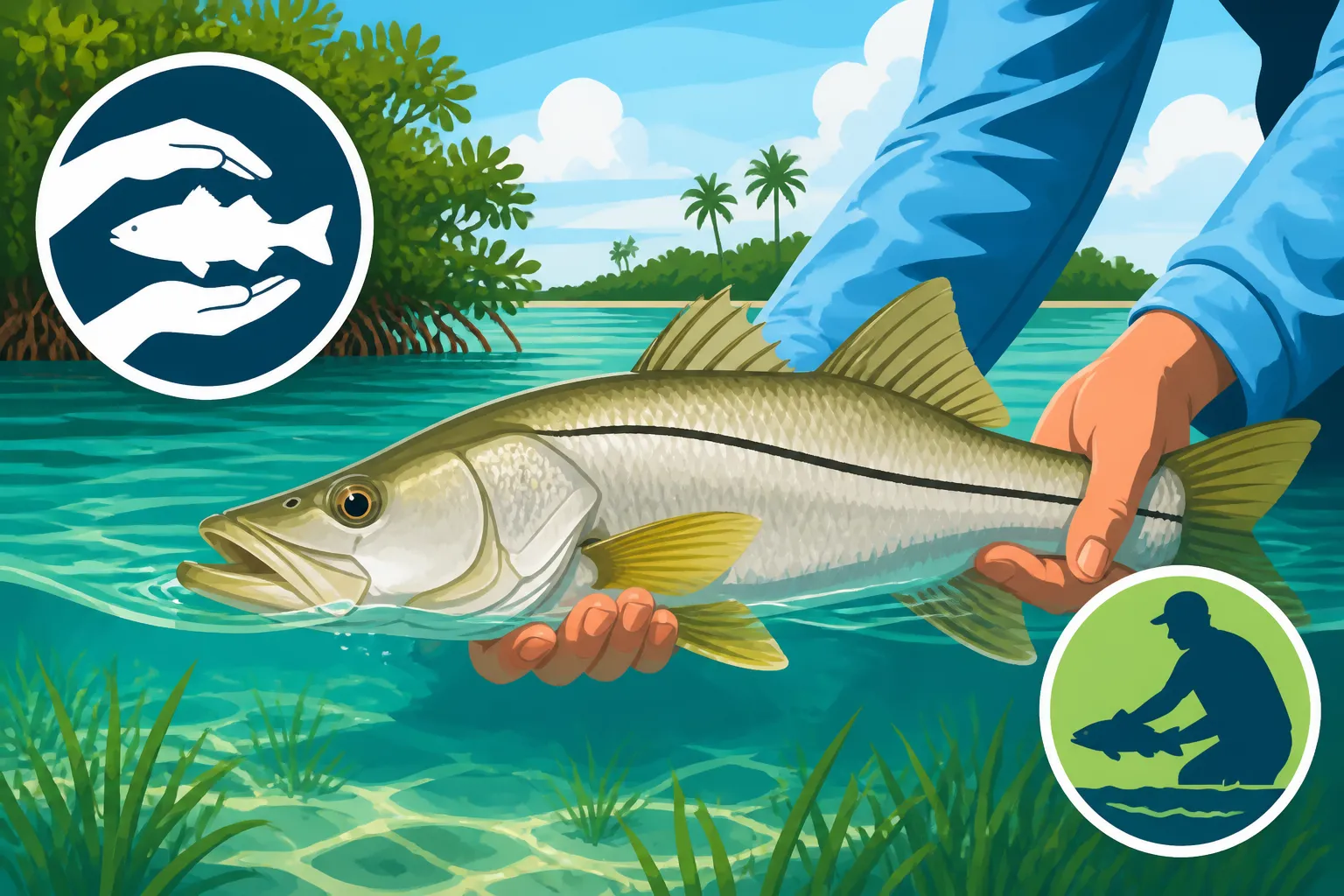
Once you've unhooked the fish and it's back in the water, hold it gently upright, facing into a mild current. Support its belly and grasp the base of its tail. This technique, often called "tail grabbing," helps you keep control while allowing water to flow over its gills. Move the fish slowly forward and back if there isn't a strong natural current, or hold it steady in a moving current. This gentle motion helps force oxygenated water over its gills, aiding in its recovery and flushing out lactic acid.
You’ll feel the fish start to regain strength. Its fins will begin to flutter, and it will try to swim. Don't let go until you feel a strong kick and the fish actively tries to pull away from your hands. This active resistance is your signal that it's ready. Don't just toss it back; patiently revive it. This is a critical moment for Catch and Release Best Practices for Snook.
Knowing When to Let Go
The moment a snook vigorously kicks its tail and tries to swim away from your grasp, that's your cue. Release it gently, allowing it to swim off on its own power. Watch it for a moment to ensure it swims strongly into deeper water or cover. If it struggles or rolls over, gently recapture it and continue the revival process. Sometimes a fish might need a second or even third attempt at revival.
It's common for anglers to want to snap a quick photo right before release. If you do, make it extremely brief, keeping the fish mostly submerged if possible, and then immediately return to the revival technique. Remember, the fish's health is the priority. Successful releases like this ensure that when you're looking for best time of year to catch snook in Florida, you'll continue to find a healthy population. Responsible angling ensures that the conservation efforts, like those explored in Why Florida Closes Snook Season in Winter and Why Snook Are Protected During Cold Weather, truly make a difference.
Table: Proper vs. Improper Snook Release Techniques
To help visualize the best practices, here's a quick comparison:
| Technique Aspect | Proper Catch and Release | Improper Catch and Release |
|---|---|---|
| Fight Time | Minimize fight time with appropriate tackle to reduce exhaustion. | Prolong fight with overly light tackle, exhausting the fish. |
| Hook Type | Use circle hooks to prevent gut hooking. | Use J-hooks, increasing the risk of deep hooking and fatal injury. |
| Handling Out of Water | Keep fish in water as much as possible; quick removal for photos (seconds). | Prolonged air exposure; fish out of water for minutes for multiple photos. |
| Body Support | Support entire body horizontally, or use lip grippers with other hand under belly. | Hold vertically by the jaw/lip alone, especially large fish, straining spine and jaw. |
| Gills/Eyes | Avoid touching gills or eyes; cut line if hook is deep and cannot be removed safely with dehooker. | Rough handling near gills, inserting fingers into gills, or poking eyes. |
| Revival | Gently move fish forward in water (or against current) until it kicks strongly and swims away on its own. | Simply toss tired fish back into the water without revival, leading to poor recovery. |
| Tool Usage | Have dehooker and lip grippers readily accessible and use them swiftly. | Fumble for tools, use hands unnecessarily, or lack proper dehooking tools. |
By following these catch and release best practices, you're not just fishing; you're actively participating in the conservation of one of Florida's most iconic and beloved sport fish. Every responsible angler contributes to ensuring a vibrant future for snook fishing.
Disclaimer
This article is for general informational purposes only and does not constitute professional advice. Laws, prices and regulations vary by location and change over time. Consult a qualified professional for guidance on your specific situation.