How to Handle a Redfish for Release
There's nothing quite like the thrill of feeling that powerful tug on your line, knowing it's a magnificent Florida redfish on the other end. But for many of us who cherish these incredible creatures, that excitement can quickly turn into a moment of concern as we consider how to ensure the fish's well-being for a successful release. It's a legitimate worry, as improper handling can seriously jeopardize a redfish's chances of survival. This guide is dedicated to walking you through every crucial step, from the moment you hook a redfish to the time it swims away strong, giving you the confidence that you're doing everything possible to protect our beloved bronze beauties.
The Heart of Conservation: Why Redfish Release Matters
Anglers in Florida love redfish, and for good reason! They're powerful fighters, beautiful to look at, and a truly iconic species in our inshore waters. Because of their popularity and their vital role in our ecosystems, conservation is absolutely key, and that often means practicing catch and release. But catch and release isn't just about letting the fish go; it's about letting it go healthy and strong so it can continue to thrive, reproduce, and provide enjoyment for future generations of anglers.
Understanding Redfish Vulnerability
Redfish, like many inshore species, are surprisingly delicate outside of their watery home. Their internal organs are not designed for the crushing weight of their own body against gravity, nor for prolonged exposure to air. When a redfish is caught, especially after a hard fight, its body undergoes significant stress. Lactic acid builds up in its muscles, much like in a human after an intense workout, leading to exhaustion. Air exposure can cause damage to their sensitive gills, which are crucial for oxygen exchange. Even seemingly minor nicks or scrapes from rough handling can become serious infections in the wild. This vulnerability means that every action we take during the catch and release process can dramatically impact whether that redfish survives or succumbs to the stress and injuries later on. Our goal is always to minimize these negative impacts.
The Long-Term Impact of Safe Practices
When we commit to proper handling techniques, we're not just saving one fish; we're contributing to the overall health and sustainability of the redfish population. Every successfully released redfish is one more fish that can grow, spawn, and contribute to the genetic diversity of its species. Over time, these individual actions collectively safeguard the entire fishery. It ensures that the stunning redfish you catch today will still be around for your children and grandchildren to enjoy. It's a proactive approach to conservation, recognizing that as stewards of the environment, we have a responsibility to leave our fishing grounds better than we found them. Adhering to guidelines like those found in the Florida Redfish Fishing Guide and understanding Florida Redfish Size and Bag Limits is a big part of this stewardship.
Setting Up for Success: Pre-Fishing Prep for a Quick Release
The moment you hook a redfish isn't the best time to realize you're unprepared for a safe release. A lot of the success in catch and release happens before you even make your first cast. Thinking ahead and having the right tools and strategies in place can dramatically reduce the stress on the fish and increase its chances of survival. It’s all about being ready for that magnificent catch.
Essential Tools for Quick Unhooking
Having the right tools readily accessible is paramount. Fumbling for equipment while a stressed redfish is on the deck only prolongs its exposure and increases its distress. A good pair of long-nose pliers or, even better, a specialized dehooker is a non-negotiable item for any serious catch-and-release angler. These tools allow you to quickly and safely remove hooks, especially those that might be deeper.
Here's a quick checklist of what to keep on hand:
| Tool Category | Specific Tools | Purpose | Notes |
|---|---|---|---|
| Unhooking | Long-nose pliers, Hemostats, Specialized Dehooker | Quick and safe hook removal, especially with barb compression. | Essential for minimizing injury; consider a stainless steel set from Amazon. |
| Handling | Fish Grips/Lip Grippers, Large Rubberized Net | Securely hold the fish without touching its body or removing slime. | Avoid using bare hands directly on the fish's body; a sturdy net is crucial. |
| Cutting | Braid Scissors/Nippers | Quickly cut the line if a hook is too deep to retrieve. | Always better to leave a deeply swallowed hook than to attempt forceful removal. |
| Measuring/Photo | Measuring board, Soft Ruler, Camera (optional) | Documenting catch data; ensure quick measurements for slot limits. | Have these ready before the fish is out of the water. |
A quality dehooker, easily found on platforms like Amazon, is designed to reach hooks quickly and pop them out with minimal fuss, often without even needing to touch the fish. Hemostats are fantastic for smaller hooks or for pinching down barbs, which is another excellent practice for easier hook removal. Always consider filing down or crimping the barbs on your hooks – it makes removal so much easier and causes less damage to the fish. Also, keep a pair of stout braid scissors or nippers handy; if a fish is deeply hooked and removal would cause more trauma, it's often best to simply cut the line as close to the hook as possible.
Choosing the Right Tackle to Minimize Harm
Your tackle choices play a significant role in the fish's post-release survival. Heavy tackle can allow you to land a fish more quickly, reducing the duration of the fight and the build-up of lactic acid. While it might seem counterintuitive to use stronger gear for a "fairer fight," minimizing fight time is often kinder to the fish when release is the goal. For instance, selecting a robust Best Rod for Inshore Fishing in Florida that matches the size of redfish you expect to encounter can make a big difference.
Consider using circle hooks whenever possible, especially when fishing with natural baits. Circle hooks are designed to hook fish in the corner of the mouth, significantly reducing the chance of gut-hooking, which is a major cause of post-release mortality. Many anglers swear by them for redfish, particularly when using live or cut bait. If you're using artificial lures, consider replacing treble hooks with single, barbless hooks. This small modification can make hook removal much faster and less damaging. Even something as simple as the type of bait you use, as discussed in "Best Bait for Redfish Fishing in Florida", can influence hook placement.
Planning Your Approach and Landing Zone
Before you even hook a fish, think about how you'll land it. If you're fishing from a boat, clear any clutter from the deck. Have your net or fish grips ready. If you're wading or fishing from shore, identify a clear, shallow area with a soft bottom where you can safely land the fish without dragging it across abrasive surfaces like rocks or oyster shells.
For kayak anglers, this means having your tools tethered and within easy reach, and practicing how you'll maneuver the fish alongside your kayak for unhooking. The goal is to minimize the amount of time the fish spends out of the water and to reduce any physical contact that could remove its protective slime layer. This slime layer is the fish's first line of defense against disease and infection, and preserving it is incredibly important.
The Dance of the Fight: Reducing Stress from Hookup to Hand
The battle between angler and fish is exhilarating, but it's also a high-stress event for the redfish. Every second counts, and how you manage the fight and subsequent landing can significantly influence the fish's recovery and survival. It’s a delicate balance of putting pressure on the fish while being mindful of its limitations.
Fighting the Fish Efficiently
When a redfish takes your bait, the instinct is often to reel it in as fast as possible. However, a prolonged, intense fight can lead to severe exhaustion, making it harder for the fish to recover. On the other hand, letting a fish run too long on light tackle can also be detrimental. The key is to apply steady, firm pressure to bring the fish in efficiently without completely "horsing" it. Use your rod's flex to absorb runs, and pump and reel to gain line.
Avoid high-sticking your rod, which puts excessive strain on the blank and can break your rod, or worse, allow the fish to get into structure. Keep the rod tip pointed towards the fish when it's running, and use the drag to your advantage. Proper drag settings allow the fish to take line when necessary, preventing break-offs, but still apply enough pressure to tire the fish effectively. Think of it as a dance, where you lead but allow the fish to move when it needs to. Many Florida Inshore Fishing Techniques emphasize these careful considerations.
Minimizing Air Exposure During Landing
Once the redfish is close, the critical moment of landing arrives. The absolute golden rule for catch and release is to minimize air exposure. A fish out of water is like a human holding their breath underwater – every second counts. Ideally, a redfish should never be lifted by its gills or eyes, and only for the briefest of moments, if at all.
If you can, try to unhook the fish while it's still in the water, especially if it's lightly hooked in the lip. If you need to bring it aboard or ashore, use a large, rubberized landing net. The rubber coating protects the fish's delicate slime layer and fins much better than traditional knotted nylon nets. For larger redfish, or when a net isn't practical, a set of lip grippers can be incredibly useful. These allow you to secure the fish by its lower jaw, keeping your hands off its body, and providing a safe way to control it for unhooking. When using lip grippers, always support the fish's belly with your other hand, especially for larger specimens, to prevent internal organ damage from gravity. Never let the fish dangle vertically by the lip grippers without supporting its weight. If a picture is a must-have, snap it quickly, holding the fish horizontally with two hands, supporting its belly, and then immediately return it to the water.
The Moment of Truth: Gentle Unhooking and Release Techniques
This is where all your preparation pays off. The actual unhooking and release must be swift, gentle, and deliberate. A few seconds of fumbling or rough handling can undo all the good intentions of a catch-and-release angler. Our aim here is precision and care, ensuring the redfish experiences as little trauma as possible.
Mastering the Art of the Dehooker
The dehooker is your best friend when it comes to quick and clean hook removal. It's designed to reach into the fish's mouth without you having to put your hands near sharp teeth or gills, and to push the hook out the way it went in. To use it effectively, slide the dehooker down the line until it contacts the bend of the hook. Then, apply downward pressure and a gentle twist, and the hook should pop right out. This can often be done while the fish is still in the water, which is ideal.
Sometimes, despite your best efforts, a redfish might swallow the hook deeper. This is particularly common when using live bait or if you delay setting the hook. In such cases, attempting to forcefully extract a deeply swallowed hook can cause far more internal damage than simply cutting the line. Use your braid scissors to snip the line as close to the hook as possible. The hook, being made of carbon steel, will eventually corrode and fall out, or the fish's stomach acids will dissolve it. This approach, while sometimes feeling like a failure, is often the most humane option for deep-hooked fish. Having a quality pair of needle-nose pliers or a dehooker from Amazon readily available makes this process much smoother.
Handling the Fish with Care
Once the hook is out, the way you hold and manage the redfish is crucial. As mentioned, avoid direct hand contact with the fish's body as much as possible to protect its slime layer. If you must handle the fish, wet your hands thoroughly first. Never squeeze the fish around its abdomen or gills. Always support its weight horizontally, one hand under the belly and the other gently gripping the tail base, if not using a lip gripper.
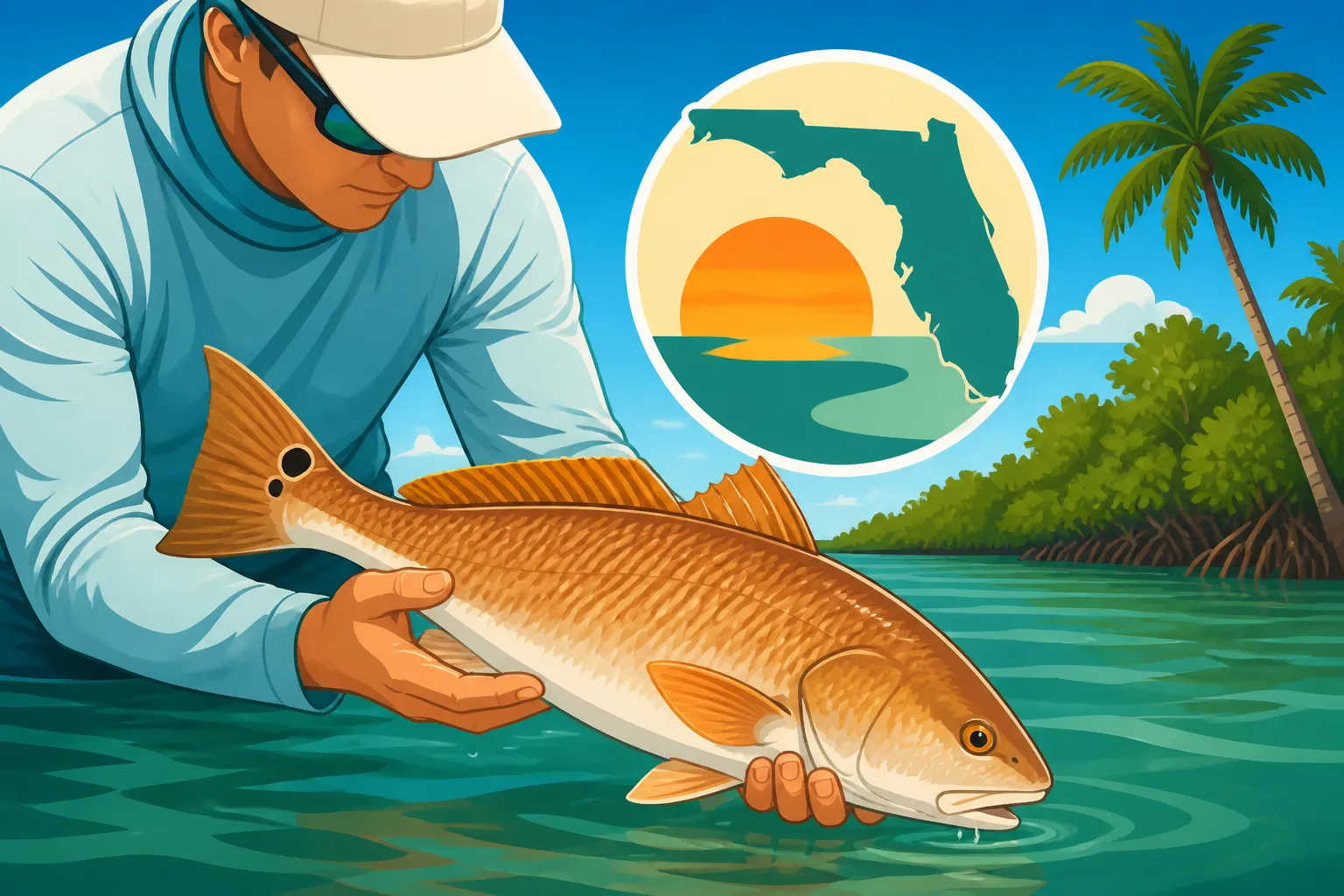
For photos, keep the fish low to the water, perhaps with its tail still submerged. Get your shot quickly – we're talking mere seconds, not minutes – and then immediately prepare for release. Think about how Catch and Release Best Practices for Snook often mirror these redfish guidelines, emphasizing minimal out-of-water time for all sensitive species.
Reviving and Releasing Properly
Returning a redfish to the water isn't just about letting it go; it's about making sure it's ready to swim away under its own power. After the stress of the fight and unhooking, some fish might be lethargic. To revive a redfish, hold it gently in the water, facing into the current if there is any, allowing water to flow over its gills. Move the fish forward and backward gently, creating a flow of oxygenated water through its gill plates. This helps to re-oxygenate its blood and flush out lactic acid.
Watch for signs of recovery: the fish will start to show stronger fin movements, attempt to swim away, and its color will often brighten. Once it vigorously tries to pull free from your grasp, it's ready to be released. Gently let it go, allowing it to swim away at its own pace. Sometimes, a redfish might float away on its side. If this happens, continue the revival process until it can maintain its equilibrium. Never simply toss a fish back into the water from a height; gently place it in, headfirst. Observing the fish as it swims away, strong and vibrant, is truly the most rewarding part of the catch and release experience.
Disclaimer
This article is for general informational purposes only and does not constitute professional advice. Laws, prices and regulations vary by location and change over time. Consult a qualified professional for guidance on your specific situation.