Is Red Drum Catch and Release Only in the Indian River Lagoon?
It's a common question, and honestly, a bit of a tricky one: what are the rules for red drum in the Indian River Lagoon? You hear whispers of "catch and release only," and it can be confusing trying to figure out if you can actually keep one of these beautiful, strong fish. This guide is here to clear up that confusion and help you understand the specific regulations for red drum fishing in the Indian River Lagoon, ensuring you're a responsible and compliant angler.
Understanding Red Drum Regulations in Florida
Fishing in Florida is a fantastic privilege, but with it comes the responsibility to understand and abide by the rules. These regulations aren't arbitrary; they're put in place by the Florida Fish and Wildlife Conservation Commission (FWC) to protect our precious marine resources and ensure that future generations can enjoy the same incredible fishing experiences we do today.
The Importance of Conservation
Think about it: red drum are one of Florida's most iconic inshore sport fish. They're strong fighters, beautiful to look at, and they represent a huge draw for anglers from all over. But popularity comes at a cost. If everyone kept every legal red drum they caught, our populations would quickly diminish. That's why conservation efforts, supported by regulations, are so vital. They help manage fish populations, allowing them to reproduce and grow, maintaining a healthy ecosystem. When you hear about specific rules for a certain area, it often means that area's fish populations are particularly vulnerable or important to the overall health of the species.
Part of being a good steward of our waters means understanding that sometimes, the best catch is the one you release. It contributes directly to the sustainability of the fishery and ensures there are plenty of red drum for everyone to enjoy catching for years to come. This understanding is key to appreciating why certain areas, like the Indian River Lagoon, might have stricter rules. You can learn more about general regulations in our Florida Fishing Regulations and Bag Limits guide.
General Florida Red Drum Rules Statewide Context
Before we dive specifically into the Indian River Lagoon, let's briefly touch on what the red drum regulations typically look like in other parts of Florida where harvest is permitted. Generally, outside of specific restricted zones, there's a slot limit and a bag limit for red drum. This means fish must be within a certain size range (the "slot") to be legal to keep, and you can only keep a certain number of those legal fish per day (the "bag limit").
These statewide rules are designed to protect the very large, mature "breeder" fish, which are crucial for reproduction, and also the very small, juvenile fish, giving them a chance to grow. The slot limit ensures that you're only keeping fish that are mature enough to have spawned at least once, but not so old and large that they become irreplaceable breeders. It's a balance act, but one that's constantly being evaluated based on scientific data and stock assessments.
Specific Regulations for Red Drum in the Indian River Lagoon
Alright, let's get right to the heart of the matter for the Indian River Lagoon. This is where things get really specific, and it's super important to pay close attention because the rules here are different from many other parts of the state.
The Catch and Release Mandate
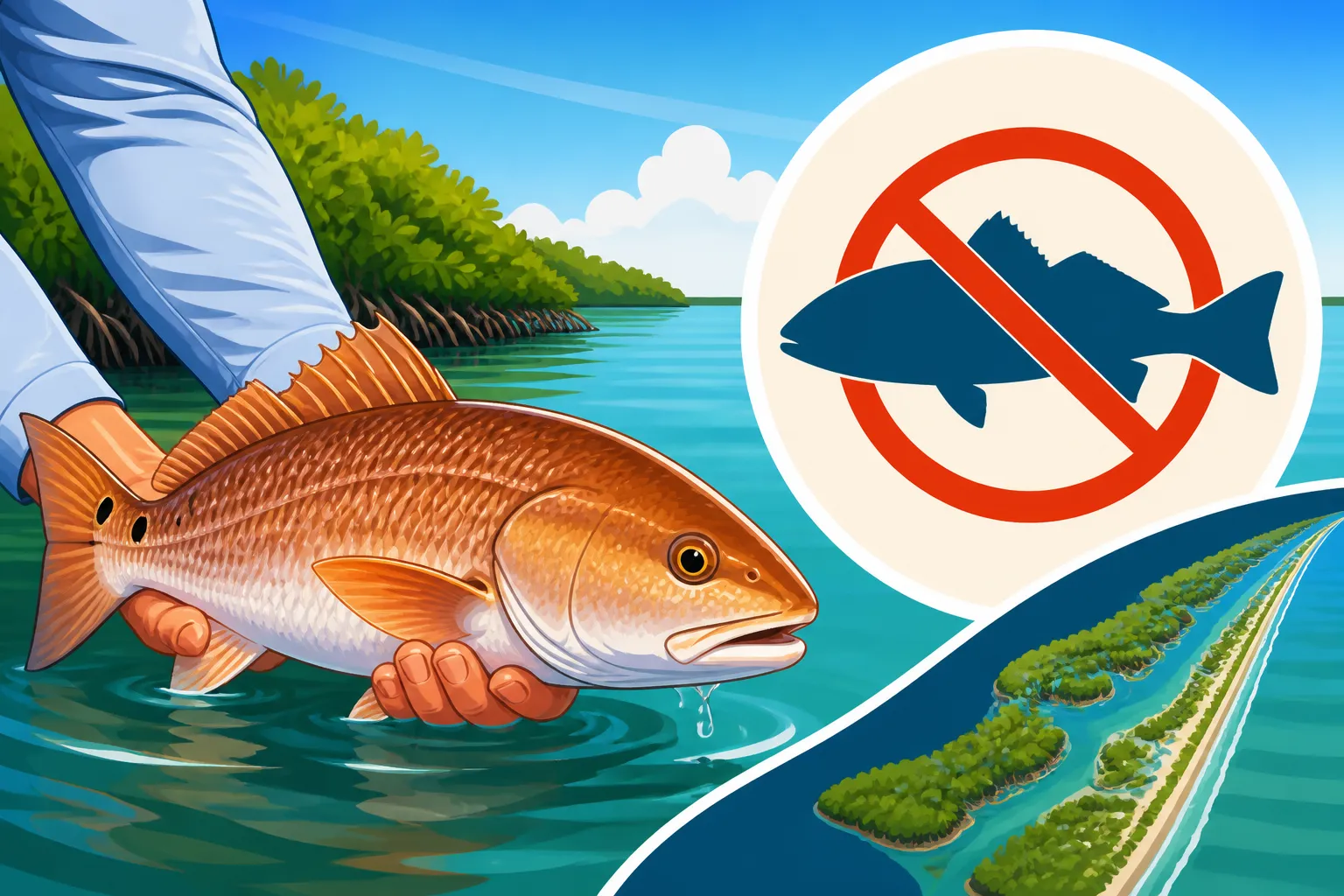
For red drum in the Indian River Lagoon, the answer to the question "Is it catch and release only?" is a resounding yes. As of the time of this writing, red drum caught in the Indian River Lagoon are strictly catch and release only. There is no harvest permitted whatsoever. This means if you catch a red drum in the IRL, no matter its size, it must be immediately released alive. This regulation has been put in place by the FWC due to significant concerns about the red drum population health in this particular ecosystem.
This isn't just a suggestion; it's a mandatory regulation. The FWC monitors these populations closely, and specific measures are taken when fish stocks are deemed vulnerable. The Indian River Lagoon has faced considerable environmental challenges over the years, and its red drum population has been impacted. Instituting a catch and release only rule is a critical step in helping these fish recover and thrive. It means every angler plays a direct role in the recovery efforts by carefully releasing every red drum they encounter.
Geographical Boundaries of the Indian River Lagoon Catch and Release Zone
Understanding where this catch and release rule applies is just as important as knowing the rule itself. The Indian River Lagoon system is a massive, complex estuary stretching along a significant portion of Florida's Atlantic coast. For regulatory purposes, the "Indian River Lagoon" usually refers to the waters of Volusia, Brevard, Indian River, St. Lucie, and Martin counties. This includes the main body of the Indian River, Mosquito Lagoon, and Banana River, all the way down to Jupiter Inlet.
Essentially, if you're fishing in any of the interconnected waterways within these counties that are part of the larger Indian River Lagoon system, you are in a catch and release zone for red drum. It's not just the "river" portion, but all the associated bays, sounds, and interconnected canals that flow into it. Always check the latest FWC regulations, as boundaries can sometimes be adjusted. It's your responsibility as an angler to know exactly where you are and what the rules are for that specific body of water. Knowing the exact boundaries helps prevent accidental violations and contributes to the overall effectiveness of the conservation efforts. You can find more detailed information on specific areas in our Indian River Lagoon Fishing Guide in Florida.
Best Practices for Catch and Release in the Indian River Lagoon
Since every red drum caught in the Indian River Lagoon must be released, mastering proper catch and release techniques isn't just a good idea—it's absolutely essential. The goal is to ensure that every fish swims away strong and has the best possible chance of survival.
Minimizing Stress on the Fish
When you hook a red drum, your first priority, especially in a catch and release area, should be to land it as quickly and efficiently as possible. A prolonged fight can exhaust the fish, making it more susceptible to predators or disease after release. This doesn't mean horsing the fish in, but rather applying steady pressure and not letting it take excessive runs. Once you get the fish close, avoid dragging it onto dry land or a hot boat deck. Instead, try to keep it in the water as much as possible.
Use wet hands if you need to handle the fish directly. Dry hands can remove the fish's protective slime coat, leaving it vulnerable to infection. If possible, use a net with a rubberized mesh (which is gentler on fins and scales) to scoop the fish quickly. Support the fish horizontally, especially larger ones, to avoid damaging internal organs or its spine. And always, always handle fish by the lower jaw or cradle their belly; never hold them vertically by the gills or mouth only, as this can cause irreversible damage.
Essential Gear for Responsible Anglers
Having the right tools can make all the difference in a successful release. A good pair of long-nosed pliers or a dedicated dehooking tool is paramount. These tools allow you to quickly remove hooks without having to put your hands near sharp teeth or deeply embedded hooks, which is safer for both you and the fish. Many anglers find tools like the Baker Hookout or specific long-handled dehookers incredibly useful. You can often find a great selection of these on Amazon or at your local tackle shop.
Using circle hooks is another game-changer, particularly when fishing with natural baits. Circle hooks are designed to hook fish in the corner of the mouth, rather than deep in the gullet, which dramatically reduces gut-hooking and increases the chances of a clean, healthy release. If a fish is deeply gut-hooked and you can't easily remove the hook without tearing tissue, it's often best to simply cut the line as close to the hook as possible. The hook will eventually rust out, and the fish has a much better chance of survival than if you attempt a traumatic removal. For appropriate gear, consider reading up on Best Rod and Reel Setup for Florida Inshore Fishing.
What Happens If You Don't Follow the Rules?
It's tempting sometimes, especially if you've caught a beautiful, perfectly-sized red drum, to think "just this once." But ignoring the rules for red drum in the Indian River Lagoon carries real consequences, both for you and for the fishery.
Penalties and Enforcement
The Florida Fish and Wildlife Conservation Commission (FWC) is the primary enforcement agency for fishing regulations in Florida. FWC officers are regularly patrolling the waters of the Indian River Lagoon, and they are well-versed in the specific rules for red drum and other species. If you are found to be in possession of a red drum caught in the Indian River Lagoon, or if you are observed harvesting one, you could face significant penalties.
These penalties can range from substantial fines, confiscation of your gear (including your boat in some serious cases), and even jail time for repeated or egregious violations. Furthermore, a violation can result in points against your fishing license, which might lead to its suspension or revocation. It's not just about the money; it's about the disruption to your day, the legal hassle, and the potential loss of your ability to enjoy fishing in the future. The FWC takes these regulations very seriously because they are vital for conservation. You can find more information about the consequences in our guide Penalty for Fishing Without a License in Florida, which touches on similar enforcement themes.
The Broader Impact
Beyond the personal consequences, illegally keeping a red drum from the Indian River Lagoon has a negative impact on the entire fishery. Every fish illegally removed is one less fish contributing to the struggling population, one less fish that could spawn and help rebuild the stock. These regulations are designed as a collective effort to allow the red drum population to recover from environmental stresses.
When individuals disregard these rules, they undermine the efforts of countless other responsible anglers, conservationists, and the FWC itself. It slows down the recovery process and can even lead to more restrictive regulations for everyone in the long run. By adhering to the catch and release mandate, you're not just avoiding a ticket; you're actively participating in the vital restoration of one of Florida's most cherished fisheries.
Why the Indian River Lagoon Needs Special Protection
You might be wondering, why is the Indian River Lagoon (IRL) singled out with such strict red drum regulations when other areas allow some harvest? The answer lies in the unique and unfortunately, often challenged, ecosystem of the IRL itself. It's a truly special place that requires extra care.
Unique Ecosystem Challenges
The Indian River Lagoon is not just a lagoon; it's one of North America's most biodiverse estuaries, a complex system of interconnected waters spanning 156 miles. It's home to more than 4,300 species of plants and animals, including a significant portion of the nation's manatee population. However, this incredible ecosystem has been under severe environmental stress for decades.
Issues like nutrient pollution from stormwater runoff and wastewater discharge have led to widespread seagrass die-offs, which are the fundamental nurseries and feeding grounds for many species, including juvenile red drum and their prey. Harmful algal blooms, often called "brown tide" or "red tide," further degrade water quality and severely impact the food chain. These environmental challenges mean that fish populations, particularly those that rely heavily on healthy seagrass beds like red drum, are incredibly vulnerable. Their ability to reproduce, find food, and grow to maturity is compromised, making recovery much harder than in less impacted areas. You can explore more about environmental factors in How Red Tide Affects Fishing in Florida.
Long-Term Outlook for Red Drum
The FWC's decision to implement a catch and release mandate for red drum in the Indian River Lagoon is a direct response to these severe environmental pressures and the observed decline in red drum populations. It's an aggressive but necessary step to give these fish the best possible chance to rebound. The hope is that with reduced fishing pressure (specifically, no harvest), coupled with ongoing restoration efforts focused on improving water quality and restoring seagrass, the red drum population can eventually recover to healthier levels.
This isn't a permanent situation, ideally. Regulations are often dynamic, changing as fish stocks improve or worsen. The long-term outlook depends heavily on both environmental recovery and continued angler compliance. Every fish released, every bit of advocacy for clean water, contributes to a brighter future for red drum and the entire Indian River Lagoon ecosystem. It's a testament to the fact that we all have a role to play in protecting Florida's natural treasures.
Comparing Red Drum Regulations: Statewide vs. Indian River Lagoon
To really drive home the difference, let's look at a simple comparison table that outlines the general approach to red drum regulations across Florida compared to the specific rules within the Indian River Lagoon. This should help clarify any lingering questions you might have about where and when you can harvest red drum.
| Feature | General Florida Red Drum Regulations (Outside IRL) | Indian River Lagoon Red Drum Regulations |
|---|---|---|
| Harvest Permitted? | Yes, under specific conditions | No, strictly catch and release only. |
| Size Limit (Slot)? | Typically a minimum and maximum size (e.g., 18-27 inches) | N/A (since no harvest is permitted) |
| Bag Limit? | Typically 1 fish per person per day | N/A (since no harvest is permitted) |
| Protective Measures | Slot limits protect juvenile and large breeding fish, annual closures | Total harvest prohibition due to severe population concerns and environmental factors. |
| Why Different? | Generally healthier populations, different regional environmental impacts | Extremely vulnerable population due to significant and ongoing environmental degradation. |
| Primary Goal | Sustainable harvest and population management | Population recovery and ecosystem restoration. |
As you can see, the Indian River Lagoon stands out with its total prohibition on red drum harvest. This is not a slight on anglers, but a necessary conservation measure for a struggling, yet incredibly important, fishery. Your cooperation is a huge part of its potential comeback. Remember to always consult the latest FWC regulations before heading out, as rules can change. For more details on species-specific rules, check out our Florida Redfish Fishing Guide. And for those interested in catching rather than keeping, our Best Bait for Redfish Fishing in Florida article might be helpful.
Disclaimer
This article is for general informational purposes only and does not constitute professional advice. Laws, prices and regulations vary by location and change over time. Consult a qualified professional for guidance on your specific situation.