Florida Redfish Fishing Guide
Many anglers dream of the bronze flash and powerful run of a Florida redfish, but actually finding and consistently catching these elusive inshore giants can feel like cracking a secret code. You've heard the stories, seen the pictures, and now you want to experience that thrill yourself, yet the sheer vastness of Florida's waters and the nuances of redfish behavior can be intimidating. This comprehensive guide will peel back the layers of mystery, providing you with everything you need to know about targeting and landing redfish, from understanding their preferred haunts to mastering the techniques that lead to a successful day on the water.
Understanding the Allure of Florida Redfish
There's something truly special about chasing redfish in Florida's diverse inshore waters. For many of us, it's not just about the catch; it's about the entire experience—the quiet hum of the trolling motor, the sun rising over the mangroves, and the sudden, explosive strike that signals you've found your target. Redfish, with their distinctive look and powerful fight, have cemented their place as one of the Sunshine State's most sought-after game fish.
They are an iconic species that embody the spirit of Florida's shallow water fisheries. Their presence is a hallmark of healthy estuarine systems, and the pursuit of them draws anglers from all walks of life. Whether you're a seasoned veteran with years of experience under your belt or a newcomer eager to learn, the challenge and reward of redfish fishing are hard to beat. It’s a pursuit that constantly teaches you something new about the intricate ecosystems they inhabit.
The sheer excitement of spotting a redfish "tailing" in just inches of water, its black-spotted tail waving above the surface as it forages, is an unforgettable moment. It's a visual cue that sets your heart racing and tests your casting accuracy under pressure. This combination of visual hunting and a powerful tug-of-war on the line creates an addictive fishing experience that keeps anglers coming back for more, year after year.
The Iconic Fight and Appearance
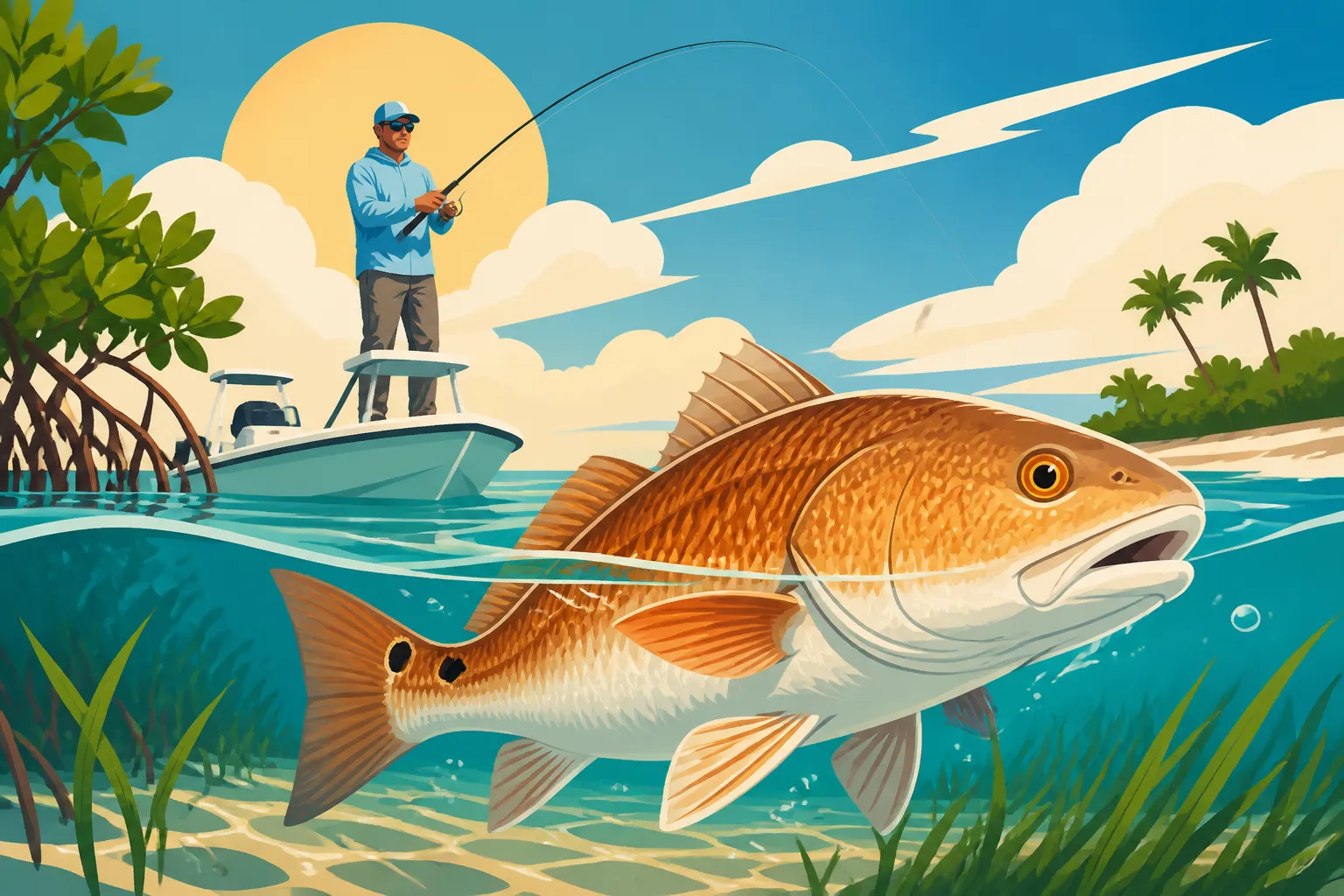
Redfish, scientifically known as Sciaenops ocellatus, are instantly recognizable. Their bodies typically boast a coppery-bronze hue on their backs, fading into a lighter, often silvery belly. The most defining characteristic, however, is the prominent black spot, sometimes multiple spots, usually found on their tail. This spot is believed to mimic an eye, confusing predators about which end of the fish is vulnerable. These fish also possess large, robust scales and a powerful, deeply forked tail, built for explosive bursts of speed.
When you hook a redfish, be prepared for a fight that's less about aerial acrobatics and more about brute strength and stubborn refusal to give up. They're known for making powerful, drag-screaming runs, especially those larger "bull" reds. Often, they'll hug the bottom, using their broad sides and muscular bodies to create immense resistance, making you work hard for every inch of line gained. It's a test of both your tackle and your angling finesse.
The initial shock of a redfish strike, particularly when casting artificial lures, is often a solid thump that quickly turns into a heavy, relentless pull. Unlike some fish that might jump or shake their heads violently at the surface, a redfish typically prefers to stay deep, digging in and making strong, determined surges. Landing a big redfish after such a spirited battle is incredibly satisfying, a true testament to the strength of this remarkable inshore predator.
Habitat and Foraging Behavior
Redfish are quintessential estuary inhabitants, thriving in the intricate network of brackish and saltwater environments found along Florida's coastline. They are most commonly found in relatively shallow waters, making them a prime target for inshore anglers who prefer sight fishing or wading. These areas provide the perfect blend of food sources, protection from larger predators, and warmer waters that these fish favor. You'll typically find them in places like vast seagrass flats, around gnarly oyster bars, and tucked deep into the labyrinthine roots of mangrove shorelines.
Their diet is varied and opportunistic, but their mainstays include shrimp, crabs, and a variety of small baitfish such as mullet and pinfish. Redfish use their downward-facing mouths to root around on the bottom, often stirring up mud and sand as they search for crustaceans. This behavior is precisely what gives away their presence when they are feeding in extremely shallow water – their tails often break the surface, a phenomenon known as "tailing," sending a clear signal to observant anglers that dinner is being had.
Understanding their foraging behavior is key to successful redfish fishing. They are particularly active during moving tides, when currents sweep food their way or make it easier for them to ambush prey. Knowing what redfish are currently eating in a specific area, whether it's fiddler crabs scurrying on an oyster bar or schools of glass minnows flickering in the grass, allows you to "match the hatch" with your bait or lure selection, significantly increasing your chances of a strike.
Recreational and Culinary Value
Beyond the thrill of the catch, redfish hold significant value for anglers both as a sportfish and as a delicious meal. Their accessibility in Florida's vast inshore waters means you don't always need a fancy offshore boat to target them; many can be caught from kayaks, small skiffs, or even by wading. This democratic appeal makes them a favorite among a wide range of anglers, from those just starting out to seasoned pros who appreciate a good challenge close to home. The sheer visual appeal of a vibrant, bronze redfish with its distinct spot is also a huge draw, making them popular subjects for fishing photography.
From a culinary perspective, redfish are highly regarded for their firm, white, flaky meat. They are incredibly versatile in the kitchen, lending themselves well to various cooking methods. One of the most popular preparations in Florida is "redfish on the half shell," where the fish is cooked skin-on with its scales still attached, protecting the delicate flesh while grilling or baking. This method often involves seasoning the fillet generously and cooking it until the meat flakes easily.
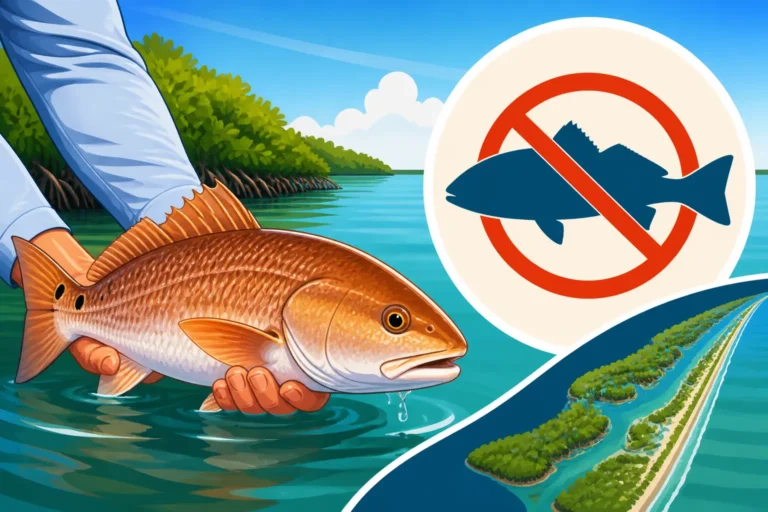
However, enjoying redfish at the dinner table comes with a crucial responsibility: understanding and adhering to local fishing regulations. Florida implements strict slot limits and bag limits for redfish, designed to protect the breeding stock and ensure sustainable populations for the future. For example, many areas have a slot limit that requires you to keep only fish within a specific size range, releasing both smaller juveniles and larger, older breeding fish. Familiarizing yourself with these rules is paramount for ethical angling, and you can learn more by checking out Florida Redfish Size and Bag Limits.
Prime Redfish Habitats Across Florida
Finding redfish is often a matter of understanding their preferred environments. These fish aren't just randomly swimming around; they have specific types of areas they gravitate towards for feeding, protection, and spawning. Florida's coastline, with its vast estuaries and shallow water ecosystems, offers an abundance of these prime redfish habitats, each presenting unique angling opportunities and challenges.
Whether you're poling a flats boat across a pristine grass flat, quietly paddling a kayak through a maze of mangroves, or casting from a bridge overlooking a busy pass, knowing why redfish choose these spots will dramatically increase your success. It's about thinking like a redfish: where would you find food? Where would you feel safe? Where would you ambush prey? Answering these questions helps you narrow down vast stretches of water to pinpoint high-probability zones.
From the northern reaches of the Panhandle down to the southern tips of the Everglades, redfish utilize similar habitat features, though the specific vegetation or bottom composition might vary slightly. Focusing your efforts on these well-known redfish strongholds, and understanding the nuances of each, is the first step toward consistent catches. It's a journey of discovery, learning to read the water and interpret the subtle signs that betray a redfish's presence.
Shallow Flats and Grass Beds
The expansive shallow flats and vibrant seagrass beds are arguably the most iconic redfish habitats in Florida, attracting anglers with the promise of exciting sight fishing opportunities. These submerged prairies, often just inches to a few feet deep, are teeming with life, providing both abundant food and crucial camouflage for redfish. Common seagrasses like turtle grass, shoal grass, and manatee grass form dense meadows that serve as nurseries for countless juvenile fish and invertebrates, which are primary food sources for redfish.
Redfish cruise these flats, often in small schools or as solitary hunters, methodically searching for crabs, shrimp, and small baitfish hiding within the grass. They use their excellent sense of smell and lateral line system to detect prey, often rooting around in the bottom with their mouths to dislodge hidden morsels. This feeding behavior, especially in very shallow water, frequently leads to the thrilling sight of "tailing" redfish, where their bronze tails break the water's surface as they feed head-down.
Fishing these grass flats is often most productive during the rising and falling tides, as the moving water brings in food and allows fish to access shallower areas. However, paying close attention to the bottom composition is also crucial; redfish love to congregate around "potholes" – sandy depressions within the grass beds – as well as along the edges where the grass transitions to sand or mud. These subtle changes in terrain often concentrate bait and provide easy ambush points for hungry redfish. Areas like the Mosquito Lagoon and the expansive flats of Tampa Bay are renowned for their incredible grass bed fishing.
Mangrove Edges and Oyster Bars
Beyond the open flats, Florida's intricate mangrove ecosystems and rugged oyster bars offer another crucial set of habitats for redfish, often holding some of the larger, more elusive individuals. Mangrove forests, with their dense, prop-rooted shorelines, provide invaluable shade, shelter from predators, and a rich, complex food web. Redfish will often tuck deep into these roots, especially during high sun or low tide, seeking refuge and an easy meal. The dark, tannin-stained water found in many mangrove estuaries also provides camouflage, making fish feel more secure.
Oyster bars, on the other hand, are jagged, calcified structures that create miniature reefs in the shallows. While they can be challenging to navigate and are notorious for cutting lines, they are absolute magnets for redfish. These bars are essentially living cafeterias, home to countless crabs, small fish, and of course, the oysters themselves, which redfish will actively forage for. The irregular structure of oyster bars also creates current breaks and ambush points where redfish can lie in wait for unsuspecting prey.
When targeting redfish in these environments, accuracy in casting is paramount. Getting your bait or lure as close to the mangrove roots or the edge of an oyster bar as possible without getting snagged is key. Anglers often fish the outgoing tide along mangrove shorelines, as receding water pulls baitfish out from the roots, making them easier targets for waiting redfish. Similarly, fishing the perimeter of oyster bars during moving water can be incredibly productive, requiring a delicate balance of presentation and quick reflexes to avoid snags while enticing a strike.
Inlets, Passes, and Bridges
While redfish are primarily known for their shallow water habits, they are also frequently found congregating in and around inlets, passes, and bridge structures, particularly the larger "bull" redfish. These areas are characterized by strong tidal currents that act like conveyor belts, bringing in a constant supply of baitfish and other forage from the open ocean or larger bays. Redfish are highly adept at using these currents to their advantage, conserving energy while waiting to ambush prey.
Bridges, with their numerous pilings, fenders, and associated rock rubble, provide abundant structure and current breaks. Redfish will stage themselves behind these pilings, out of the main current, waiting for an opportune moment to dart out and grab a meal. Similarly, the jetties and rock walls that define inlets and passes create similar current eddies and provide excellent ambush points. These areas can be especially productive during major bait migrations, when schools of mullet or other forage fish are pouring in or out with the tide.
Fishing these high-current areas often requires heavier tackle and a different approach than fishing the flats. Bottom fishing with live bait, such as hearty pinfish or mullet, is highly effective, allowing the bait to drift naturally with the current close to the structure. Casting artificial lures that mimic fleeing baitfish, like paddle tail soft plastics or lipless crankbaits, can also draw aggressive strikes. However, anglers must be prepared for strong tides and potential snags. Always remember that fishing from these structures, like bridges, may have specific licensing rules, so it's wise to check out Bridge Fishing License Rules in Florida before you go.
Essential Gear for Florida Redfish Fishing
Having the right gear makes all the difference when targeting Florida redfish. It's not just about owning fishing equipment; it's about having the appropriate tools that can withstand the saltwater environment, handle the powerful runs of a redfish, and allow you to present your bait or lure effectively. Trying to tackle a bullish redfish with inadequate gear can lead to frustration, broken lines, and missed opportunities, which nobody wants after spending a beautiful day on the water.
While there's a vast array of specialized fishing tackle available, the good news is that you don't need to break the bank to get started. A solid, versatile setup will serve you well in most redfish scenarios. The key is to select components that are durable, reliable, and matched to the size of fish you expect to encounter and the environments you'll be fishing in. Investing wisely upfront means more time fishing and less time worrying about equipment failure.
From the rod and reel that form the core of your setup to the often-overlooked terminal tackle and even the vessel you use to access prime spots, each piece plays a vital role. This section will walk you through the essential gear you'll need, helping you make informed choices that will enhance your redfish fishing experience and boost your chances of success.
Rod, Reel, and Line Selection
For general Florida redfish fishing, a versatile setup typically consists of a 7 to 7'6" medium-heavy spinning rod paired with a 3000 to 4000 series spinning reel. The rod should have a fast action, meaning it bends mostly in the tip, which provides the sensitivity needed to detect subtle bites and the quick responsiveness for a solid hookset. The medium-heavy power offers enough backbone to handle a strong, fighting redfish while still allowing for accurate casting of various baits and lures. Look for rods designed for saltwater use, as they typically feature corrosion-resistant components.
Your spinning reel is the workhorse of the setup, and it needs to be robust and reliable. A 3000 or 4000 size reel is ideal, offering a good balance of line capacity, cranking power, and manageable weight. Crucially, choose a reel that is rated for saltwater and ideally features some level of sealing to protect its internal components from corrosive salt spray and splashes. A smooth, consistent drag system is non-negotiable; it's what allows you to tire out a powerful redfish without snapping your line.
When it comes to line, braided line is the go-to choice for redfish anglers. A 10 to 20 lb test braided line offers superior casting distance, incredible sensitivity to feel even the lightest taps, and virtually no stretch, which aids in solid hooksets. Because braid is highly visible, you'll need to tie on a fluorocarbon leader. A 20 to 30 lb test fluorocarbon leader, typically 2-4 feet long, provides excellent abrasion resistance against sharp oyster shells or fish teeth, and its low visibility underwater makes it practically invisible to wary redfish. For similar inshore species, these line strengths are often interchangeable; you can explore more about appropriate line weights by looking into What Pound Test Line for Snook Fishing?. Many anglers also pick up essentials like polarized sunglasses and fishing specific gloves from Amazon to enhance their experience on the water.
Terminal Tackle and Rigging
Terminal tackle refers to all the bits and pieces at the "business end" of your fishing line, and having the right selection is crucial for presenting your bait or lure effectively to redfish. Hooks are fundamental, and choosing the correct type and size is dictated by your bait. For live shrimp or small cut bait, 1/0 to 2/0 J-hooks or circle hooks are common. If you're using larger live bait like mullet or pinfish, you might step up to 3/0 or 4/0 hooks. Many jurisdictions now mandate the use of non-offset circle hooks when fishing with natural baits, particularly for species like redfish, to minimize gut-hooking and improve survival rates upon release, so always verify local regulations.
Weights play a critical role, especially when you need to get your bait down to the bottom or keep it in a specific current. Slip sinkers, egg sinkers, or split shots are commonly used for bottom fishing rigs, allowing the line to run freely through the weight, so the fish doesn't feel resistance when it bites. When fishing with soft plastics, jig heads combine a hook and weight into one unit, coming in various weights and hook sizes to match your lure and the conditions. The weight of the jig head will depend on water depth, current, and the desired sink rate.
Beyond hooks and weights, floats or popping corks are indispensable for fishing live shrimp or artificial lures over seagrass beds or shallow bottoms where you want to keep your bait suspended and visible. A popping cork creates an enticing "chug" sound that mimics feeding baitfish, drawing redfish in. Finally, having a selection of strong swivels and snaps can be useful for quickly changing lures, though many experienced redfish anglers prefer to tie directly to their leader for maximum strength and stealth. Always ensure your knots are strong and reliable; practicing knots like the uni-knot for tying to hooks and the FG knot for braid-to-fluorocarbon connections will prevent frustrating break-offs.
Waders, Boats, and Kayaks
How you access redfish habitats significantly impacts your fishing strategy and the gear you'll need. For those who love the stealth and intimacy of being in the water, a good pair of waders is essential. Lightweight, breathable waders are highly recommended for Florida's often warm climate, allowing you to quietly stalk the shallow flats and get within casting distance of spooky redfish. Combined with comfortable wading boots, this allows you to cover extensive areas of grass beds and oyster bars, offering a unique perspective and often leading to some of the most memorable sight-fishing experiences.
For covering more water or reaching deeper pockets and offshore structures, boats become necessary. Flats boats and bay boats are the quintessential vessels for Florida redfish fishing. Flats boats are designed for extreme shallow water, allowing anglers to pole silently into inches of water where redfish feed. Bay boats, while drafting a bit more water, offer greater versatility, capable of handling choppier bay conditions while still accessing relatively shallow areas. Both provide platforms for multiple anglers, tackle storage, and typically feature trolling motors for silent maneuvering.
Kayaks and stand-up paddleboards (SUPs) offer an incredibly stealthy and increasingly popular way to target redfish, granting access to extremely shallow or tight areas that larger boats simply cannot reach. Their quiet glide allows you to approach fish without spooking them, making them perfect for sight fishing along mangrove shorelines or in skinny water flats. When choosing a kayak or SUP for fishing, consider stability, storage for your gear, and comfort for extended paddling sessions. Remember that while a fishing license is usually required, there might be specific rules depending on where and how you launch, so it's always good to check into topics like Do You Need a License to Kayak Fish in Florida? for local guidelines.
Top Baits and Lures for Hungry Redfish
Redfish are not particularly picky eaters, which is great news for anglers! However, knowing which baits and lures are most effective in different situations can significantly increase your catch rate. Their diet primarily consists of what's readily available in their estuarine environments, so presenting something that mimics their natural forage is almost always a winning strategy. Understanding their preferences and having a diverse tackle box will prepare you for various conditions and feeding moods.
From the natural appeal of a live, squirming shrimp to the flash and vibration of a carefully retrieved artificial lure, there are many ways to entice a strike from a redfish. The choice often comes down to personal preference, the clarity of the water, the depth you're fishing, and whether you're sight fishing or blind casting. Sometimes, a subtle presentation is key, while other times, an aggressive retrieve is what's needed to trigger a reaction strike.
This section will delve into the most effective live baits and artificial lures for redfish, explaining how and when to use them. We'll also touch on the importance of observing their natural diet to "match the hatch," ensuring your offerings look, feel, and even smell like something a hungry redfish would eagerly devour.
Live Bait Strategies
When it comes to live bait for redfish, shrimp are universally considered the king. These delectable crustaceans are a natural part of a redfish's diet, and few redfish can resist a well-presented live shrimp. You can fish them in several ways: under a popping cork to suspend them just above grass or oyster beds, allowing the cork's "pop" to draw attention; free-lined with no weight in current or over shallow flats; or threaded onto a light jig head for controlled presentations near the bottom. The key is to hook the shrimp lightly through the horn or just under the tail to keep it lively and natural-looking.
For targeting larger redfish, especially those hefty "bull" reds, live mullet (finger mullet size) are an exceptional choice. Mullet are a primary baitfish in Florida's estuaries, and a frisky live mullet fished free-lined or with minimal weight can provoke aggressive strikes from trophy-sized fish. Pinfish and grunts are other excellent, hearty live baits that redfish find irresistible. These are particularly effective when fished on a knocker rig (a slip sinker directly above the hook) or a Carolina rig near oyster bars, deep channels, or bridge pilings where redfish are known to lurk. Their hardiness means they stay alive longer on the hook, and their natural frantic movements can often be enough to trigger a bite.
Crabs, particularly fiddler crabs or small blue crabs, are a true redfish delicacy, especially when fishing around oyster bars and mangrove roots where crabs are abundant. These can be fished on a small, strong hook with a minimal weight, allowing them to scuttle naturally along the bottom. The presentation is key here; you want the crab to look as if it's casually moving, not struggling unnaturally. The more natural your live bait presentation, the higher your chances of fooling a wary redfish.
Artificial Lure Techniques
Artificial lures offer a dynamic and often more active approach to redfish fishing, allowing anglers to cover more water and mimic a wider range of forage. Soft plastic lures are incredibly versatile and consistently effective. Paddle tail swimbaits, jerk shads, and Gulp! shrimp imitations rigged on a jig head are staples in any redfish angler's tackle box. Varying your retrieve speed, adding twitches, and letting the lure fall on a slack line can all trigger strikes. Popular colors include natural shades like white, clear, green, and brown in clear water, while brighter colors like chartreuse or pink can excel in murkier conditions.
Spoons, particularly weedless gold spoons like the Johnson Silver Minnow, are legendary for redfish, especially when fishing over extensive seagrass flats. Their flashing, wobbling action perfectly imitates a fleeing baitfish, and their weedless design allows them to glide over grass without snagging. A steady, moderate retrieve is often all that's needed, but occasional pauses or twitches can add to their appeal, mimicking an injured baitfish.
For sheer excitement, nothing beats a topwater strike from a redfish. "Walk-the-dog" style lures, such as the Heddon Super Spook or MirrOlure MirrO-Lure, create an enticing side-to-side sashay across the surface, while poppers create a splashing commotion. These lures are most effective during calm mornings, evenings, or overcast conditions when fish are active and willing to look up for a meal. The explosive surface strike of a redfish on a topwater lure is a sight every angler cherishes. Finally, bucktail jigs or simply lead head jigs dressed with soft plastic trailers are excellent for fishing near structure or along channel edges. A slow, bouncing retrieve along the bottom or a steady retrieve with occasional drops can be deadly.
Understanding Redfish Forage
Successfully fooling a redfish with either live bait or artificial lures often boils down to a fundamental principle: "matching the hatch." This means observing what natural forage is present in the area you're fishing and selecting your offerings to mimic it as closely as possible. Redfish are highly attuned to their local food sources, and if you can present something that looks, acts, and even smells like what they're actively hunting, your chances of success skyrocket.
Take a moment before you start fishing to observe your surroundings. Are there schools of finger mullet skipping across the surface? Are small shrimp flicking in the grass? Are fiddler crabs scurrying along the oyster shells at low tide? These visual cues are invaluable. If mullet are prevalent, a live mullet or a soft plastic lure that imitates a mullet's profile and swimming action will likely outperform a shrimp imitation. Conversely, if you see lots of shrimp, a live shrimp or a Gulp! shrimp under a popping cork would be your best bet.
Beyond appearance, consider the "action" of your lure. If redfish are feeding on bottom-dwelling crabs, a slow-moving jig bounced along the bottom will be more effective than a fast-retrieved topwater lure. Furthermore, scent plays a significant role in a redfish's foraging strategy. Many artificial baits come infused with scent, or you can add scent sprays or gels to your lures. Redfish have a keen sense of smell, helping them locate food in murky water or low light, so enhancing your offerings with a natural attractant can make a big difference.
Mastering Redfish Fishing Techniques
Once you understand where redfish live and what they eat, the next step is mastering the techniques to effectively present your bait or lure and entice a strike. Redfish fishing is a nuanced art, often requiring a blend of stealth, precision, and patience. The specific technique you employ will largely depend on the habitat you're fishing, the water conditions, and whether you can actually see the fish or not.
Learning to adapt your approach to various scenarios is a hallmark of a successful redfish angler. Sometimes, it's about making a perfect, delicate cast to a tailing fish; other times, it's about covering vast amounts of water with blind casts. Understanding when to use which technique, and how to execute it flawlessly, is what truly separates consistent catches from frustrating blank days.
This section will dive into the most effective redfish fishing techniques, providing detailed insights into how to execute each one. We'll explore the thrill of sight fishing on the flats, the methodical approach of blind and fan casting, and the strategic considerations for fishing around structure and current.
Sight Fishing on the Flats
Sight fishing for redfish on the shallow flats is perhaps the most exciting and rewarding technique, often described as hunting with a fishing rod. The thrill comes from spotting the fish before you cast, identifying its direction of travel, and then attempting to make a perfect presentation. Look for subtle signs: a "tailing" redfish with its tail waving above the surface, a distinct "wake" of water pushing across the flat, or a "push" of mud as a fish roots around. Sometimes, you'll simply see the bronze flash of a fish cruising in clear water.
Stealth is absolutely paramount when sight fishing. Any sudden movements, loud noises, or heavy footsteps can send wary redfish scattering. If you're in a boat, use a push pole or a quiet electric trolling motor to approach slowly and silently. If wading, shuffle your feet and avoid splashing. Always try to approach with the wind and sun at your back; the sun will help you see into the water, and the wind will carry any noise away from the fish and aid in longer casts. For sight fishing specifically, you can gain more insight by reading Sight Fishing Technique for Shallow Flats.
Once you've spotted a redfish, the cast must be accurate and delicate. Land your bait or lure softly, ideally 3-5 feet beyond and slightly ahead of the fish's direction of travel. You want the lure to enter the water without a splash that would spook the fish, then retrieve it into its strike zone as naturally as possible. If you cast directly on top of the fish, you'll likely send it fleeing in a hurry. A good pair of polarized sunglasses, easily found on Amazon, is not just a comfort item; it's an indispensable tool for reading the water and spotting redfish.
Blind Casting and Fan Casting
While sight fishing is incredibly exciting, it's not always possible. Murky water, windy conditions, or simply a lack of visible fish often require a different approach: blind casting and fan casting. These techniques involve systematically covering a wide area of water in the hope of intercepting a feeding or cruising redfish that you cannot see. It's a more methodical approach but can be incredibly effective when executed properly.
When blind casting, you're relying on your knowledge of redfish behavior and habitat to determine likely holding areas. Focus your casts on logical spots like the edges of grass beds, potholes, small channels, or around oyster bars that you know are productive. Instead of targeting an individual fish, you're targeting the habitat itself. This often means making repeated casts to the same general area, experimenting with different retrieve speeds and lure actions until you find what triggers a bite.
Fan casting is a systematic way to cover a wide area. Imagine standing in one spot and making a series of casts that fan out in front of you, like the spokes of a wheel. Start with a cast at 12 o'clock, then 1 o'clock, 2 o'clock, and so on, until you've covered a 90 to 180-degree arc. This ensures you're thoroughly exploring the water column and bottom in a particular location before moving on. Pay close attention to where any strikes occur, as that often indicates a productive zone or a pattern in the fish's behavior for that day.
Fishing Structure and Current
Redfish, especially larger ones, are often found congregating around various types of structure, particularly where strong currents are present. This includes bridge pilings, dock posts, rock piles, jetties, and channel edges. These structures provide excellent ambush points and current breaks, allowing redfish to conserve energy while waiting for baitfish to be swept by. Learning to identify and effectively fish these areas is a critical skill for any redfish angler.
When fishing around structure, accuracy in your cast is crucial. You want your bait or lure to land as close to the structure as possible without getting immediately snagged. The key is to present your offering in a way that mimics a natural food item being carried by the current. If you're using live bait, a knocker rig or a Carolina rig can allow your bait to drift naturally along the bottom near the structure. For artificials, jigs or soft plastics retrieved with a slight bounce off the bottom can imitate crabs or baitfish hugging the structure.
Understanding tidal flow is paramount when fishing current. Redfish typically orient themselves into the current, waiting for food to come to them. Therefore, casting upstream and allowing your bait or lure to drift naturally downstream past the structure is often the most effective approach. The moving water also disorients baitfish and washes out crustaceans, making them easier prey. Pay attention to how the tide affects the current in different areas; you can find more detailed information on this by looking into Best Tides for Inshore Fishing in Florida. For those fishing near structure, investing in a good quality net or lip gripper from Amazon can be a game-changer for landing fish safely and efficiently.
Florida Redfish Regulations and Conservation
Fishing for redfish in Florida is not just a recreational activity; it's a privilege that comes with the responsibility of adhering to strict regulations designed to protect and sustain the species. These rules are put in place by wildlife management agencies to ensure that redfish populations remain healthy for future generations of anglers and for the overall health of Florida's delicate estuarine ecosystems. Ignoring these regulations can lead to significant penalties, but more importantly, it undermines the conservation efforts vital to the species.
It's a common misconception that once you've caught a fish, it's yours to keep. However, with redfish, there are specific guidelines regarding size, quantity, and sometimes even seasonal restrictions. These rules can vary by region within Florida, so staying informed about the most current regulations for your specific fishing location is absolutely crucial before you even wet a line. This diligence ensures you're fishing legally and contributing positively to conservation.
This section will break down the essential regulations you need to be aware of, focusing on size and bag limits, any relevant seasonal considerations, and the overarching importance of ethical angling practices, particularly catch and release. By understanding and following these guidelines, you become a vital part of the ongoing effort to preserve Florida's incredible redfish fishery.
Size and Bag Limits
Florida employs a strict slot limit system for redfish, which is a key component of their conservation strategy. A slot limit means that anglers can only keep fish within a specific size range, typically measured from the tip of the nose to the fork of the tail. For example, a common slot limit might be 18 to 27 inches. This approach protects both the smaller, juvenile redfish, allowing them to grow and mature, and the larger, older "bull" redfish, which are crucial for spawning and replenishing the population. Keeping fish within the slot ensures that you're harvesting fish that have had a chance to reproduce at least once, but aren't the large, valuable breeders.
In addition to the slot limit, there is also a daily bag limit, which dictates the maximum number of redfish an individual angler can keep per day. This limit is typically very conservative, often one fish per person per day, further reinforcing the conservation mindset. These limits can vary not only by year but also by specific management zones within Florida (e.g., Gulf Coast vs. Atlantic Coast, or even more localized areas). Therefore, it is absolutely essential to consult the latest Florida Fish and Wildlife Conservation Commission (FWC) regulations before each fishing trip to ensure compliance.
Failing to adhere to these size and bag limits can result in substantial fines, confiscation of gear, and even legal repercussions. Enforcement officers take these regulations seriously, and ignorance is rarely accepted as an excuse. The best practice is to have a reliable measuring device on your boat or in your tackle box, know the current regulations for your area, and be prepared to immediately release any fish that falls outside the legal slot. For a comprehensive look at the specifics, refer to Florida Redfish Size and Bag Limits.
Seasonal Considerations
Unlike some other popular Florida sportfish, such as snook, redfish generally do not have a statewide closed season. This means that, in most areas, you can target redfish year-round, which is fantastic news for dedicated anglers. However, it's crucial to understand that specific regional closures or restrictions can occasionally be implemented, especially in response to environmental events like red tide or severe cold snaps, which can significantly impact fish populations. These temporary measures are designed to give fish populations a chance to recover.
Redfish are particularly susceptible to extreme cold weather. During severe cold fronts, especially those that linger for several days, shallow water temperatures can drop dramatically, leading to what is known as a "cold stun" event. In these situations, redfish can become lethargic and even die. Wildlife agencies may enact temporary closures or impose stricter bag limits in affected areas to protect these vulnerable fish while they recover. This is similar to how other species are protected during environmental stress, as seen in discussions like Why Snook Are Protected During Cold Weather.
While there isn't a specific closed season for redfish spawning, it's important for anglers to be aware of their reproductive cycles. Redfish typically spawn in nearshore waters during the late summer and fall, with activity peaking from August through October. Understanding this natural cycle reinforces the importance of practicing responsible catch and release, particularly with larger, breeding-size fish, to ensure a healthy future for the fishery. More detailed information on this topic can be found by researching Florida Redfish Spawning Season.
Ethical Angling and Catch & Release
Beyond legal requirements, ethical angling practices are fundamental to the long-term sustainability of Florida's redfish populations. With conservative bag limits and a high emphasis on catch and release, particularly for larger breeding fish, how you handle a redfish once it's caught becomes incredibly important. The goal is always to maximize the fish's chances of survival if it's going back into the water.
Proper fish handling starts the moment you land the fish. Minimize the time the fish spends out of the water; every second counts. If you intend to release the fish, use wet hands or a wet towel when handling it to avoid removing its protective slime coat, which guards against infections. Always support the fish's belly, especially with larger redfish, to prevent damage to its internal organs or spinal column. Avoid holding fish vertically by the jaw if they are large, as this can cause severe jaw and organ damage.
De-hooking tools are invaluable, especially if a fish is deeply hooked. Using pliers, hook removers, or specialized de-hookers can help extract hooks quickly and cleanly, minimizing trauma. The use of non-offset circle hooks with natural baits is highly recommended (and often legally required) because they significantly reduce the chance of gut-hooking, instead typically hooking fish in the corner of the mouth, which is much safer for the fish. After de-hooking, gently place the fish back in the water, holding it upright and allowing water to flow over its gills until it regains strength and can swim away on its own power. Sometimes, a gentle push back and forth in the water can help revive it.
Best Times to Target Florida Redfish
Timing is everything in fishing, and targeting Florida redfish is no exception. While redfish can be caught year-round, certain times of day, tide cycles, moon phases, and seasons offer significantly better opportunities. Understanding these temporal patterns allows you to maximize your time on the water, increasing your chances of finding actively feeding fish. It's about aligning your efforts with the redfish's natural rhythms, which are largely dictated by environmental factors.
Just as important as where you fish is when you fish. A prime redfish spot can be dead during the wrong tide, but absolutely teeming with activity just hours later. Similarly, seasonal changes in water temperature and forage availability will influence where redfish are located and how aggressively they feed. Ignoring these factors is a common mistake that can lead to frustratingly slow days.
This section will unravel the complexities of redfish timing, guiding you through the influence of tides and moon phases, the seasonal patterns throughout the year, and how weather and water conditions play a crucial role. By paying close attention to these elements, you'll be able to plan your trips more effectively and significantly improve your redfish fishing success.
Tides and Moon Phases
For inshore redfish anglers, understanding tides is perhaps the single most critical factor in determining fishing success. Moving water is almost always better than slack water when targeting redfish. Incoming and outgoing tides create current, which disorients baitfish, washes out crustaceans from their hiding spots, and makes it easier for redfish to ambush prey. As a general rule, actively moving water stimulates feeding activity. During high tide, redfish will often push far back into the shallowest parts of the flats, mangroves, and creeks, accessing areas they can't reach at low tide to forage. As the tide falls, they'll often retreat to the edges of these flats, or into deeper channels and potholes, creating predictable travel routes and feeding zones.
Conversely, slack tide, the period of minimal water movement at the peak of high or low tide, is often the slowest time for redfish fishing. During these periods, baitfish activity usually slows down, and redfish tend to become less active, often resting in deeper pockets. While it's not impossible to catch them during slack tide, your efforts are usually better spent waiting for the water to start moving again. Timing your fishing efforts around the beginning or end of a tidal flow can often be the most productive.
Moon phases also play a role, primarily because they dictate the strength of the tides. Full and new moons are associated with stronger gravitational pulls, resulting in more pronounced "spring" tides (higher highs and lower lows) and thus stronger currents. These stronger currents can sometimes trigger more aggressive feeding behaviors in redfish due to the increased availability of forage. However, while moon phases influence the intensity of the tides, the timing of the moving water within any given day remains the most crucial aspect. For a deeper dive into lunar influences, check out Does Moon Phase Affect Fishing in Florida?.
Seasonal Patterns Throughout the Year
Florida's climate ensures redfish fishing is a year-round affair, but understanding the seasonal patterns can help you anticipate where the fish will be and how they'll be feeding. Each season presents unique challenges and opportunities, influencing redfish behavior in predictable ways. Adjusting your strategy to these patterns is key to consistent success.
In spring, as water temperatures begin to warm after winter, redfish become increasingly active. They move out of their deeper winter haunts and spread out onto the vast shallow flats and into the back country, eager to feed. This is an excellent time for sight fishing, as fish are often cruising aggressively and less wary. Baitfish schools become more prevalent, and redfish will chase down a variety of offerings.
Summer fishing for redfish requires an adjustment due to the heat. Early mornings and late evenings are often the most productive times, as redfish will seek out deeper water or the shade of mangrove roots and docks during the harsh midday sun. As afternoon thunderstorms roll through, they can cool the water and trigger a burst of feeding activity. Topwater lures can be incredibly effective during low light conditions, providing explosive strikes.
Fall is arguably the peak redfish season in many parts of Florida. As temperatures moderate, redfish become incredibly active, feeding aggressively in preparation for their spawning season. Large schools of "bull reds" often gather in nearshore waters and passes, offering incredible opportunities for anglers. This is a time of abundant bait, and redfish will respond well to both live bait and a wide array of artificials.
During winter, redfish seek out warmer, more stable water. This often means they'll congregate in deeper channels, dark-bottomed potholes that absorb sunlight, or along sunny shorelines protected from cold winds. Fishing can still be excellent on sunny, calm days, especially later in the morning after the sun has had a chance to warm the shallows. However, cold fronts can shut down the bite significantly, requiring a slower, more subtle presentation.
Weather and Water Conditions
Beyond seasonal shifts, daily weather and immediate water conditions profoundly impact redfish behavior and, consequently, your fishing strategy. Paying attention to these elements before and during your trip can make the difference between a successful day and a frustrating one. Redfish are highly sensitive to changes in their environment, and adapting to these changes is a mark of an experienced angler.
Water clarity is a major factor. In clear water, redfish tend to be much warier and more easily spooked. This calls for longer fluorocarbon leaders, more subtle bait presentations, and extreme stealth. Sight fishing is prime in clear conditions, but casting accuracy must be impeccable. Conversely, in murky or stained water, redfish may be less wary, making them easier to approach. Here, lures with more vibration, scent-enhanced baits, or brighter colors (like chartreuse or gold spoons) can be more effective, as fish rely more on their lateral line and sense of smell than sight.
Wind can be a double-edged sword. While strong winds can make casting difficult and boat control challenging, a light to moderate chop on the water's surface can actually be beneficial. The ripples break up the water's surface, making it harder for redfish to see you and making them less wary. It also disorients baitfish, creating feeding opportunities. When it's windy, try fishing the lee side of islands, mangroves, or points where the water is calmer, and baitfish often seek refuge.
Finally, cold fronts can dramatically impact redfish activity. A rapid drop in air temperature, especially after a warm spell, can send redfish into a state of shock, causing them to become lethargic and cease feeding. During and immediately after a significant cold front, focus on deeper areas, dark-bottomed mud flats (which retain heat), or sunny shorelines. Presentations should be slower and more deliberate. Understanding how fish react to these temperature drops can be gained by reading articles like Fishing After a Cold Snap in Florida.
Advanced Redfish Tips and Troubleshooting
Even with a solid understanding of redfish habitats, gear, baits, and techniques, there will always be days when the fish seem to have lockjaw, or conditions throw a curveball. That's part of the challenge and excitement of fishing! Moving beyond the basics and developing advanced skills in reading the water, adapting to difficult situations, and knowing when to seek professional help can significantly elevate your redfish game. These are the subtle nuances that often separate good days from truly exceptional ones.
Becoming a master redfish angler is an ongoing learning process, built on experience, observation, and a willingness to experiment. It means constantly analyzing the conditions, the fish's behavior, and your approach, and being ready to make adjustments on the fly. It's about developing an intuition for the water and its inhabitants, much like a seasoned hunter understands their quarry.
This section is dedicated to those insights that go beyond the fundamentals. We'll explore how to effectively "read the water" for subtle signs, strategies for troubleshooting challenging conditions like spooky fish or lack of current, and critically, when to consider the invaluable expertise that a local fishing guide can provide. These tips are designed to help you think more deeply about your approach and tackle those tricky days with greater confidence.
Reading the Water
One of the most valuable skills an experienced redfish angler develops is the ability to "read the water." This isn't just about looking for obvious signs of fish; it's about interpreting a multitude of subtle cues that collectively paint a picture of what's happening beneath the surface. It’s an art form honed over countless hours on the water, but anyone can start by paying closer attention to their surroundings.
Look for subtle disturbances on the water's surface: small wakes in calm water could indicate a fish cruising; nervous baitfish jumping or scattering can signal a predator nearby; even diving birds can lead you to concentrations of bait, and often, the redfish that are feeding on them. Another key indicator is mud plumes or stirred-up bottom, which often means a redfish is rooting around for crustaceans. Understanding the difference between a feeding mud cloud and a boat wake is crucial.
Beyond surface activity, learn to identify different bottom compositions. Dark mud bottoms often absorb more heat and can be warmer in winter. Sandy potholes within grass flats are prime ambush points. Transitions from grass to sand, or from shallow to slightly deeper water, are natural highways for redfish. Learning to distinguish these features by sight, especially with the aid of polarized sunglasses, will help you identify high-probability areas even without seeing direct signs of fish. A good pair of polarized sunglasses, easily found on Amazon, is not just a comfort item; it's an indispensable tool for reading the water and spotting redfish.
Adjusting to Challenging Conditions
Even on the most beautiful Florida day, conditions can sometimes be challenging, and redfish can become notoriously finicky. Knowing how to troubleshoot and adjust your approach is key to salvaging a slow day. One common challenge is dealing with "spooky" fish, especially in clear, calm, shallow water. If redfish are scattering at your approach or refusing to bite, try downsizing your lures, using longer and lighter fluorocarbon leaders (e.g., dropping from 30lb to 20lb), or switching to unweighted live baits that offer a more natural, subtle presentation. Slow down your retrieve and your overall movements.
Another scenario is high sun with no visible tailing fish. In these conditions, redfish often retreat from the open flats. Instead, focus on areas that provide shade and deeper water: mangrove edges, deep cuts in the flats, potholes, or the shady side of docks and bridge pilings. They'll also often burrow into thicker grass beds for protection and cooler water. A slower, more methodical approach with bottom-oriented baits or jigs can often coax a strike from lethargic fish.
Finally, a lack of current or "slack tide" can make redfish challenging. When the water isn't moving, baitfish are less active, and redfish may become less inclined to chase. During these times, focus on areas where even minimal current might still exist, such as creek mouths or the deeper ends of channels. Try a slower, more deliberate retrieve that gives the fish more time to react, or switch to a high-scent live bait that can tempt even a lazy redfish. Sometimes, just changing your retrieve from an aggressive jig to a slow, steady paddle-tail can make all the difference.
When to Hire a Guide
While this guide provides a wealth of information to help you get started or improve your redfish fishing, there's no substitute for the hands-on experience and local knowledge that a professional Florida fishing guide offers. For many anglers, especially those visiting a new area or looking to rapidly accelerate their learning curve, hiring a guide is an invaluable investment that can pay dividends far beyond a single day's catch.
A good guide can drastically shorten your learning process. They spend hundreds of days a year on their specific waters and possess an intimate understanding of local patterns, seasonal movements, and subtle nuances that can take years for an amateur to acquire. They know exactly where the fish have been biting, what they're eating, and what presentation is currently working best. They often have access to private spots or areas that are difficult for public access, further increasing your chances of success.
Furthermore, a guide provides top-tier gear, bait, and often, even the necessary fishing licenses for the day, removing much of the logistical hassle. They can teach you specific casting techniques, knot tying, and fish handling, giving you direct, personalized instruction. If you're targeting a specific trophy redfish or simply want to maximize your chances on a limited vacation, a guide's expertise is unparalleled. Choosing the right guide is also important, and you can learn more about finding reputable captains by checking out How to Choose a Florida Fishing Guide.
| Bait/Lure Type | Best Use Case | Pros | Cons |
|---|---|---|---|
| Live Shrimp | All-around, under popping cork, free-lined, jig head | Irresistible, natural forage, effective in all conditions | Small fish can pick at them, can be delicate to hook |
| Live Mullet/Pinfish | Larger redfish, aggressive feeding, strong currents | Mimics natural baitfish, draws strong strikes, durable | Can be harder to obtain/keep alive, may require heavier tackle |
| Soft Plastic Paddle Tail | Versatile, covering water, varied retrieves | Wide color/size range, durable, weedless options | Requires active retrieve, presentation dependent |
| Gold Weedless Spoon | Grass flats, muddy/stained water | Weedless, good flash, covers water quickly, simple retrieve | Less effective in super clear water, minimal scent |
| Topwater Plug | Calm mornings/evenings, active fish, low light | Exciting visual strikes, covers large areas quickly | Requires calm conditions, can spook wary fish, often missed strikes |
| Bucktail/Lead Head Jig | Structure fishing, deeper water, varied retrieves | Good for vertical jigging, versatile with trailers | Can get snagged easily on bottom, requires feel for subtle bites |
Disclaimer
This article is for general informational purposes only and does not constitute professional advice. Laws, prices and regulations vary by location and change over time. Consult a qualified professional for guidance on your specific situation.