Where Do Redfish Spawn in Florida?
It’s a common frustration for many Florida anglers: you’re out on the water, you know redfish are around, but finding those big schools, especially during their crucial spawning season, can feel like searching for a needle in a haystack. Understanding where these magnificent fish choose to reproduce is absolutely key, not just for improving your catch rates, but also for appreciating and protecting the future of this iconic species. This guide is going to peel back the layers on redfish spawning habits in Florida, giving you the insights you need to understand their lifecycle and, hopefully, increase your chances of a successful and responsible encounter.
Understanding the Red Drum: Florida's Iconic Redfish
Redfish, scientifically known as Sciaenops ocellatus, are one of Florida’s most beloved inshore sport fish. Their distinctive copper color, often with a prominent black spot (or multiple spots!) near the tail, makes them instantly recognizable. But beyond their good looks, redfish play a vital role in our coastal ecosystems, and understanding their life cycle, particularly their spawning habits, is essential for any angler serious about conservation and consistent fishing success.
The Red Drum Profile: Appearance, Diet, and Lifespan
Redfish are robust, powerful fish, well-suited to the diverse inshore environments of Florida. From the shallow grass flats to deeper channels, they are opportunistic feeders, cruising for crabs, shrimp, and smaller baitfish. Their downward-facing mouth is perfect for rooting around on the bottom or snatching prey from the water column. While juvenile redfish spend their early years in the sheltered backwaters, maturing fish gradually move towards more open waters as they grow, eventually joining the larger schools we often associate with adult redfish. They can live for a surprisingly long time, with some individuals reaching over 30 years old, growing to impressive sizes, which makes protecting their spawning populations even more critical.
The Importance of Spawning to the Ecosystem: Population Health and Conservation
The spawning process is the very heartbeat of the redfish population. Without successful reproduction, the numbers dwindle, impacting not only future fishing opportunities but also the intricate food web of our coastal ecosystems. When redfish gather to spawn, they become more vulnerable, making it paramount that anglers practice responsible catch-and-release, especially during these sensitive times. Florida's fishing regulations, which include specific slot limits and bag limits, are designed to protect these breeding populations, ensuring that enough fish can successfully reproduce and contribute to the next generation. Learning about Florida Redfish Size and Bag Limits is crucial for all anglers. It's a delicate balance, and every angler plays a part in maintaining the health of this incredible fishery.
Key Redfish Spawning Habitats in Florida
When redfish decide it's time to reproduce, they don't just pick any old spot. They're very strategic, seeking out specific environments that offer the best chance for their eggs and larvae to survive. These aren't the same shallow flats where you might target them during other times of the year; instead, they move to deeper, more dynamic areas where ocean currents and tidal flows play a significant role in their reproductive success.
Deep Channels and Inlets: Where the Action Happens
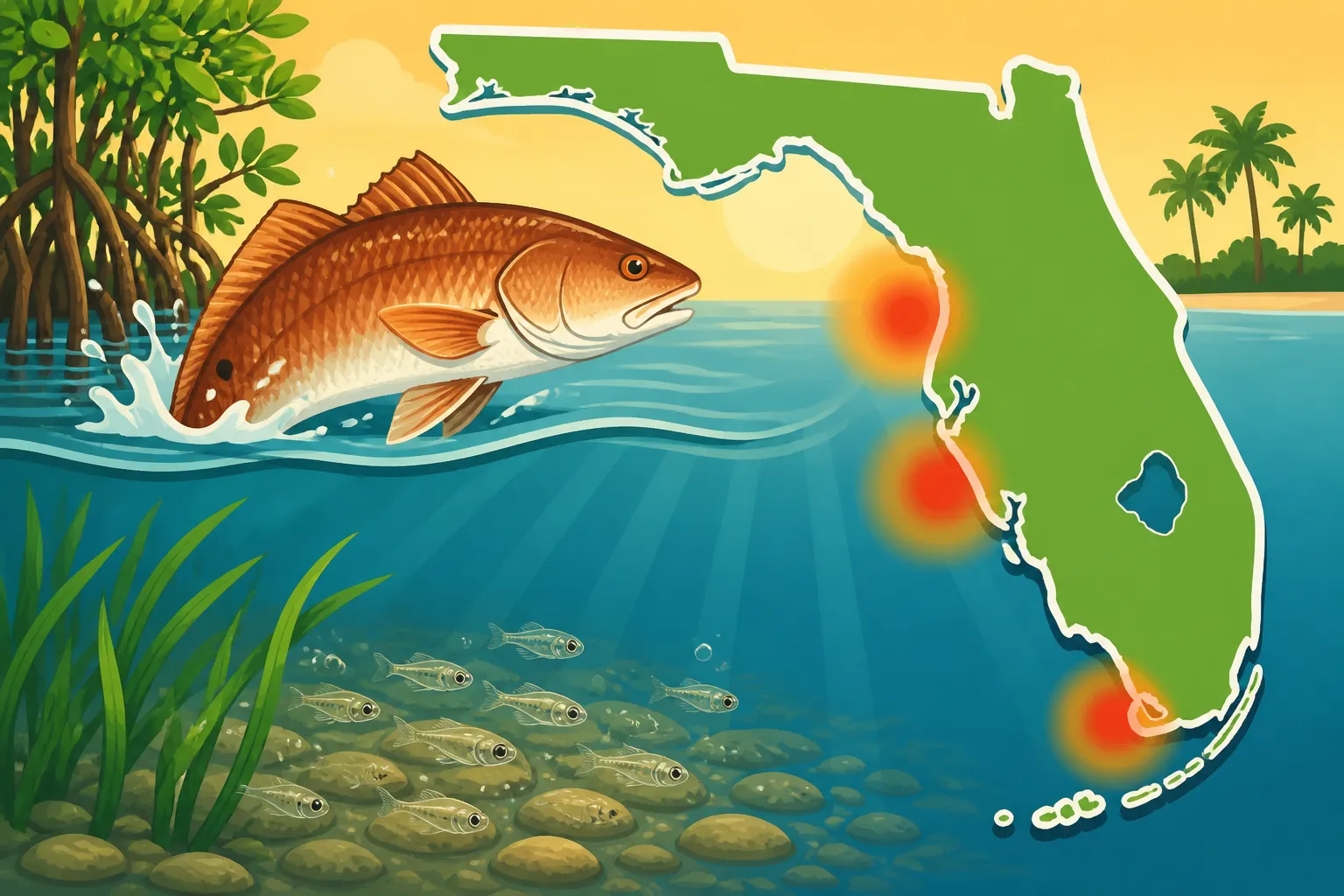
The primary spawning grounds for adult redfish are typically found in and around deep channels, passes, and inlets that connect Florida's vast estuaries to the open ocean. Think of places like passes in the Florida Keys, the inlets along the Atlantic coast, or the deeper channels leading out of large bays like Tampa Bay or Charlotte Harbor. These areas provide several advantages. First, the deeper water offers protection and a more stable environment for large schools of adult redfish. Second, the strong tidal currents associated with these areas are essential for dispersing the eggs. Redfish are broadcast spawners, releasing millions of tiny, buoyant eggs directly into the water column. These eggs then drift with the currents into the protective nursery habitats of the estuaries, where they can develop into larvae and then juveniles. It's a natural conveyor belt designed to give the next generation a head start.
Coastal Estuaries and Nearshore Waters: Nursery Grounds and Congregation Points
While the actual spawning largely occurs in those deeper, more turbulent channels, the surrounding coastal estuaries and nearshore waters are intrinsically linked to the entire process. These vast brackish water systems, such as the Indian River Lagoon Fishing Guide in Florida or the expansive Charlotte Harbor Fishing Guide, serve as critical congregation points where adult redfish gather before moving to the spawning grounds. They also act as the crucial nursery areas where the eggs, once dispersed by the currents, eventually settle and hatch. The abundance of food and protection from predators in these shallow, marshy environments allows juvenile redfish to grow rapidly. Anglers often find large "bull" redfish staging in deeper pockets or along channel edges within these estuaries just before and after the peak spawning periods, making these transition zones incredibly productive for targeting bigger fish.
Identifying Prime Spawning Structure: Bottom Composition and Current Breaks
Within these general areas, redfish aren't just swimming aimlessly. They're looking for specific features. Ideal spawning structure often includes areas with distinct changes in bottom composition, like sand to shell or rock formations, which can provide eddies and current breaks. These subtle underwater features can create zones where baitfish congregate, offering an easy meal for the energy-intensive spawning fish. Additionally, proximity to deep ledges or drop-offs provides easy access to deeper, safer water. Learning to "read the water" and identify these subtle changes – whether it's through a quality fish finder, by observing current lines, or even just by feel with your anchor – can be a game-changer. For those who want to explore these areas effectively, having a reliable cast net to catch fresh bait, perhaps one you picked up from Amazon, can make all the difference when you're on the water.
Understanding the Redfish Spawning Season
Timing is everything when it comes to redfish spawning. It’s not a year-round affair; rather, it’s a specific window when conditions are just right for reproduction. Knowing this window, and the factors that influence it, can significantly enhance your understanding of redfish behavior and your angling success.
Peak Spawning Months: When to Expect the Action
In Florida, redfish typically spawn during the late summer and fall months. While it can vary slightly depending on latitude – meaning it might start a bit earlier in South Florida and extend later in the Panhandle – the general timeframe is from August through November, with September and October often being the absolute peak. During these months, water temperatures begin to cool slightly after the intense summer heat, and the longer nights seem to trigger the reproductive urge. This is when those massive schools of large adult redfish, often referred to as "bull reds," gather in the deeper waters of the inlets and passes, making those distinctive "drumming" sounds that give them their name. These sounds are produced by special muscles vibrating against their swim bladder, a call to attract mates.
Lunar and Tidal Influences: The Moon's Pull on Reproduction
Just like many other marine species, redfish spawning is heavily influenced by lunar cycles and tidal patterns. The strongest spawning activity often coincides with the full and new moons, when tidal fluctuations are at their most extreme. These "spring tides" create stronger currents, which, as mentioned earlier, are vital for dispersing the vast quantities of eggs released by the spawning fish. The stronger currents carry the buoyant eggs further into the estuarine nursery habitats, increasing the chances of survival for the next generation. Anglers keen on targeting these fish during their spawning season will often pay close attention to tide charts, looking for those periods of maximum tidal flow. Many experienced guides will tell you that the couple of days leading up to and immediately following a full or new moon are prime times.
Environmental Cues: Water Temperature and Salinity
While the lunar cycle is a strong driver, environmental cues like water temperature and salinity also play critical roles in orchestrating the redfish spawn. Optimal water temperatures for redfish spawning in Florida generally fall between the mid-70s and low-80s Fahrenheit. If the water stays too hot or too cold for too long, it can delay or disrupt the spawning process. Similarly, salinity levels are important. Redfish are euryhaline, meaning they can tolerate a wide range of salinities, but spawning typically occurs in higher salinity waters found closer to the ocean. These specific environmental conditions create the perfect storm, so to speak, for successful reproduction. Monitoring these factors, even with a basic thermometer or salinity meter, can give you an edge in predicting when the fish will be most active. It’s all about understanding the subtle dance between the fish and their environment.
How Anglers Can Approach Redfish During Spawning Season
Fishing during the redfish spawning season can be incredibly rewarding, offering a chance to encounter some truly large and powerful fish. However, it also comes with a heightened responsibility. Ethical angling practices are paramount to ensure that these crucial breeding populations remain healthy for generations to come.
Ethical Angling Practices: Catch and Release, Minimizing Stress
When you're targeting big bull redfish that are actively spawning, they are often concentrated in large schools and can be more susceptible to capture. This is where responsible angling truly shines. The vast majority of these large, breeding redfish should be caught and released. Florida's slot limits are designed to protect these larger breeders, so any fish outside the legal slot must be released. When you do catch one, handle it with extreme care. Support its weight horizontally, avoid dragging it on abrasive surfaces, and get it back into the water as quickly as possible. Consider barbless hooks, which can reduce damage and make release easier. Using appropriate tackle that can bring the fish in relatively quickly, rather than an extended fight that exhausts the fish, is also a key component of How to Handle a Redfish for Release. We want these fish to be strong enough to finish their spawning duties after their encounter with us.
Gear and Bait for Spawning Redfish: Rods, Reels, Lures, and Live Bait
Targeting large, spawning redfish often means you're dealing with powerful fish in deeper, current-swept areas. This calls for slightly heavier tackle than what you might use for smaller redfish on the flats. A medium-heavy to heavy action spinning rod, perhaps in the 7-foot range, paired with a robust spinning reel spooled with 20-40 pound braided line, is a solid setup. You'll want a strong fluorocarbon leader, typically 30-50 pound test, to withstand their abrasive mouths and protect your main line.
When it comes to bait, live bait is often king for these big fish. Live mullet, pilchards, or pinfish are excellent choices, typically fished on a knocker rig or a simple Carolina rig with enough weight to hold bottom in the current. If you prefer artificials, heavy jig heads with large soft plastic paddletails or grub tails can be very effective, especially in current. Spoons and even large topwater plugs can also draw explosive strikes when the fish are actively feeding. You can find a fantastic selection of these lures and baits on Amazon, making it easy to stock up before your trip. For more specific recommendations, check out our Best Bait for Redfish Fishing in Florida guide.
Reading the Water and Locating Schools: Signs to Look For
Finding spawning redfish isn't always about seeing them. While you might occasionally spot a tell-tale ripple or a flash of copper, often you're looking for subtle cues. Keep an eye on your fish finder for large arches suspended near the bottom or along channel edges in those key spawning areas. Pay attention to bird activity, as diving birds can indicate baitfish, and where there's bait, there are often predators. Strong current lines, eddies behind structures, and areas where currents meet can also be hotspots.
Don't be afraid to drift through areas, paying close attention to your rod tip. The distinctive "thump" of a redfish bite is unmistakable. Sometimes, simply listening can help; if conditions are calm, you might even hear the "drumming" sound of redfish beneath the surface. Using scent attractants can also give you an edge, drawing fish in from a wider area. Patience, observation, and a willingness to move until you find them are your best friends when pursuing these magnificent fish during their spawning season. Remember, while the goal is to catch fish, the true reward is connecting with nature and understanding the intricate dance of life in Florida's waters.
| Redfish Spawning Habitat Characteristics | Description | Angler Considerations |
|---|---|---|
| Deep Channels & Inlets | Connect estuaries to ocean; strong tidal currents; deeper water for large schools. | Focus on deeper water; use heavier tackle to combat current; consider boat positioning for drifts. |
| Coastal Estuaries & Nearshore Waters | Serve as staging areas for adults and nurseries for juveniles; diverse bottom structures. | Look for channel edges, drop-offs, and bait concentrations; use fish finder to locate schools. |
| Bottom Composition Changes | Areas where sand meets shell, rock, or mud; create current breaks and ambush points. | Identify these transitions; these often hold bait and active fish. |
| Proximity to Ledges/Drop-offs | Easy access to deeper water for safety and staging; currents can concentrate bait. | Fish along ledges and breaks; adjust weight to maintain bottom contact in varying depths. |
| High Salinity Waters | Closer to ocean influence, essential for egg development and survival. | More prevalent in coastal inlets and lower estuary reaches. |
Disclaimer
This article is for general informational purposes only and does not constitute professional advice. Laws, prices and regulations vary by location and change over time. Consult a qualified professional for guidance on your specific situation.