Gag Grouper Size and Bag Limits
It’s a truly frustrating experience, isn't it? You head out for a fantastic day on the water, excited about the possibility of landing a magnificent gag grouper, only to be riddled with anxiety about whether you're following every single regulation. The rules for gag grouper, with their varying seasons, regions, and limits, can feel like a constantly shifting puzzle. This comprehensive guide aims to demystify Florida's gag grouper size and bag limits, giving you the clear, actionable information you need to fish responsibly, avoid hefty fines, and contribute to the health of this incredible fishery.
Why Gag Grouper Regulations Are So Crucial for Anglers
Understanding and adhering to fishing regulations isn't just about avoiding a ticket; it's about being a responsible steward of our marine resources. When it comes to popular species like the gag grouper, careful management is essential to ensure they remain abundant for generations of anglers to come.
The Frustration of Conflicting Information
You've probably felt it – that knot in your stomach when a buddy tells you one thing about the season, a website says another, and the bait shop owner has a slightly different take. The sheer volume of information, often outdated or generalized, can lead to genuine confusion. Many anglers just want to do the right thing, but finding accurate, up-to-date information for their specific location and time of year is a constant battle. This is why digging into the specifics of gag grouper rules, including all the nuances between state and federal waters, is so vital. It’s not just you; these regulations are complex, and it takes dedicated effort to keep them straight.
Protecting a Valued Fishery
Gag grouper are not only a blast to catch, offering a strong fight and a delicious reward, but they're also a critical part of Florida's marine ecosystem. Like many slow-growing, long-lived species, gag grouper are susceptible to overfishing. Their populations need time to recover and replenish, especially after periods of high fishing pressure. The size limits ensure that fish have a chance to mature and reproduce at least once before they are harvested, while bag limits prevent too many fish from being removed at once. These rules are put in place by scientists and fishery managers to maintain a healthy balance, ensuring that our grandchildren can still experience the thrill of reeling in a stout gag grouper from Florida's vibrant waters. Without these protective measures, we risk depleting their numbers, a scenario no responsible angler wants to see unfold.
Mastering Gag Grouper Identification
Before you even think about keeping a grouper, you absolutely need to be sure it's a gag grouper. Misidentification is one of the most common reasons anglers inadvertently violate regulations. There are many species of grouper in Florida, and while some are easy to distinguish, others can be tricky, especially to an inexperienced eye or in varying light conditions.
Key Features to Look For
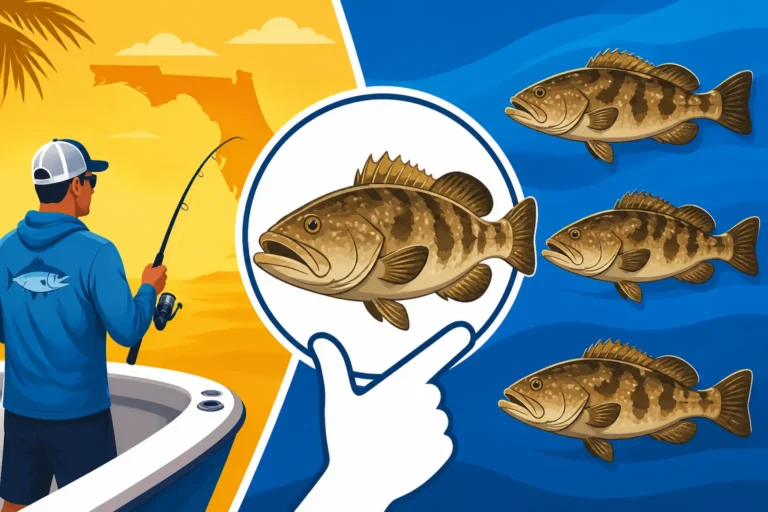
Gag grouper have distinct features that set them apart. One of the most telling characteristics is their coloration, which tends to be a mottled pattern of olive green or brown over a lighter background, often with darker blotches that resemble "kissing marks" or irregular worm-like markings on their sides. Their fins are typically darker than their body. Another key identifier is their mouth: the upper jaw extends well beyond the rear margin of the eye. Perhaps the most reliable visual cue, however, is their prominent, straight lateral line which dips sharply below the second dorsal fin. They also have a noticeably concave, or "notched," tail fin. Take a moment to really study these characteristics on a fish you've caught before assuming it's a gag. Trust me, a few seconds of careful observation can save you a lot of headache down the line.
Gag Grouper vs. Red Grouper: A Common Mix-Up
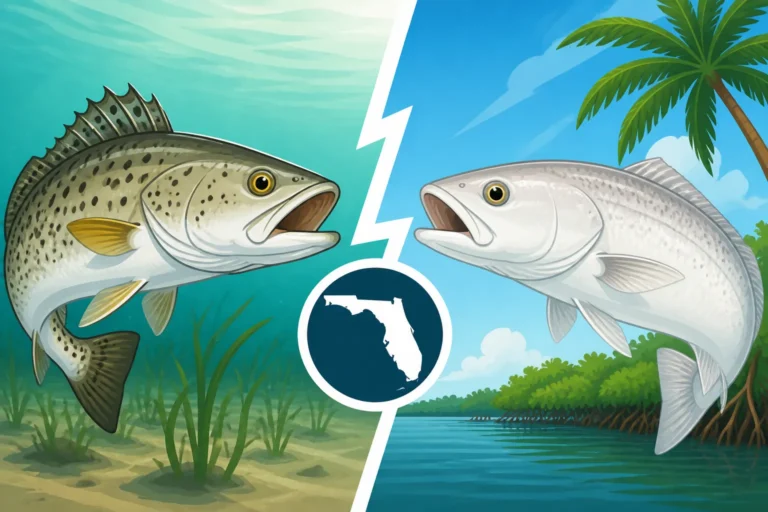
The red grouper is perhaps the most frequently confused species with the gag grouper, and understanding the differences is paramount because their regulations can be quite different. Red grouper, as their name suggests, typically have a more uniform reddish-brown or pinkish coloration, lacking the distinctive mottled patterns of the gag. Their lateral line is less pronounced and doesn't have the sharp, distinctive dip of a gag. Crucially, their mouth is different: the upper jaw of a red grouper does not extend past the back of the eye. Furthermore, red grouper have a convex (rounded) or truncate (straight) tail fin, never the notched tail of a gag. If you're still uncertain, consider having a laminated fish identification guide on hand on your boat or kayak, or even a good app on your phone. Even experienced anglers can sometimes second-guess themselves, and a quick reference can be a lifesaver. You can often find excellent, waterproof fish identification charts on Amazon that are perfect for keeping on board. For a deeper dive into distinguishing these fish, check out How to Identify a Gag Grouper vs Red Grouper.
Navigating Florida's Gag Grouper Size Limits
Size limits are arguably the most fundamental regulation for gag grouper. They ensure that enough fish survive to reproductive age, contributing to a sustainable population. However, these limits are not universal across the state. They vary significantly depending on whether you're fishing in federal or state waters, and whether you're on the Gulf or Atlantic coast.
Minimum Length Requirements (Gulf and Atlantic)
Florida's state waters generally extend 9 nautical miles into the Gulf of Mexico and 3 nautical miles into the Atlantic Ocean. Beyond those points, you're in federal waters, where different rules, enforced by federal agencies like NOAA Fisheries, often apply.
For Florida Gulf Coast state waters, the minimum size limit for gag grouper is typically 24 inches total length. This applies to fish caught from the shore, from piers, or from boats within state waters. It's crucial to remember this number because even being an inch or two under can lead to a violation.
For Florida Atlantic Coast state waters, the minimum size limit for gag grouper can differ. Anglers must stay up-to-date with current FWC regulations for their specific region. While often similar to the Gulf, there can be subtle variations, especially when federal seasons might differ.
When fishing in federal waters (beyond 9 nautical miles in the Gulf or 3 nautical miles in the Atlantic), the minimum size limit for gag grouper is almost always 24 inches total length. It’s worth noting that federal regulations often mirror state regulations for simplicity, but it's never safe to assume. Always verify with the most current FWC and federal guidelines before heading out, especially if you plan to venture far offshore. This distinction between state and federal waters is paramount for all offshore species, and gag grouper are no exception.
The Importance of Accurate Measuring
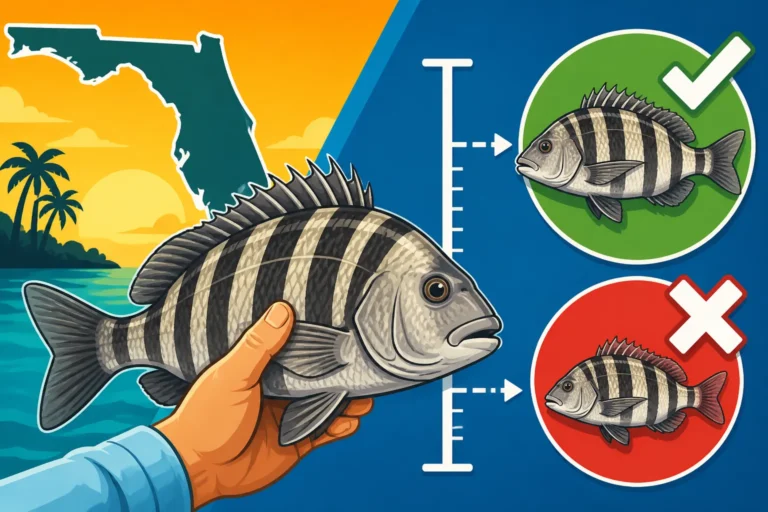
You've hooked a beautiful grouper, brought it to the boat, and it looks like a keeper. But don't just eyeball it! Accurate measurement is non-negotiable. Florida measures most fish by "total length," which means from the most forward point of the head to the farthest tip of the tail, with the tail compressed or squeezed together.
Here’s how to do it correctly:
- Lay the fish flat: Place the fish on a measuring device, such as a sturdy ruler or a specialized fish measuring board. A soft measuring tape won't give you accurate results on a wriggling fish. Many anglers find durable, non-slip measuring devices on Amazon that stick to their boat deck or cooler, making the process much easier.
- Mouth closed: Ensure the fish's mouth is completely closed against the bumper of the measuring device (or the starting point of your ruler).
- Tail compressed: Gently pinch or squeeze the tail fin together to get the maximum possible length.
- Read the measurement: Read the measurement at the furthest point of the tail.
If there's any doubt, or if the fish is right on the line, it’s always best practice to err on the side of caution and release it. An undersized fish is simply not worth the potential fine, which can be significant, plus the legal trouble and the damage to the fishery. Remember, that fish will grow, and you might catch it again when it's a legal keeper!
Deciphering Gag Grouper Bag Limits
Beyond size, there's also a limit to how many gag grouper you can keep per person, and sometimes per vessel. These bag limits are designed to spread the harvest among more anglers and prevent a single boat from taking an excessive number of fish, especially during peak seasons.
Daily Possession Limits
For individual anglers, the daily recreational bag limit for gag grouper in Florida is typically two fish per person per day. This means that no matter how many gag grouper you catch in a 24-hour period, you can only keep two of them. This limit applies regardless of whether you're fishing from your own boat, a friend's boat, or even from shore. It’s important to understand that this is a daily limit, not a trip limit. If you fish multiple days, you reset your limit each day.
However, a crucial point often overlooked is the vessel limit. While each individual angler on a boat can keep two gag grouper, there's also an overall limit for the entire vessel. For gag grouper in Florida, the vessel limit is generally two gag grouper per vessel per day in Gulf state waters. This means that if you have three anglers on a boat, even though each could keep two fish individually, the boat collectively cannot exceed two gag grouper. This regulation is designed to prevent a boat with many anglers from taking an unreasonable number of fish, putting extra pressure on the stock.
| Regulation Category | Gulf State Waters (Typically) | Atlantic State Waters (Typically) | Federal Waters (Gulf & Atlantic) |
|---|---|---|---|
| Minimum Size | 24 inches total length | 24 inches total length | 24 inches total length |
| Daily Bag Limit | 2 fish per person | 2 fish per person | 2 fish per person |
| Vessel Limit | 2 fish per vessel | 2 fish per vessel | 2 fish per vessel |
| Open Season | June 1 – December 31 | Check FWC for specific zones/dates | June 1 – December 31 |
Note: These are general guidelines; always verify with the latest FWC and federal regulations.
Vessel Limits and Special Circumstances
The vessel limit for gag grouper in the Gulf of Mexico is a prime example of a regulation that sometimes trips up even seasoned anglers. Imagine you have a party of four fishing on your boat. Each person is technically allowed two gag grouper. However, because of the vessel limit, your boat can only possess a total of two gag grouper for the entire day. So, if your first two anglers each catch a legal gag grouper, the other two anglers cannot keep any, even if they catch legal-sized fish. Those fish would need to be immediately released. This is a significant distinction that many miss, so always clarify the vessel limit before you start reeling them in.
There are also specific rules that apply to for-hire vessels (charter boats and headboats). If you're on a chartered trip, the captain and crew typically cannot retain gag grouper when clients are onboard. The clients are subject to the individual and vessel limits. If you're wondering about specific limits for your next trip, don't hesitate to ask your Florida Fishing Charter Guide for clarification beforehand. They are experts in these rules and can guide you through the intricacies.
Understanding Regional and Seasonal Changes for Gag Grouper
One of the most challenging aspects of fishing for gag grouper in Florida is that the rules aren't static. Both the seasons and sometimes even the specific regulations can shift based on whether you're in the Gulf or the Atlantic, and whether you're in state or federal waters. Keeping up with these changes is essential to avoid surprises.
Gulf of Mexico Seasons and Areas
For recreational anglers in the Gulf of Mexico state and federal waters, the gag grouper season traditionally runs from June 1 through December 31. This means that during the months of January, February, March, April, and May, recreational harvest of gag grouper is closed. Any gag grouper caught during the closed season, regardless of size, must be immediately released unharmed. It's a hard and fast rule.
However, there can be regional nuances even within the Gulf. For example, some specific areas, like certain special management zones or areas designated for scientific study, might have slightly different rules or extended closures. While the June 1 to December 31 season is a good general guideline for much of the Gulf, smart anglers always check the most current FWC regulations and NOAA Fisheries announcements for their exact fishing location just before heading out. This is especially true if you are fishing near the Panhandle or the southernmost parts of Florida's Gulf Coast, as boundaries and rules can sometimes vary slightly. For a quick reference, check out Florida Gag Grouper Season Dates.
Atlantic Coast Seasons and Areas
The Atlantic Coast of Florida has a different set of regulations for gag grouper compared to the Gulf. For Atlantic state and federal waters, gag grouper recreational harvest is typically closed for a significant portion of the year. The open season for gag grouper in the Atlantic is much shorter, often limited to specific months, and can sometimes be split into two periods. Historically, this has included periods in the spring and fall, but these can change.
This difference in seasons reflects varying stock assessments and management strategies between the two coasts. The Atlantic gag grouper population is managed differently due to distinct biological factors and fishing pressures. Therefore, it is absolutely critical for Atlantic anglers to consult the Florida Fish and Wildlife Conservation Commission (FWC) website directly, or use their official FWC Fish Rules App, for the exact dates of the gag grouper season in the Atlantic. Assuming the Gulf season applies will almost certainly lead to a violation. These specific dates can vary annually, so what was true last year might not be true this year.
Federal vs. State Waters: A Critical Distinction
The line between state and federal waters is one of the most important distinctions in Florida fishing, and it’s especially critical for gag grouper. As mentioned, Florida’s state waters extend out to 9 nautical miles in the Gulf and 3 nautical miles in the Atlantic. Beyond these imaginary lines, you enter federal waters.
Why does this matter so much? Because federal regulations, set by the South Atlantic Fishery Management Council (SAFMC) for the Atlantic and the Gulf of Mexico Fishery Management Council (GMFMC) for the Gulf, in conjunction with NOAA Fisheries, can sometimes supersede or differ from state regulations. While Florida often tries to align its state water regulations with federal rules to minimize confusion for anglers who cross these boundaries, it’s not always perfectly seamless.
For example, a federal closure might begin or end on a different date than a state closure, or there might be different bag limits if the two entities haven't fully harmonized their rules. When fishing in federal waters, you are subject to federal law. Enforcement can be carried out by federal agents (like the U.S. Coast Guard) in addition to state FWC officers. Always make sure your GPS or marine charts clearly show the state/federal water boundaries. If you plan to fish offshore, carrying a copy or having digital access to both state (FWC) and federal (NOAA Fisheries) regulations is a smart move.
Practical Tips for Gag Grouper Compliance and Conservation
Adhering to gag grouper regulations isn't just about avoiding fines; it’s about participating in sustainable fishing practices that benefit everyone. By following a few best practices and utilizing available tools, you can ensure a successful and compliant fishing trip.
Essential Gear for Measuring and Releasing
Having the right equipment on board is non-negotiable for responsible gag grouper fishing.
- A reliable measuring device: As discussed, a sturdy, rigid measuring board or ruler is essential. Look for one that's clearly marked, easy to read, and preferably non-slip so fish don't slide off while you're trying to get an accurate measurement. Many options are available, and a quick search on Amazon for "fish measuring board" will show you a variety of suitable choices.
- Dehooking tools: Grouper often swallow hooks deep. A good dehooker, especially a long-handled one, can significantly reduce injury to fish you intend to release. These allow you to remove hooks without putting your hands near the fish's teeth or causing additional damage.
- Descending device or venting tool: This is arguably the most critical piece of equipment for deep-water grouper fishing. Grouper caught from depths of 50 feet or more often suffer from barotrauma – a condition caused by the rapid change in pressure when they are brought to the surface. Symptoms include a distended swim bladder, bulging eyes, and the inability to swim back down. A descending device (like a "fish gripper" or specialized tool that clamps to the fish's jaw and has a weighted line) allows you to quickly and safely return the fish to the depth from which it was caught, recompressing its swim bladder. Venting tools (hypodermic needles) are used to carefully puncture the swim bladder to release the gas. While both have their advocates, descending devices are generally preferred as they are less invasive and easier for beginners to use correctly. If you fish for grouper in deeper waters, carrying one of these tools is not just a good idea – it's often legally required or highly recommended by FWC. For more on releasing fish, see Catch and Release Best Practices for Snook (principles often apply to grouper).
Staying Informed with FWC Resources
The Florida Fish and Wildlife Conservation Commission (FWC) is your primary and most reliable source for all Florida fishing regulations. They work tirelessly to update rules and provide clear guidance to anglers.
- FWC Website: The official FWC website (MyFWC.com) is a treasure trove of information. They have dedicated sections for saltwater and freshwater regulations, including detailed pages for specific species like gag grouper, complete with current size limits, bag limits, and season dates. They also provide maps showing state and federal water boundaries.
- FWC Fish Rules App: This free mobile application is an absolute game-changer for many anglers. It uses your phone's GPS location to determine whether you are in state or federal waters and then immediately displays the relevant regulations for the species you're interested in, including photos for identification. It’s an invaluable tool for on-the-spot verification and highly recommended for any serious Florida angler.
- FWC Customer Service: If you have a question that isn't answered by the website or app, don't hesitate to call FWC directly. They have staff available to answer specific questions and clarify confusing regulations. You can find their contact information on their website. Regularly checking these resources before each trip, especially if you haven't been out in a while or are fishing a new area, is the best way to stay compliant. Your Florida Fishing License Guide is a great starting point, but always dig deeper into the species-specific rules.
Ethical Catch and Release for Undersized Fish
Even with the best intentions, you're going to catch undersized gag grouper, or fish during a closed season. How you handle these fish directly impacts their survival chances.
- Minimize handling: The less you handle a fish, especially out of water, the better. Use wet hands if you must touch them, as dry hands can remove their protective slime coat, making them vulnerable to infection.
- Quick release: Get the fish back in the water as quickly as possible. Don't spend excessive time taking photos or attempting to revive them if they appear healthy.
- Proper dehooking: Use your dehooking tools to remove the hook cleanly. If the fish is deeply hooked and removing the hook would cause more damage, it's often better to cut the line as close to the hook as possible. Hooks made of non-stainless steel will eventually corrode and fall out.
- Revive if necessary: If a fish seems lethargic or isn't swimming away strongly, gently hold it by the tail in the water, facing into the current. Move it back and forth slightly to push water over its gills until it regains its strength and can swim away on its own. For fish showing signs of barotrauma, deploy your descending device or use a venting tool immediately.
Practicing ethical catch and release ensures that those future generations of gag grouper (and future fishing trips for you!) remain a viable reality. It's a fundamental part of being a responsible angler in Florida, a state renowned for its incredible fishing opportunities.
Disclaimer
This article is for general informational purposes only and does not constitute professional advice. Laws, prices and regulations vary by location and change over time. Consult a qualified professional for guidance on your specific situation.