Why Offshore Charters Cost More Than Inshore Charters
It’s a common moment of sticker shock when you’re browsing Florida fishing charters: you see a price for an inshore trip, then scroll down to an offshore option, and suddenly the numbers jump significantly. Many anglers scratch their heads, wondering why there's such a noticeable difference in cost for what seems like just "going fishing." This guide will demystify those pricing structures, breaking down all the factors that make offshore charters a more substantial investment than their inshore counterparts, so you can plan your next fishing adventure with clarity and confidence.
The Fundamental Differences in Fishing Environments
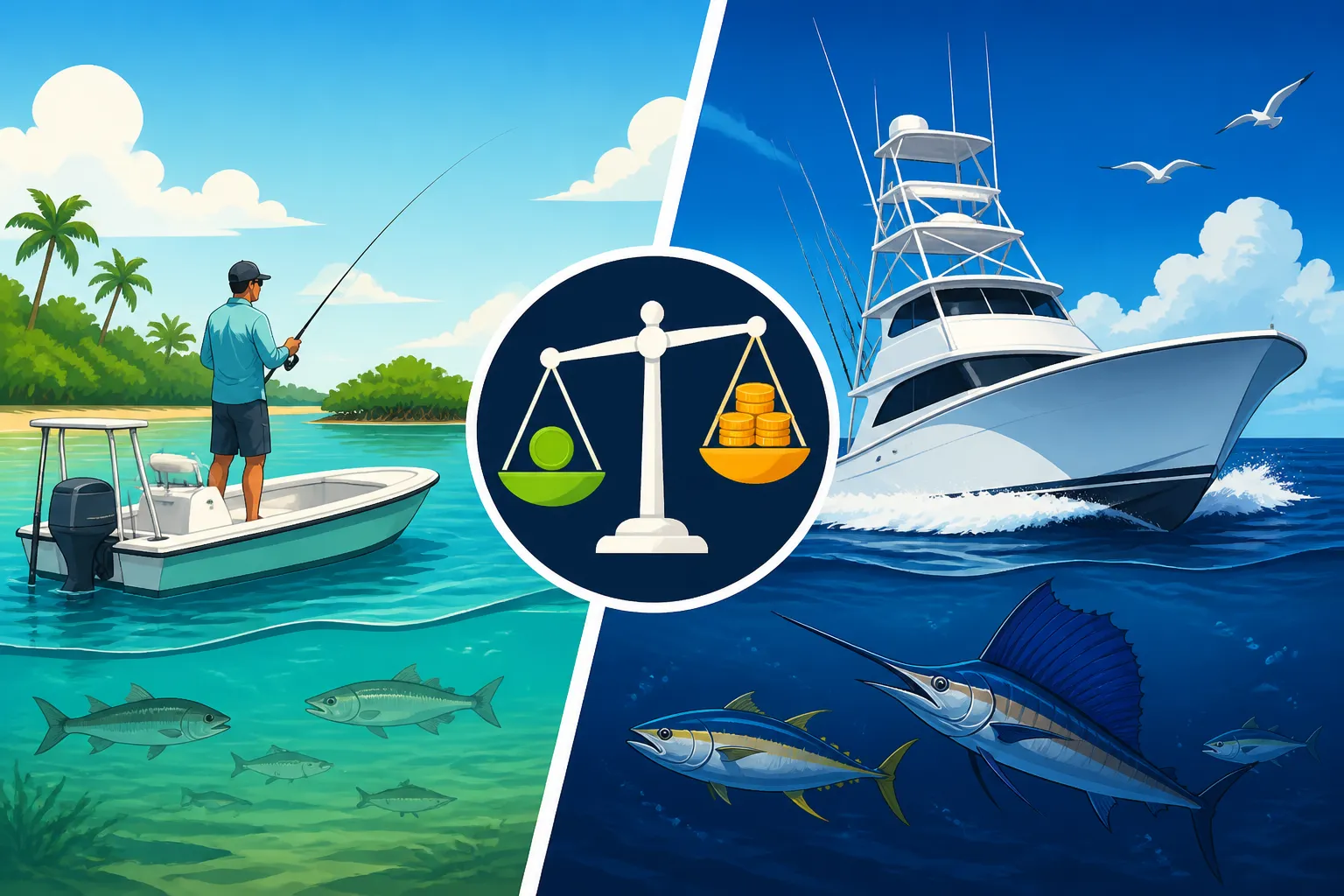
The most straightforward reason for the cost disparity lies in the very nature of inshore versus offshore fishing in Florida. These aren't just different names; they represent entirely distinct ecosystems, travel requirements, and target species, all of which heavily influence the operational costs of a charter.
Distance to Fishing Grounds
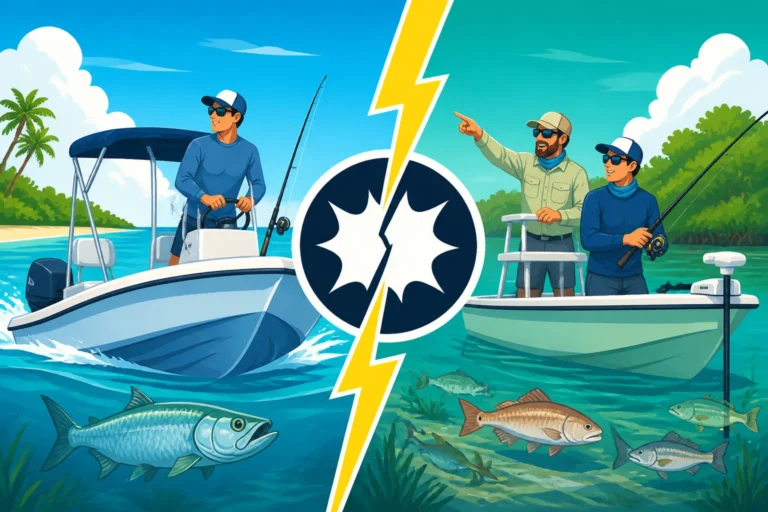
When you book an inshore charter, you're often looking at trips that stay relatively close to shore, within sight of land, or in protected waters like bays, estuaries, and shallow flats. Think about fishing in Tampa Bay, the Indian River Lagoon, or the backcountry of the Florida Keys. The captain usually doesn't have to run the boat very far from the dock to get to productive fishing spots. This means less time traveling and more time fishing, but critically, it also means significantly less fuel burned.
Offshore, on the other hand, means heading out into the open ocean, often miles, or even tens of miles, from the coastline. Whether you're targeting kingfish off Destin or bottom fishing for snapper in the Gulf of Mexico, these trips require a substantial run to reach the continental shelf, reefs, wrecks, or specific temperature breaks where pelagic species roam. A charter boat might be running for an hour or more just to get to the fishing grounds, and then another hour back, plus moving between spots throughout the day. This prolonged travel at higher speeds, against potentially rougher seas, demands a lot more fuel.
Target Species and Fishing Techniques
The types of fish you pursue also dictate the cost. Inshore, you’re typically chasing species like snook, redfish, speckled trout, and tarpon (often in calmer waters). These fish can be caught using lighter tackle and often respond well to live bait caught nearby or easily purchased, and a variety of artificial lures. The techniques usually involve casting, drifting, or slow-trolling in relatively shallow water.
Offshore fishing targets much larger, more powerful species such as grouper, snapper, mahi-mahi, wahoo, tuna, and even billfish like sailfish and marlin. These fish require heavy-duty rods, reels, and line that can withstand immense pressure. The bait can also be more specialized and expensive, sometimes requiring large quantities of chum or specific live baits that are harder to obtain. The fishing techniques are often more physically demanding and complex, involving deep-dropping, high-speed trolling, kite fishing, or chunking. Each of these methods requires specific gear, knowledge, and considerable effort from the crew. You'll definitely want to check out our Florida Offshore Fishing Techniques guide for more on this!
Operational Costs: Fuel, Maintenance, and Gear
It's not just about getting to the fish; it's about what it takes to operate the vessel safely and effectively once you're there. The wear and tear, the consumables, and the sheer power required for offshore adventures are far greater.
Fuel Consumption
This is arguably the biggest single factor driving up offshore charter prices. As mentioned, offshore boats travel much greater distances. Imagine a typical inshore flats boat with a single outboard engine, maybe a 150 horsepower, cruising at 25-30 mph for a short run. It sips fuel compared to a 30-40 foot offshore center console or sportfisher, often equipped with twin or even triple high-horsepower outboards (say, 250-400 HP each), or massive inboard diesel engines, pushing the boat at similar or higher speeds for much longer durations, often into headwinds and choppy seas.
The fuel tanks on these larger offshore vessels are colossal, sometimes holding hundreds of gallons, and filling them up can represent a significant portion of the charter's operating budget for a single trip. A full-day offshore trip might burn several times the amount of fuel a full-day inshore trip would, especially if the captain is chasing a bite far out or encountering rough conditions that demand more power. This is why you'll often see charters mention fuel surcharges or include a certain amount of fuel in their base price.
Vessel Maintenance and Wear & Tear
Larger offshore boats endure far more punishment from the elements. Saltwater exposure, constant pounding against waves, and the sheer mechanical demands of long runs mean more frequent and intensive maintenance. Think about it: a boat that regularly travels 30+ miles offshore needs its engines serviced meticulously, its hull inspected for stress cracks, and its electronics calibrated precisely.
Engines, particularly outboards, have recommended service intervals based on hours. An offshore boat racking up 8-10 engine hours per trip will hit those intervals much faster than an inshore boat running 2-3 hours. Parts are often larger, heavier, and more specialized for offshore vessels, leading to higher costs for repairs and replacements. Even things like trailer maintenance (if the boat is trailered) or dockage fees for larger vessels contribute to a higher overhead. It's a continuous cycle of upkeep to ensure the boat is safe and reliable for those long runs out to sea.
Specialized Gear and Bait Costs
Offshore fishing demands robust, heavy-duty tackle that can handle powerful fish and deep waters. This includes specialized rods and reels designed for trolling, jigging, or bottom fishing, often costing hundreds, if not thousands, of dollars per setup. Line capacities are larger, and line itself is often heavier and more expensive monofilament or braided line. Terminal tackle – hooks, swivels, weights, leaders – must be top-tier to withstand the forces at play and prevent break-offs from big fish.
Live bait for offshore species can also be a significant expense. While inshore charters might use readily available shrimp, pilchards, or pinfish, offshore trips often require larger baits like goggle-eyes, blue runners, or mullet, which can be harder to catch or more expensive to purchase from bait boats. And if the captain is using frozen bait like ballyhoo for trolling or squid for bottom fishing, those costs add up too. Furthermore, specialized gear like outriggers, downriggers, kite fishing setups, and advanced sonar/fish-finder systems are essential for successful offshore trips, and all these items represent a substantial investment and ongoing maintenance cost for the charter captain. Learning more about Best Rod and Reel Setup for Florida Offshore Fishing versus Best Rod and Reel Setup for Florida Inshore Fishing highlights this difference.
Vessel Requirements and Crew Expertise
Beyond the immediate operational costs, the type of vessel and the qualifications of the crew also play a huge role in charter pricing. Offshore fishing isn't just a bigger boat; it's a different league of marine operation.
Larger and More Complex Vessels
Offshore charters require larger, more seaworthy boats that can safely navigate open ocean conditions. These vessels are typically 25 feet or more, with many sportfishers reaching 40-60 feet. They are built with deeper hulls, greater beam (width), and more sophisticated navigation and safety equipment to handle rough seas and long distances away from shore. The initial purchase price of such a vessel is exponentially higher than a smaller inshore bay boat or flats skiff.
Beyond the initial investment, there's the cost of outfitting these boats. They need sophisticated marine electronics, including multiple GPS units, radar, powerful sonar/fish finders, auto-pilots, and VHF radios with extended range. Safety equipment is more extensive, including EPIRBs (Emergency Position Indicating Radio Beacons), life rafts, flares, and medical kits designed for remote operations. All these components are expensive to buy, install, and maintain. You'll notice these differences when comparing what's typically included on a booking site like FishingBooker.
Increased Crew Requirements and Expertise
While many inshore charters are run by a single captain, offshore charters, especially on larger vessels, often require or greatly benefit from having a mate or first mate on board. This additional crew member is crucial for duties like setting lines, deploying outriggers, gaffing fish, re-rigging tackle, managing the cockpit, and ensuring client safety. An extra crew member means an extra salary or share of the tips, which naturally increases the overall cost of the charter.
Furthermore, the expertise required for offshore navigation and fishing is often more specialized. An offshore captain needs to be proficient in reading complex weather patterns, understanding ocean currents, interpreting marine charts for offshore structures, and safely operating a larger vessel far from shore. Their U.S. Coast Guard licensing requirements are also typically more stringent than those for operating smaller inshore vessels, reflecting the greater responsibility and risks involved. This specialized knowledge and experience command a higher rate. When considering How to Choose a Florida Fishing Guide, remember that offshore experience is a highly valuable asset.
Risk Factors and Safety Regulations
The open ocean carries inherent risks that are simply not present in protected inshore waters. These elevated risks translate directly into increased operational costs, particularly concerning insurance and adherence to rigorous safety standards.
Higher Insurance Premiums
Operating a commercial fishing charter in Florida requires comprehensive insurance coverage. For offshore operations, given the greater distances from rescue, the potential for rougher seas, and the larger, more expensive vessels involved, insurance premiums are significantly higher. Accidents in the open ocean, whether a mechanical breakdown, a person overboard, or a collision, can have far more severe consequences than similar incidents in shallow, protected waters. Insurers factor in these elevated risks, passing those costs onto the charter operator.
Think about the difference between navigating a calm bay versus being 50 miles out in unpredictable seas. The liability exposure is vastly different, and the cost of protecting against those liabilities, both for the vessel and the passengers, is substantial. This is a non-negotiable expense for any legitimate charter captain.
Stringent Safety Equipment and Regulations
The U.S. Coast Guard has strict regulations for vessels operating commercially, particularly when carrying passengers for hire. For offshore charters, these regulations often mandate more extensive safety equipment and inspections than for smaller inshore boats. As mentioned, life rafts, EPIRBs, and more comprehensive first-aid kits are standard. These items are costly to purchase, require regular inspection, and often have expiration dates for components that need replacement.
Beyond the equipment, captains operating offshore must maintain specific licenses and often undergo recurring safety training. This ensures they are prepared for emergencies that could arise far from shore, where immediate assistance isn't always available. Adhering to these regulations is critical for passenger safety and maintaining legal operation, but it comes with a price tag that contributes to the overall charter cost. For more details, you might want to look into Florida Fishing License Requirements for Boat Captains.
Cost Comparison Table: Inshore vs. Offshore Charters
To help visualize the factors discussed, here’s a quick comparison of the typical characteristics that influence the pricing of inshore versus offshore fishing charters in Florida. This isn't about exact prices, but the types of costs that drive the difference.
| Feature | Inshore Charter (General Characteristics) | Offshore Charter (General Characteristics) | Impact on Cost (Offshore vs. Inshore) |
|---|---|---|---|
| Vessel Type | Smaller flats boats, bay boats, skiffs (18-24 ft) | Larger center consoles, sportfishers (25-60+ ft) | Higher initial boat cost, higher maintenance for larger vessels |
| Engine Power | Single outboard (75-200 HP) | Multiple powerful outboards or large inboards (500-1200+ HP) | Dramatically higher fuel consumption, more complex engine maintenance |
| Fishing Grounds | Bays, estuaries, flats, nearshore waters, rivers | Open ocean, reefs, wrecks, continental shelf, deep water | Greater travel distance, more fuel burned, more time traveling |
| Target Species | Snook, redfish, trout, tarpon, bass (often smaller sizes) | Grouper, snapper, mahi, wahoo, tuna, sailfish (larger, stronger) | Requires heavier, more expensive tackle and specialized bait |
| Fuel Consumption | Relatively low, shorter runs | High, long runs at speed, often against currents/waves | Major cost driver for offshore trips |
| Gear/Tackle | Lighter spinning/baitcasting combos, common lures/bait | Heavy-duty rods/reels, specialized lures, deep-dropping gear | Higher investment in specialized, robust, and expensive equipment |
| Bait Costs | Often live bait caught on-site or readily available/cheaper | Specialized, larger live bait, extensive chumming, more frozen bait | Can be significantly higher, harder to source |
| Crew | Often captain only | Captain + First Mate (common on larger boats) | Additional labor costs (salary/tips) |
| Electronics | GPS, basic sonar, VHF | Advanced GPS, radar, powerful sonar, autopilot, satellite comms | Higher initial cost and maintenance for sophisticated systems |
| Safety Equipment | Standard PFDs, flares, basic first aid | Life raft, EPIRB, advanced first aid, survival suits | Higher purchase, maintenance, and certification costs |
| Insurance | Moderate premiums | Significantly higher premiums | Direct cost passed to charter price due to increased risk |
| Licenses/Permits | Standard commercial license for captain | Often more stringent USCG captain's license, federal permits | Higher cost for certifications and compliance |
| Comfort/Amenities | Basic seating, open deck | Enclosed cabin, restroom, advanced seating, refrigeration | Adds to vessel cost and maintenance |
Understanding What You're Paying For
When you look at the price of an offshore charter, it's easy to focus solely on the "hourly rate" or the "day rate." However, what you're truly investing in is a complex operation that brings together a powerful, specialized vessel, top-of-the-line gear, extensive safety equipment, and the unparalleled expertise of a seasoned captain and crew.
Imagine the cost of owning and maintaining an offshore boat yourself: the monthly payments, the insurance, the fuel for a long run, the tackle upgrades, the bait, and the countless hours of cleaning and repairs. A charter essentially allows you to access all of that, plus the captain's years of experience finding fish and navigating challenging conditions, for a single trip. It's an all-inclusive experience that eliminates the logistical headaches and financial burden of ownership, allowing you to focus purely on the thrill of the catch.
Platforms like FishingBooker make it easy to browse different types of charters and see what's included in the price, helping you understand the value. Whether you're planning a trip to the Florida Keys Fishing Charter Guide or a Destin Fishing Charter Rates experience, always review the details of what’s covered. Understanding these underlying costs can help temper the initial surprise of the price tag and highlight the true value of hiring professionals for a memorable and safe offshore adventure. It's often the best way to experience Florida Deep Sea Fishing Charter Guide without the commitment of owning an offshore rig yourself.
Making the Right Choice for Your Fishing Adventure
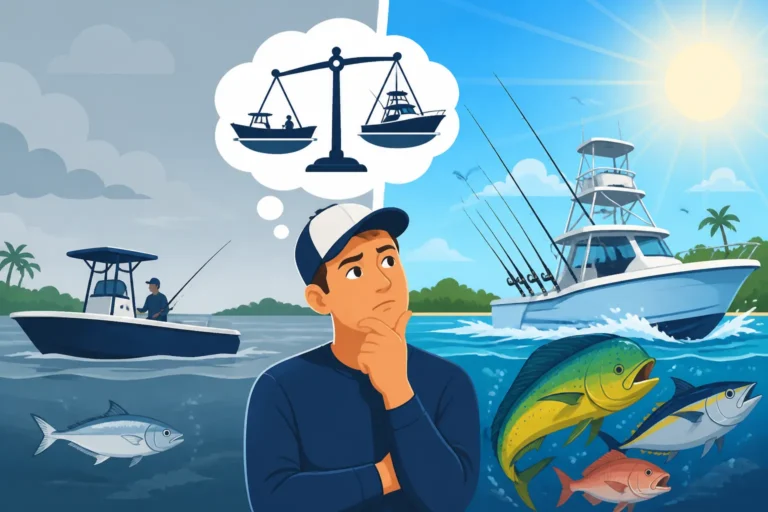
Deciding between an inshore and offshore charter ultimately comes down to your personal preferences, target species, and budget. If you're looking for calmer waters, a focus on sight fishing, and a potentially more budget-friendly option, an inshore charter is a fantastic choice. You might even discover the joys of Florida Shoreline Fishing License Explained for those days you want to fish from land!
However, if you dream of battling larger, pelagic species, experiencing the vastness of the open ocean, and have a bit more flexibility in your budget, an offshore charter delivers an unforgettable experience that simply can't be replicated closer to shore. It's important to remember that the higher cost isn't arbitrary; it reflects the increased complexity, risk, and resource demands of operating safely and successfully in the offshore environment. When looking at your options, especially on sites like FishingBooker, you'll see a clear breakdown of what each charter offers. Don't forget to look at guides like Half-Day vs Full-Day Fishing Charter Cost in Florida to weigh your options.
No matter which adventure you choose, understanding why offshore charters cost more allows you to appreciate the incredible value and hard work that goes into every successful fishing trip out on the water.
Disclaimer
This article is for general informational purposes only and does not constitute professional advice. Laws, prices and regulations vary by location and change over time. Consult a qualified professional for guidance on your specific situation.