Florida Shoreline Fishing License Explained
It can be incredibly frustrating to just want to cast a line into Florida’s beautiful waters, only to feel utterly lost in a sea of confusing regulations about what license you might need. Many folks hear whispers of "free" fishing licenses and wonder if it's too good to be true, especially for fishing right off the beach or a public dock. This comprehensive guide is here to untangle the complexities of the Florida Shoreline Fishing License, explaining exactly what it is, who qualifies, what it covers, and crucially, what it doesn't.
Understanding the Shoreline Fishing License Basics
Florida's abundant coastline offers incredible opportunities for land-based anglers, but the rules aren't always as simple as just showing up with a rod. The Florida Shoreline Fishing License is a unique provision designed to make fishing accessible for residents, yet it comes with specific parameters that often trip up even seasoned anglers.
What Exactly is the Florida Shoreline Fishing License?
Essentially, the Florida Shoreline Fishing License is a no-cost option for eligible Florida residents who plan to fish for saltwater species from the shore or shore-attached structures. Its purpose is to encourage recreational fishing while still ensuring that every angler is accounted for in the state's conservation efforts. It's not a free-for-all, but rather a specific type of license with clear limitations. The idea is to make it easy for residents who might not own a boat or kayak to enjoy Florida's fantastic coastal fishing without an extra financial burden. It’s a vital part of the broader Florida Fishing License Guide that seeks to cover all bases for anglers in the Sunshine State.
This license helps the Florida Fish and Wildlife Conservation Commission (FWC) track how many people are fishing and what they're catching, which is absolutely critical data for managing fish populations and maintaining healthy ecosystems. While it might feel like a bit of paperwork for something "free," think of it as your official permission slip that helps protect the very resources you're enjoying. Without this data, conservation efforts would be a shot in the dark, and that’s something no angler wants.
Who Qualifies for the Free Shoreline License?
To be eligible for the Florida Shoreline Fishing License, you must be a Florida resident. This is the absolute cornerstone of qualification. Non-residents, unfortunately, are not eligible for this particular free license and must purchase a standard Florida saltwater fishing license if they wish to fish from the shore or anywhere else. The age requirements are also specific: residents between the ages of 16 and 64 typically need this license if they're fishing from shore.
Children under 16 years old in Florida don't need any fishing license, period, whether they're fishing from a boat, pier, or the shoreline. And for our esteemed senior residents, if you're 65 years old or older and a Florida resident, you're also exempt from recreational fishing license requirements. So, if you fall into those younger or older age brackets, you can skip the application process for the shoreline license altogether. This is a common point of confusion, and it’s important to understand Who Needs a Fishing License in Florida to avoid any surprises.
What "Shoreline" Truly Means in Florida Fishing Terms
The term "shoreline" might seem straightforward, but in the context of this license, it has specific legal definitions. Generally, it refers to land-based fishing spots that are directly attached to the land. This includes:
- Natural shorelines: Beaches, riverbanks, canal banks, and similar stretches of land.
- Shore-attached structures: Docks, jetties, seawalls, and bridges that are physically connected to the mainland.
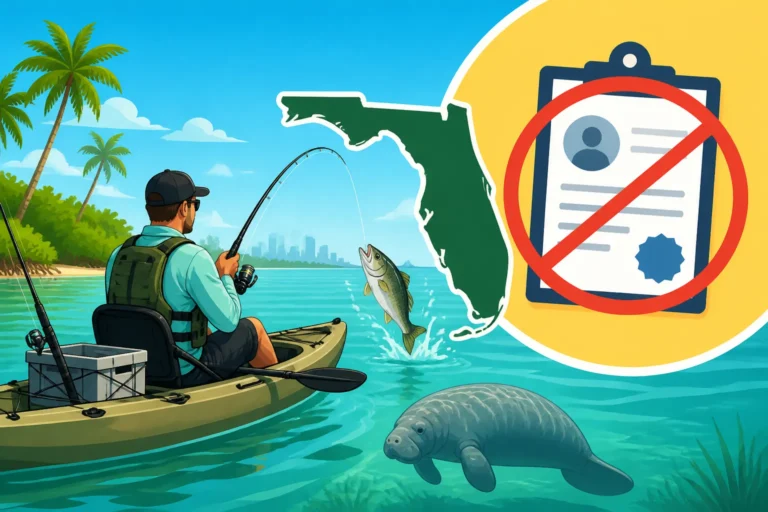
However, it's crucial to understand the nuances. The free shoreline license does not cover fishing from any kind of vessel, no matter how small, such as kayaks, canoes, paddleboards, or boats. Even if you're only a few feet from shore in a kayak, you'll need a regular saltwater fishing license. Similarly, some privately owned piers or fishing parks might have their own separate fishing fees or require their own permits, even if they are shore-attached. Always check with the specific pier or park beforehand. For more details on where this license applies, you might want to read our guide on Do You Need a License to Fish From a Florida Pier?.
Navigating the Application Process for Your Free License
Getting your free Florida Shoreline Fishing License isn't complicated, but it does require a few specific steps to ensure you meet all the criteria and that the FWC has your information on file. It’s worth taking the time to do it correctly to avoid any future headaches.
Step-by-Step Guide to Getting Your Shoreline License
The easiest way to obtain your Florida Shoreline Fishing License is online through the Florida Fish and Wildlife Conservation Commission’s (FWC) GoOutdoorsFlorida website. Here’s a general rundown of what you can expect:
- Visit GoOutdoorsFlorida.com: This is the official portal for all Florida hunting and fishing licenses.
- Create an Account or Log In: If you're a new user, you'll need to create a customer account. If you've had a Florida license before, you can log in with your existing credentials.
- Provide Personal Information: You'll be asked for your name, address, date of birth, and possibly your Florida driver's license or identification card number. This is where your proof of residency comes into play.
- Select the Shoreline Fishing License: Look for the "Florida Resident Saltwater Shoreline License" option. It should clearly state that it has no cost.
- Confirm and Print/Save: Once you've completed the application, you'll receive a confirmation. You can often print a temporary license right away, and a permanent card will usually be mailed to you. Many anglers opt to save a digital copy on their phone, which is perfectly acceptable.
While it might seem like a bit of a process for a "free" item, remember that this is how Florida ensures proper management of its valuable marine resources. Don’t rush it, and double-check all your information.
Where to Obtain Your Florida Shoreline Fishing License
While the FWC's GoOutdoorsFlorida website is the most convenient method for many, it's not the only way to get your shoreline license. Sometimes, it's just easier to do it in person, especially if you have questions or prefer a physical interaction.
- Online: As mentioned, the GoOutdoorsFlorida website is available 24/7, making it the most popular choice. You can apply and receive immediate confirmation. This is often the preferred method, as detailed in our guide on How to Buy a Fishing License Online.
- Local Tax Collectors' Offices: Many county tax collectors’ offices throughout Florida are authorized to issue fishing licenses. This can be a great option if you need to handle other vehicle or property matters at the same time.
- Authorized License Agents: Sporting goods stores, bait and tackle shops, and even some large retailers like Walmart and Bass Pro Shops often serve as authorized license agents. Just look for the GoOutdoorsFlorida logo or ask at the customer service desk. These places can be handy, especially if you're already picking up some new gear, perhaps that rod and reel you saw on Amazon. Our article on Where to Buy a Florida Fishing License Near You provides more location specifics.
Required Documentation and Proof of Residency
To apply for the Florida Shoreline Fishing License, whether online or in person, you'll need to demonstrate proof of Florida residency. This is crucial because, as we discussed, the free shoreline license is exclusively for residents. Typically, acceptable forms of identification include:
- Florida Driver’s License: This is the easiest and most common form of proof.
- Florida Identification Card: Issued by the Florida Department of Highway Safety and Motor Vehicles.
- Other acceptable documents: In some cases, a voter registration card, a declaration of domicile, or a utility bill in your name at a Florida address might be accepted, especially if combined with another photo ID.
It's important to have these documents readily available when you apply. The FWC takes residency requirements seriously to ensure that only eligible individuals benefit from the free license program. If you’ve just moved to the state or are unsure about what exactly counts, check out our detailed guide on Proof of Residency Needed for a Florida Fishing License. Having everything in order beforehand will make the application process much smoother and faster.
Limitations and Important Considerations
While the Florida Shoreline Fishing License is a fantastic opportunity for residents, it's not a blanket pass for all types of fishing. Understanding its limitations is just as important as knowing what it covers. Misinterpreting these rules can lead to citations and fines, which nobody wants when they’re out trying to enjoy a peaceful day on the water.
What the Shoreline License Doesn't Cover
This is where many anglers, especially newcomers to Florida, get confused. The free shoreline license has very distinct boundaries:
- Freshwater Fishing: It applies only to saltwater fishing. If you're targeting bass, crappie, bluegill, or catfish in Florida's vast network of lakes, rivers, and ponds, you will need a separate Florida Freshwater Fishing License Rules (or a combination license if you plan on both). The free shoreline license offers no coverage for inland waters. This is a critical distinction, which we cover more deeply in Florida Saltwater vs Freshwater Fishing License.
- Fishing from a Vessel: As noted earlier, if you're on any type of boat, kayak, canoe, or even a paddleboard, you are considered to be fishing from a vessel, and the free shoreline license does not apply. You will need a standard Florida saltwater fishing license.
- Species Requiring Special Permits: While the shoreline license covers common saltwater species from shore, certain highly regulated species, like snook or lobster, often require additional permits or stamps in addition to your base fishing license. For example, if you catch a snook from the beach and want to keep it during open season, you’ll need a snook permit. Check out Florida Snook Permit Requirements for more information.
Failing to understand these exclusions is a common reason for anglers to find themselves in hot water with FWC officers, so it’s always best to be clear on what your license actually covers.
Exceptions and Other License Types You Might Still Need
Even if you qualify for the free shoreline license, there are scenarios where you'll still need to purchase a different type of license. This applies particularly to non-residents, but also to residents engaging in different forms of fishing.
- Non-Residents: Visitors from out of state are never eligible for the free shoreline license. If you're an out-of-state visitor and want to fish from the shore, a pier, or a boat, you must purchase a standard Florida nonresident saltwater fishing license. You can typically buy these for various durations, such as 3-day, 7-day, or annual options. Our guide on Florida Nonresident Fishing License Rules breaks this down in detail.
- Fishing on a Charter Boat: If you're lucky enough to hop on a guided fishing trip or a party boat, you typically don't need your own individual license. The charter boat or head boat usually operates under a vessel-specific license that covers all passengers. However, it's always wise to confirm this with your charter captain before you go. Learn more about this in Florida Charter Boat Fishing License Rules.
- Harvesting Special Species: Again, even if you’re fishing from shore, if you’re targeting species like spiny lobster or certain regulated crabs, you might need additional endorsements or permits. These are separate from your basic fishing license.
It’s easy to think a free license covers everything, but Florida’s diverse fisheries and extensive regulations mean you often need to stack up various permissions depending on your target and method.
Understanding Bag Limits and Other Regulations
Having your Florida Shoreline Fishing License is just one piece of the puzzle. It grants you permission to fish, but it doesn't give you free rein over what you catch or how much. All anglers, regardless of their license type, must adhere to Florida's strict fishing regulations, including:
- Size Limits: Most species have minimum and sometimes maximum size requirements. Keeping an undersized or oversized fish can result in a significant fine.
- Bag Limits: There are daily limits on how many fish of a particular species you can keep. These limits are in place to prevent overfishing and maintain healthy populations.
- Season Closures: Certain species have specific seasons when they can be harvested, and closed seasons when they cannot. These vary by region (e.g., Gulf vs. Atlantic) and can change annually.
- Gear Restrictions: There are rules about the types of fishing gear you can use, such as hook size, net types, and bait restrictions.
Always, always check the latest regulations from the FWC website or a current Florida fishing regulations pamphlet before you head out. These rules are updated frequently, and ignorance is not considered an excuse. You can find comprehensive details in our Florida Fishing Regulations and Bag Limits article. Staying informed is the best way to enjoy your fishing experience responsibly and legally.
Common Scenarios and FAQs
The free Florida Shoreline Fishing License is a fantastic resource, but because it's so specific, it naturally leads to a lot of common questions. Let's tackle some of the most frequent scenarios that arise when people are trying to figure out if they're covered.
Fishing from Piers, Bridges, and Jetties with the Shoreline License
This is perhaps one of the most confusing areas. Many people assume if they're not in a boat, they're "shoreline fishing." However, the rules can be nuanced depending on the specific structure:
- Public, Shore-Attached Structures: Generally, if you're a Florida resident and fishing from a public pier, bridge, or jetty that extends directly from the mainland, your free Florida Shoreline Fishing License should cover you.
- Privately Owned Piers/Fishing Parks: Here's the catch. Some larger, privately owned piers, fishing parks, or causeways operate under their own special pier licenses. These facilities often charge a daily or annual fee, and their license covers all anglers fishing from their structure, meaning you might not need your individual state license (free shoreline or otherwise). This varies widely, so always call ahead or check their website. For example, some famous piers like the Skyway Fishing Pier State Park in St. Petersburg have their own fees that cover the fishing license requirement for their patrons.
- Federal Waters: While rare for true "shoreline" fishing, some extremely long jetties or bridges could potentially extend into federal waters where rules might differ slightly, though this is less common for the free shoreline license's scope.
The key takeaway is to always verify the specific rules for the exact pier or bridge you plan to fish from. It's better to make a quick call than to risk a fine. Our guide on Which Florida Piers Don't Require a Fishing License? offers some examples of places where the rules might be different.
Does the Free Shoreline License Cover Catch and Release?
Yes, absolutely. The purpose of any recreational fishing license, including the free Florida Shoreline Fishing License, is to grant you the legal right to attempt to catch fish. Your intention to keep them or release them doesn't change the requirement for a license. If you are a Florida resident, age 16-64, and fishing for saltwater species from the shore, you need the free shoreline license even if every single fish you hook is immediately released.
The FWC uses license sales data (even for free licenses) to understand participation rates and manage fish populations. Even catch-and-release fishing has an impact on fish, and by requiring a license, the FWC can better monitor overall fishing pressure. It might feel counterintuitive to need a license when you're not even taking a fish home, but it's part of the larger conservation framework. For more on this, read Do You Need a License for Catch and Release Fishing in Florida?.
Consequences of Fishing Without the Proper License
Let's be very clear: fishing without the required license in Florida is a violation of state law, and the FWC takes it seriously. It's not just a slap on the wrist.
- Fines: The most common consequence is a fine, which can easily range from a few hundred dollars or more, depending on the severity and whether it’s your first offense. These fines are significantly more expensive than even an annual paid license.
- Confiscation of Gear: In some cases, FWC officers are authorized to confiscate your fishing gear, including your rods, reels, and tackle. Imagine losing that beloved rod you finally bought from Amazon!
- Court Appearances: You might be issued a notice to appear in court, adding legal fees and inconvenience to your troubles.
- Loss of Future Privileges: Repeated offenses could lead to the suspension of future fishing and hunting privileges in Florida.
FWC officers regularly patrol beaches, piers, and other popular shoreline fishing spots. They often check licenses as part of their routine duties. Don't risk ruining your day (or your wallet) by fishing without the correct license. It’s simply not worth it. We detail the severity of these infractions in our article, Penalty for Fishing Without a License in Florida.
Beyond the Shoreline – Enhancing Your Fishing Experience
Once you've got your Florida Shoreline Fishing License squared away, it's time to focus on the fun part: fishing! But just because it's shoreline fishing doesn't mean you can't be well-prepared and strategic. Getting the right gear and understanding the best times and places can make all the difference.
Gear Essentials for Florida Shoreline Fishing
You don't need a boatload of expensive equipment to enjoy shoreline fishing in Florida, but a few key items will certainly improve your chances and comfort:
- Rod and Reel Combo: For surf fishing, a medium-heavy to heavy spinning rod, typically 9 to 12 feet long, paired with a matching spinning reel (size 4000-6000) spooled with 15-30 lb braided line, is a great all-around choice. For calmer bays or canals, a lighter 7-8 foot medium-action rod might be sufficient. You can find excellent value combos on sites like Amazon, or at local tackle shops.
- Tackle: Essential terminal tackle includes an assortment of hooks (circle hooks are often preferred for conservation and self-setting), sinkers (pyramid sinkers for surf fishing, egg sinkers for calmer water), swivels, and leader material (fluorocarbon is popular).
- Bait: Live bait is often king in Florida. Common choices include live or frozen shrimp, cut bait (like mullet or ladyfish), or natural baits like sand fleas for pompano. Artificial lures, such as soft plastics, spoons, or jigs, can also be very effective for various species.
- Other Essentials: Don't forget sunscreen, a wide-brimmed hat, polarized sunglasses (to spot fish and structure), a small cooler for bait and drinks, a tackle box, and a measuring device to ensure your catches are legal size. A pair of pliers for hook removal and a small net or lip gripper are also super handy.
Investing in decent gear makes the experience much more enjoyable and productive.
Best Spots for Shoreline Fishing in Florida
Florida is practically synonymous with incredible fishing, and its shorelines are no exception. The "best" spot really depends on what you're targeting and what kind of environment you prefer, but here are some general ideas:
- Beaches: For surf fishing, look for areas with current, troughs, sandbars, and structures that break up the uniform sand. These features create feeding grounds for species like pompano, whiting, redfish, and sometimes snook. Areas around inlets are particularly productive as they concentrate baitfish.
- Jetties and Piers: These structures extend into deeper water and provide excellent habitat for a wider variety of species, including snook, redfish, trout, Spanish mackerel, king mackerel, and even grouper (from very long piers). The rock formations around jetties also hold bait and provide ambush points for predatory fish.
- Bridges and Causeway catwalks: Many bridges, especially those spanning inlets or connecting islands, offer fantastic fishing opportunities due to the strong currents and structure. Just be mindful of local regulations and safety.
- State Parks and Public Access Points: Florida has numerous state parks and public access points along its coastline that offer excellent, well-maintained shoreline fishing spots. Many feature long stretches of beach, nature trails along estuaries, and sometimes even small piers. Our guide on Best Shore Fishing Spots in Florida can give you more specific ideas.
Before heading out, a quick online search for local fishing reports or asking at a local bait shop can give you invaluable, up-to-the-minute information on where the fish are biting. You can also gain an edge by understanding Best Beaches for Surf Fishing in Florida.
Seasonal Considerations for Shoreline Anglers
Florida’s fishing changes dramatically with the seasons, even for shoreline anglers. While you can typically catch something year-round, targeting specific species effectively means understanding their seasonal movements and habits:
- Spring (March-May): This is often a fantastic time as water temperatures warm up. Many species become more active. Pompano and whiting are abundant in the surf, while snook, redfish, and trout become very active in the warmer inshore waters. Tarpon also begin their migration along the coasts.
- Summer (June-August): The heat brings mangrove snapper, flounder, and often more aggressive snook and redfish into play. Early mornings and late evenings are key to avoid the hottest parts of the day and afternoon thunderstorms.
- Fall (September-November): Many consider fall to be prime time. The famous "fall run" sees large schools of baitfish migrating, attracting a wide array of predators like Spanish mackerel, king mackerel, bluefish, and continued excellent action for redfish and snook.
- Winter (December-February): While some species move offshore or into deeper waters, others become more accessible from shore. Sheepshead are abundant around structure, and cooler waters can concentrate redfish and trout in sunny, shallow areas. Pompano also make a strong showing in the surf during cooler months.
Understanding these patterns will help you choose your fishing spots and target species more effectively, making your shoreline adventures much more rewarding. For a deeper dive into seasonal changes, read our guide on Florida Fishing Seasons Explained.
Florida Shoreline Fishing License Overview
Here’s a quick summary to help clarify the key aspects of the Florida Shoreline Fishing License:
| Feature | Details |
|---|---|
| Eligibility | Florida Residents only (age 16-64). |
| Cost | Free |
| Covers | Saltwater fishing from shore, shore-attached structures (beaches, jetties, most public piers, seawalls, bridges). |
| Does NOT Cover | Freshwater fishing, fishing from any vessel (boats, kayaks, paddleboards), fishing from some private/special piers (e.g., Skyway Pier). |
| Additional Permits | May be required for specific species (e.g., Snook, Lobster). |
| Regulations | All state size, bag, and season limits apply. |
| Where to Obtain | FWC GoOutdoorsFlorida website, Tax Collector’s offices, authorized license agents (e.g., Walmart, Bass Pro Shops). |
| Proof Required | Valid Florida ID (Driver's License, State ID Card) to prove residency. |
Disclaimer
The information provided in this guide is for general informational purposes only and is subject to change. Fishing regulations in Florida are dynamic and can be updated by the Florida Fish and Wildlife Conservation Commission (FWC) at any time. Always consult the official FWC website or their current regulations pamphlet for the most accurate and up-to-date rules and requirements before engaging in any fishing activities.