Golf Course Pond Fishing License Rules in Florida
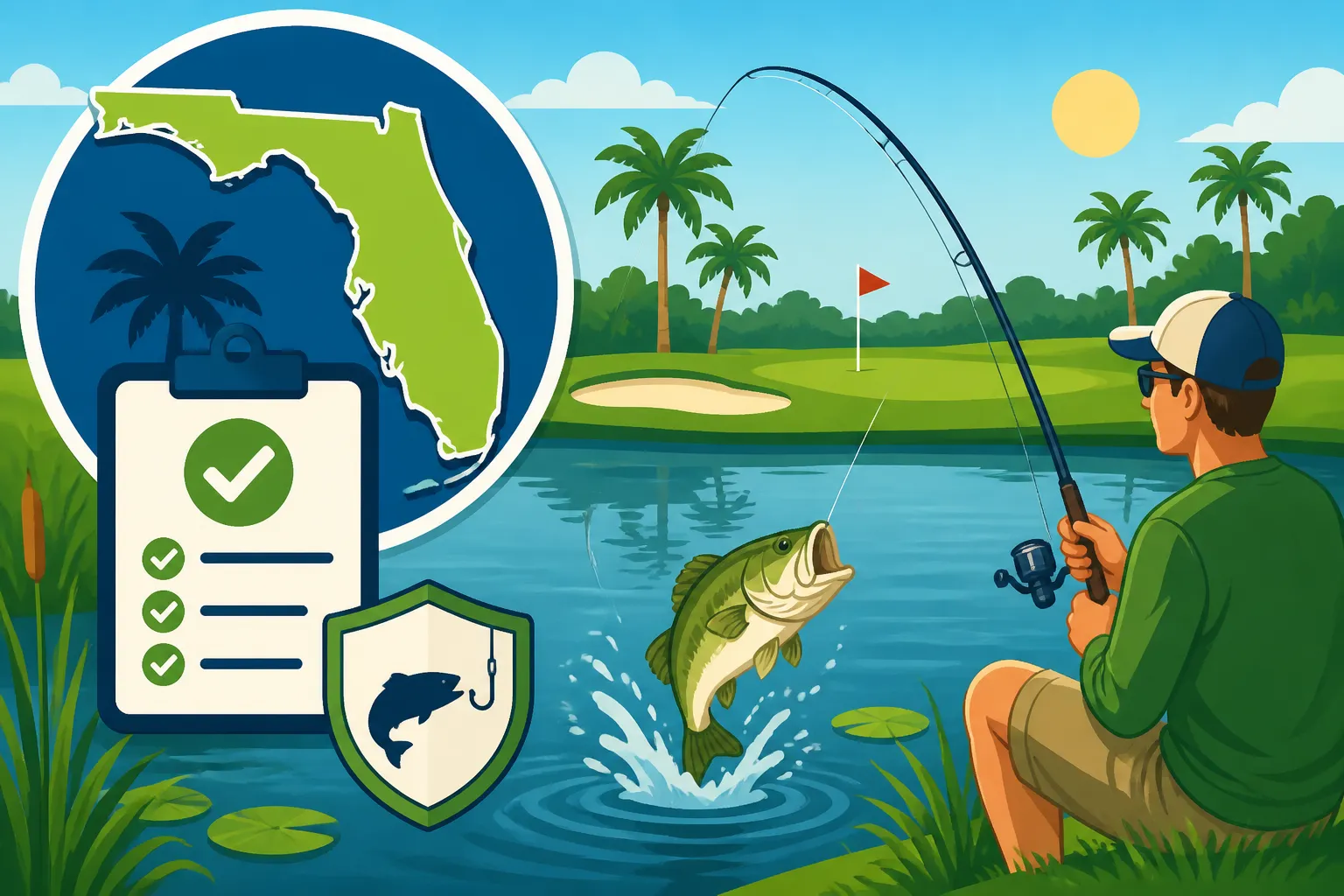
It’s a scenario many of us have found ourselves in: admiring the serene, often bass-filled ponds nestled within a pristine Florida golf course, and wondering, "Can I fish there? And if so, do I need a license?" The answer isn't always as straightforward as it seems, and making assumptions can lead to an unexpected encounter with local authorities or golf course management. This comprehensive guide will untangle the nuances of fishing license requirements specifically for golf course ponds in Florida, ensuring you're fully informed before you ever cast a line.
The Core Question: Do You Need a License for Golf Course Ponds in Florida?
The short answer is: probably, but it depends on the specifics of the pond and the golf course itself. Unlike a well-defined public lake or a clearly marked private farm pond, golf course ponds often exist in a bit of a gray area, blending elements of private property with potential connections to broader waterways. This is where the confusion often begins, and why it's so important to understand the underlying rules.
Understanding Public vs. Private Waters
Florida's fishing license laws generally hinge on whether the water body is considered "public" or "private." Public waters, as you might expect, are those open for public use, such as state-managed lakes, rivers, canals, and coastal areas. Fishing in these typically requires a valid Florida Fishing License Guide, unless you fall under specific exemptions.
Private waters, on the other hand, are usually defined as wholly owned and enclosed by private property, with no connection to outside public waters. Think of a small, isolated pond in your backyard that you dug yourself, or a retention pond that clearly has no inlets or outlets. In such cases, if you own the land or have explicit permission from the owner, a fishing license might not be required to fish your own wholly private pond. The key here is "wholly private," meaning no natural or man-made connection to other public waterways where fish could freely move in and out. Golf course ponds can be tricky because while they are on private property, many are designed with hydrological connections to manage water flow, linking them to a wider system that might be considered public.
The Role of Property Ownership and Management
Even if a golf course pond appears private and isolated, the official stance on requiring a fishing license can change dramatically if it connects to a public water body. Florida Fish and Wildlife Conservation Commission (FWC) regulations state that if fish can move freely between a private water body and public waters, then fishing license requirements apply as if it were a public waterway. Many golf courses in Florida, especially in developed areas, utilize complex drainage systems that connect their ponds to larger canal systems, stormwater networks, or even natural streams that eventually lead to rivers or the coast.
Furthermore, regardless of the license requirements, golf courses are private property. This means they have every right to prohibit fishing entirely, permit it only to members, or set their own specific rules and hours for anglers. Even if state law says you don't need a license because a pond is technically "private" (which is rare for connected golf course ponds), the golf course's "no fishing" sign takes precedence. Trespassing is a serious issue, and you could face legal consequences if you fish without explicit permission. Therefore, contacting the golf course management or the homeowners' association (if applicable) is always your first, most crucial step.
Navigating Florida's Freshwater Fishing License Requirements
Let's dive a bit deeper into when a Florida freshwater fishing license is typically required, as this directly applies to many golf course pond scenarios. Understanding these broader rules will help you determine your obligations when eyeing those tempting greenside waters.
When a Florida Freshwater Fishing License is Absolutely Required
In most cases, if you're fishing in any freshwater body in Florida, including lakes, rivers, and canals, a valid freshwater fishing license is required for anyone age 16 or older. This applies to both residents and non-residents. The license helps fund important conservation efforts that maintain healthy fish populations and habitats across the state. Even if a golf course pond is on private land, if it has any sort of connection to a public water system – and many do for irrigation or drainage – then it falls under these general requirements.
For example, imagine a golf course in Orlando whose ponds are part of the larger network of canals that feed into the Butler Chain of Lakes. Since fish can migrate freely between these ponds and the publicly accessible lakes, a fishing license would absolutely be necessary. It’s not just about what you put in; it’s about what nature can move in and out. If you're wondering about the specific costs, you can find detailed information on the Florida Resident Fishing License Types and Costs or the Florida Nonresident Fishing License Types and Costs. Always double-check your age requirements, too, as there are specific Florida Fishing License Age Requirements.
Situations Where an Exemption Might Apply
While the general rule leans towards needing a license, there are a few specific exemptions that could theoretically apply to golf course ponds, though they are often quite narrow. The primary exemption related to private waters is for residents fishing in a "private pond of less than 20 acres in which the owner has granted permission to fish." Critically, this pond must be wholly within the private property and not connected to any public waters. It’s the "not connected" part that usually rules out most golf course ponds.
Think about a small, completely isolated pond on a sprawling, privately owned ranch – that’s a clear case for the private pond exemption. But most golf course ponds, by their very design, are integrated into a larger drainage system. If you own a home bordering a golf course and want to fish in a tiny, truly landlocked pond within your own property that happens to be next to the golf course, and you have the golf course's permission, then you might be exempt. However, if you step off your property line onto the golf course's land or fish in a pond that's clearly part of their larger water management, these exemptions become much harder, if not impossible, to claim. Always err on the side of caution. For more details, explore the Florida Fishing License Exemptions and the specific Florida Private Pond and Farm Pond Fishing Rules.
Practical Steps Before You Cast a Line in a Golf Course Pond
Before you even think about rigging up your rod or browsing for new gear on Amazon, there are a few critical steps you need to take. Skipping these could land you in hot water, both literally and figuratively.
Contacting the Golf Course Management
This is, hands down, the most important step. Always contact the golf course management or the general manager first. Do not assume that because you see someone else fishing, or because the pond looks inviting, it's open to the public for fishing. Golf courses are private businesses, and they have strict rules in place, primarily for safety, course maintenance, and liability.
When you call or visit, clearly state your intent: "Hello, I'm interested in fishing in your ponds. Do you allow fishing, and if so, what are the rules and requirements?" Be prepared to hear "no." If they do allow it, ask specific questions:
- Are there designated fishing areas or times?
- Do non-golfers need special permission or a pass?
- Are there any specific permits required by the golf course itself (beyond a state fishing license)?
- Are there any restrictions on bait, lures (e.g., barbless hooks only), or species?
- What are their policies regarding trespassing if you're caught without permission?
Some golf courses, especially those that cater to a resort crowd or have residential communities built around them, might have specific programs or membership benefits that include fishing access. Others might have a strict "no fishing" policy to prevent interference with golfers, protect landscaping, or mitigate liability risks from anglers getting hit by golf balls. Always get explicit, ideally written, permission if you can.
Checking for Connections to Public Waterways
Even with golf course permission, you still need to understand the FWC licensing requirements. The easiest way to check for connections to public waterways is to use online satellite maps, like Google Maps. Zoom in on the golf course and trace the paths of its ponds. Do they have visible culverts, canals, or ditches leading away from them, eventually connecting to a river, a larger lake, or a municipal canal system? If water can flow in and out, chances are the FWC considers it "public water" for licensing purposes.
You can also inquire with local stormwater management districts or even the golf course management themselves about their drainage systems. Many modern golf courses are designed with intricate water features that are interconnected for irrigation, runoff management, and aesthetic appeal. If there's a clear connection, then the Florida Freshwater Fishing License Rules apply. It's often safer to assume there's a connection and prepare accordingly, rather than risk a fine.
Preparing for a Legitimate Fishing Experience
Once you've secured permission from the golf course and determined the license requirements (likely needing one), make sure you're fully prepared. First, obtain your fishing license if required. You can easily get a Florida Fishing License online, or find Where to Buy a Florida Fishing License Near You at local retailers like Walmart or Bass Pro Shops. Always carry your license with you, either a physical copy or a digital one on your phone via the Florida GoOutdoors App Fishing License.
Beyond the license, remember you'll be on a golf course. This means adhering to certain etiquette:
- Respect Golfers: Never cast if there's a risk of interfering with a golfer's swing or ball. Yield to golf cart traffic. Be as unobtrusive as possible.
- Stay in Designated Areas: Stick to the ponds and banks you've been given permission to fish. Do not wander onto greens, fairways, or private residences.
- Practice Catch and Release: Many golf course ponds are stocked with bass and other species specifically for enjoyment, not harvest. Even if not explicitly stated, catch and release is often the best practice to maintain the fishery and goodwill. Be familiar with Florida Bass Fishing Techniques if targeting largemouth.
- Pack Out What You Pack In: Leave no trash behind – no empty bait containers, fishing line, or food wrappers.
- Appropriate Gear: Consider lighter tackle and lures that are less likely to snag or cause damage. You might find great beginner rods and reels or a selection of Best Lures for Florida Bass Fishing on Amazon.
Potential Pitfalls and Enforcement
Fishing in a golf course pond without proper authorization or a license isn't just a minor oversight; it can lead to significant headaches and penalties. It’s crucial to understand these risks to avoid an unpleasant experience.
The Risks of Fishing Without Permission or Proper License
Let’s be blunt: fishing without permission on private property is trespassing. In Florida, trespassing can range from a misdemeanor to a felony, depending on the circumstances. At a minimum, you could be asked to leave, banned from the property, or issued a warning. However, repeated offenses or defiant behavior could lead to arrest. Golf courses often have security personnel, and they won't hesitate to call law enforcement.
Beyond trespassing, fishing without a valid license (when one is required) is a violation of state law. The penalties for fishing without a license in Florida can include fines that quickly add up, court costs, and potentially even the confiscation of your fishing gear. It’s not worth the risk, especially when a license is so easy and affordable to obtain. Law enforcement officers from the FWC regularly patrol and enforce fishing regulations, and they are well-versed in the nuances of public versus private waters. For a deeper dive into the repercussions, you can read about What Happens If You Fish Without a License. Always ensure you are also aware of Florida Fishing Regulations and Bag Limits, as these apply even if you have a license.
Understanding Local Ordinances and Golf Course Specific Rules
It's not just state law and FWC regulations you need to consider. Local municipalities (cities and counties) can also have ordinances that affect fishing access, especially in urban areas where many golf courses are located. These might include rules about public access to waterways, noise ordinances, or specific guidelines for private recreational areas. While less common, it's another layer of regulation that could come into play.
More directly, each golf course will have its own unique set of rules. Their primary concern is the integrity of the golf course, the safety of their patrons, and maintaining an aesthetically pleasing environment. They might prohibit fishing entirely due to:
- Safety Concerns: Stray casts interfering with golfers, or anglers getting hit by golf balls.
- Course Maintenance: Anglers trampling sensitive areas, leaving trash, or damaging irrigation systems.
- Liability: The risk of injury to unauthorized individuals on their property.
- Aesthetics: Maintaining the pristine appearance of their grounds.
Even if you have a license and the pond technically qualifies as "public" under FWC rules, the golf course’s right to control access to its private property supersedes your right to fish. Always default to seeking and respecting the golf course's specific rules and explicit permission.
Here’s a quick summary to help you navigate the common scenarios:
| Scenario | Golf Course Permission Needed? | Florida Fishing License Needed? | Key Considerations |
|---|---|---|---|
| Pond is wholly enclosed, no connection to public water, on private property you own (e.g., your backyard pond). | No (if you own it) | No (for residents 16+, if less than 20 acres and you have permission if not owner) | This is the rare "private pond" exemption. If it's your own small pond, you likely don't need a license. If it's on a golf course, it's almost certainly not "wholly enclosed" with "no connection." |
| Pond on golf course property, connected to public waterways (most common scenario). | YES | YES (for anyone 16+, unless specific FWC exemption applies) | This is the most likely scenario. The golf course management must grant permission, and you must have a valid Florida freshwater fishing license. Always assume connection unless proven otherwise. |
| Pond on golf course property, no connection to public waterways (extremely rare). | YES | Possibly No (for residents 16+, if less than 20 acres and golf course grants permission) | Even if truly isolated, the golf course still sets the rules for their private property. Getting explicit permission is paramount. A license might not be technically required by state law, but the golf course could still mandate it or prohibit fishing. |
| Fishing from your property that borders a golf course pond (and you have permission). | Yes (from golf course) | Depends on pond's connection | If the pond connects to public water, a license is needed. If the pond is truly isolated and small (under 20 acres), and you have permission from the golf course (who effectively owns the water rights or manages the pond), then you might not need a license as a resident. |
| Fishing from a public easement adjacent to a golf course pond. | N/A (if truly public) | YES (for anyone 16+) | If there’s a genuine public easement (like a city-owned canal bank) that runs alongside a golf course pond and allows legal access without trespassing, then you'd still need a license if the water is connected to public waterways. The golf course itself cannot restrict access to a public easement. However, such situations are often murky, so verify legal access. |
Ultimately, the best advice for fishing golf course ponds in Florida is to be respectful, do your homework, and always seek explicit permission. It's a fantastic way to enjoy some unique fishing opportunities, but only if done correctly and legally.
Disclaimer
The information provided in this guide is for general informational purposes only and does not constitute legal advice. Fishing regulations in Florida can be complex and are subject to change. Always consult the most current regulations published by the Florida Fish and Wildlife Conservation Commission (FWC) and contact local authorities or property owners for specific rules before engaging in any fishing activity.