Best Reefs Near Fort Lauderdale for Grouper
Finding those prime grouper spots near Fort Lauderdale can feel like an endless treasure hunt, especially when you're dreaming of a big gag or red grouper for dinner. It's frustrating to head out to what you think are good numbers, only to reel in nothing but bait stealers. This guide is here to cut through the guesswork, sharing the best reefs and techniques to target grouper in the vibrant waters off Fort Lauderdale, helping you turn those hopes into hooked fish.
Understanding Fort Lauderdale's Grouper Habitat
Fort Lauderdale isn't just known for its beautiful beaches and bustling waterways; it's also a fantastic jumping-off point for offshore fishing, especially when it comes to grouper. These fish are masters of camouflage and ambush, making their homes in the intricate reef systems and rocky ledges that lie beneath the surface. Knowing where they prefer to hide is half the battle won.
The Natural and Artificial Reef Systems Off Fort Lauderdale
The waters off Fort Lauderdale boast a remarkable network of natural and artificial reefs, providing ideal habitat for various grouper species. Unlike some parts of Florida with expansive natural rock formations, Fort Lauderdale's natural reefs are primarily composed of calcified algae and coral formations that parallel the coastline. These structures create ledges, overhangs, and crevices where grouper can hide from predators and ambush prey.
Beyond the natural formations, Broward County has been incredibly proactive in deploying an impressive array of artificial reefs. These range from old ships and tugboats deliberately sunk to create new ecosystems to concrete culverts and massive rubble piles. These structures, often in deeper waters, quickly become magnets for marine life, including a thriving population of grouper. The sheer volume and variety of these artificial reefs make the Fort Lauderdale area a prime location for bottom fishing. They provide ample structure for grouper to congregate, offering both protection and a rich feeding ground.
Common Grouper Species in These Waters
When you're fishing off Fort Lauderdale, you're likely to encounter a few key grouper species, each with its own characteristics and preferred habitats. The most common targets for anglers here are Gag Grouper and Red Grouper, but you might also stumble upon Scamp Grouper in deeper water or even Black Grouper.
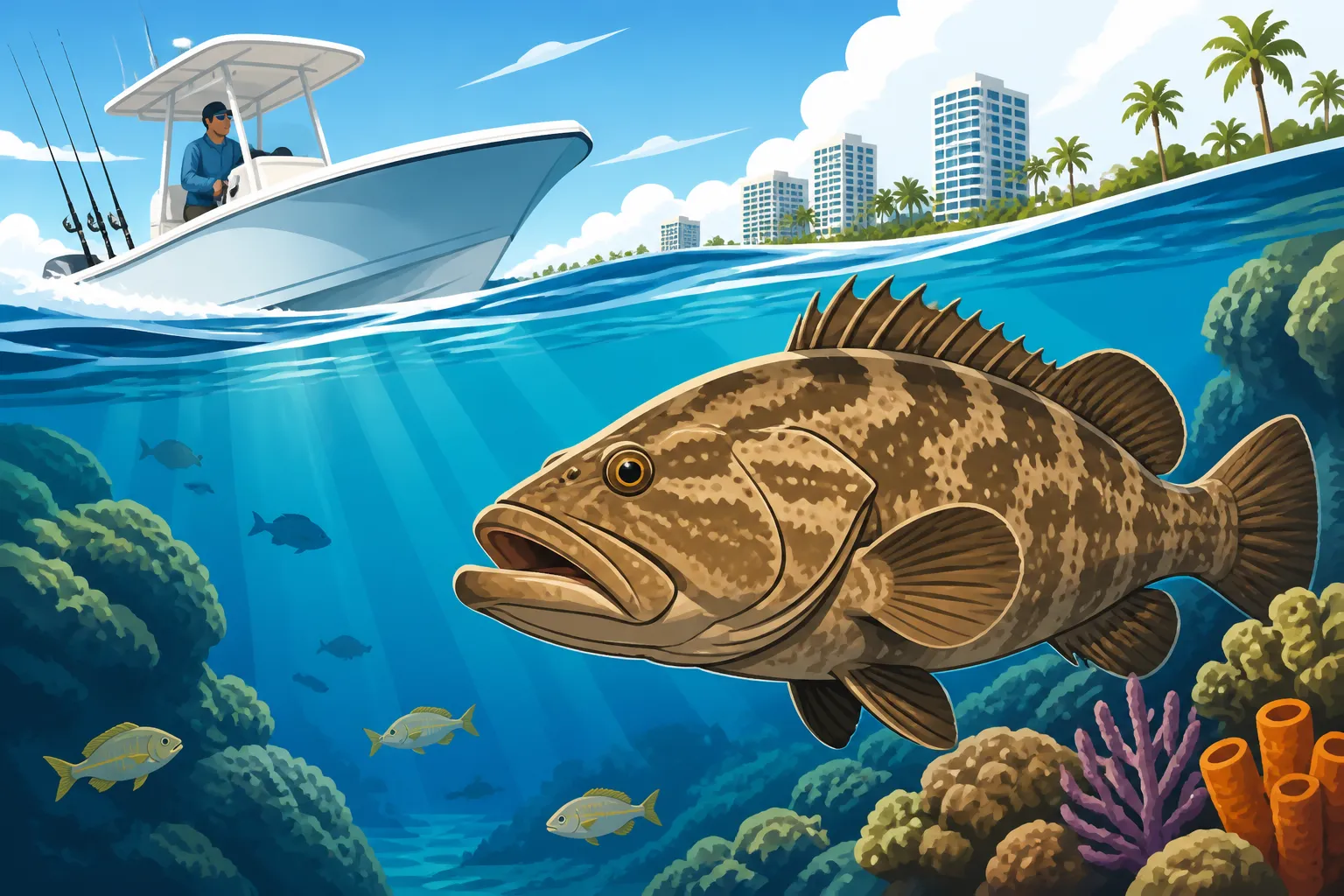
Gag Grouper, often called "gags," are a highly prized species known for their aggressive strikes and powerful fights. They typically inhabit rocky ledges, wrecks, and artificial reefs in depths ranging from 60 to 250 feet. They have a mottled, brownish-gray appearance, allowing them to blend seamlessly into their surroundings. Red Grouper are perhaps the most frequently caught grouper in Florida, and Fort Lauderdale is no exception. They favor similar rocky habitats but are often found in slightly shallower waters, sometimes as shallow as 30-40 feet, though they extend to deeper areas as well. Their reddish-brown coloration is a dead giveaway. Scamp Grouper, while not as prevalent as gags or reds, are fantastic table fare and can be found on deeper rocky outcroppings and wrecks, often recognizable by their elongated bodies and intricate patterns. Identifying these species correctly is important, not just for bragging rights, but also for adhering to specific size and bag limits. You can learn more about how to distinguish them in our guide on How to Identify a Gag Grouper vs Red Grouper.
Top Grouper Reefs and Wrecks Near Fort Lauderdale
Fort Lauderdale's offshore playground is vast, but certain spots consistently produce grouper. These locations provide the necessary structure and depth that grouper crave, attracting both resident fish and those migrating through.
The Inner Reef Tract: Depths and Features
The inner reef tract off Fort Lauderdale starts surprisingly close to shore, in depths ranging from around 30 to 90 feet. While these shallower reefs are more commonly associated with snapper and hogfish, healthy populations of smaller Red Grouper can often be found lurking in the rock piles and ledges. These areas are particularly accessible, making them great for shorter trips or when conditions prevent heading further offshore. The third reef line, typically around 60-90 feet, is where you'll start seeing more consistent grouper action. Look for pronounced ledges, sudden depth changes, and isolated coral heads. These natural structures create perfect ambush points for grouper. Anglers often find success by drifting over these areas, using their fish finders to pinpoint promising anomalies on the bottom. Remember, even a small bump on an otherwise flat bottom can hold a hungry grouper.
The Outer Reefs and Artificial Wrecks
Venturing further offshore, beyond 90 feet, opens up a world of more substantial grouper fishing opportunities. This is where the larger Gag Grouper and deeper-dwelling Scamp Grouper become more common targets. Fort Lauderdale is exceptionally fortunate to have an abundance of well-documented artificial wrecks, many of which are specifically placed to enhance fishing opportunities.
Some notable artificial reefs and wrecks that are legendary for grouper fishing include:
- The Copenhagen (Wreck): Lying in about 120-130 feet of water, this steamship wreck is a massive structure that holds a huge variety of marine life, including excellent gag grouper. Its sheer size provides endless hiding spots.
- The Tenneco Towers: These former oil platforms, sunk in about 100-160 feet of water, are iconic artificial reefs. They are massive, intricate structures that act as vertical reefs, attracting baitfish and, consequently, large grouper and amberjack.
- The Jay Scutti (Wreck): A former tugboat resting in about 70 feet of water, this wreck is easily accessible and often holds smaller grouper, especially red grouper, as well as snapper and amberjack.
- Various County-Deployed Reefs: Broward County has many other designated artificial reef sites, often marked with specific GPS coordinates. These sites include concrete culverts, bridge rubble, and even old tanks, all creating excellent habitat. Many of these are documented on local fishing charts or through resources like NOAA.
When exploring these deeper reefs and wrecks, paying close attention to your sonar is crucial. Look for "marks" — distinct fish arches or schools of baitfish congregated around the structure. These are tell-tale signs that predatory fish, like grouper, are in the vicinity. Many local charters listed on platforms like FishingBooker specialize in targeting these exact spots, offering invaluable local knowledge and expertise. A good captain will have an extensive library of numbers for these productive structures.
Strategies for Catching Grouper on Fort Lauderdale Reefs
Catching grouper is an exciting challenge that requires the right gear, bait, and technique. They are powerful fish that will try to "rock you up" – pull you into the structure to break your line – so being prepared is key.
Essential Gear and Bait Setups
For successful grouper fishing off Fort Lauderdale, heavy-duty gear is a must. You'll want a stout rod, typically a 6 to 7-foot medium-heavy to heavy action rod, capable of handling powerful fish and heavy weights. Pair this with a conventional reel (like a Penn Fathom or a Shimano Trinidad) spooled with 50 to 80-pound braided line. Braid offers excellent sensitivity and strength with a thin diameter, which is crucial for feeling subtle bites in deep water and fighting fish off the bottom. You'll also need a monofilament or fluorocarbon leader, typically 60 to 100-pound test, to resist abrasion against the sharp reef structures. Many anglers opt for a short, heavy leader (3-5 feet) attached to the main line with a strong knot like an FG knot or a Bimini Twist.
When it comes to terminal tackle, a good quality circle hook, sized 7/0 to 9/0, is essential for bottom fishing. Circle hooks significantly reduce gut-hooking, improving the survival rate of released fish and are often mandated by regulations. You'll also need a variety of lead weights, anywhere from 6 to 16 ounces, depending on the current and depth. A standard "knocker" rig (where the sinker slides directly on the main line above the hook) or a "Carolina" rig (with a swivel separating the sinker from the leader) are effective setups.
Live bait is king for grouper. Pinfish, pilchards, cigar minnows, grunts, and even small snapper are all excellent choices. If live bait is hard to come by, fresh cut bait such as squid, bonita strips, or mackerel chunks can also be effective, especially when fished directly on the bottom. Many charter operations ensure they have fresh live bait ready to go, and you can often purchase it from local bait shops.
Best Fishing Techniques for Reef Grouper
There are a few tried-and-true methods for targeting grouper on the reefs and wrecks.
Bottom Fishing
This is the most common and often most effective technique. With your heavy tackle and live or fresh cut bait, you'll drop your bait directly to the bottom, right on top of or slightly up-current from the structure where grouper are hiding. The goal is to keep your bait as close to the bottom as possible without snagging. Once you feel a bite, strike immediately and reel aggressively to pull the fish away from the structure before it can "rock you up" and cut your line. This technique is often used when anchoring over a known spot or slowly drifting over a reef.
Drifting
Drifting can be incredibly effective, especially when you're exploring new areas or when the current is too strong to anchor precisely. By allowing your boat to move slowly with the current, your bait covers more ground, increasing your chances of finding a hungry grouper. When drifting, it's crucial to adjust your weight to keep your bait near the bottom. If you feel a snag, immediately open your bail or free-spool to try and free your hook. This technique is a fantastic way to cover extensive reef lines or find those isolated rock piles that might not be on your chart. Our guide on Drift Fishing Technique for Grouper offers more specific advice.
Jigging
While often overlooked for grouper, vertical jigging with heavy metal jigs can also be very productive, especially for Gag and Black Grouper. Look for jigs weighing 4-8 ounces or more, depending on depth and current. Drop the jig to the bottom and work it with an aggressive retrieve – quick upward jerks followed by a free-fall – to imitate a wounded baitfish. Grouper will often strike on the fall. This method can be very engaging and provides a different kind of fight.
Timing Your Trip for Success
Timing is critical in grouper fishing. While you can catch grouper year-round in Florida, certain periods and conditions increase your odds. The cooler months, typically from fall through spring, often see Gag Grouper move into shallower waters, making them more accessible. Red Grouper are a bit more consistent throughout the year.
The best time of day often revolves around tide changes. An incoming or outgoing tide creates current, which stimulates feeding activity by bringing baitfish over the reefs. Always check a local tide chart before heading out. Low light conditions, such as early morning and late afternoon, are often prime feeding times for many fish species, including grouper. However, in deeper water, light penetration is less of a factor, and grouper might feed throughout the day if conditions are right. You can dive deeper into this topic with our piece on Best Time of Day to Fish in Florida.
Weather also plays a significant role. Calm seas are not only more comfortable for anglers but also make it easier to maintain contact with the bottom and detect subtle bites. Strong winds and choppy seas can make bottom fishing incredibly challenging. Always check the marine forecast before planning your trip.
Navigating Regulations and Responsible Fishing
Fishing in Florida comes with specific rules designed to protect fish populations and ensure healthy fisheries for future generations. Knowing and following these regulations is not just about avoiding fines; it's about being a responsible angler.
Florida Grouper Regulations You Need to Know
Florida's grouper regulations, like many other species, can vary by species, region (Gulf vs. Atlantic), and even time of year. For grouper fishing off Fort Lauderdale (Atlantic side), you need to be aware of:
- Size Limits: Each grouper species typically has a minimum size limit. For example, Gag Grouper in the Atlantic often have a 24-inch minimum length, while Red Grouper might have a 20-inch minimum. These numbers can change, so always verify the latest regulations from the Florida Fish and Wildlife Conservation Commission (FWC) website before your trip.
- Bag Limits: There are also daily bag limits per angler for each species or aggregate limits for multiple grouper species. This means you can only keep a certain number of fish per day.
- Season Dates: Grouper seasons can close for certain periods to protect spawning fish. For instance, Gag Grouper in the Atlantic often have a closed season from January 1 to April 30. Red Grouper seasons typically remain open year-round in the Atlantic. Staying informed about these dates is crucial, and our Florida Grouper Season Guide is a great resource.
- Gear Restrictions: As mentioned, circle hooks are often required when fishing with natural bait for reef fish in federal waters (beyond 3 miles offshore in the Atlantic).
- Reef Fish Endorsement: While not a separate license, if you plan to fish for snapper and grouper in federal waters, your regular Florida fishing license typically includes a "Reef Fish Endorsement." It's essentially an acknowledgment that you understand the federal regulations apply. You will, of course, need a valid Florida Fishing License Guide to fish at all.
It's paramount to have a current copy of the FWC regulations, either printed or via their Fish Rules app, on board your vessel. Enforcement officers frequently check for compliance, and ignorance of the law is not an excuse.
Practicing Sustainable Grouper Fishing
Beyond just following the rules, responsible anglers contribute to conservation through sustainable fishing practices.
Catch and Release Best Practices
For any fish you intend to release, minimize handling time and keep the fish in the water as much as possible. If a fish is deeply hooked, consider cutting the line as close to the hook as possible rather than trying to extract it, especially with circle hooks that tend to hook in the jaw. When fishing in deeper waters, grouper can suffer from barotrauma (swim bladder expansion) when brought up too quickly. Using a descending device or "fizzing" tool (venting the swim bladder) can significantly increase their survival chances upon release. There are specific guidelines for Catch and Release Best Practices for Snook that apply similarly to grouper and other sensitive species.
Minimizing Impact on Habitat
Be mindful of where you drop anchor. Try to anchor in sandy spots near reefs rather than directly on top of delicate coral or rocky formations to avoid damaging the habitat. If drifting, be aware of your surroundings to prevent snagging on sensitive areas.
Supporting Conservation Efforts
Your Florida fishing license fees directly contribute to the conservation and management of Florida's fisheries. Additionally, supporting organizations dedicated to marine conservation helps ensure that these incredible fishing opportunities remain for future generations. When you book a charter through platforms like FishingBooker, you're often supporting local businesses that are intrinsically linked to the health of the marine ecosystem and are often advocates for sustainable practices. Many captains are happy to share their knowledge on conservation if you ask.
By understanding Fort Lauderdale's unique reef systems, selecting the right gear and techniques, and always adhering to regulations and responsible practices, you'll greatly improve your chances of a successful and enjoyable grouper fishing adventure in these productive waters.
Disclaimer
Fishing regulations and conditions in Florida can change frequently. Always consult the latest Florida Fish and Wildlife Conservation Commission (FWC) regulations before embarking on any fishing trip. This guide is for informational purposes only and should not be considered legal advice.