How to Identify a Gag Grouper vs Red Grouper
It can be incredibly frustrating out on the water, especially when you've reeled in a beautiful grouper, but then you find yourself staring at it, scratching your head, and wondering, "Is this a Gag or a Red?" The differences can be subtle, and the regulations strict, making proper identification absolutely crucial for any angler in Florida. This guide is here to walk you through the distinct features that will help you confidently tell these two popular species apart, ensuring you stay within the law and contribute to healthy fish populations.
The Grouper Conundrum: Why Identification Matters
Florida's waters are teeming with incredible fish, and few are as prized by anglers as grouper. They’re powerful fighters, delicious table fare, and represent a true accomplishment for many fishermen. But here’s the rub: not all groupers are created equal, especially when it comes to regulations. The rules about size limits, bag limits, and open seasons can vary wildly from one species to another. What might be perfectly legal for a Red Grouper could land you in serious trouble if it turns out to be a Gag Grouper. This isn't just a minor detail; it's a critical piece of knowledge that every angler needs to master.
The Stakes of Misidentification
Imagine spending a fantastic day offshore, battling a couple of impressive fish, only to have a Florida Fish and Wildlife Conservation Commission (FWC) officer inspect your cooler at the ramp. If you've misidentified a fish and kept something out of season or undersized for that specific species, you're looking at more than just a stern talking-to. The penalties for violating fishing regulations in Florida can range from hefty fines to the forfeiture of your gear, and in some cases, even more severe consequences. It’s a situation no one wants to find themselves in, especially when the mistake could have been avoided with a bit more knowledge.
Think about it: you’ve worked hard, invested in your boat, your tackle, your fuel, and your time. The last thing you want is for a simple misidentification to spoil the entire experience and hit your wallet hard. Different species, like the Gag Grouper and the Red Grouper, often have distinct seasons and minimum size requirements, sometimes even varying by region or whether you're fishing in state or federal waters. Keeping a Gag Grouper during a closed Gag season, even if Red Grouper season is wide open, is still a violation. It’s a classic case where ignorance of the law is absolutely no excuse, and wardens are highly trained to spot these differences immediately.
Conservation and Sustainable Fishing
Beyond the legal implications, accurate identification plays a pivotal role in conservation. Each species of grouper has its own unique biology, reproductive cycles, and population dynamics. Fishing regulations are meticulously crafted by fisheries biologists and management councils, like the Gulf of Mexico Fishery Management Council, to protect these populations and ensure their long-term health. When anglers correctly identify and adhere to species-specific rules, they are directly contributing to the sustainability of these incredible fisheries for future generations.
Conversely, misidentifying a fish and accidentally keeping an over-the-limit Gag Grouper or one that is undersized for its species puts undue pressure on those particular stocks. For example, Gag Grouper are often slower-growing and mature later than Red Grouper, making them more vulnerable to overfishing if their specific regulations aren't followed. By taking the time to learn the differences, you're not just protecting yourself from a fine; you're becoming a more responsible steward of Florida's precious marine resources. It’s about more than just catching fish; it’s about ensuring there are plenty of fish for everyone, for many years to come. Understanding things like Gag Grouper Size and Bag Limits is a huge part of this responsibility.
Understanding the Gag Grouper: A Closer Look
The Gag Grouper is a highly sought-after species throughout Florida, known for its powerful runs and delicious white flesh. They are often found around hard bottom structures, wrecks, and ledges, making them a favorite target for bottom fishermen. However, their coloration can be quite variable, which sometimes makes them a challenge to distinguish from other grouper species. But once you know what to look for, their defining characteristics become much clearer.
Physical Characteristics of the Gag Grouper
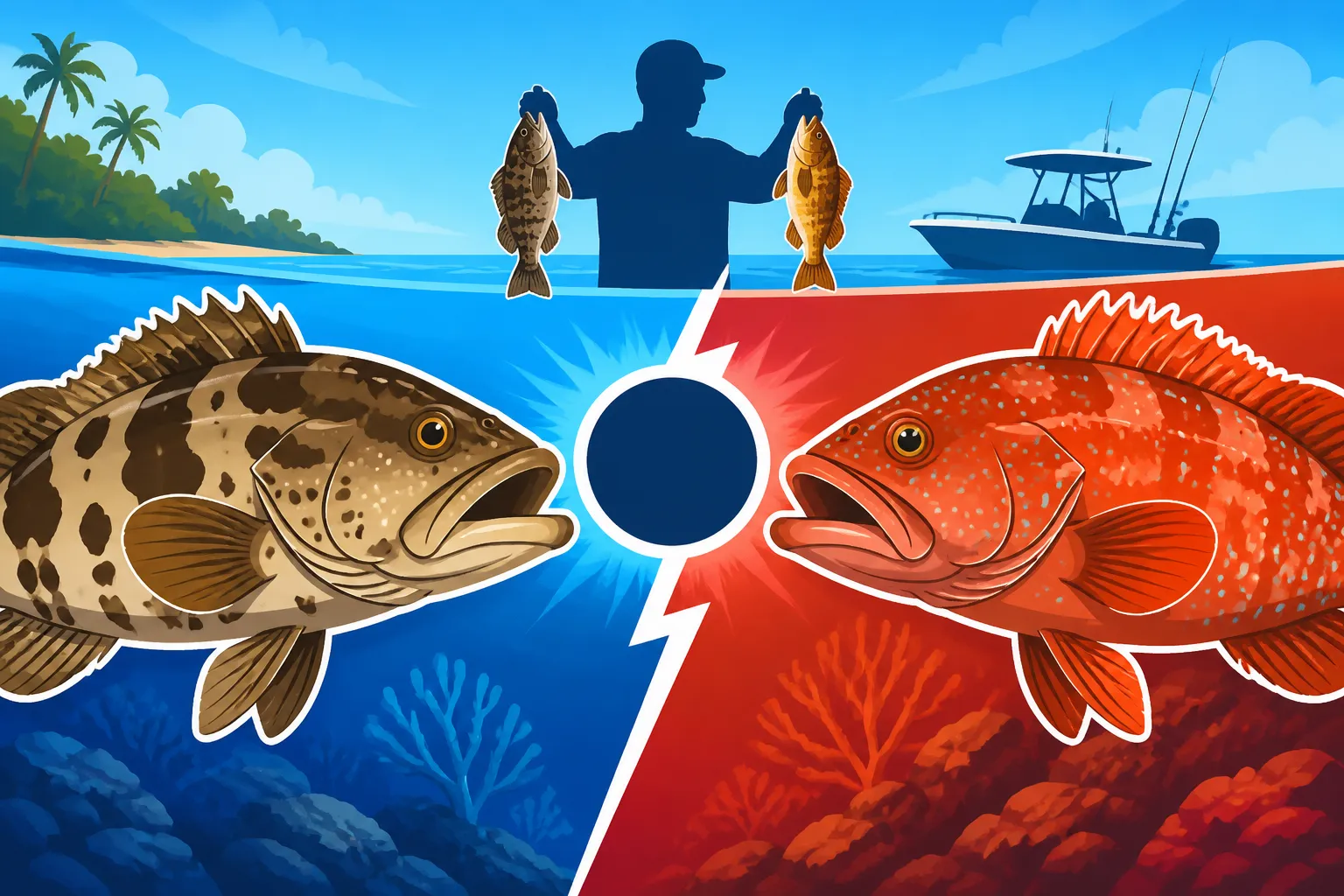
Let's break down the Gag Grouper's most reliable identifiers. One of the first things you'll notice about a Gag is its generally mottled gray or brownish-gray body, often with darker, worm-like markings or blotches that create a camouflage pattern. These markings are irregular and can sometimes resemble a chain-link fence or maze pattern. While their color can lighten or darken depending on their habitat and stress levels, these patterns are usually present.
Perhaps the most telling feature, and often the easiest to spot, is the distinct curve of their lower jaw. If you look closely at a Gag Grouper, you’ll see that the upper profile of its head is relatively straight, but the lower jaw extends further back than the upper jaw. More importantly, when you look at the angle of its mouth, the maxilla (the bone along the side of the upper jaw) typically extends past the rear margin of the eye. This gives the Gag a rather long, pointed snout appearance compared to some other grouper species. Their tail fin is also usually concave, meaning it's slightly indented in the middle, almost like a shallow "V" shape, rather than perfectly straight or rounded. As for fins, their pectoral fins are generally dark or mottled, matching the body, and the soft dorsal (top) and anal (bottom rear) fins have darker margins. If you're looking to gear up, a good pair of polarized sunglasses available on Amazon can really help you spot these details in clear water.
Common Habitats and Behaviors
Gag Groupers are true ambush predators that absolutely love structure. You’ll find them congregating around rocky reefs, coral heads, wrecks, artificial reefs, and even bridge pilings. They are masters of using these features for cover, darting out to ambush unsuspecting baitfish or crustaceans. When hooked, they'll make an immediate, powerful dive back into the structure, often trying to "rock you up" – a common term for breaking your line on a sharp edge. This behavior makes them incredibly exciting to catch but also challenging, requiring strong tackle and quick reflexes. Learning Jigging Technique for Grouper is often very effective for these fish, as it mimics their natural prey around structure.
These fish are also known to be somewhat migratory, especially the larger adults. They tend to move to deeper offshore waters during colder months, seeking warmer, more stable temperatures, and then migrate back to shallower, nearshore structures during warmer periods. This makes understanding Florida Fishing Seasons Explained crucial for targeting them. Their diet consists primarily of small fish like sardines, pinfish, and grunts, along with squid and various crustaceans. They’re opportunistic feeders, and presentation of live bait or jigs near their preferred structure is often the key to success.
Decoding the Red Grouper: Distinct Features
Now, let's turn our attention to the Red Grouper, another highly popular and delicious species found throughout Florida's coastal waters. While they share some similarities with Gag Groupers, they have their own set of unique characteristics that, once learned, make them much easier to differentiate. They might not always put up the same kind of fight as a Gag trying to break you off on structure, but they are still powerful fish that demand respect.
Key Identifying Marks of the Red Grouper
The name "Red Grouper" itself gives you a pretty good hint about their primary coloration. These fish typically display a reddish-brown or reddish-orange hue across their bodies, often adorned with scattered, irregular whitish spots or blotches. While they can also lighten or darken their overall color, the reddish undertones are almost always noticeable. Unlike the worm-like markings of the Gag, the Red Grouper's patterns are more like diffused splotches or individual spots.
One of the most reliable distinguishing features of a Red Grouper is its mouth. If you look at the maxilla, the bone that runs along the side of the upper jaw, it does not extend past the rear margin of the eye. This gives the Red Grouper a shorter, more blunt snout appearance compared to the Gag. Another important detail is their tail fin; it is usually straight or slightly convex (rounded), which is a clear contrast to the Gag's concave tail. Also, pay attention to the lateral line, which is typically well-defined and often a lighter color than the surrounding scales. Their pectoral fins tend to be a more uniform reddish or brownish color, often with a pale edge, rather than the mottled pattern seen on Gags. Having a good fish identification chart with you, perhaps laminated and bought from Amazon, can be a real lifesaver here.
Preferred Environments and Feeding Habits
Red Groupers have a slightly different preference when it comes to habitat compared to Gags. While they will certainly hang around hard bottom and ledges, they are much more commonly found over softer, sandy, or shell-hash bottoms interspersed with rocky patches, small ledges, or coral rubble. They are known for creating their own "holes" or depressions in the sandy bottom, where they can lie in wait for prey or seek shelter. When you're bottom fishing for them, you'll often feel them pull directly down into these holes, making it feel like you're stuck on the bottom initially. This unique behavior of retreating into the sand is a hallmark of the Red Grouper.
Their feeding habits are similar to Gags, preying on a variety of small fish, squid, and crustaceans. However, because they often inhabit sandier areas, their diet might include more bottom-dwelling crabs and shrimp. They are less prone to making the explosive "rock-up" runs that Gags are famous for, tending instead to pull with consistent, heavy pressure straight down. This makes them a bit more forgiving on lighter tackle, though still a formidable opponent. They are a staple of Florida Offshore Fishing Techniques and often caught when Bottom Fishing Technique for Snapper is employed, as they share similar habitats and feeding zones.
Side-by-Side Comparison: Gag vs. Red Grouper
Now that we’ve explored each species individually, let’s put them head-to-head. Comparing them directly makes their unique features stand out even more. It’s like looking at two siblings; they share a family resemblance, but each has their own distinct personality and appearance.
Visual Cues at a Glance
Sometimes, in the heat of the moment, or when a fish is thrashing around on deck, it can be tough to focus on every detail. This table provides a quick reference for the most important visual distinctions that will help you make a confident identification. Keep these points in mind when that fish comes over the rail.
| Feature | Gag Grouper | Red Grouper |
|---|---|---|
| Coloration | Mottled gray/brown, worm-like markings | Reddish-brown/orange, scattered white blotches |
| Maxilla (Upper Jaw Bone) | Extends past the rear margin of the eye | Does not extend past the rear margin of the eye |
| Tail Fin Shape | Concave (indented, shallow "V") | Straight or slightly convex (rounded) |
| Head Profile | Relatively straight upper head profile | More rounded or slightly convex upper head profile |
| Lower Jaw | Protrudes slightly more than upper jaw, often pointed | More even with upper jaw, blunter snout |
| Pectoral Fins | Usually dark and mottled, matching body | More uniform reddish/brown, sometimes pale edge |
| Habitat Tendency | Strong preference for hard structure (wrecks, reefs) | Often over sandy/shell bottoms with rubble, creates holes |
When you're out there, remember these key differences. The mouth is often the biggest giveaway for many anglers. If that upper jaw bone extends past the eye, you're likely holding a Gag. If it stops before or at the eye, it’s a Red. It sounds simple, but it's remarkably consistent. And for those really tough calls, consider snapping a quick photo before releasing it, just in case. This is especially important for fish that might be on the edge of a Florida Fishing License Requirements for Boat Captains check.
Behavioral Differences and Angler Observations
Beyond their physical appearance, the way these fish fight and where you typically encounter them can offer additional clues to their identity. While these aren't foolproof, they can certainly help reinforce your visual identification.
Gag Groupers are notorious for their explosive first run. As soon as you hook one, it's a race against time to pull them away from structure. They will aggressively try to break you off on anything sharp. You'll often hear experienced captains yell "Gag!" the moment they feel that characteristic fight. This immediate, powerful dive into cover is a hallmark of the Gag. They're excellent at finding that one sharp barnacle or rock crevice to cut your line, which is why Best Rod and Reel Setup for Florida Offshore Fishing often involves heavier gear when targeting them.
Red Groupers, while still strong, tend to pull with a more sustained, heavy pressure. They'll try to get into their "hole" in the sand, or just burrow down, making you feel like you've snagged the bottom. They don't typically make the same frantic dashes for sharp structure that Gags do, though they are perfectly capable of hiding in larger rocky areas. Many anglers describe the Red Grouper fight as a heavy, determined pull, whereas the Gag fight is more about quick bursts and an immediate run for cover. Both are fantastic fish, but their fighting styles can definitely give you a hint about which one you've got on the line. Being familiar with Florida Fishing Regulations and Bag Limits for both species is crucial, as their seasons and size requirements can differ.
Practical Tips for Anglers: Avoiding Common Mistakes
Even with all this knowledge, identifying fish in real-time, especially when the adrenaline is pumping, can be tricky. But there are some practical steps you can take to minimize mistakes and ensure you're always fishing responsibly.
What to Do When in Doubt
Let’s be honest: sometimes, despite your best efforts, you’re just not 100% sure. Maybe the light is bad, the fish is stressing, or it's a smaller specimen that hasn't fully developed its distinguishing features. In these moments, the absolute best course of action is to err on the side of caution. If you have any doubt whatsoever, release the fish immediately. It’s far better to release a legal fish than to keep an illegal one and face the consequences. This is a common mantra among ethical anglers, and it's particularly important when dealing with species that have complex regulations like grouper.
Another smart move is to have a small, waterproof fish identification card or a reliable app on your phone. Many official resources and even products on Amazon offer laminated cards with clear pictures and bullet points for quick reference. When you pull up a fish you're unsure about, take a moment, lay it on a wet surface, and calmly compare it to your guide. Snap a picture with your phone; often, reviewing the photo later can help you confirm your identification and learn for next time. Remember, minimizing the time a fish is out of the water is vital for its survival if you plan to release it. Always handle fish gently and use proper dehooking tools to ensure a healthy release.
Essential Gear for Responsible Grouper Fishing
Having the right gear isn't just about catching fish; it's about being able to comply with regulations and ensure the health of the fish you release. For grouper fishing, a few key items are non-negotiable. First, a reliable measuring device is paramount. Don't rely on guesswork or your rod's length. Get a sturdy, accurate measuring tape or ruler that's easy to read, preferably one that floats or attaches securely to your boat. You can find excellent, durable options on Amazon that are designed for marine environments. Knowing the exact length is critical for abiding by How Many Grouper Can You Keep in Florida?.
Next, investing in good dehooking tools is crucial, especially for gags and reds that tend to swallow baits. A long-nosed pliers or a specialized dehooker will allow you to quickly and safely remove hooks, minimizing harm to the fish. Lip grippers are also excellent for safely handling larger grouper, keeping your hands away from their sharp gill plates and teeth while providing a secure hold for measurement or photo opportunities. Finally, carrying a pair of heavy-duty gloves is wise. Grouper have abrasive skin and sharp fins, and a good pair of gloves will protect your hands while also allowing you to handle the fish more securely, preventing accidental drops. Being prepared makes all the difference for a safe, responsible, and enjoyable fishing trip.
Disclaimer
This article is for general informational purposes only and does not constitute professional advice. Laws, prices and regulations vary by location and change over time. Consult a qualified professional for guidance on your specific situation.