What Fish Do You Catch on a Night Charter?
Many anglers imagine Florida fishing under the bright sunshine, casting lines into sparkling turquoise waters. But let me tell you, if you’re only fishing during the day, you’re missing out on a whole other world of angling excitement! When the sun dips below the horizon, a new cast of characters comes out to play, and the fishing can be absolutely phenomenal. This guide is all about pulling back the curtain on Florida night fishing charters and revealing the incredible species you can target once darkness falls.
Why Night Fishing in Florida Is a Secret Weapon for Anglers
There's a magic to fishing under the stars that's hard to describe. The sounds change, the air cools, and the fish seem to get a whole new attitude. It's not just about the ambiance, though; there are very real, practical advantages to hitting the water after sunset, especially in Florida's warm climate.
Escaping the Daytime Heat and Crowds
Let's be honest, Florida summers are glorious, but the midday sun can be brutal. You're sweating, your bait's wilting, and often, the fish are feeling the heat too, becoming lethargic and less willing to bite. Then there are the crowds – packed boat ramps, busy waterways, and popular fishing spots teeming with fellow anglers. It can be a real buzzkill when you're trying to find some peace and quiet on the water.
Night fishing solves both these problems beautifully. The air temperature drops, often making for a much more comfortable experience for both you and the fish. Imagine a gentle breeze as you cast, no sunscreen required, just the moon and stars overhead. Plus, many of the daytime crowds have called it a day, leaving you with more elbow room and less competition for those prime fishing spots. This calmer environment means less boat traffic and noise, which can make a huge difference in how fish behave. It's a chance to truly relax and connect with the water in a way that's hard to do during the hustle and bustle of daylight hours.
The Nocturnal Feeding Frenzy
It’s not just about comfort; it's about biology. Many fish species become far more active after dark. They're often ambush predators that use the low light conditions to their advantage, making it harder for their prey to spot them. Think about snook, for instance – they're champions of stealth, and those dock lights and bridge shadows become their hunting grounds. The change in light triggers a natural feeding instinct for many species, turning what might be a slow daytime bite into an explosive nighttime frenzy.
Baitfish also behave differently at night, often schooling tighter or becoming disoriented by artificial lights, making them easier targets for larger predators. This shift in the food chain creates prime opportunities for anglers willing to embrace the dark. You might find that the fish that were completely uninterested during the day are suddenly hitting everything you throw at them, with an aggression you rarely see when the sun is high. This nocturnal advantage can lead to some truly memorable battles, often with larger, more elusive fish.
Top Saltwater Species You'll Hook on a Florida Night Charter
Florida's diverse waters offer an incredible array of fish that love to feed after the sun goes down. Depending on whether you're fishing inshore, nearshore, or venturing a bit further offshore, you'll encounter different, exciting species.
Inshore Thrillers Under the Lights
When most people think of night fishing in Florida, they often picture casting around illuminated docks, bridges, and inlets. This inshore environment is where some of the most exciting nocturnal action happens, especially for anglers targeting prized game fish.
- Snook: Without a doubt, snook are the kings of Florida's inshore night fishing scene. These powerful, elusive fish are ambush predators that thrive in low light conditions. You'll find them lurking in the shadows created by dock lights, bridge pilings, and mangrove edges, waiting for an unsuspecting baitfish or shrimp to swim by. They're notoriously hard fighters, often making explosive runs and acrobatic jumps, especially on light tackle. When you hook into a snook at night, it’s an experience you won’t soon forget. Charters specializing in night fishing will often focus heavily on these magnificent fish, using live bait like pilchards or scaled sardines, or artificial lures that mimic baitfish. If you're interested in learning more about these incredible fish, check out our Florida Snook Fishing Guide.
- Spotted Seatrout: While often associated with grass flats during the day, spotted seatrout also become very active at night, especially around dock lights and channel markers where baitfish congregate. They're attracted to the artificial light, which draws in their food source. Fishing for trout at night often involves drifting live shrimp under a popping cork or slowly working soft plastic jigs. They may not have the brute strength of a snook, but they offer consistent action and are excellent table fare. Many anglers find the quiet solitude of night trout fishing incredibly peaceful. You can find more detail on targeting them in our Florida Spotted Seatrout Fishing Guide.
- Mangrove Snapper: These cunning and tasty fish are another prime target for night anglers. Mangrove snapper are opportunistic feeders that will readily hit baits presented near structures like bridges, docks, and rocky shorelines. They have excellent eyesight in low light, making them fierce hunters after dark. Small live baits, cut bait, or even shrimp are highly effective. They're strong fighters for their size and provide a delicious reward at the end of the trip. Plus, unlike some species, their season is typically open year-round, offering consistent opportunities.
- Redfish: While not as exclusively nocturnal as snook, redfish will certainly feed throughout the night, particularly during outgoing tides around oyster bars, deeper channels, and under bridges. They use their keen sense of smell and touch to root out crustaceans and baitfish in the dark. A live shrimp or a scented soft plastic lure can be incredibly effective when targeting redfish after sunset. Just like snook, they put up a fantastic fight, and a big bull red under the moonlight is a truly special catch.
Nearshore and Offshore Nighttime Giants
If you're looking to venture beyond the immediate coastline, night charters can also take you to nearshore reefs or even further offshore for some truly epic battles with larger, deeper-dwelling species.
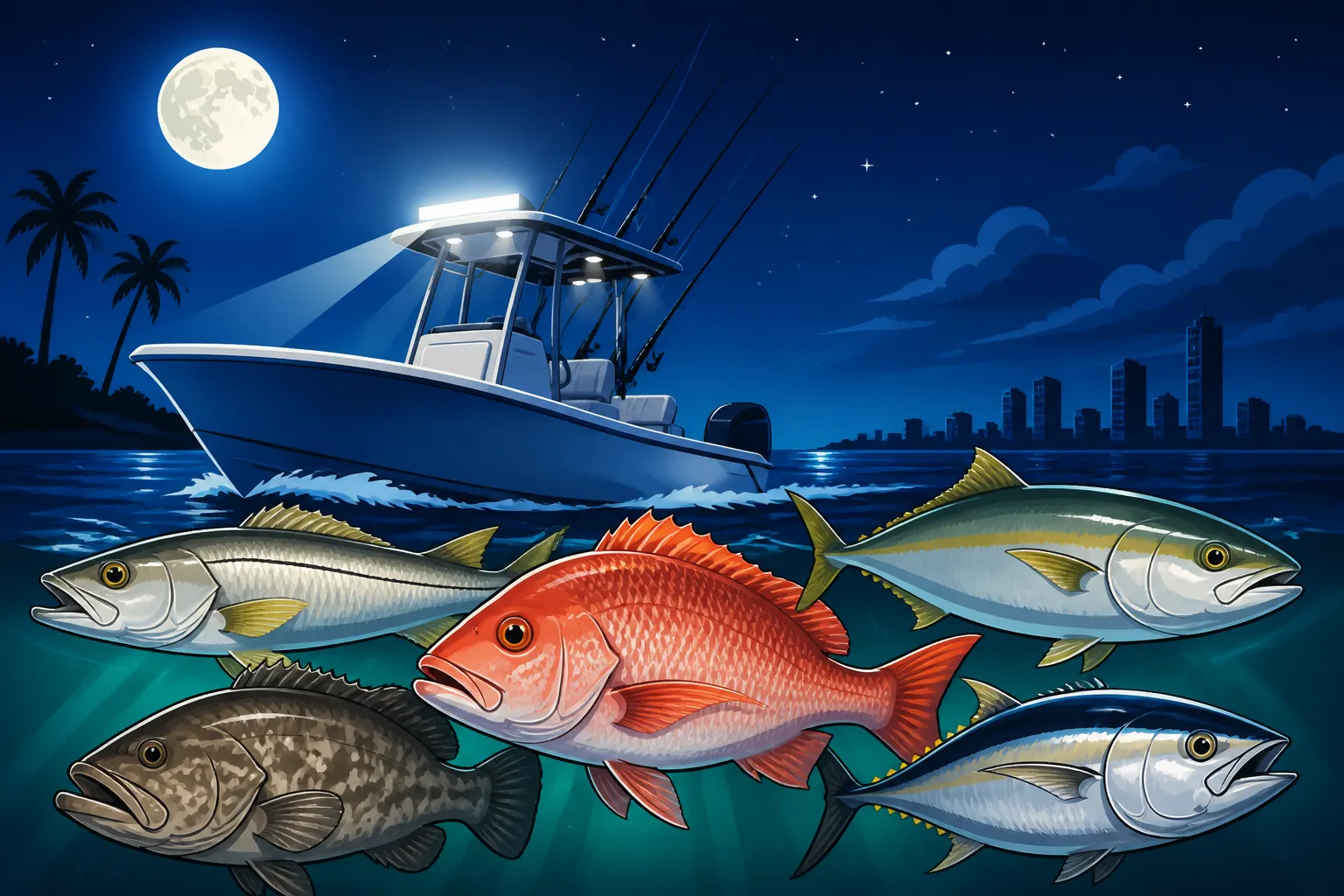
- Tarpon: The "Silver King" is legendary, and while many anglers chase them during the day, night fishing for tarpon around bridges and passes can be incredibly productive. These colossal fish often stage under large bridge spans, feeding on crabs and baitfish that get swept through with the current. It's a truly exhilarating experience to hook into a tarpon that might be over 100 pounds in the dark, with only the stars and bridge lights to illuminate its massive jumps. These trips require heavy tackle and a skilled captain. To learn more about these incredible fish, check out our Florida Tarpon Fishing Guide.
- Grouper and Snapper (Offshore Varieties): Many offshore species, particularly various types of grouper (like gag and red grouper) and snapper (such as mutton and lane snapper), are highly active after dark. They use the cover of night to hunt over reefs and wrecks. Deep-sea night charters often involve bottom fishing with cut bait or live baits over known structures. The lack of sun penetration allows these fish to move more freely from their daytime hiding spots, often resulting in more aggressive bites. These trips can be incredibly rewarding, both for the fight and for the amazing fresh fish you'll take home.
- Sharks: For those seeking a truly adrenaline-pumping experience, targeting sharks at night is an option on some charters. Many shark species, from blacktips and spinners to hammerheads and bull sharks, become more active and confident hunters after dark. Charters will often anchor up near channels or reefs and deploy large cut baits to attract these powerful predators. It's almost always a catch-and-release endeavor, providing an intense battle and a memorable story. Remember, safety is paramount when shark fishing, and a knowledgeable captain is essential.
Gear, Techniques, and What to Expect
Night fishing isn't just daytime fishing after hours; it requires some specific adjustments in your approach, your gear, and your mindset. Your charter captain will have the right equipment, but knowing a bit about what’s involved can enhance your experience.
Specialized Tactics for Nighttime Success
The key difference in night fishing is, of course, the lack of natural light. This means fish rely more on other senses, and you need to adapt your presentation accordingly.
- Focus on Artificial Lights: Inshore, any source of light is a magnet for baitfish, and where there's bait, there are predators. Dock lights, bridge lights, and even your boat's deck lights (if used strategically) can create productive fishing zones. Predators like snook and trout will sit just outside the halo of light, darting in to ambush prey.
- Scent and Sound: With limited visibility, scent becomes a crucial factor. Live bait is often king at night because its natural smell and movement are irresistible. If using artificials, consider scented lures or adding a scent attractant. Popping corks, which create a "chugging" sound, can also draw attention in the dark.
- Slower Retrieves: Often, a slower, more deliberate retrieve with artificial lures is effective at night. Fish may not be able to track fast-moving baits as easily, and a slower presentation gives them more time to zero in.
- Stealth is Key: Even though it's dark, noise can still spook fish. Be mindful of dropping tackle, banging cooler lids, or loud conversations. Approaching a spot quietly is just as important at night, if not more so, than during the day. This applies to both the boat's motor and your own movements on deck. Learn more about effective night strategies in Night Fishing Technique for Trout Under Dock Lights.
Preparing for Your Night Charter Adventure
While the charter provides most of the heavy lifting, a few personal preparations can make your night trip much more enjoyable.
- Dress in Layers: Even if the day was hot, nights in Florida can get surprisingly cool, especially on the water. Bring a light jacket or sweatshirt.
- Bug Spray: This is Florida. Mosquitos and no-see-ums can be active at night, especially in inshore areas. Don't forget the bug spray!
- Headlamp (Red Light Capable): While your captain will have lights, a small headlamp with a red light option is invaluable. Red light preserves your night vision and is less likely to spook fish than white light.
- Food and Drink: While some charters might provide basic refreshments, it's always a good idea to bring your own snacks and drinks to keep your energy up through the night.
- Proper Footwear: Non-slip, closed-toe shoes are essential for safety on a boat in the dark.
- Camera (with flash): You'll want to capture those epic catches! Just be mindful of blinding your captain or fellow anglers with a bright flash. For a more comprehensive list of what to bring, check out What to Bring on a Florida Fishing Charter.
Finding the Right Night Charter for Your Target Species
Booking a night charter requires a little more specificity than a general daytime trip. You'll want to make sure your captain is experienced in nocturnal fishing and targets the species you're most interested in.
Specialization Matters for Night Trips
Not all charters are created equal, and not all captains specialize in night fishing. When you're looking to book, make sure to ask about the captain's experience and what species they primarily target after dark. A captain who regularly fishes bridges for tarpon might not be the best choice if your heart is set on snook under dock lights, and vice-versa. Many experienced captains offer specific "night fishing" or "snook lights" trips.
Online platforms like FishingBooker can be incredibly helpful here. You can often filter by trip type, and read reviews that specifically mention night fishing experiences. When browsing, look for mentions of target species like "night snook" or "tarpon under the bridge." Don't hesitate to call the captain directly to discuss your expectations and what's biting best at night during your visit. This upfront communication ensures you're on the same page and set up for success. Understanding the nuances of different charter offerings can be found in our comprehensive Florida Fishing Charter Guide.
Understanding Charter Options and Locations
Florida offers diverse opportunities for night charters across the state. From the bustling bridges of South Florida to the quiet backwaters of the Gulf Coast, the fishing experiences vary greatly.
- Inshore Light Tackle: Many night charters focus on the immediate inshore waters, targeting snook, trout, and snapper around residential docks, bridges, and lighted canals. These trips often use lighter tackle, providing exciting battles with strong fish in tight quarters. Locations like Tampa Bay, the Indian River Lagoon, and areas around Fort Lauderdale and Miami are hotbeds for this type of fishing. If you're looking for options, you might explore Night Fishing Charter Options in Tampa.
- Bridge Tarpon and Goliath Grouper: In certain areas, particularly around large causeways and bridges in Southwest Florida and the Keys, specialized charters target monster tarpon or even the protected goliath grouper (strictly catch-and-release, of course) at night. These require heavier gear and a captain intimately familiar with the currents and structure.
- Offshore Reef and Wreck Fishing: For those willing to head further out, some offshore charters run night trips to deepwater reefs and wrecks. Here, you'll be dropping baits to target snapper, grouper, and other bottom dwellers that become more active without the sun. These trips can be particularly productive for filling the cooler with delicious fish.
The best way to choose is to think about what kind of fish you want to catch and then find a reputable charter that consistently delivers that experience after dark. A good captain on a platform like FishingBooker will clearly outline their night trip offerings, including target species and techniques.
Comparing Night vs. Day Charters for Specific Species
Deciding whether to book a night or day charter often comes down to the specific fish you're hoping to catch and the kind of experience you're after. Let's look at some popular species and how the time of day can influence your success.
| Species | Night Charter Advantage | Day Charter Advantage | Notes |
|---|---|---|---|
| Snook | Increased activity, easier to locate around lights, less pressure. | Sight fishing opportunities in clear water, wider range of habitat. | Night is often preferred for larger, more consistent snook bites. |
| Spotted Seatrout | Consistent bite under lights, larger schools in concentrated areas. | Visual cues for grass flats, wading opportunities. | Night can yield bigger trout, especially on outgoing tides. |
| Mangrove Snapper | Aggressive feeding around structure, less shy than daytime. | Easier to navigate complex structures visually. | Excellent at night; often less line-shy. |
| Tarpon | Highly concentrated under bridges, predictable feeding patterns. | Visual hunting on flats, rolling activity in passes. | Night bridge fishing can be incredibly productive for large tarpon. |
| Grouper/Snapper (Offshore) | Greater activity over reefs/wrecks, fish move more freely. | Easier navigation, visual identification of structure. | Many bottom fish are very active nocturnal feeders. |
| Redfish | Can be less wary, will still hunt in certain areas. | Sight fishing on shallow flats, tailing activity. | More of a bonus catch at night; daytime sight fishing is classic. |
| Sharks | Highly active, confident hunters, strong scent trails are key. | Can spot sharks cruising, different species might be targeted. | Night is prime time for thrilling shark battles. |
Ultimately, the best time to fish often depends on the species, the tide, and even the moon phase. Your charter captain will be the ultimate expert, guiding you to the most productive waters.
Disclaimer
This article is for general informational purposes only and does not constitute professional advice. Laws, prices and regulations vary by location and change over time. Consult a qualified professional for guidance on your specific situation.