Florida Red Snapper Minimum Size
There's nothing quite like the thrill of feeling that distinct tug on your line, the one that tells you a powerful red snapper is on the other end. But that excitement can quickly turn into anxiety if you're not absolutely certain about the rules once you get that beautiful fish to the boat. Fishing Florida's abundant waters for red snapper comes with a strict set of guidelines, and knowing the minimum size limit is paramount to enjoying a legal and responsible day out. This guide will walk you through everything you need to know about the Florida red snapper minimum size, ensuring you can fish with confidence and contribute to the health of this incredible fishery.
Understanding Red Snapper Regulations in Florida
Fishing for red snapper in Florida is a truly cherished experience, drawing anglers from all over for its challenging fight and delicious reward. However, because red snapper populations have faced challenges over the years, both state and federal agencies have put very specific rules in place to help these fish thrive. It’s not just about catching them; it's about making sure future generations can experience that same thrill. Ignoring these rules, especially size limits, isn't just a minor oversight; it can have significant consequences, not to mention a negative impact on the long-term health of the species.
The Importance of Size Limits for Conservation
Size limits aren't arbitrary numbers pulled out of a hat. They are carefully determined by marine biologists and fisheries managers who study the life cycle of red snapper. The primary goal is to protect juvenile fish, allowing them to grow to a mature size and reproduce at least once before they are harvested. This strategy helps maintain a healthy breeding stock, which is absolutely vital for replenishing the population. Without these regulations, anglers could inadvertently deplete the younger fish, severely impacting the species' ability to recover and sustain itself. It’s a delicate balance, and our adherence to these rules plays a direct role in that equilibrium. Think of it as investing in the future of Florida fishing. How Florida Fishing License Fees Fund Conservation is a great resource if you want to dive deeper into why these regulations exist.
Navigating State vs. Federal Waters for Red Snapper
One of the most crucial distinctions to grasp when targeting red snapper is whether you're fishing in state or federal waters. This distinction isn't just an administrative detail; it often comes with different sets of rules, including varying minimum size limits, bag limits, and even season dates. Generally, state waters extend nine nautical miles off Florida's Gulf Coast and three nautical miles off the Atlantic Coast. Beyond those lines, you're in federal waters, and federal regulations take precedence. It's a common mistake for anglers to assume state rules apply everywhere, but that's a quick way to find yourself in hot water with law enforcement. Always know your location and the applicable rules. State Waters vs Federal Waters Fishing Rules in Florida provides an excellent overview of these boundaries.
Florida Red Snapper Minimum Size by Region
The minimum size for red snapper in Florida is not a one-size-fits-all rule; it changes depending on whether you're fishing in the Gulf of Mexico or the Atlantic Ocean, and also whether you're in state or federal waters. This regional approach acknowledges the different management needs and stock assessments for each body of water.
Gulf of Mexico Red Snapper Size Limits
For anglers targeting red snapper in the Gulf of Mexico, the regulations are typically among the most discussed and often change, so staying informed is critical.
Gulf State Waters Minimum Size
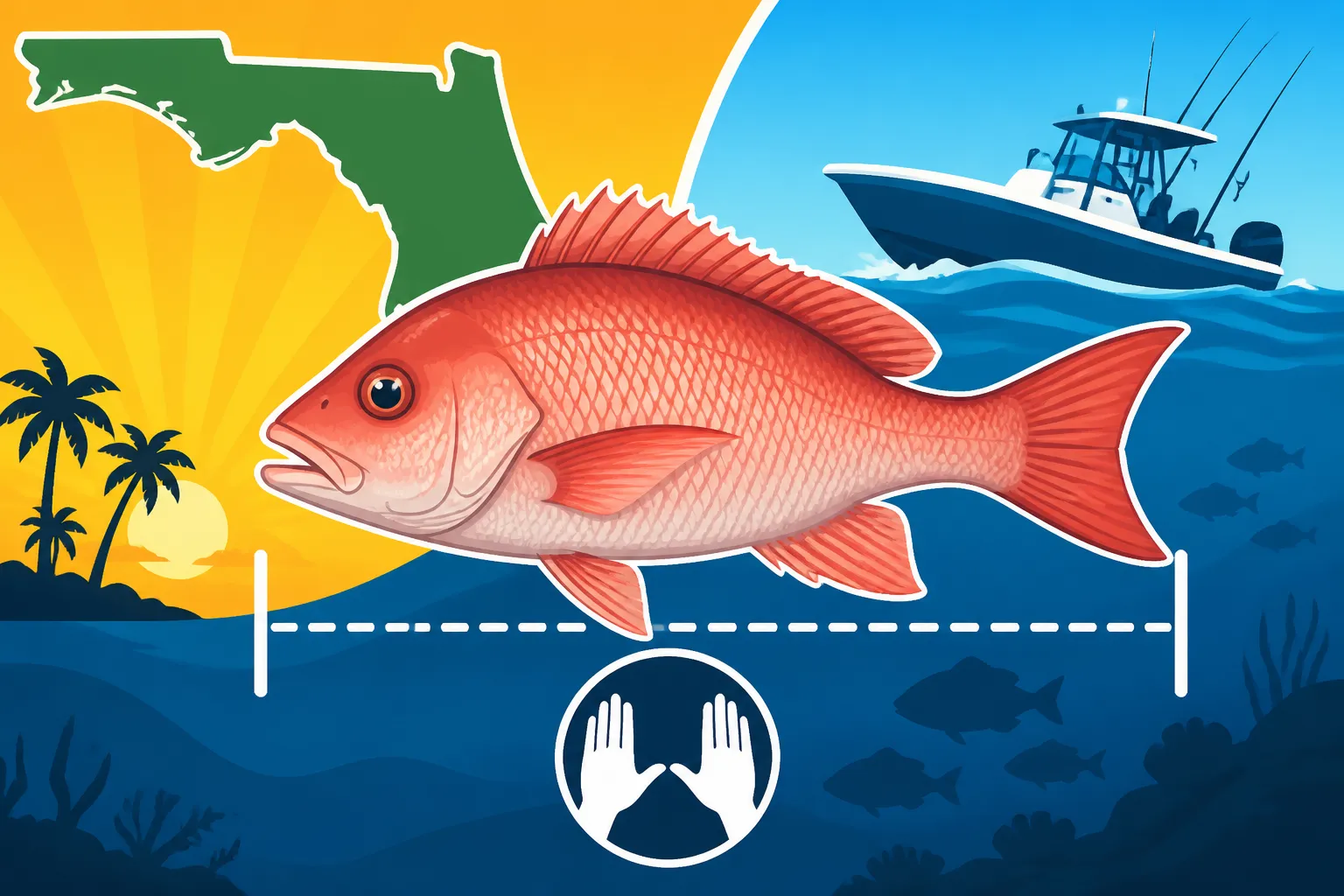
In Florida's Gulf state waters (up to nine nautical miles offshore), the minimum size limit for recreational harvest of red snapper is often 16 inches total length. This measurement is taken from the tip of the jaw to the longest lobe of the tail, with the tail pinched to get the maximum length. It’s vital to use a reliable measuring device to ensure accuracy. Catching an undersized fish means it must be immediately and carefully released.
Gulf Federal Waters Minimum Size
Once you venture beyond Florida's Gulf state waters into federal territory, the minimum size limit typically increases. For recreational red snapper in Gulf federal waters, the minimum size is often 18 inches total length. Again, this is measured with the tail pinched. The federal season is also usually much shorter and highly publicized, making those few open days incredibly popular. Always double-check the latest regulations from the Florida Fish and Wildlife Conservation Commission (FWC) and the Gulf of Mexico Fishery Management Council before heading out.
Atlantic Ocean Red Snapper Size Limits
The Atlantic coast of Florida also offers opportunities for red snapper, but these are generally less frequent and often fall under different regulatory frameworks due to separate stock assessments.
Atlantic State Waters Minimum Size
On the Atlantic side, within Florida's state waters (up to three nautical miles offshore), red snapper minimum size limits can vary. Historically, the Atlantic red snapper season has been extremely limited, sometimes only open for a few specific days each year. When open, the minimum size for recreational harvest in Atlantic state waters has often been set at 20 inches total length. This larger size reflects different management goals and the status of the Atlantic stock.
Atlantic Federal Waters Minimum Size
Similar to the Gulf, once you move into federal waters off Florida's Atlantic coast, different rules apply. For recreational red snapper in Atlantic federal waters, the minimum size limit is often 20 inches total length. It's crucial to understand that federal waters off the Atlantic coast are primarily managed by the South Atlantic Fishery Management Council, which works in conjunction with NOAA Fisheries. Their seasons are often even more restrictive than the Gulf, sometimes with only a few days or weekends open each year, or no season at all for recreational harvest. Always verify the latest announcements from both FWC and federal agencies for any planned Atlantic red snapper seasons and their associated size limits.
Here’s a quick glance at how these can vary, but remember to always check current regulations before your trip!
| Region | Water Type | Typical Minimum Size (Total Length) | Notes |
|---|---|---|---|
| Gulf of Mexico | Florida State | 16 inches | Up to 9 nautical miles offshore |
| Gulf of Mexico | Federal | 18 inches | Beyond 9 nautical miles offshore |
| Atlantic Ocean | Florida State | 20 inches | Up to 3 nautical miles offshore; seasons often very limited |
| Atlantic Ocean | Federal | 20 inches | Beyond 3 nautical miles offshore; seasons often very limited/closed |
How to Accurately Measure and Handle Red Snapper
Catching a beautiful red snapper is just half the battle; the other half is making sure it meets the legal requirements and, if it doesn't, releasing it properly to ensure its survival. This isn't just about avoiding a fine; it's about respecting the fish and the fishery.
Proper Measuring Techniques
The difference between a legal fish and an undersized one can often be as little as an inch or two, making accurate measurement critical. For red snapper, like many other species, Florida regulations specify "total length."
- Lay the Fish Flat: Place the fish on its side on a flat surface, such as a measuring board or cooler lid. Make sure it's as straight as possible.
- Mouth to Tail: Position the tip of the fish's jaw (mouth closed) at the zero mark of your measuring device.
- Pinch the Tail: Gently but firmly pinch the tail fin lobes together to get the longest possible measurement. This ensures you're getting the full "total length" as defined by regulations.
- Read the Measurement: Read the length at the point where the pinched tail meets the measuring device. If it falls short of the minimum, it's a catch-and-release situation.
It's a good idea to have a durable, visible measuring device on board. You can find excellent options on platforms like Amazon, from simple tape measures affixed to your cooler to rigid, marked fish rulers designed for saltwater environments. Always make sure your measuring device is clearly marked and easy to read, even when wet.
Safe Release Practices for Undersized Fish
Even when you're being careful, you'll inevitably catch fish that are too small or out of season. Knowing how to release them properly dramatically increases their chances of survival. This is especially true for deep-water species like red snapper, which are prone to barotrauma.
- Minimize Handling Time: The less time the fish spends out of the water, the better. Have your measuring device, dehooking tool, and release equipment (like a descending device) ready before you even bring the fish in.
- Wet Hands/Gloves: If you need to handle the fish directly, wet your hands thoroughly or wear wet gloves. Dry hands can remove the fish's protective slime coat, making it vulnerable to disease.
- Support the Fish: Support the fish horizontally, especially around its belly. Avoid holding it vertically by the jaw or tail alone, as this can damage internal organs.
- Use a Dehooker: Whenever possible, use a dehooking tool to remove the hook while the fish is still in the water or with minimal handling on deck. This is much better than trying to wrench it out with your fingers. Amazon has a wide selection of specialized dehookers that make this process easier and safer for the fish.
- Address Barotrauma: Red snapper are often caught in deeper waters, and bringing them up quickly can cause barotrauma—a buildup of gases in their swim bladder. Signs include a bloated belly, bulging eyes, or stomach protruding from the mouth.
- Descending Devices: The best way to mitigate barotrauma is to use a descending device (like a 'fish descender' or 'seaqualizer'). These tools allow you to quickly return the fish to the depth it was caught, recompressing its swim bladder. Many reputable fishing stores and online retailers like Amazon carry these essential tools.
- Venting (Last Resort): While less ideal than a descending device, venting a fish (inserting a hollow needle into the swim bladder to release gas) can be used as a last resort if you know exactly how to do it. Improper venting can be fatal. If you're not trained, avoid this method.
- Gentle Release: Once the hook is removed and any barotrauma addressed, gently lower the fish back into the water headfirst, allowing it to swim away on its own.
Practicing these safe release methods not only ensures compliance but also contributes directly to the sustainability of the red snapper fishery. Catch and Release Best Practices for Snook offers similar principles that apply to many saltwater species.
Penalties for Violating Red Snapper Size Limits
The state of Florida and federal authorities take fishing regulations very seriously, and for good reason. Violating size limits or other red snapper rules isn't just a slap on the wrist; it can lead to significant fines, confiscation of gear, and even more severe legal repercussions. It's a risk simply not worth taking.
Fines and Citations
If a Florida Fish and Wildlife Conservation Commission (FWC) officer or federal agent finds you in possession of undersized red snapper, or fish caught out of season or over the bag limit, you will likely receive a citation. The specific fine amount can vary widely depending on the severity of the offense, the number of undersized fish, and whether it's a first offense or a repeat violation. These fines can range from a few hundred dollars to thousands. Furthermore, these are often considered criminal infractions, which can lead to a court appearance and potentially a mark on your record, not just a simple ticket. Penalty for Fishing Without a License in Florida discusses similar consequences for other violations.
Confiscation and Other Repercussions
Beyond monetary fines, law enforcement has the authority to confiscate illegal catches, and in some cases, even your fishing gear. Imagine losing your prized rod and reel combo, or worse, your boat. Repeat offenders or those found with egregious violations might also face suspension of their fishing privileges, meaning you wouldn't be allowed to fish in Florida waters for a specified period. In the most severe cases, particularly involving commercial-level violations or attempts to illegally sell fish, federal charges could be filed, leading to much heavier penalties, including potential jail time. This is why being meticulous about checking regulations, measuring correctly, and releasing properly is not just good practice, but a critical part of being a responsible angler in Florida.
Always, always double-check the current FWC regulations and federal rules before every trip targeting red snapper. Seasons, bag limits, and even minimum sizes can change year to year, sometimes even mid-season, based on stock assessments and management decisions. A quick search online, a call to FWC, or checking the Florida GoOutdoors App Fishing License are easy ways to stay informed.
Disclaimer
This article is for general informational purposes only and does not constitute professional advice. Laws, prices and regulations vary by location and change over time. Consult a qualified professional for guidance on your specific situation.