What Do Tarpon Eat?
One of the most thrilling experiences for any angler in Florida is coming face-to-face with a massive tarpon, often called the "Silver King." But if you've ever spent hours casting to rolling fish without a bite, you've likely asked yourself: what in the world do these magnificent creatures actually eat? It's a question that can make or break a fishing trip, and understanding their diet is the ultimate key to unlocking their secrets. This guide dives deep into the complex and often surprising dietary habits of Florida tarpon, helping you understand what makes them tick and how to tempt them onto your line.
The Dynamic Diet of Florida's Silver King
Tarpon aren't picky eaters in the way a snook might be for a particular bait, but they are certainly opportunistic predators with a preference for easy meals. Their diet isn't static; it shifts constantly based on what's available in their environment, the time of year, and even the time of day. They are truly masters of adaptation when it comes to finding their next meal.
Opportunistic Feeding Strategies
Tarpon are the epitome of an opportunistic feeder. This means they'll gobble up whatever is readily available and easiest to catch in their immediate vicinity. They don't expend unnecessary energy chasing down a single, fast-moving baitfish if there's a school of stunned mullet struggling nearby. Think of them as the ultimate diners, always looking for the biggest buffet spread.
This opportunistic nature is why you'll hear so many different stories from anglers about what a tarpon ate. One day, they might be crushing pinfish on the flats, and the next, they're leaping after shrimp in a backcountry creek. Their powerful, upward-facing mouth is perfectly designed for gulping prey at the surface, but they're equally adept at sucking unsuspecting morsels off the bottom. It's not uncommon to see a tarpon roll on the surface, then dive quickly to intercept a school of baitfish or a crab scuttling along the seabed. Their sheer size and incredible burst speed allow them to capitalize on a wide variety of prey, making them a formidable predator in nearly any environment they inhabit.
Primary Prey: What's on the Menu?
While tarpon are opportunistic, they do have a "go-to" list of favorite foods. These are the main staples that make up the bulk of their diet across Florida's diverse waters. Knowing these key species is paramount for anyone hoping to fool a tarpon.
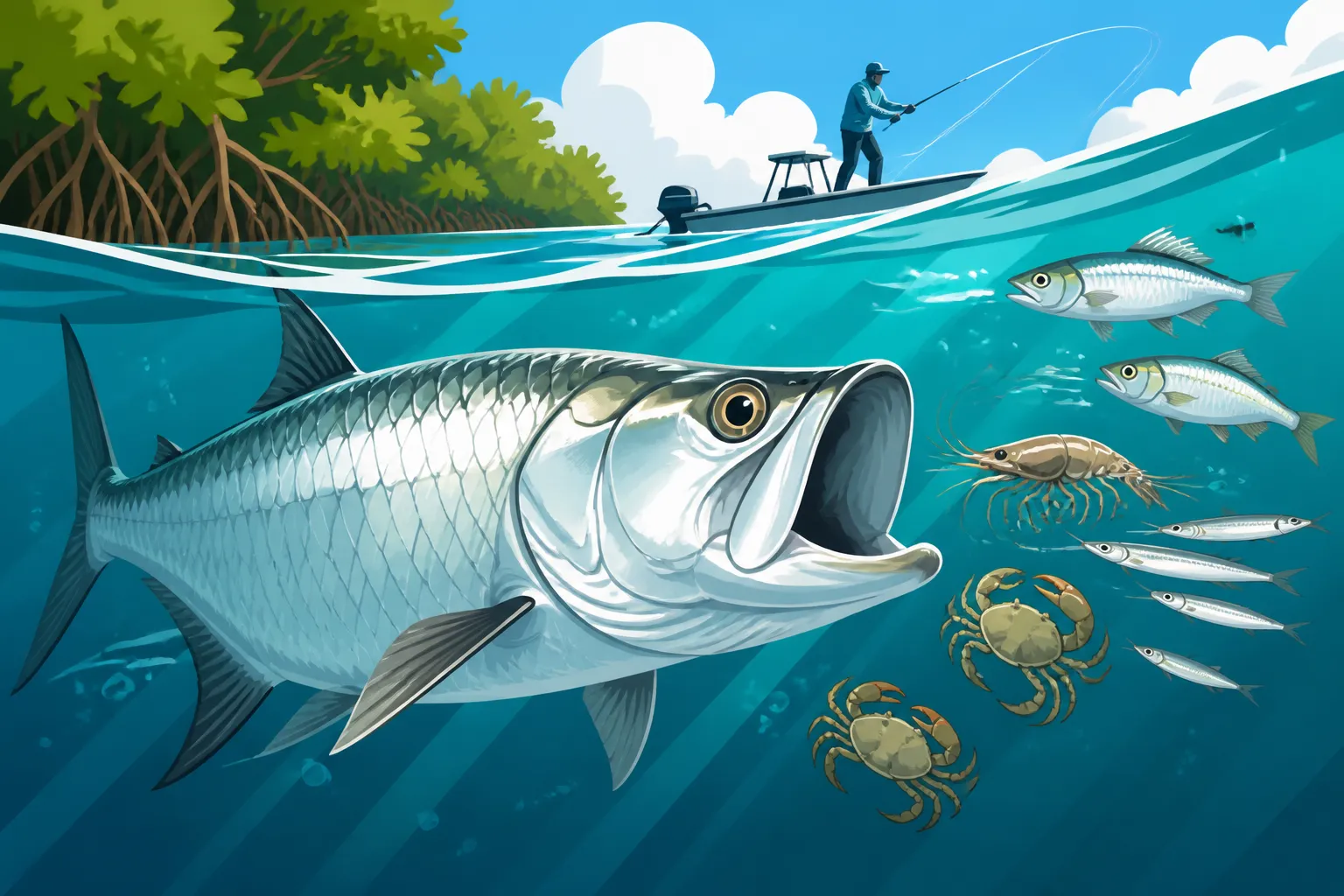
Mullet, particularly finger mullet and larger sizes, are arguably the most consistent and important food source for tarpon, especially in inshore and nearshore waters. These oily, schooling fish are abundant in Florida's estuaries, coastal rivers, and along beaches. Tarpon will gorge on them, often crashing through schools with incredible force, sending mullet flying in every direction. Best Bait for Snook Fishing in Florida often includes mullet, highlighting its universal appeal to many predatory fish. Beyond mullet, other schooling baitfish like threadfin herring, sardines (pilchards), and scaled sardines are also high on the list. These smaller, silvery fish often congregate in massive schools, making them easy targets for a hungry tarpon. You'll frequently see tarpon "bust" these schools, sending sprays of bait into the air as they feed.
But it's not just fish. Crustaceans play a huge role, especially shrimp and various types of crabs. In backcountry areas, during certain tides, and particularly when shrimp or crab migrations are underway, tarpon will key in heavily on these invertebrates. They might seem like small snacks for such a large fish, but when present in abundance, they offer an easy and energy-rich meal. Pass crabs, specifically, are a legendary tarpon bait during their migrations through inlets and passes, leading to some of the most exciting fishing imaginable. Anglers often keep a sharp eye on local bait shops, as the availability of these specific prey items can give strong clues to what the tarpon are currently focusing on.
Habitat and Seasonal Shifts in Tarpon Foraging
The Florida landscape is incredibly varied, from shallow grass flats to deep offshore wrecks, and tarpon move through all of it. Their diet is intrinsically linked to these diverse habitats and the seasonal cycles that dictate the presence and abundance of different prey.
Estuarine and Inshore Delicacies
When tarpon are found in the shallow, nutrient-rich estuarine and inshore environments of Florida, their diet tends to be heavily dominated by the baitfish and crustaceans native to those areas. Think of the Indian River Lagoon, Tampa Bay, or the Everglades backcountry. Here, small schooling fish like finger mullet, pilchards, and sometimes even juvenile snook or redfish become targets. Florida Tarpon Fishing Guide will often detail how these fish are pursued in shallow water.
In these environments, tarpon also have a strong preference for crustaceans. Grass shrimp, often found clinging to seagrass beds, are a primary food source for smaller, juvenile tarpon, but larger adults will also slurp them down by the mouthful when concentrations are high. Blue crabs and stone crabs, especially smaller, soft-shelled individuals, are another common find. Anglers targeting tarpon in these areas will often use live shrimp or small crab imitations. For those fishing the mangroves, tarpon are known to ambush anything that drops into the water, from small lizards to juvenile birds, showcasing their broad palate. The key is recognizing the local bait at any given time.
Offshore and Migratory Feasts
As tarpon undertake their annual migrations, particularly those moving along the coast or heading to offshore spawning grounds, their diet can shift dramatically. They move from the sheltered, prey-rich estuaries to the vastness of the open ocean, where different food sources become available.
During these migrations, larger, pelagic baitfish become more important. Threadfin herring and sardine schools are still key, but larger species like goggle eyes, ballyhoo, and even small Spanish mackerel might enter the diet. These are often targeted by tarpon feeding aggressively near the surface or along current lines. The sheer abundance of these baitfish during the Florida Tarpon Migration Timing allows tarpon to feed efficiently, building up energy reserves for their long journeys. It’s also during these offshore movements that tarpon might encounter and consume cephalopods like squid, though perhaps less frequently than other fish species. Understanding these offshore dietary preferences is critical for anglers targeting these migrating giants, as traditional inshore baits may prove less effective.
How Seasons Dictate the Buffet
Florida's distinct seasons, even subtle ones, profoundly impact the availability of prey and, consequently, the tarpon's diet. Warm summer waters bring an explosion of baitfish, while cooler winter temperatures can push tarpon to seek out different food sources or even go into a state of torpor.
In the warmer months, especially from spring through fall, baitfish are incredibly abundant. Mullet runs, massive schools of sardines, and shrimp hatches provide an endless buffet. This is when tarpon are most active, often feeding aggressively on schools of bait near the surface. Anglers will see them rolling and showering bait, indicating intense feeding activity. However, during the cooler winter months, many of these baitfish move south or into deeper, warmer pockets. Tarpon that remain in Florida's waters during winter often become sluggish and focus on less active prey, or they may concentrate in deep canals and warm-water discharges. During these times, they might feed more on bottom-dwelling crustaceans or less active fish, becoming much harder to entice. Knowing the best time of year to catch tarpon in Florida directly correlates with understanding these seasonal shifts in prey abundance and tarpon feeding behavior.
Angler's Approach: Mimicking Tarpon's Natural Food Sources
The ultimate goal for any tarpon angler is to present a bait or lure that perfectly imitates what the tarpon are naturally eating. This isn't always easy, as their preferences can change on a dime, but with a good understanding of their diet, you can significantly increase your chances.
The Art of Live Bait Presentation
When tarpon are actively feeding on live bait, there's often no substitute for the real thing. The natural scent, erratic movement, and life-like appearance of a healthy live baitfish or crustacean can be irresistible. The trick is presenting it correctly.
For baitfish like mullet, pinfish, or threadfin herring, a common rigging method involves a circle hook through the nose, lips, or just behind the dorsal fin. This allows the bait to swim naturally and minimizes damage. The size of the bait should match what the tarpon are currently eating; if they're crashing on small finger mullet, a foot-long mullet might be ignored. When fishing areas with current, like inlets or passes, drifting a live bait is often highly effective. For crabs, such as pass crabs, hooking them through a point on their shell (usually one of the outer points) allows them to drift naturally with the current. Shrimp are typically hooked through the tail or the horn of the head. Patience and careful observation are key here; watch for tarpon rolling or "gulping" to understand their location and possible feeding patterns. Sometimes, even the splash of a well-placed live bait can trigger a predatory response from an otherwise finicky tarpon.
Enticing Tarpon with Artificial Lures
While live bait often reigns supreme, artificial lures can be incredibly effective, especially when tarpon are scattered or actively chasing schools of bait. The advantage of lures is their durability, castability, and the ability to cover more water quickly.
Hard-bodied plugs and soft plastics that imitate mullet, sardines, or pinfish are top choices. MirrOlure MirrOdine, Rapala X-Rap, and various lipped plugs are popular for their realistic profiles and enticing swimming actions. Anglers often keep a wide array of colors and sizes on hand, as tarpon can be surprisingly selective about what they'll hit on a given day. You can find a vast selection of these on Amazon, often with different dive depths and rattle features to mimic distressed bait. Soft plastic swimbaits, like the Hogy Pro Tail Paddles or other large paddle tails, are also fantastic, especially when fished with a heavy jig head to get them down to cruising fish. What Pound Test Line for Tarpon Fishing? will give you an idea of the strength needed when using these lures, as a tarpon strike can be explosive.
Fly anglers, too, have a plethora of options. Large fly patterns like "Tarpon Toads," "Black Death," and "Cockroach" patterns are designed to imitate common baitfish or crabs. Fly Fishing for Florida Tarpon is an art form, requiring precise casting and stripping techniques to make the fly appear alive and irresistible. The trick with any artificial lure is to present it naturally, mimicking the movement of a real baitfish or crab trying to escape. A retrieve that's too fast or too slow, or an unnatural presentation, can send a tarpon veering away. Experimentation with retrieve speed, pauses, and twitches is crucial until you find what triggers a strike.
Decoding Tarpon Feeding Behavior for Success
Beyond knowing what tarpon eat, understanding how they eat and what drives their appetite is invaluable. Tarpon are not always hungry, and recognizing the subtle cues of a feeding fish versus a cruising, uninterested one can save you hours of fruitless casting.
Reading the Water: Signs of a Feeding Tarpon
Tarpon are often visible on the surface, making them a prime target for sight-fishing, but not every rolling tarpon is a feeding tarpon. Many times, they are simply gulping air to supplement oxygen uptake in warmer, less oxygenated waters, or just cruising leisurely. Knowing the difference is key to avoiding frustration.
True feeding behavior is much more aggressive and purposeful. Look for "busts" – violent explosions on the surface where tarpon are actively chasing and crashing through schools of baitfish. You might see baitfish showering out of the water, sometimes with the dark silhouette of a tarpon close behind. Another sign is "gulping" or "sipping," where a tarpon slowly opens its mouth at the surface, taking in water and often small, slow-moving prey like grass shrimp or small crabs. This is a more subtle feeding behavior, often observed on calm flats. In deeper water or current, look for fish hanging under birds that are diving for bait, or for strong, deliberate pushes of water. Understanding these visual cues helps you determine if the fish are in a feeding mood. Learning How to Sight Fish for Tarpon on the Flats is a skill that will greatly improve your success.
Environmental Factors Affecting Appetite
A tarpon's appetite isn't just about the presence of food; it's heavily influenced by environmental conditions. Water temperature, tide, moon phase, and even barometric pressure can all play a role in whether a tarpon decides to eat or not.
Tarpon are very sensitive to water temperature. They prefer warmer water, generally above 70°F (21°C). If the water is too cold, they become lethargic and their metabolism slows down, making them less likely to feed aggressively. Strong cold fronts can send them into deeper, warmer channels where they become almost dormant. Tide is another massive factor, especially in coastal areas. Moving water concentrates bait and can push it into ambush points, making tarpon more active. Often, an outgoing tide near a pass, or an incoming tide flooding a flat, will trigger a feeding frenzy. The moon phase is also widely believed to influence tarpon activity, with many anglers swearing by certain phases for peak action. Finally, abrupt changes in barometric pressure, often associated with approaching storm fronts, can sometimes trigger a pre-front feeding binge, while a stable, high-pressure system might lead to more lethargic fish. Understanding these factors will help you predict when and where tarpon are most likely to be actively hunting.
Common Tarpon Prey & Corresponding Angler Strategies
To help you visualize the connection between what tarpon eat and what anglers use, here's a quick reference table.
| Primary Prey Item | Typical Habitat | Live Bait Angler Strategy | Artificial Lure/Fly Angler Strategy |
|---|---|---|---|
| Mullet (Finger/Adult) | Estuaries, shallow flats, beaches, inlets | Freeline, slow troll, drift | Large topwater plugs, swimbaits, lipped plugs, Gulp! Mullet |
| Sardines/Threadfin Herring | Nearshore, inlets, open water, grass flats | Freeline, under popping cork | Soft plastic jerkbaits, small lipped plugs, flies (e.g., Surf Candy) |
| Pinfish | Grass flats, near structure | Freeline, slow troll, under cork | Soft plastic swimbaits (e.g., MirrOlure Lil' John), jigs |
| Shrimp | Backcountry, estuaries, grass flats | Under popping cork, freeline | Soft plastic shrimp imitations (e.g., D.O.A. Shrimp), shrimp flies |
| Crabs (Pass, Blue, Stone) | Inlets, passes, grass flats, mangrove edges | Freeline, slow drift, jigged | Crab flies (e.g., Merkin Crab), soft plastic crab imitations |
| Ladyfish (Juvenile) | Estuaries, nearshore | Freeline, slow troll | Large soft plastic swimbaits, MirrOlure MirrOdine |
Knowing what tarpon eat is more than just a fun fact; it's the fundamental building block of successful tarpon fishing. Whether you're carefully presenting a live mullet, strategically twitching a MirrOlure MirrOdine, or delicately laying a tarpon fly, your efforts are rooted in imitating their natural diet. Take the time to observe the bait in the area, understand the local ecosystem, and adapt your approach. The Silver King is a challenging but incredibly rewarding adversary, and a deep understanding of its diet will put you well on your way to that unforgettable tug on your line. You'll be amazed at how much your success improves when you truly "match the hatch" for these incredible fish.
Disclaimer
This article is for general informational purposes only and does not constitute professional advice. Laws, prices and regulations vary by location and change over time. Consult a qualified professional for guidance on your specific situation.