Private Charter vs Shared Charter Cost in Florida
One of the biggest head-scratchers when planning a Florida fishing trip isn't just where to go or what to catch, but how to go. Many anglers, especially those visiting our beautiful state, get hung up on the choice between a private fishing charter and a shared "party boat" experience, often wondering what the real differences are in terms of cost and value. It's a valid concern, because nobody wants to overpay or, worse, end up on a trip that doesn't meet their expectations. This guide is here to break down the ins and outs of private vs. shared charter costs in Florida, helping you make the best decision for your next angling adventure.
Understanding Florida Fishing Charters: The Basics
Before we dive into the numbers, it's crucial to understand what distinguishes a private charter from a shared charter. They both get you out on the water, often with experienced captains, but the entire experience, from the moment you step on board to when you're telling your fish tales, can be vastly different.
What Exactly is a Private Charter?
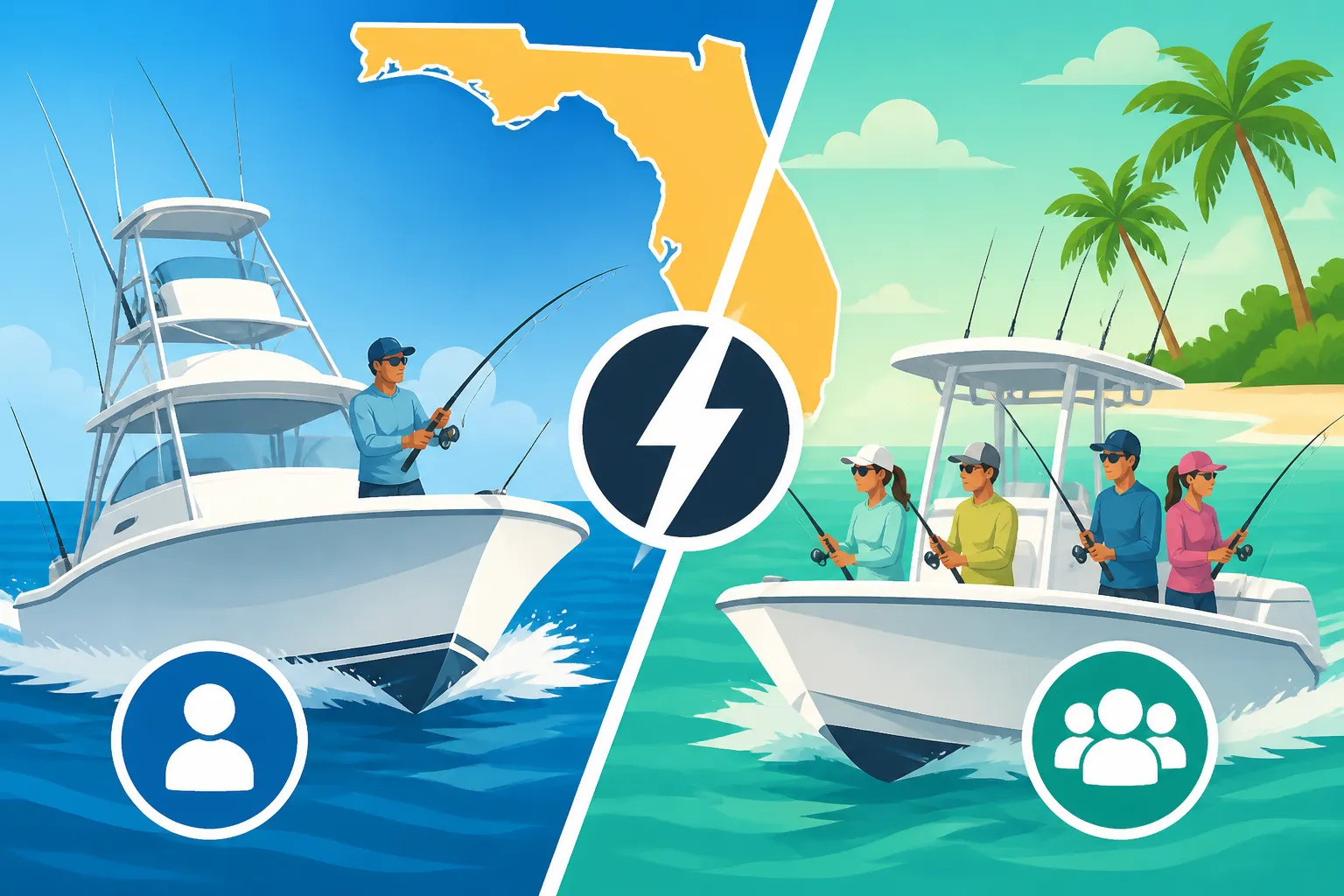
Imagine a fishing trip where the boat, the captain, and the entire itinerary are exclusively dedicated to you and your chosen group. That's the essence of a private charter. You're not sharing deck space with strangers, nor are you competing for the captain's attention. This kind of trip offers a personalized experience, tailored to your group's specific interests and skill levels.
For instance, if you're traveling with your family – perhaps with younger kids or grandparents – a private charter allows for much more flexibility. You can decide if you want to spend more time trolling for pelagics offshore, anchor up and bottom fish for snapper, or even focus on a specific technique like fly fishing for Florida Tarpon Fishing Guide. The captain will typically consult with you beforehand to set expectations and craft a trip that aligns with what you truly want to do. This exclusivity often means the captain can move around more freely, chase bites, and adapt to conditions without needing to get a consensus from multiple unrelated parties. It's truly your day on the water.
What is a Shared (Party) Charter?
On the flip side, a shared charter, often affectionately called a "party boat" or "head boat," operates on a per-person basis. You're essentially buying a spot on a larger vessel that will be filled with other anglers, all paying for their individual ticket. These boats are generally much larger than private charter vessels, designed to accommodate anywhere from 10 to 60 or even more passengers comfortably.
Think of it like public transportation for fishing. Everyone gets on, everyone goes to the same general fishing grounds, and everyone fishes for the same general species. The captain and crew will do their best to get everyone on fish, but the experience is necessarily less personalized. You might be shoulder-to-shoulder with other anglers, and the focus is often on high-volume fishing, like dropping baits to the bottom for snapper or grunts, rather than intricate techniques or targeting trophy fish. For many, this social aspect is part of the fun – meeting new people, sharing stories, and experiencing a collective adventure. It's a great option if you're a solo angler, a small group looking to keep costs down, or just want to experience deep-sea fishing without the full financial commitment of a private boat.
The Cost Breakdown: Private Charters
Now, let's talk turkey about what you can expect to pay for the privilege of your own private boat and captain in Florida. The price tags on private charters can vary significantly, reflecting the diverse offerings and experiences available across the state.
Factors Influencing Private Charter Rates
Several key elements play into the final price of a private fishing charter. It's not just a flat fee; it's a reflection of the resources and expertise you're hiring.
Firstly, the duration of the trip is probably the most significant factor. You'll typically find options for half-day (4-6 hours), ¾ day (6-8 hours), and full-day (8-10+ hours) charters. Naturally, the longer you're out, the more it costs. A quick four-hour jaunt for some inshore redfish near Tampa Bay will be considerably less than an all-day offshore expedition targeting Florida Mahi Mahi Fishing Guide out of Miami.
Secondly, the type of fishing and target species make a huge difference. Inshore charters, which stay closer to the coast in shallower waters, generally have lower operating costs (less fuel, smaller boats) than offshore or deep-sea charters. If you're chasing something specific and highly sought after, like migratory Florida Tarpon Fishing Guide during their peak season or swordfish in the deep Atlantic, expect to pay a premium. The specialized gear, bait, and knowledge required for these species demand a higher rate. Florida Fishing Charter Cost Guide delves into this in more detail.
Thirdly, the boat's size and amenities contribute to the cost. A sleek, fast center console designed for flats fishing will have a different price point than a large, luxurious sportfishing yacht equipped with air conditioning, multiple cabins, and advanced electronics. The more comfort and capability, the higher the price. Finally, location and time of year also play a role. Peak tourist seasons in popular destinations like the Florida Keys or Destin will naturally see higher demand and potentially higher prices. Conversely, booking during the slower "shoulder" seasons or on weekdays might offer some savings.
What's Typically Included in a Private Charter Price?
When you book a private charter, the price usually encompasses a good chunk of what you need for a successful day. Most reputable captains will include all necessary fishing licenses for everyone on board, so you don't have to worry about buying your own Florida Fishing License Guide – a huge convenience!
You can also expect all fishing gear, including rods, reels, and tackle, to be provided. This is fantastic, especially if you're flying in and don't want to lug your own equipment. Bait, both live and artificial, is almost always part of the package, though for specialized or extremely expensive live bait, it's always wise to confirm if there's an extra charge.
Beyond the tangibles, the most valuable inclusion is often the captain's expertise and experience. You're not just paying for a boat; you're paying for years of local knowledge, understanding of tides, fish behavior, and secret spots. Many captains also offer fish cleaning services at the end of the trip, filleting your catch and bagging it for you to take home, though a tip for this service is always appreciated. Some charters might even include bottled water and ice, but for snacks and other beverages, you're generally expected to bring your own. It's always best practice to confirm these details with your chosen captain or booking agent, such as FishingBooker, before your trip.
The Cost Breakdown: Shared Charters
Shared charters offer a distinctly different pricing model and, consequently, a different financial commitment. They are often seen as the more budget-friendly entry point into Florida's diverse fishing scene.
How Shared Charter Pricing Works
The pricing structure for shared charters is straightforward: it's a per-person cost. This means you pay a set fee for each individual who wants to fish, regardless of how many people are in your immediate group. The total cost of the trip for the boat itself is spread across all the paying passengers. This model is what makes shared charters so appealing for solo anglers, couples, or small groups who might find the cost of a private charter prohibitive.
For example, if a private charter might cost several hundred dollars for a half-day, a spot on a shared charter for the same duration could be a fraction of that per person. This affordability allows more people to experience offshore fishing, which might otherwise be out of reach. The focus is on maximizing the number of anglers on board while still providing a viable fishing experience. Because the overhead is distributed among many, these boats can run more frequently and sometimes offer a wider range of trip times throughout the day. You'll often see options for shorter trips, like 2-hour "drift fishing" excursions or 4-hour bottom fishing trips, making them accessible for even the most casual angler or families with short attention spans!
What's Typically Included in a Shared Charter Price?
Just like private charters, shared charter prices typically bundle in the essentials, but often with a more standardized approach. A major convenience is that your fishing license is almost always covered by the boat's blanket commercial license. This eliminates the need for individual anglers to purchase a Florida Saltwater Fishing License Rules or Florida Freshwater Fishing License Rules, depending on the type of water.
Rods, reels, and basic tackle are also provided as part of your ticket. The crew will usually bait your hook, show you how to drop your line, and help you reel in fish. While bait is included, it's usually a standard option like squid, cut bait, or frozen sardines, rather than premium live baits that a private charter might use to target specific species.
Ice chests for your catch are generally available, and the crew will often provide fish cleaning services at the end of the trip, usually for a small fee or expecting a tip. Water might be available for purchase on some boats, but bringing your own snacks and beverages is always a good idea. Because of the larger passenger count, shared charters are less about customization and more about providing a consistent, accessible fishing experience for everyone on board. The amenities on board can vary greatly, from basic open decks to boats with air-conditioned cabins, galleys, and even full restrooms, so it's worth checking what facilities are available when you book.
Comparing Costs: Private vs. Shared Side-by-Side
Understanding the individual cost structures is one thing, but seeing them side-by-side really clarifies the value proposition of each. It's not just about the sticker price, but what you get for your money.
Initial Investment vs. Value for Money
At first glance, a private charter's price tag might seem daunting. Let's say a half-day private charter costs around $600-$900. If you're a solo angler or a couple, that's a significant investment. However, if you're a group of four to six people, that cost can break down to a much more manageable $100-$225 per person. In this scenario, for a slightly higher per-person cost than a shared charter, you gain immense value: exclusivity, a personalized experience, the captain's undivided attention, and the flexibility to target specific fish or locations. You're essentially renting the entire experience, not just a seat. This often results in more fish caught (due to targeted efforts and flexibility) and a more comfortable trip for your group.
On the other hand, a shared charter might cost $50-$150 per person for a similar duration. This is an undeniably attractive price point, especially for individuals or small groups on a tight budget. The value here is access. You get to experience deep-sea fishing without the full financial burden. While you might not target specific trophy fish or have the captain's full attention, you still get to fish, learn from the crew, and potentially bring home some dinner. The "value for money" for a shared charter comes from its accessibility and lower entry barrier. It democratizes the fishing experience.
To illustrate, consider this table outlining some typical differences:
| Feature | Private Charter | Shared (Party) Charter |
|---|---|---|
| Cost Structure | Flat rate for the boat; price split by group | Per-person rate |
| Typical Range | Higher initial cost, lower per-person for larger groups | Lower initial per-person cost |
| Group Size | Exclusive to your group (1-6 anglers typical) | Shared with many other anglers (10-60+ anglers) |
| Privacy | High; full boat to yourselves | Low; shared deck space |
| Flexibility | High; tailored itinerary, target species, timing | Low; fixed itinerary, general target species |
| Captain's Attention | Dedicated to your group | Shared among all passengers |
| Experience Level | Great for all, including beginners, families, serious anglers | Good for beginners, casual anglers, solo travelers |
| Boat Size | Varies (smaller flats boats to larger offshore vessels) | Typically larger head boats |
Hidden Costs and Unexpected Expenses
While the base price covers a lot, it's wise to budget for a few extras, regardless of the charter type. The most common and important "hidden cost" is tipping the crew. This is customary and highly encouraged in the charter fishing industry. A standard tip is typically 15-20% of the total charter cost for good service. For a private charter, this would be 15-20% of the entire boat fee. For a shared charter, it would be 15-20% of your individual ticket price, or sometimes a standard amount per person for the deckhands. Remember, these folks work incredibly hard to ensure you have a great time and are often working for a lower base wage.
Other potential extras include:
- Fish cleaning: While often offered, sometimes there's a small charge per fish or per pound, especially on party boats.
- Food and drinks: Most charters don't provide meals, so plan to bring your own cooler with snacks and beverages.
- Sunscreen and insect repellent: Essential for Florida, but not usually provided.
- Specialty bait: Occasionally, if you're targeting a very specific fish that requires unusually expensive live bait, there might be an extra charge, but this is rare and usually discussed beforehand on private charters.
- Fuel surcharges: Less common on private inshore charters, but for offshore private charters covering long distances, especially on larger boats, a fuel surcharge might be added, particularly if fuel prices are volatile. Always confirm this when booking.
By accounting for these potential extras, you can avoid any surprises and ensure your budget accurately reflects the full cost of your Florida fishing adventure.
Deciding Which Charter is Right for Your Florida Adventure
Choosing between a private and shared charter isn't about one being inherently "better" than the other. It's about aligning the type of experience with your personal needs, budget, and fishing goals.
When a Private Charter Shines
A private charter truly shines when you're looking for a personalized, intimate, and flexible fishing experience. Consider it your top choice if any of these scenarios resonate with you:
- Family Outings with Kids: If you're bringing young children or beginners, a private charter offers a controlled and patient environment. The captain can dedicate time to teaching them, adjust the pace if someone gets seasick, and move to calmer waters if needed. There's less pressure, more space, and a greater chance for individual attention, which can make all the difference for a child's first fishing experience. Imagine a captain patiently showing your child how to reel in a small grunt, or adjusting the boat's position for optimal comfort – that's the kind of attention a private trip provides.
- Targeting Specific Species or Techniques: Are you dead-set on catching a trophy Florida Snook Fishing Guide on a fly rod, or do you dream of battling a Goliath Grouper (catch and release only, of course!)? A private charter allows you to communicate these goals directly to the captain, who can then plan the entire trip around maximizing your chances for that specific pursuit. On a party boat, the target species are generally broad, catering to the lowest common denominator, which might not align with your specific angling ambitions.
- Experienced Anglers Seeking a Challenge: If you're an experienced angler who wants to test your skills against Florida's toughest fish, a private guide offers the opportunity for advanced techniques, venturing to remote spots, and engaging in more serious fishing. The captain can tailor the trip to match your skill level, offering guidance without hand-holding. This is also ideal for anglers who prefer to use their own specialized gear, though most guides welcome this.
- Privacy and Comfort: For those who value privacy, want to discuss business, or simply enjoy the company of only their closest friends or family, a private charter provides an exclusive setting. You won't have to contend with other people's music, conversations, or fishing styles. It's your boat for the day, and that peace can be priceless.
- Flexibility on the Water: Rough seas? Slow bite? On a private charter, the captain has the freedom to adapt. They can move to a different spot, change tactics, or even head back to the dock a bit early if conditions become unfavorable or someone isn't feeling well. This responsiveness is a major advantage over a fixed party boat schedule. Half-Day vs Full-Day Fishing Charter Cost in Florida often highlights this flexibility.
When a Shared Charter is the Smart Choice
Shared charters are fantastic for many situations, offering an accessible and often social way to get out on the water. Opt for a shared charter if:
- You're on a Budget: This is arguably the biggest draw. If the cost of a private charter is simply too high for your financial plan, a shared charter makes Florida fishing affordable. You get a taste of offshore action without breaking the bank. It's a great option for Cheapest Way to Go Fishing in the Florida Keys.
- You're a Solo Angler or Small Group: If you're traveling by yourself or with just one or two others, splitting the cost of a private boat can still be expensive. A shared charter allows you to join a larger group, paying only for your individual spot, making it a viable option for solo adventurers.
- You're a Beginner or Casual Angler: Shared charters are very beginner-friendly. The crew is typically adept at assisting new anglers, baiting hooks, and explaining the basics. You don't need any prior experience, and the pressure to perform is low. It's more about the collective experience and less about individual prowess. This is a fantastic way to learn the ropes of deep-sea fishing.
- You Enjoy the Social Aspect: For many, meeting new people and sharing the excitement of the catch with strangers is part of the fun. Party boats create a lively atmosphere, and you might make new friends or hear some great fishing stories from seasoned regulars.
- You Just Want to Catch Fish for Dinner: If your primary goal is simply to put some fresh fish on the table, shared charters are very efficient at getting anglers onto common species like snapper, grunts, and seabass. While you might not be targeting trophy fish, you'll often leave with a cooler full of edible fare.
Booking Your Florida Fishing Charter with Confidence
Once you've weighed the pros and cons and decided whether a private or shared charter is best for you, the next step is booking your trip. Knowing how to find the right charter and what questions to ask can save you headaches and ensure a great experience.
Tips for Finding the Best Deals
Finding a good deal doesn't always mean finding the cheapest option; it means finding the best value for your money. Here are some strategies:
- Book During the Off-Season or Mid-Week: Just like any travel industry, Florida fishing has its peak seasons. If your schedule allows, consider booking your trip during the quieter months or on a weekday. You might find lower rates, less crowded boats (even for shared charters), and more availability for your preferred captain or vessel. This is particularly true for popular tourist destinations.
- Consider Shorter Trips: For private charters, a half-day trip will always be less expensive than a full-day trip. If your budget is tight, a 4-hour inshore trip can still yield plenty of action and a memorable experience without the higher cost of an extended offshore adventure.
- Utilize Online Booking Platforms: Websites like FishingBooker are excellent resources. They allow you to compare multiple charter options, filter by private or shared, read reviews from other anglers, and see transparent pricing. Many captains list their available dates and rates, making it easy to browse and book. You can often find deals or last-minute availability on these platforms. Using FishingBooker also gives you a centralized place to manage your booking and communicate with the captain.
- Book Directly (Sometimes): While online platforms are convenient, sometimes contacting a captain directly, especially if they operate a small, independent operation, can lead to a slightly better rate or more personalized booking experience. However, always ensure they are reputable and licensed.
- Look for Special Promotions: Keep an eye out for promotions, especially during slower times of the year or for newer charter operations trying to build their client base. Signing up for newsletters from local marinas or fishing guides can sometimes provide access to these deals.
Essential Questions to Ask Before Booking
To avoid any surprises, it’s always a good idea to clarify key details before finalizing your booking. Don't be shy; a good captain will be happy to answer your questions thoroughly.
- What is included in the price? Reconfirm what's covered: licenses, bait, tackle, fuel, ice, water, and fish cleaning. Knowing this upfront will help you budget for any additional expenses.
- What is the cancellation policy? Florida weather can be unpredictable. Understand the policy for cancellations due to bad weather (e.g., high winds, storms) or other unforeseen circumstances. Will you receive a full refund, a rain check, or will you forfeit your deposit? This is particularly important if you're traveling a long distance.
- What should I bring? Ask about recommended items like sunscreen, hats, sunglasses, appropriate clothing, snacks, drinks, and any personal medications. Many charters will have a suggested packing list.
- What fish are we likely to target? While private charters offer more flexibility, it's good to confirm the primary target species, especially for shared charters, to ensure it aligns with your expectations.
- What are the fishing regulations and bag limits? While the captain is responsible for adherence, it's good to be aware of the rules, especially for protected species or those with strict slot limits. Understanding Florida Fishing Regulations and Bag Limits is key.
- How many people will be on board (for shared charters)? Knowing the maximum capacity can help manage expectations regarding deck space and comfort.
- Is fish cleaning included, and is there an extra charge or customary tip? Clarify the protocol for handling your catch at the end of the trip.
- What is the tipping etiquette? While we've discussed general guidelines, asking the captain or booking agent can provide specific local insights. Many platforms like FishingBooker will often provide a tipping guide.
By asking these questions, you'll not only be more prepared for your trip but also gain confidence that you've chosen a reputable and transparent charter service. Whether you opt for the tailored experience of a private boat or the camaraderie of a shared charter, Florida's waters promise an unforgettable angling adventure!
Disclaimer
This article is for general informational purposes only and does not constitute professional advice. Laws, prices and regulations vary by location and change over time. Consult a qualified professional for guidance on your specific situation.