How to Tip on a Split Charter With Strangers
It's happened to all of us: you've booked a fantastic split charter, ready to hit the Florida waters and reel in some unforgettable catches, but as the trip winds down, a familiar wave of anxiety washes over you. How much do you tip the captain and mate when you're sharing the boat with a bunch of strangers? It can feel awkward and confusing, but don't worry, this guide is here to help you navigate the unspoken rules of tipping on a shared fishing adventure in Florida.
Understanding the Unique Dynamics of a Split Charter
Stepping onto a charter boat, especially in a fishing paradise like Florida, is an experience many anglers dream of. But not everyone can afford or fill a private charter. That's where split charters come in, offering a more accessible way to enjoy the deep blue or serene flats.
What Exactly is a Split Charter?
A split charter, often called a "shared charter" or "head boat" (though head boats are typically much larger and carry more people), is essentially a fishing trip where multiple individuals or small groups, who don't necessarily know each other, share the cost of the boat and guide services. Instead of one party footing the entire bill, everyone pays a per-person rate, making it a much more budget-friendly option. This setup is incredibly popular in places like the Florida Keys or along the Gulf Coast, where offshore trips can be quite an investment. It allows solo anglers, couples, or small families to experience world-class fishing without the full expense of a private booking. You might be targeting anything from grouper offshore to snapper near the reefs, depending on the charter's focus. The downside, of course, is that you're sharing the space and the guide's attention with people you've never met, which can sometimes lead to questions about group dynamics, including tipping. If you're looking for an easy way to find and book these types of trips, platforms like FishingBooker can show you available split charters and their per-person costs.
Why Tipping is Essential (and Different) on a Charter
Just like in any service industry, tipping is a crucial part of a fishing guide's income. Many captains and especially mates rely heavily on gratuities to make a living. These aren't just folks driving a boat; they are skilled professionals who put in long, hard hours, often well before you even step foot on the vessel. Think about it: they're out scouting, preparing bait, maintaining expensive equipment, navigating tricky waters, and ensuring your safety. After you leave, they're cleaning the boat, processing fish, and getting ready for the next trip. Their expertise, whether it's finding the elusive Florida Tarpon Fishing Season Guide or helping you land a trophy Florida Largemouth Bass Fishing Guide, is what makes your trip successful and memorable. Unlike a restaurant where your tip is primarily for a waiter bringing food, a fishing guide's tip is for their comprehensive effort, knowledge, and the overall quality of your experience from start to finish. It's a direct reflection of their hard work and dedication, and it directly supports the individuals who make these incredible fishing adventures possible.
The Core Question: How Much to Tip?
Now for the elephant in the room: the actual amount. This is where most of the uncertainty lies, especially when you're splitting the cost with others. You want to be fair, show appreciation, but also not overdo it or feel like you're carrying the weight for someone else.
The Standard Percentage Guideline
Generally speaking, the unwritten rule for tipping fishing guides in Florida, whether on a private or split charter, falls into the 15-20% range of the total charter cost. Not just your individual portion, but what the charter would cost if one person booked it. However, on a split charter, you typically tip based on your share of the trip. So, if your individual spot cost, say, $200, a 15-20% tip would be $30-$40. This percentage serves as a good baseline for good service. If the captain and mate were attentive, worked hard, kept things clean, were helpful with baiting and de-hooking, and generally made your day enjoyable, a tip within this range is well-deserved and customary. It's their livelihood, and they genuinely appreciate your generosity. Remember, this isn't just a casual job for them; it's a passion and a profession that demands significant skill and effort.
Factors That Influence Your Tip (Even with Strangers)
While the 15-20% guideline is a solid starting point, tipping isn't always a strict math problem. Several factors can, and should, influence whether you lean towards the lower or higher end of that spectrum, even when you're sharing the boat.
- Effort and Attitude: Did the captain and mate work tirelessly to find fish, even if the bite was slow? Were they friendly, patient, and good communicators? A guide who is actively engaged, offering advice, and maintaining a positive atmosphere, regardless of the catches, deserves a higher tip. They went the extra mile to make the day enjoyable for everyone, not just you.
- Helpfulness and Instruction: On a split charter, you often have anglers of varying skill levels. Did the crew take the time to help beginners, untangle lines, re-rig, or offer tips to improve everyone's chances? Were they equally attentive to all guests, ensuring everyone felt included and supported? This level of service, especially with a mixed group, is invaluable.
- Boat and Gear Maintenance: Was the boat clean and well-maintained? Was the fishing gear in good working order? A well-kept operation speaks volumes about the professionalism of the crew.
- Fish Processing: Did the crew expertly clean and bag your catch at the end of the day? This extra service saves you time and effort and is definitely worth acknowledging with a more generous tip.
- Safety and Professionalism: Above all, a good guide prioritizes safety and maintains a professional demeanor throughout the trip. This is non-negotiable and forms the foundation of any charter experience.
Even if you barely spoke to your fellow anglers, you should still evaluate the crew's performance based on your own experience and observations.
Navigating the "Strangers" Aspect: Tipping Etiquette with Others
This is where things can get a little sticky. When you're with friends, you might pool your money or have a pre-arranged plan. With strangers, it's a different ball game.
The Individual Responsibility
One of the most important things to remember on a split charter is that your tip is your responsibility. You shouldn't feel pressured to match what someone else is tipping, nor should you assume that someone else will cover a larger portion. Each individual or small group (if you came with a partner or family) on the charter should determine their own tip based on their personal experience and satisfaction. Don't worry about what the person next to you is doing. Your relationship is with the crew, not with the other passengers. It’s a common mistake for people to assume that since they're splitting the charter cost, they should also collectively sort out the tip, but this often leads to confusion or the guide getting shortchanged. Be prepared to offer your own gratuity independently. This individual accountability ensures that the hard-working crew receives fair compensation from each paying guest.
When and How to Present Your Tip
Timing and method matter when it comes to tipping. You want to make it easy for the crew and avoid any awkwardness.
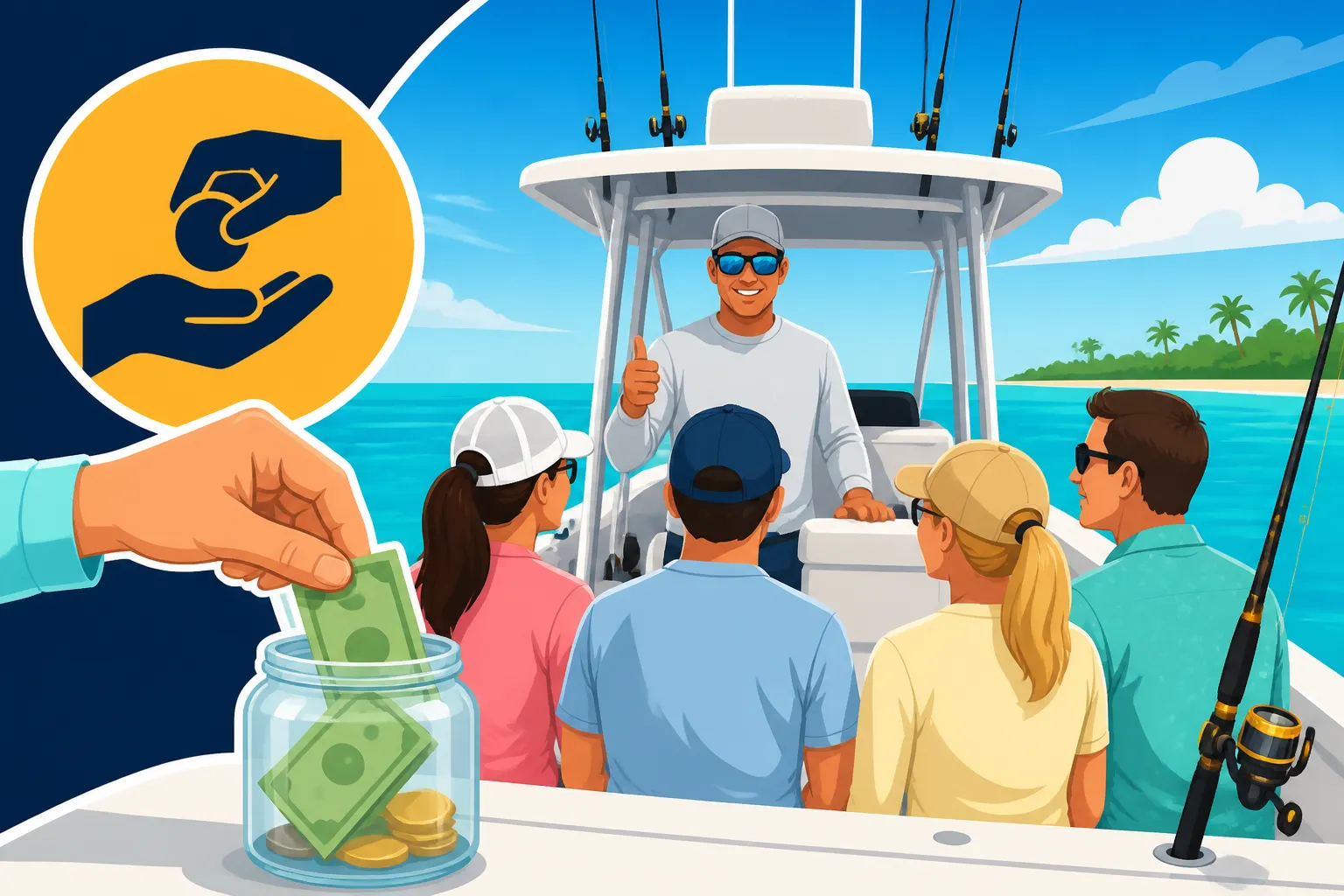
- Timing: The best time to offer your tip is at the very end of the trip, after the boat has returned to the dock, and your fish have been cleaned (if applicable). This allows you to assess the full experience. As you're gathering your belongings and saying your goodbyes, that's the natural moment.
- Method: Cash is king. While some charters might have options for electronic payments, cash is always preferred. It’s immediate, no fees are deducted, and it can be easily divided between the captain and mate (if there's a mate). It's a good idea to bring enough cash specifically for the tip, even if you paid for the charter online or with a card. Many anglers will tuck the cash into an envelope or simply hand it discreetly to the captain or mate with a genuine thank you. If you booked through a service like FishingBooker, you might even find their platform offers clear instructions or options regarding gratuities, though cash is still generally the most direct way to show appreciation. When learning How to Book a Florida Fishing Charter Online, it's always smart to confirm their tipping preferences or expectations.
- Discretion: You don't need to make a grand announcement about your tip. A quiet "Thank you, Captain, we had a great time!" while handing over the cash is perfectly sufficient. This also helps to avoid making other passengers feel uncomfortable about their own tipping choices.
Dealing with Different Tipping Philosophies
On a split charter, you might encounter people with different ideas about tipping. Some might tip generously, others might tip minimally, and some might even try to skip it entirely. This can be frustrating, especially if you feel the crew deserved more. However, the best approach is to focus on your own actions. Your tip is a reflection of your appreciation for the service you received and the hard work you witnessed. Don't let someone else's stinginess or excessive generosity dictate your own.
It's not your place to police other passengers' tipping habits. If you've given what you feel is a fair and appropriate tip based on the service, you've done your part. The captain and mate are professionals and understand that every group dynamic is different. They'll appreciate your genuine gratitude, regardless of what others choose to do. Just ensure you've properly accounted for your share of the gratuity.
Common Tipping Scenarios and Best Practices
Fishing isn't always predictable. Sometimes the fish are biting like crazy, and other times, it's a grind. How does this affect your tip?
When the Fishing is Slow
This is a common dilemma. You've paid for a fishing trip, and the fish just aren't cooperating. It can be disheartening. However, it's crucial to remember that a slow fishing day is rarely the guide's fault. They can't control the weather, the tides, or the fish's appetite. What they can control is their effort, their knowledge, and their attitude.
Did the captain try different spots? Did the mate keep fresh bait on the line? Were they still positive and encouraging, even when things were tough? If the crew worked hard, remained professional, and made a genuine effort to put you on fish, they still deserve a standard tip. Their job is to facilitate the opportunity to fish and to provide an enjoyable experience, not to guarantee a specific number of catches. Think of it this way: you wouldn't stiff a chef because you didn't like the taste of a dish, if they tried their best. The same applies here. A good rule of thumb is to tip for effort, not just for fish in the cooler. If you're concerned about a trip where the fish aren't biting, you might want to read What Happens If You Catch Nothing on a Florida Charter?.
Exceptional Service vs. Just Okay
Sometimes a charter experience is simply phenomenal, and other times it's just adequate. Your tip should reflect this spectrum.
- Exceptional Service: This is when the crew goes above and beyond. Maybe they stayed out an extra half-hour because the fish started biting late, or they meticulously taught a child how to cast, making their day. Perhaps they spotted a school of Florida Tarpon Fishing Guide that no one else saw and put you right on them. They were exceptionally friendly, helped you land a personal best, and cleaned your fish perfectly. In these cases, tipping 20% or even a bit more is a wonderful way to show your extreme appreciation. It acknowledges their outstanding effort and skill.
- Good, Standard Service: The crew was professional, the boat was clean, they put you on some fish, and everything ran smoothly. This warrants the standard 15-20% tip. They did their job well, and they deserve to be compensated accordingly.
- Just Okay Service: Perhaps the crew was competent but not particularly engaging, or the boat wasn't as clean as it could be. If the service was merely adequate, you might consider tipping towards the lower end of the 15% scale.
- Truly Poor Service: This is rare, but if the captain or mate were rude, unsafe, negligent, or actively detrimental to your experience, you might consider withholding a tip or giving a minimal amount. However, this should be a last resort and based on significant, justifiable issues, not just a slow fishing day. It's usually best to communicate any serious concerns directly with the charter operator or through the booking platform like FishingBooker if your experience was truly disappointing.
Leveraging Platforms like FishingBooker
Booking platforms have made it incredibly easy to find and secure fishing charters across Florida. When it comes to tipping, these platforms can indirectly help clarify expectations.
First, many listings on reputable sites will have a section on tipping etiquette, often stating the customary 15-20% guideline. This gives you a heads-up before you even book your trip. Second, the review sections are invaluable. Anglers often share their experiences, sometimes even mentioning the great service (or lack thereof) from the crew, which can give you a feel for their dedication. While these platforms don't typically handle the gratuity directly for split charters, they provide transparency and a reliable way to communicate with your captain before the trip, allowing you to ask about tipping norms if you're still unsure. A good platform like FishingBooker aims to connect you with professional, highly-rated captains who consistently deliver great experiences, meaning you're more likely to have a trip where you want to tip generously.
Here's a quick summary of tipping considerations on a split charter:
| Factor | Tipping Guideline | Details |
|---|---|---|
| Standard Rate | 15-20% of your individual share of the charter cost | Base amount for good, professional service. |
| Exceptional Service | 20% or more | Crew went above and beyond (extra effort, excellent teaching, outstanding demeanor, perfect fish processing). |
| Adequate Service | 10-15% | Crew was competent but lacked enthusiasm or personal engagement; basic service was met. |
| Slow Fishing | Tip based on effort, not catch | If the crew worked hard, changed spots, and remained positive, still tip in the 15-20% range. Fish cooperation is beyond their control. |
| Payment Method | Cash is preferred | Hand discreetly to the captain or mate at the end of the trip. Avoid electronic payment for tips unless explicitly offered by the charter. |
| Group Dynamics | Your tip is individual | Do not rely on others to tip more or less; make your own decision based on your experience. Don't judge or compare with other passengers. |
| When to Tip | At the end of the trip | After returning to the dock and fish cleaning is complete. |
The most important takeaway is to be prepared. Bring enough cash for your tip, evaluate the crew's effort and service, and tip what you feel is appropriate for the experience you had. A genuine "thank you" and a fair tip go a long way in showing appreciation for the hard work that goes into every Florida fishing charter.
Disclaimer
This article is for general informational purposes only and does not constitute professional advice. Laws, prices and regulations vary by location and change over time. Consult a qualified professional for guidance on your specific situation.