Penalty for Fishing Without a License in Florida
There’s a unique feeling of peace that settles in when you’re out on Florida’s waters, rod in hand, waiting for that tell-tale tug. But that peaceful moment can turn into a real headache if you’re caught unprepared, specifically without the proper fishing license. Many folks underestimate the importance of this small piece of paper, or simply forget, only to find themselves facing fines and legal trouble. This guide is here to walk you through exactly what can happen if you fish without a license in Florida, helping you understand the rules and, more importantly, how to avoid these common pitfalls.
Understanding Florida's Fishing License Requirements
Florida is a paradise for anglers, but with great fishing comes great responsibility. The state has clear regulations in place to ensure that its abundant marine and freshwater resources remain healthy for generations to come. Your fishing license isn't just a formality; it's a vital part of this conservation effort.
Why Licenses are Required for Florida Fishing
It’s easy to think of a fishing license as just another government fee, but in Florida, those funds are directly reinvested into the very fisheries you enjoy. The Florida Fish and Wildlife Conservation Commission (FWC) uses the revenue from license sales to support crucial conservation programs. This includes everything from fish stocking and habitat restoration projects to scientific research and enforcement efforts that protect against poaching and overfishing. When you purchase a license, you’re not just gaining the right to fish; you're actively contributing to the health and sustainability of Florida's diverse aquatic ecosystems. It's a system designed to keep those beautiful bass biting and the redfish schooling for everyone. You can learn more about How Florida Fishing License Fees Fund Conservation on our blog.
Who Needs a Fishing License in Florida
The general rule of thumb is pretty straightforward: if you're 16 years of age or older and engaging in fishing activities, you're going to need a license. However, the specifics can vary significantly depending on where you're casting your line and whether you're a Florida resident or just visiting. For instance, there are distinct rules for Florida Saltwater Fishing License Rules and Florida Freshwater Fishing License Rules.
Florida residents often have different pricing and longer-term options compared to non-residents. Children under 16 are typically exempt from needing a license, which is fantastic for introducing youngsters to the sport. What about our more seasoned anglers? You might be wondering, Do Seniors Need a Fishing License in Florida?. While there are specific considerations for seniors, generally speaking, residents over 65 can obtain a Florida Resident Senior Citizen Hunting and Fishing Certificate, which functions as a lifetime license for fishing and hunting, but you still need to apply for it. It's crucial to check the current Florida Fishing License Age Requirements before heading out, regardless of your age or residency status.
Common Misconceptions About Fishing Licenses
It’s astonishing how many folks get caught without a license because of a simple misunderstanding. One common myth is that if you're fishing on private property, like a friend's retention pond or a private lake, you don't need a state license. While there are specific rules for Florida Private Pond and Farm Pond Fishing Rules, generally, if the water body has a connection to state waters (even if it's underground or seasonal), a license is often still required. It’s always safer to assume you need one or verify with the FWC directly.
Another widespread misconception revolves around charter boats. Many assume that because the captain of a fishing charter holds a commercial license, all passengers are covered. This is largely true for certain types of vessels like for-hire charter boats that hold a valid recreational fishing license. However, for recreational vessels where the captain is not a licensed charter, or for individual anglers on a private boat, everyone 16 and older needs their own license. Don't rely on assumptions – make sure you understand Do You Need a License to Fish From a Charter Boat in Florida? before booking your trip. Always double-check with your charter captain beforehand to be absolutely sure.
The Immediate Consequences of Fishing Without a License
So, you’ve decided to risk it, or perhaps you genuinely forgot your license at home. What happens when a Florida Fish and Wildlife Conservation Commission (FWC) officer pulls up alongside your boat or walks down the pier to chat? It’s rarely a pleasant encounter, and the immediate fallout can range from an inconvenient conversation to a significant disruption of your day.
Initial Encounter with Law Enforcement
The moment an FWC officer approaches and asks for your fishing license and identification, that peaceful fishing vibe vanishes. They’re there to enforce regulations, and usually, they’re quite professional. They'll ask for your valid Florida fishing license. If you can't produce one, they'll verify your details and residency status to determine if you should have one. This initial interaction isn’t just a quick check; it's the start of an official process. They'll likely explain the violation and the potential penalties, which can be quite sobering when you’re just trying to enjoy a relaxing day on the water. It’s a moment that most anglers hope to avoid, and it's easily avoidable by simply having your license ready.
Citations and Warnings vs. Arrests
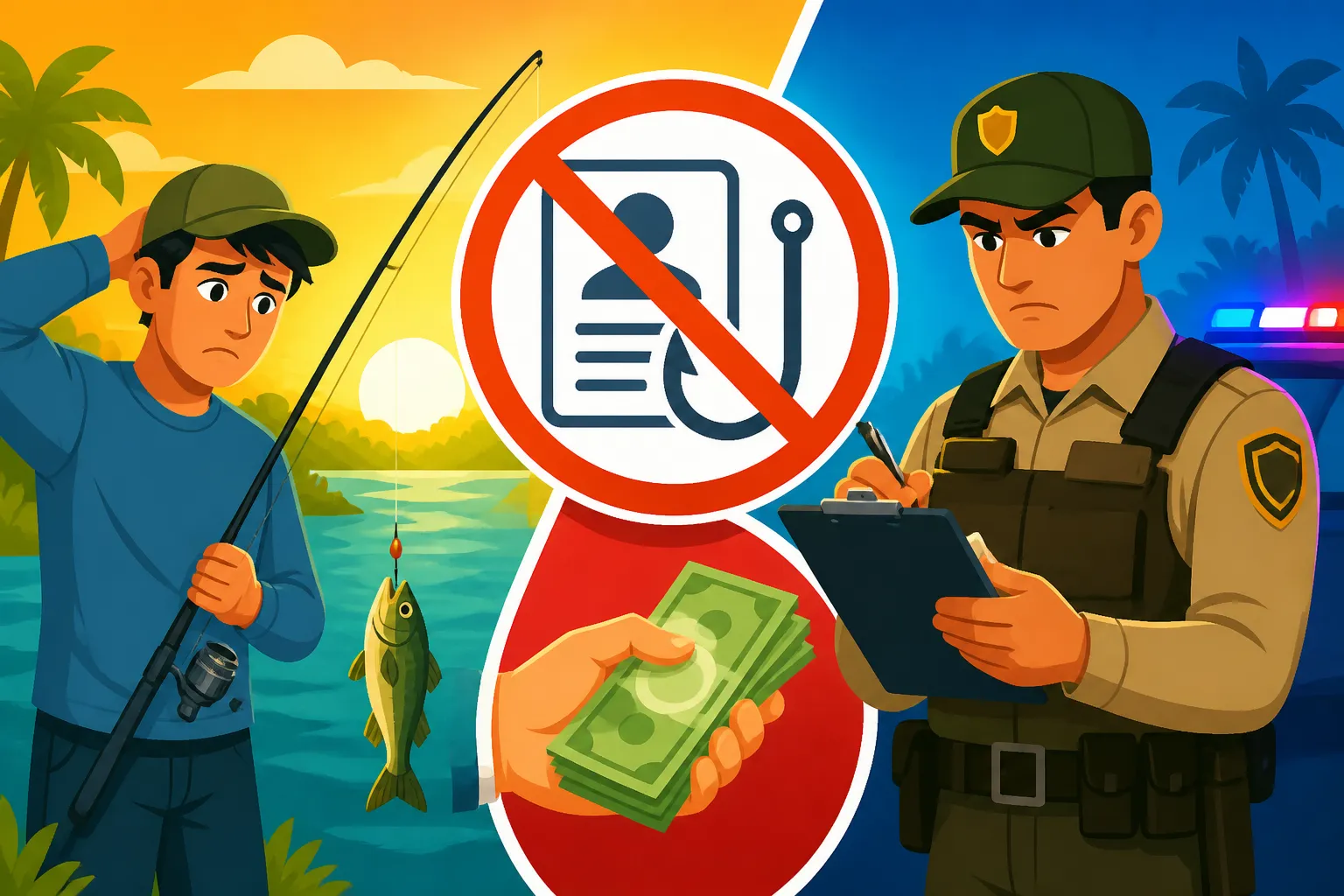
An FWC officer has discretion in how they handle a violation. For a first-time offender with no other issues, and perhaps an honest mistake, you might get a warning. However, these are rare, especially for license violations. More commonly, you'll receive a citation, which is essentially a ticket outlining the violation and requiring you to pay a fine or appear in court. This is typically classified as a second-degree misdemeanor under Florida law.
An actual arrest is less common for a simple first-time license violation but is certainly possible, especially if there are aggravating circumstances. This could include:
- Repeat Offenses: If you’ve been cited for fishing without a license before, an officer is far less likely to give you a break.
- Refusal to Cooperate: Being uncooperative or disrespectful to an officer can quickly escalate the situation.
- Other Violations: If you're also found to be breaking other laws – like having undersized fish, over the bag limit, or possessing illegal substances – a simple license violation can quickly become part of a larger, more serious charge leading to an arrest.
It’s always best to be polite, cooperative, and provide whatever information the officer requests, even if you know you’re in violation.
Confiscation of Gear and Catch
This is one of the most painful immediate consequences for many anglers. If you're found to be fishing illegally, FWC officers have the authority to confiscate your fishing gear, including rods, reels, nets, and even your cooler. Your hard-earned catch, whether it’s a cooler full of beautiful snook or a stringer of panfish, can also be seized. Imagine the frustration: not only are you facing a fine and a ruined day, but you're also losing the investment you've made in your equipment and the fish you worked so hard to catch. This isn't just about financial loss; it's about the emotional toll of having your recreational outing turn into a legal ordeal, and losing the very tools that bring you joy.
The Fines and Legal Penalties
Getting caught fishing without a license in Florida isn't just a minor inconvenience; it carries real legal weight. Depending on the specifics of your situation, the financial penalties can be significant, and in some cases, you might even find yourself facing a judge.
How Fines Are Determined
In Florida, fishing without the required license is generally considered a second-degree misdemeanor. This classification comes with a standardized range of penalties. For a first offense, you can typically expect a fine of up to $500. While some local jurisdictions might have slightly varying base fees, the state sets the maximum. This doesn't include additional court costs or administrative fees that often get tacked on, pushing the total amount even higher.
The actual amount of the fine can also be influenced by the severity of the violation (e.g., fishing a closed area versus simply forgetting a license) and the officer's discretion. Repeat offenders face a much harsher reality. If you've been cited for similar violations in the past, the charge can escalate to a first-degree misdemeanor, which carries a potential fine of up to $1,000. It's not just about the sticker price of the fine; it's about the financial strain of court fees, potential legal counsel, and the sheer hassle. If you're wondering How Much Is a Fishing Without a License Fine in Florida?, be prepared for at least a few hundred dollars.
Court Appearances and Administrative Fees
Receiving a citation often means more than just paying a fine online or mailing in a check. Depending on the nature of the violation and the jurisdiction, you might be required to appear in court. This means taking time off work, traveling to the courthouse, and standing before a judge. This can be a daunting and stressful experience for anyone, especially if you're not used to navigating the legal system. Beyond the court appearance itself, there are almost always administrative fees associated with processing the citation and maintaining court records. These fees quickly add up, turning what seemed like a small oversight into a costly legal entanglement. It really drives home the point that a simple fishing license is a much smaller investment than dealing with the aftermath of a violation.
Potential Jail Time
While it’s certainly not a common outcome for a first-time, simple fishing license violation, the potential for jail time is a very real, if often overlooked, penalty. A second-degree misdemeanor, by Florida law, is punishable by up to 60 days in county jail. For a first-degree misdemeanor, which repeat offenders or those with additional serious violations might face, the penalty can extend to up to one year in jail.
Now, let’s be realistic: for a single, straightforward instance of fishing without a license, it's highly unlikely you’ll be thrown in jail. Judges typically reserve jail sentences for repeat offenders, individuals who show a pattern of disregard for the law, or when the license violation is coupled with other significant offenses like poaching, violating bag limits, or resisting arrest. However, the legal possibility exists, and it serves as a stark reminder that these aren't minor infractions; they are criminal offenses in the eyes of the law. Nobody wants to consider Can You Go to Jail for Fishing Without a License in Florida?, but it's important to understand the full scope of potential consequences.
Long-Term Repercussions and How to Avoid Them
Beyond the immediate fines and legal woes, a fishing license violation can cast a long shadow on your future recreational activities. It's not just about paying a ticket and moving on; there can be lasting impacts.
Impact on Future License Purchases
One of the less-talked-about but significant repercussions of a fishing license violation is how it might affect your ability to purchase licenses in the future. Depending on the severity and frequency of your offense, the FWC may suspend your recreational fishing privileges. This means you could be legally barred from obtaining a new license for a certain period, ranging from months to several years. Imagine living in Florida, surrounded by incredible fishing opportunities, and being unable to legally participate. Any outstanding fines or court orders related to your violation would also need to be settled before you could even apply for a new license, adding more hurdles to getting back on the water legally. This isn't a situation any avid angler wants to find themselves in.
The Importance of Knowing the Rules
Ignorance is never a valid excuse when it comes to legal matters, and fishing regulations are no exception. The FWC makes a concerted effort to publish all current rules and regulations clearly on their website, through brochures, and via various media. It's your responsibility as an angler to stay informed about Florida Fishing Regulations and Bag Limits, season dates, and license requirements. This includes not just having a license, but understanding specific rules for different species, minimum sizes, bag limits, and gear restrictions. A quick check before you head out, especially if you're targeting a new species or visiting a new area, can save you a lot of grief. Being proactive about understanding the rules is the simplest way to avoid penalties.
Easy Ways to Get Your License
The good news is that obtaining a Florida fishing license is incredibly easy and accessible, making any penalty for not having one even more regrettable. You have several convenient options:
- Online: The easiest and fastest way is through the FWC's official GoOutdoorsFlorida website. You can purchase your license instantly, print it out, or save a digital copy to your phone. The Florida GoOutdoors App Fishing License makes it super simple to carry proof of your license wherever you go.
- In Person: Many retailers across Florida sell fishing licenses. This includes major chains like Walmart, Bass Pro Shops, and some smaller tackle shops. This is a great option if you prefer a physical card or want to pick one up on your way to your fishing spot. You can find a local vendor by looking up Where to Buy a Florida Fishing License Near You.
- By Phone: You can also purchase a license by calling the FWC at 888-FISH-FLORIDA (888-347-4356).
Don't let a forgotten license ruin your day or lead to legal trouble. It's a small investment for peace of mind and the enjoyment of Florida's incredible fishing. Make sure you have your current license with you, whether it's a printed copy, on your FWC app, or even a photograph on your phone. Many anglers find it useful to keep a waterproof pouch with their license and other essential documents, which you can easily find on sites like Amazon, alongside other fishing essentials.
Summary of Potential Penalties for Fishing Without a License
To give you a clearer picture, here's a table summarizing the general penalties for fishing without a license in Florida. Please remember these are general guidelines, and actual outcomes can vary based on individual circumstances and the discretion of law enforcement and the courts.
| Offense Type | Classification | Potential Fine | Potential Jail Time | Other Consequences |
|---|---|---|---|---|
| Fishing Without Valid License (1st Offense) | Second-Degree Misdemeanor | Up to $500 | Up to 60 days | Confiscation of gear/catch, court costs, administrative fees, potential probation |
| Fishing Without Valid License (Repeat Offense) | First-Degree Misdemeanor | Up to $1,000 | Up to 1 year | License suspension, more severe gear confiscation, mandatory court appearance |
| Other Fishing Violations (e.g., bag limits, closed season, undersized fish) | Varies (often misdemeanors) | Additional fines (potentially thousands) | Additional jail time | Significant penalties depending on violation, potential federal charges for certain species |
Disclaimer
This article is for general informational purposes only and does not constitute professional advice. Laws, prices and regulations vary by location and change over time. Consult a qualified professional for guidance on your specific situation.