Florida Combo License Savings Versus Buying Two Licenses
Standing at the tackle counter or staring at an online payment screen trying to decide which permits you actually need can leave your head spinning. Choosing between individual freshwater and saltwater permits often leads to confusion, extra transaction fees, and the nagging fear of getting caught on the wrong side of a brackish river boundary. This guide breaks down the true savings, convenience, and practical benefits of combination licenses so you can keep more cash in your wallet and stay completely legal on the water.
The Basics of Florida Freshwater and Saltwater Licensing
If you have ever spent a morning casting for largemouth bass in a central Florida lake and then decided to head down to a coastal pier for the evening bite, you know how varied the state’s fishing opportunities can be. Because the state is wrapped in ocean currents and carpeted with thousands of miles of rivers and lakes, fish management is a massive undertaking. The state splits its regulatory oversight between two distinct aquatic environments, which directly impacts how licenses are structured, priced, and issued to anglers throughout the year.
Understanding why these designations exist helps clarify why you are asked to choose between different permits at checkout. It is not just about collecting fees; it is about managing completely different marine and aquatic ecosystems, stock assessments, and habitat restoration efforts across the state.
Why Florida Separates Saltwater and Freshwater Management
The ecological divide between inland lakes and marine coastal waters is vast. Inland fisheries deal with water control structures, invasive aquatic weed management, and bass restocking programs in places like Lake Toho or Rodman Reservoir. Coastal waters, on the other hand, require extensive monitoring of red tide, mangrove habitat restoration, artificial reef construction, and complex migratory species tracking across both state and federal waters.
Because of these distinct needs, the state maintains separate conservation funds for marine and inland environments. When you purchase a standalone permit, your money goes directly toward managing that specific ecosystem. If you are curious about the deeper policy reasons behind this structure, you can explore Why Florida Splits Freshwater and Saltwater Licenses to see how state biology teams allocate funding. This separation explains why an angler fishing for bluegill in a rural pond needs a different legal authorization than someone targeting mangrove snapper in Tampa Bay.
Understanding Individual License Requirements for Residents and Visitors
Before comparing prices, it helps to review the baseline legal requirements for resident and nonresident anglers. If you take an active part in landing a fish—whether that means holding the rod, baiting the hook, or casting a net—you generally need a valid permit on your person unless you qualify for an explicit age or medical exemption. You can review the specifics of Florida Resident Fishing License Rules to determine whether your driver’s license qualifies you for state-level pricing structures.
For those who enjoy a mix of environments, keeping track of separate documentation can get messy fast. Many anglers end up buying duplicate paper prints or hunting through clutter in their glove box. A simple solution to keep your physical paperwork safe from splash damage and salt spray is ordering a simple waterproof sleeve or lanyard on Amazon to store in your tackle bag alongside your pliers and measuring tape.
It is also vital to understand where your fishing takes place, because marine and inland boundaries often blur in estuarine zones. Reviewing Florida Saltwater vs Freshwater Fishing License guidelines will help you recognize when a tidal creek transitions from freshwater to saltwater jurisdiction.
Crunching the Math: Combination License Savings vs Standalone Options
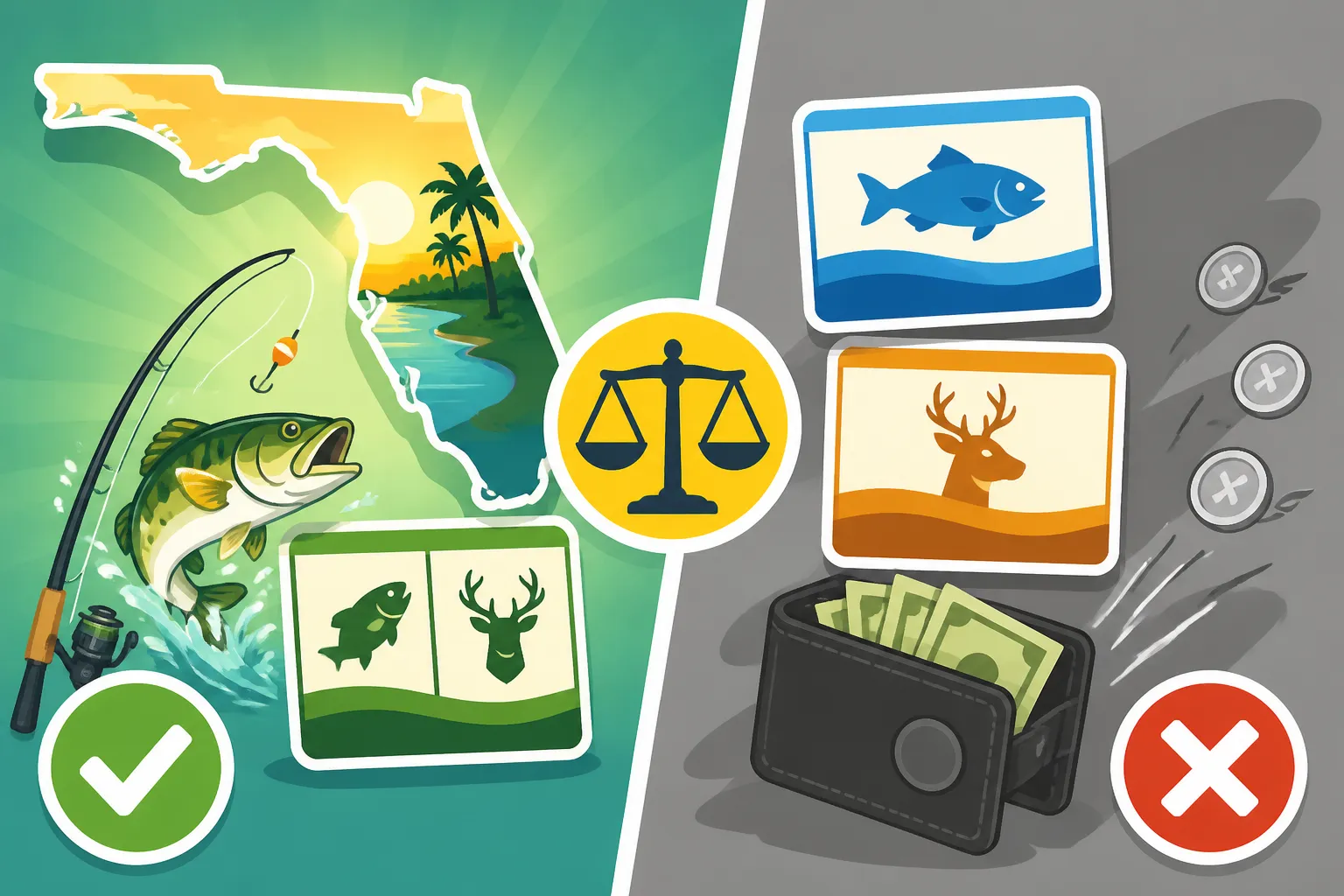
The primary reason most anglers look into a combination license is simple: saving money. When you purchase standalone permits for freshwater and saltwater fishing separately, you pay two distinct base prices. By bundling these permits into a single annual combination license, the state offers a built-in discount designed to encourage multi-water stewardship.
For local residents who fish more than a few times a year, the savings are immediate and compounding over time. When you factor in potential transaction fees and multi-year options, bundling becomes an even stronger financial choice.
Comparing Individual Permit Costs Against a Combination License
When you buy a standalone freshwater license and a standalone saltwater license during two separate store visits or online checkout sessions, you absorb the full standard rate for both. However, when you select the standard resident combination freshwater and saltwater license, the state reduces the combined rate.
To see how the numbers stack up, check out Florida Combination Freshwater and Saltwater License Cost for a breakdown of the price points. The table below outlines the general financial structure comparing individual permits against bundled options:
| License Type | Coverages Included | Cost Structure Comparison | Primary Benefit |
|---|---|---|---|
| Standalone Freshwater | Inland lakes, rivers, ponds only | Standard base rate | Ideal for strictly inland bass anglers |
| Standalone Saltwater | Coastal waters, bays, estuaries | Standard base rate | Ideal for strictly marine or offshore anglers |
| Combination Freshwater & Saltwater | Both freshwater and saltwater access | Reduced bundle rate | Saves money compared to buying both separately |
| Gold Sportsman License | Freshwater, Saltwater, Hunting, and special permits | Deeply discounted package rate | Maximum value for outdoorsmen who hunt and fish |
As shown in the comparison, stepping up to a bundled option eliminates the double-purchase penalty. If you hit the water in both environments even twice a year, the combo option easily pays for itself compared to buying separate standalone permits or short-term passes.
The Hidden Value of Processing Fees and Multi-Year Permits
Direct savings on the base license price are only part of the equation. Every time you process a license transaction—whether through a online portal, over the phone, or at a local retail counter—you may incur small vendor processing or convenience fees. Buying two separate licenses in two separate transactions means paying those administrative fees twice.
Bundling your purchase into a single transaction cuts down on processing overhead. Furthermore, if you want to lock in your rates and avoid annual renewals altogether, you can look into multi-year bundles. Check out Florida 5-Year Resident Fishing License Cost and read our guide on the 5-Year Fishing License Explained to see how long-term combination options multiply your time and financial savings over half a decade.
Practical Advantages Beyond Just Saving Dollars
While saving ten or fifteen dollars on a license bundle is great, the practical convenience on the water is often what anglers appreciate most. Florida’s geography features vast networks of interconnected rivers, canals, and bays where freshwater and marine species overlap. Trying to guess whether you are legally clear to catch a fish in brackish water can cause unnecessary anxiety on what should be a relaxing day off.
Having a combination license completely removes the guesswork. You can launch a kayak in a freshwater creek, paddle down into a saltwater bay, and target whatever bites without worrying about crossing an invisible management line.
Streamlining Compliance and Digital Carrying Options
Carrying multiple paper licenses, reef fish endorsements, and permit stamps can lead to lost paperwork or a soggy wallet. A combo license consolidates your privileges onto a single paper card or digital record. You can easily link your combined permit to the official Florida GoOutdoors App Fishing License on your smartphone, giving you immediate proof of compliance during a field inspection by a wildlife officer.
Failing to present the correct permit when caught fishing in the wrong jurisdiction can result in unexpected citations. Taking a moment to understand the Penalty for Fishing Without a License in Florida makes the small upfront cost of a combo license look like the ultimate insurance policy for your peace of mind.
To safeguard your electronics while displaying your digital license on the water, consider purchasing a heavy-duty floating dry phone case on Amazon so an accidental drop near the boat ramp does not ruin your day or your phone.
Gear and Boundary Management for Coastal and Inland Anglers
Florida is famous for its coastal canals and tidal rivers, such as the St. Johns River, the Crystal River, and the endless canal systems winding through Miami-Dade and Broward counties. In these zones, largemouth bass routinely swim alongside snook, tarpon, and redfish.
If you are fishing a coastal canal with a freshwater-only license and happen to hook a snook or a juvenile tarpon, handling or retaining that fish without a marine permit can put you in violation of state regulations. Reviewing Canal Fishing License Rules in Florida will show you just how frequently freshwater and saltwater species intermingle. A combination license ensures that no matter what hits your artificial lure, you are fully authorized to catch and handle it safely.
When setting up your tackle storage, many anglers like ordering modular utility boxes on Amazon to keep their freshwater bass lures separate from their corrosion-resistant saltwater jigs, keeping all their gear organized for multi-water trips.
Choosing the Right License Setup for Your Fishing Style
Even though a combination license offers clear advantages for many anglers, it is not a one-size-fits-all solution for everyone. Your specific habits, favorite fishing spots, and physical location play a big role in deciding whether a bundle makes sense for your lifestyle.
By analyzing how often you get out on the water and where you launch, you can easily determine whether to go with a combo or stick to a single-purpose permit.
When a Combination License Makes the Most Sense
A combination license is the clear winner for several types of anglers:
- Tidal and Estuary Anglers: If you fish in coastal rivers, brackish canals, or marshlands where salinity changes with the tide, a combo license is practically essential.
- Kayak and Mobile Fishermen: Anglers who throw their kayak on a roof rack and explore different bodies of water every weekend benefit massively from all-water access. If you prefer unpowered craft, check out Do You Need a License to Kayak Fish in Florida? to understand how vessel rules interact with personal permit requirements.
- Multi-Species Enthusiasts: If you love targeting panfish and bass in the spring but switch to coastal seatrout, sheepshead, and redfish in the autumn, bundling saves money every time.
To keep your mobile rig prepped for any water condition, picking up a few compact rod holders and gear straps on Amazon makes transitioning your kayak from fresh lake water to salt marshes effortless.
When Buying Individual Licenses Might Still Be Better
Despite the obvious perks of bundling, there are specific scenarios where buying an individual standalone license is the smarter move:
- Landlocked Inland Anglers: If you live in central Florida and exclusively fish private farm ponds or inland lakes like Lake Okeechobee without ever visiting the coast, paying for saltwater privileges is unnecessary.
- Strict Offshore Reef Anglers: If you only go fishing when heading out on a private boat into deep Gulf or Atlantic waters for grouper and snapper, a freshwater endorsement offers zero practical value to you.
- Out-of-State Visitors on Short Trips: Nonresident combination options operate under different pricing structures. If you are visiting for a few days, exploring Short-Term Fishing License Options or reviewing Florida Nonresident Fishing License Rules will help you find a 3-day or 7-day pass tailored specifically to your vacation schedule.
By assessing your real-world fishing patterns, crunching the basic costs, and considering the hassle of managing multiple permits, you can make an informed choice that keeps your wallet full and your lines wet all year long.
Disclaimer
This article is for general informational purposes only and does not constitute professional advice. Laws, prices and regulations vary by location and change over time. Consult a qualified professional for guidance on your specific situation.