Best Spots to Catch Peacock Bass in Miami Canals
There's a unique thrill that comes with chasing a challenging, hard-fighting fish in an unexpected urban landscape. For many anglers, the dream of battling a vibrant, aggressive peacock bass might conjure images of distant Amazonian rivers, but the reality is much closer to home for those in the Sunshine State. The frustration of trying to find these elusive beauties in a vast network of canals can be daunting, but fear not! This guide will demystify the best spots and strategies for catching peacock bass right here in the sprawling waterways of Miami.
Why Peacock Bass Thrive in Miami's Canals
Miami's sprawling canal system isn't just for drainage; it's a vibrant, thriving ecosystem that has become the perfect sanctuary for one of Florida's most exciting sport fish: the peacock bass. These canals offer a unique blend of urban accessibility and wild, untamed fishing opportunities. Understanding why these exotic species have flourished here is key to knowing where to find them.
The Florida Exotic Immigrant Story
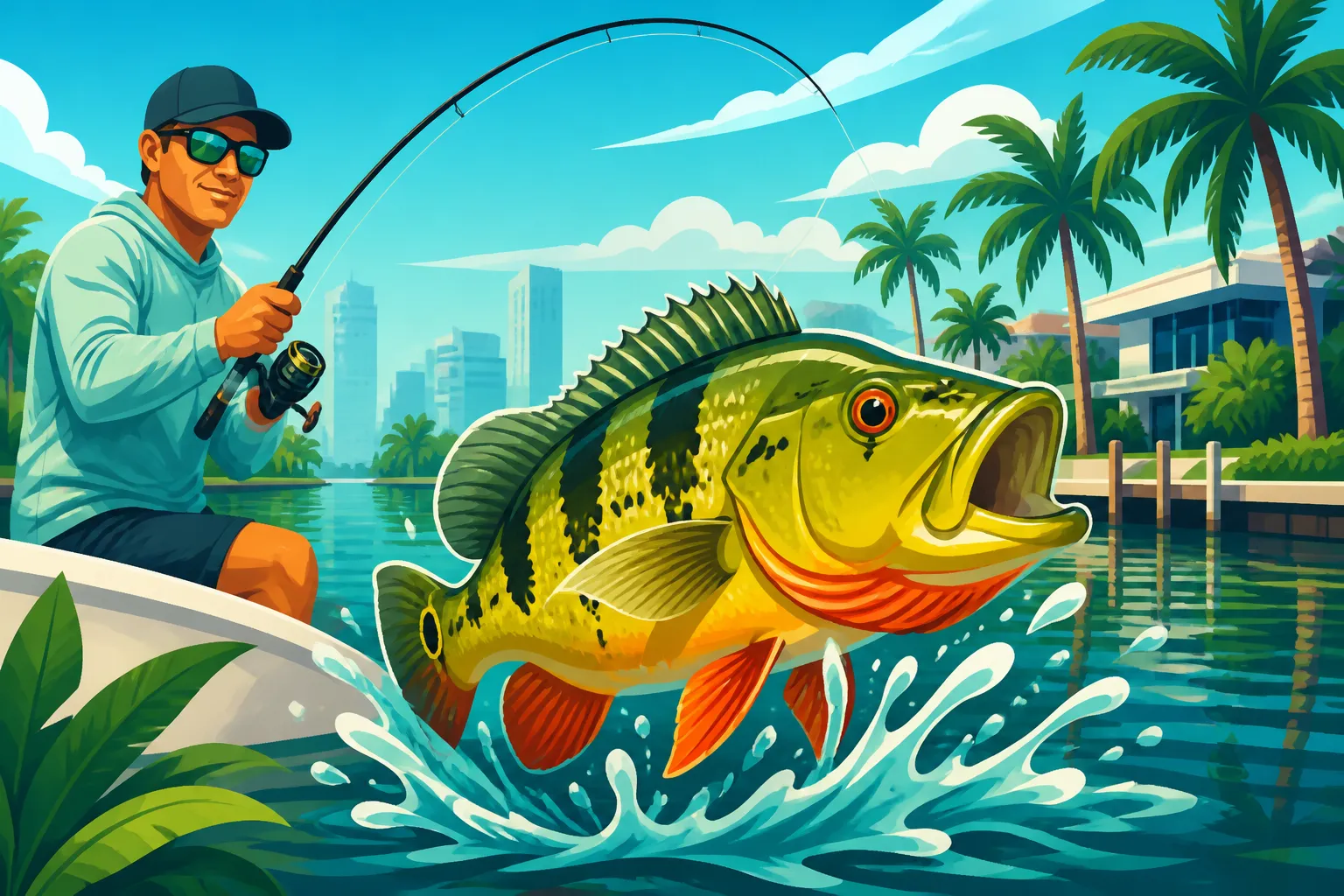
Peacock bass, specifically the butterfly peacock bass (Cichla ocellaris), aren't native to Florida. They were intentionally introduced by the Florida Fish and Wildlife Conservation Commission (FWC) in the mid-1980s. The primary goal was to create a new recreational fishery and, more importantly, to help control populations of other invasive, non-native fishes like tilapia and Mayan cichlids. And boy, did it work! These fish thrived in the warm, interconnected freshwater canals of Miami-Dade and Broward counties, establishing a self-sustaining population that now offers incredible angling experiences. It's a fascinating example of how a managed introduction can sometimes pay off for both recreation and ecological balance, providing a unique challenge for anglers looking to hook into something different.
Ideal Habitat Conditions
The canals of South Florida, particularly around Miami, offer a near-perfect environment for peacock bass. First and foremost is the warm, subtropical climate. Peacock bass are extremely sensitive to cold water, and prolonged temperatures below 60 degrees Fahrenheit can be lethal. Miami rarely experiences such cold snaps, ensuring their survival year-round. Beyond temperature, the canals provide a rich tapestry of structure and forage. Concrete seawalls, submerged culverts, fallen trees, bridge pilings, and dense aquatic vegetation all offer excellent ambush points for these predatory fish. They feast on abundant prey fish, including mollies, guppies, various cichlids, and even smaller native sunfish. The interconnected nature of the canals means fish can move freely, finding deeper pockets during cooler weather or dispersing into vast areas to feed.
Understanding Miami's Canal Network for Peacock Bass
Miami's freshwater canal system is an intricate web, stretching for hundreds of miles, a veritable labyrinth for the uninitiated angler. It can feel overwhelming trying to decide where to even start, but with a bit of local insight, you'll see patterns emerge that point you towards the most productive waters.
Navigating the Urban Jungle
Fishing in Miami's canals is a truly unique experience. You're often casting alongside busy roadways, residential neighborhoods, and even golf courses. This accessibility is a huge benefit, as many spots are reachable from shore, public parks, or small boat ramps. However, it also means dealing with urban noise, occasional litter, and sometimes limited parking. Don't let the urban setting fool you; these canals hold some truly impressive fish. You'll find yourself adjusting your approach, perhaps focusing on dawn or dusk when traffic is lighter, or targeting less conspicuous stretches of canal. For those wondering about the rules of engagement, a good starting point is always to be familiar with the general Florida Freshwater Fishing License Rules, which apply here just as much as in more remote areas.
Key Canal Systems and Their Characteristics
Miami-Dade County is crisscrossed by several major canal systems, each with its own character and hot spots for peacock bass. These waterways are part of a larger flood control and water management network, but for anglers, they represent endless possibilities. From wide, deep main arteries to narrower, shallower feeder canals, understanding the general layout is crucial. Here's a look at some of the most productive ones:
| Canal System | Primary Location | Typical Depth | Key Features for Peacock Bass | Accessibility Notes |
|---|---|---|---|---|
| Snapper Creek (C-4) | Southwest Miami-Dade | 5-15 feet | Overhanging vegetation, culverts, bridge pilings, residential docks | Good shore access in many areas, kayak/small boat ramps |
| Biscayne Canal (C-6) | Central Miami-Dade (through Miami Shores) | 6-12 feet | Seawalls, industrial areas, residential sections, current breaks | Limited shore access in some spots, can be heavily trafficked |
| Little River Canal (C-8) | North Miami-Dade | 4-10 feet | Retention ponds, golf courses, suburban neighborhoods, varied structure | Many accessible bridges and parks |
| Tamiami Canal (C-2) | West/Central Miami-Dade (parallel to Tamiami Trail) | 8-15 feet | Long stretches, culverts, spillways, road crossings, deeper pockets | Excellent bank access along Tamiami Trail (US-41) |
| Black Creek Canal (C-1) | South Miami-Dade | 5-12 feet | Connects to Everglades, remote sections, ample cover | More rural feel, limited access in some parts |
This table gives you a quick overview, but the real magic is in exploring these systems yourself, often with the help of local guides or detailed maps.
Top Peacock Bass Fishing Hotspots in Miami
Now for the juicy part – the specific locations where you're most likely to encounter these feisty fish. While peacock bass can be found throughout the interconnected canals, certain areas consistently produce better results due to their habitat, access, and overall fish population.
The C-Series Canals: C-4, C-6, and C-8
These primary canals are lifelines through Miami, offering incredible opportunities. The sheer volume of water and variety of structure make them prime peacock bass territory.
Snapper Creek (C-4)
The C-4 canal, also known as Snapper Creek, is a fantastic starting point for anyone looking to catch peacock bass. It winds through residential neighborhoods in southwest Miami-Dade, from the Everglades fringe all the way east towards Biscayne Bay. What makes it so productive are the countless residential docks, culverts, and bridges that provide excellent cover and ambush points. Anglers often find success by slowly working baits and lures along these structures. The C-4 is wide enough in many sections to accommodate small boats and kayaks, allowing you to cover more water, but many productive spots are accessible from the bank, especially around public parks and road crossings. Early mornings and late evenings are particularly fruitful, especially if you're targeting the fish with topwater lures.
Biscayne Canal (C-6)
The C-6, or Biscayne Canal, cuts through more central and northern parts of Miami-Dade, running through areas like Miami Shores and North Miami. This canal system often has sections with concrete seawalls and less natural vegetation, but don't let that deter you. Peacock bass love to hug these vertical structures, especially where there are breaks, storm drains, or bridge pilings that create current or shade. The urban nature of this canal means it can be busy, but focused efforts, particularly in the quieter stretches or where smaller feeder canals merge, can yield excellent results. Pay close attention to any canal junctions or areas where the water flow changes, as these spots tend to concentrate baitfish and, subsequently, the hungry peacocks.
Little River Canal (C-8)
Further north in Miami-Dade, the Little River Canal, or C-8, presents another excellent option. This system weaves through a mix of suburban areas, parks, and even alongside some golf courses. The diversity of habitats here, from open stretches to narrower, more vegetated sections, means you can employ a variety of techniques. Many anglers enjoy exploring the C-8 by kayak or canoe, allowing them to quietly slip into spots that might be harder to reach from the shore. Look for areas with submerged structure, such as fallen trees or rock piles, which serve as natural fish attractors. The connections to various retention ponds and smaller waterways also mean a consistent supply of food and a healthy, sprawling population of peacock bass.
Tamiami Canal (C-2)
Running parallel to the famous Tamiami Trail (U.S. Highway 41), the Tamiami Canal (C-2) is one of the longest and most iconic peacock bass fisheries in South Florida. This canal stretches for miles, offering a vast expanse of water to explore.
Its Vastness and Productivity
The Tamiami Canal is known for its sheer size and consistent productivity. It's wide and deep in many sections, providing ample room for fish to grow large. Anglers often focus on the numerous culverts, bridges, and spillways along its length, which are magnets for peacock bass, especially during periods of water flow. The canal banks, particularly along the Tamiami Trail, offer extensive access for shore anglers, making it a popular choice for those without a boat. You can often see anglers casting from the roadside, trying their luck. While it can get busy, the sheer length of the canal means there's always a new spot to try. Consider taking a walk along accessible stretches and observing the water for any signs of activity – peacock bass are aggressive and often give away their presence with splashes as they ambush prey.
Connecting Waters and Hidden Gems
Beyond the main canal, the Tamiami system often connects to smaller, less-pressured feeder canals and borrow pits. These offshoots can be hidden gems, holding surprisingly large fish that don't see as much angling pressure. Exploring these connecting waters, often accessible only by kayak or small boat, can lead to incredible days. Some of these areas can feel more wild and remote than the main urban canals, offering a different kind of fishing experience. Remember, anywhere there's ample cover, baitfish, and warm water, a peacock bass is likely lurking.
Best Fishing Techniques and Baits for Miami Peacocks
Catching peacock bass isn't just about finding the right spot; it's also about presenting your bait or lure effectively. These fish are aggressive predators, but they can also be wary, especially in pressured urban environments. Employing the right techniques is crucial for success. If you're looking for more general insights, our guide on Florida Bass Fishing Techniques can offer a broader perspective that can be adapted.
Lure Selection: Topwater, Jerkbaits, Jigs
Peacock bass are highly visual hunters, making lures incredibly effective. The key is to match the hatch and mimic their natural prey.
Topwater Explosions
There's nothing quite like the explosive strike of a peacock bass on a topwater lure. These fish are incredibly aggressive, and when they commit to a topwater bait, it's often a violent, heart-stopping event. Prop baits, poppers, and walking baits (like a Heddon Super Spook or Zara Spook) are incredibly effective, especially during low-light conditions in the early morning or late evening. Work them with a "walk-the-dog" retrieve or a series of pops and pauses near structure. The sound and commotion created on the surface often trigger an instinctual strike from nearby peacocks. This technique is not just productive, but it's arguably the most exciting way to catch them.
Jerkbaits and Jigs for Subsurface Action
When fish aren't willing to come to the surface, jerkbaits are excellent for targeting peacocks suspended near cover or in slightly deeper water. Lures like the Rapala X-Rap or similar shallow-diving jerkbaits can be retrieved with a twitch-twitch-pause motion, mimicking a wounded baitfish. The erratic action often provokes a strike. For deeper water or when fish are holding tight to structure, jigs can be deadly. Small bucktail jigs or soft plastic swimbaits rigged on jig heads can be bounced along the bottom or slowly retrieved through submerged cover. White, chartreuse, and natural baitfish colors are often the most productive. For a deeper dive into lure choices, check out Best Lures for Florida Bass Fishing, many of which are also effective for peacocks.
Live Bait Supremacy: Shiners Are King
While artificial lures are incredibly fun, when the bite is tough or you're aiming for bigger fish, live bait is often the undisputed champion.
The Allure of Live Shiners
There's a reason why local guides swear by live shiners for peacock bass: they simply work. A frisky shiner, whether a golden shiner, pond shiner, or even a local baitfish like a tilapia fingerling, presented naturally, is almost irresistible to a peacock bass. You can fish them free-lined with a small circle hook and no weight, allowing them to swim naturally, or under a float to keep them at a specific depth near structure. The frantic movements of a live shiner struggling on the hook are a prime trigger for a peacock's predatory instincts. Many local tackle shops in Miami, like those found through a quick search for "Where to Buy a Florida Fishing License Near You", will also carry live shiners, making them readily available.
Other Effective Live Baits
Beyond shiners, other live baits can also be productive. Small minnows, live shrimp (in canals with some brackish influence), or even small bluegill or tilapia can tempt larger peacocks. The key is presentation: make sure your bait looks as natural as possible, and present it directly into or very near the cover where peacocks are likely to be hiding. For general advice on live bait, consider reading Best Bait for Bass Fishing in Florida, which offers great foundational knowledge applicable here.
Mastering the Approach: Sight Fishing and Casting Accuracy
Peacock bass fishing in canals often involves an element of sight fishing and requires precise casting.
Spotting Your Quarry
In the clear waters of many Miami canals, especially on sunny days, you can often spot peacock bass cruising the edges, holding near structure, or even guarding nests. This makes sight fishing a thrilling and effective tactic. Polarized sunglasses are absolutely essential for cutting glare and allowing you to see into the water. Once you spot a fish, the challenge is to make a long, accurate cast that leads the fish without spooking it. A well-placed cast can result in an immediate strike, while a sloppy one will send the fish darting for cover.
Precision Casting Around Structure
Whether you're sight fishing or blind casting, accuracy is paramount. Peacock bass love to hide in tight spots – under overhanging trees, deep in culverts, next to bridge pilings, or right against seawalls. Being able to drop your lure or bait precisely into these strike zones dramatically increases your chances. Practice casting to specific targets to hone your skills. Remember, these fish don't usually travel far from their chosen ambush points, so getting your offering right into their living room is key.
Essential Gear and Local Knowledge for Success
Having the right tackle and tapping into local expertise can make all the difference in your peacock bass pursuit. It's not just about what you use, but how you use it and who can point you in the right direction.
Rods, Reels, and Line: Tackle Recommendations
Peacock bass are strong fighters, so you'll want tackle that can handle their aggressive runs and head shakes, especially around heavy cover.
Medium to Medium-Heavy Spinning or Baitcasting Gear
For most peacock bass fishing in Miami canals, a medium to medium-heavy action spinning rod or baitcasting setup is ideal. A 6'6" to 7' fast-action rod provides the sensitivity to detect subtle bites and the backbone to turn a strong fish away from structure. Pairing this with a quality reel spooled with 10-20 lb braided line, topped with a 15-25 lb fluorocarbon leader, gives you excellent casting distance, sensitivity, and abrasion resistance. Braided line is particularly useful because of its strength-to-diameter ratio and lack of stretch, which helps with hook sets. The fluorocarbon leader is nearly invisible underwater and provides extra protection against sharp structures and the fish's abrasive mouth. For those interested in optimizing their setup, considering a guide like Best Rod and Reel Setup for Florida Inshore Fishing might offer transferable insights into robust tackle choices.
Additional Gear for Canal Fishing
Beyond your rod and reel, a few other items are non-negotiable. A good pair of polarized sunglasses, as mentioned, is crucial for spotting fish and structure. A wide-brimmed hat and sun-protective clothing are essential for long days under the Florida sun. Pliers for hook removal, a small tackle bag with extra lures and leader material, and a net for landing fish securely are also highly recommended. If you're planning on keeping any fish, a cooler with ice is a must, though many anglers opt for catch and release with these beautiful fish. Always review Florida Fishing Regulations and Bag Limits before your trip to ensure you're in compliance.
The Value of a Local Guide
While DIY fishing is part of the adventure, hiring a local guide, especially for your first few trips, can dramatically improve your success rate and shorten the learning curve.
Unlocking Local Secrets
Miami's canal system is vast, and local guides spend countless hours on the water, understanding the nuances of fish behavior, water conditions, and the most productive spots at any given time. They know which specific culvert is holding fish, which bridge pilings are hot, or where the bait schools are congregating. A good guide can teach you the subtle presentation techniques unique to canal fishing and help you quickly adapt to changing conditions. They often have access to private ramps or know the less-trafficked public spots that hold quality fish. If you're unsure how to pick the right person, our guide on How to Choose a Florida Fishing Guide offers valuable tips.
Booking with Confidence
Platforms like FishingBooker make it incredibly easy to find and book reputable local guides specializing in peacock bass fishing. You can browse various captains, compare prices, read reviews from other anglers, and see what's included in the charter, such as tackle, bait, and often even the necessary Florida Fishing License Guide coverage. Booking through a service like FishingBooker takes the guesswork out of finding a reliable guide, ensuring you get a seasoned professional who can put you on fish. It's an investment that often pays off with more fish caught and a much more enjoyable, educational experience.
Regulations and Conservation for Peacock Bass
Even though peacock bass are an introduced species, they are a vital part of Florida's recreational fishing landscape, and responsible angling practices are essential to ensure their continued abundance. Understanding the rules helps everyone enjoy this unique fishery.
Current Bag and Size Limits
The FWC has specific regulations for peacock bass, designed to maintain a healthy and sustainable population while providing ample angling opportunities. Currently, anglers are allowed to keep two peacock bass per day, only one of which can be 17 inches or longer. This 17-inch "slot limit" helps protect the larger, breeding-size fish. These regulations are subject to change, so always double-check the latest FWC guidelines before heading out. Staying informed is part of being a responsible angler, and it applies whether you're fishing for largemouth bass in Lake Okeechobee or peacock bass in a Miami canal. You can usually find the most up-to-date information on the FWC website or through their GoOutdoors App, which is an excellent resource for anyone with a Florida GoOutdoors App Fishing License.
Catch and Release Ethics
While keeping a couple of peacock bass for the table is certainly an option (they are quite tasty!), many anglers, especially those targeting larger specimens, practice catch and release. Peacock bass are magnificent sport fish, and releasing them ensures they can continue to grow, spawn, and provide exciting battles for future generations. When practicing catch and release, handle the fish as little as possible, use wet hands to protect their slime coat, and try to minimize their time out of the water. If a fish is deeply hooked, cut the line as close to the hook as possible rather than trying to rip the hook out. For best practices, many of the principles outlined in Catch and Release Best Practices for Snook can be applied to peacock bass, ensuring a healthy release. This commitment to conservation helps preserve the quality of fishing in these unique urban waterways.
Navigating Fishing from a Charter Boat in Miami Canals
While many anglers enjoy the challenge of shore fishing or kayaking the canals for peacock bass, a charter boat offers a different, often more productive, experience. For visitors or those new to the area, it's often the quickest way to get on fish.
What to Expect on a Peacock Bass Charter
When you book a peacock bass charter, especially through a service like FishingBooker, you're typically signing up for a specialized experience. Guides usually operate from smaller, maneuverable boats, like bass boats or flats boats, perfectly suited for navigating the narrow canals and shallow waters where peacock bass lurk. Everything from rods, reels, and tackle to live bait (often golden shiners) is usually provided. Your captain will take you to the most productive areas based on current conditions, often moving between different canal systems throughout the day to find the hottest bite. This takes the guesswork out of finding the fish and allows you to focus purely on the angling action.
Licenses and Inclusions on a Charter
One of the great benefits of fishing with a licensed guide or on a charter boat is that your individual Florida Fishing License Guide requirement is often covered by the boat's blanket license. This means you don't typically need to purchase your own separate license when fishing with a professional. However, always confirm this detail with your specific captain when booking, just to be absolutely sure. Most charters also include all necessary safety equipment, ice for your drinks, and often bottled water. Many captains will also clean any legal-sized fish you choose to keep at the end of the trip, making for a fresh dinner without the extra work. For visitors, this is an excellent hassle-free way to experience Florida's unique freshwater fishing.
Disclaimer
Please note that fishing conditions, regulations, and spot availability can change. Always consult the latest Florida Fish and Wildlife Conservation Commission (FWC) regulations before fishing. Exercise caution when fishing near roads or residential areas, and respect private property. This guide is for informational purposes only and does not constitute professional advice.