Best Time to Fish Tampa Bay for Big Trout
There's nothing quite as frustrating as heading out onto the beautiful waters of Tampa Bay, full of anticipation for that bent rod and screaming drag, only to come back with a cooler full of small, barely legal trout, or worse, nothing at all. We've all been there, staring at a seemingly lifeless flat, wondering what we're doing wrong. The truth is, catching those truly impressive, "gator" trout – the ones that push the 20-inch mark and beyond – isn't just about showing up with a rod. It's about understanding the rhythm of Tampa Bay and knowing precisely when and where to put your bait or lure. This guide is here to unravel the mysteries of targeting big spotted seatrout, helping you crack the code on the best times to make your fishing dreams a reality.
Understanding Tampa Bay's Spotted Seatrout
Before we dive into the "when," let's spend a little time understanding the "what." Spotted seatrout are one of Florida's most beloved inshore species, prized for their feisty fight and delicious table fare. But catching a truly large one requires a different approach than just targeting any trout.
The Life Cycle and Habits of Big Trout
When we talk about "big trout," we're generally referring to those magnificent fish that measure 20 inches or more, often lovingly called "gators." These aren't your average 15-inch schoolie trout. Gator trout are typically older, wiser, and have developed specific behaviors that set them apart. They’ve seen a lot of lures and baits, and they’re not as easily fooled.
Unlike their smaller counterparts who often congregate in large schools, trophy trout tend to be more solitary, or at least found in smaller, more spread-out groups. They’re less interested in chasing down every tiny baitfish and more focused on conserving energy and ambushing larger prey. Think of them as the top predators on the grass flats, waiting for an easy, substantial meal. Their preferred habitats are still grass flats, but they often hug the deeper edges, seek out larger potholes, or patrol the transition zones where a flat meets a channel. They're looking for structure, cover, and a steady current to bring food to them. Their diet shifts to include larger baitfish like mullet, pinfish, and even juvenile ladyfish or croakers. Understanding this predatory shift is crucial – you need to "match the hatch" not just in species, but in size, to appeal to these bigger fish.
Factors Influencing Trout Behavior
Several environmental factors dictate where and when these elusive trophy trout decide to bite. Ignoring these is like trying to find a needle in a haystack blindfolded.
Water temperature is, without a doubt, one of the most critical elements. Spotted seatrout are cold-blooded creatures, and their metabolism is directly tied to the water temperature. In Tampa Bay, ideal temperatures for active feeding are typically between 65 and 75 degrees Fahrenheit. When temperatures dip below 60 degrees, trout become lethargic, moving to deeper, warmer pockets or mud flats. Conversely, when temperatures soar above 85 degrees, they'll seek cooler, deeper water or areas with strong tidal flow that provides more oxygen. Knowing the water temperature can tell you if trout are actively feeding or hunkering down.
Salinity also plays a role. While spotted seatrout are known for their ability to tolerate a wide range of salinities, they generally prefer brackish waters, especially during spawning periods. Tampa Bay, with its blend of freshwater input from rivers and Gulf saltwater, provides this perfect mix. Changes in rainfall can affect salinity, influencing where trout might concentrate.
Lastly, tides are the lifeblood of inshore fishing. The movement of water generated by the tides is what pushes baitfish around, dislodges crustaceans, and concentrates prey, creating feeding opportunities for trout. A strong moving tide, whether incoming or outgoing, is almost always better than a slack tide. The precise tidal phase can dictate where trout position themselves to ambush prey. We’ll delve deeper into the nuances of tides shortly, but just know, a static tide usually means static fish.
Seasonal Strategies for Tampa Bay Trout
Tampa Bay offers incredible trout fishing year-round, but the best time for big trout shifts with the seasons. Each season presents unique conditions and requires adjustments to your approach.
Winter Wonderland for Trophy Trout (December – February)
For many experienced anglers, winter in Tampa Bay is the prime time to target truly large spotted seatrout. While the general population of trout might be lower than in warmer months, the fish you do find are often the big ones. Why? Colder water temperatures (though not too cold) push baitfish off the shallow flats into deeper, warmer channels and basins, and the trout follow them. This concentrates the fish, making them easier to locate. The water also tends to be clearer in winter, meaning you need to be stealthier in your approach.
During this period, look for trout holding in deeper grass beds (4-8 feet), sandy potholes within those flats, or along the edges of channels where the current is still active but not overpowering. Focus on sunny days following a cold front, as the sun warms the shallow waters and can trigger a short but aggressive bite. Slow retrieves are key; trout are conserving energy and won't often chase a fast-moving bait. Consider suspending twitch baits like a MirrOLure MirrOdine or MirrOmullet, or slowly working soft plastics like D.O.A. C.A.L. Shadtails or jerkbaits along the bottom. This is also a fantastic time for using live shrimp under a popping cork, letting it drift with the current over those deeper grass lines. To truly maximize your chances, consult a comprehensive Florida Spotted Seatrout Fishing Guide which often details winter patterns.
Spring Spawning and Feeding Frenzies (March – May)
As the waters begin to warm in spring, usually hitting that sweet spot of 65-75 degrees, spotted seatrout become incredibly active. This is their primary spawning season in Tampa Bay, and pre-spawn and spawning fish are notoriously aggressive as they bulk up on food and seek mates.
During spring, you'll find trout moving back onto shallower grass flats (2-4 feet), often concentrating around sandy patches or potholes that offer ambush points. They'll also be found near oyster bars and mangrove edges. This is prime time for explosive topwater action, especially during dawn and dusk. Work walk-the-dog style baits or chuggers across the flats; the commotion often draws out larger trout looking for an easy meal. Live bait, particularly pilchards ("whitebait") or pinfish, are also incredibly effective, fished free-lined or under a minimal float. The aggressive nature of spring trout can lead to some truly memorable battles with big fish. Just be mindful of local Florida Spotted Seatrout Size and Bag Limits as you might encounter many fish during this prolific time.
Summer's Challenges and Opportunities (June – August)
Summer in Tampa Bay presents both challenges and unique opportunities for big trout. The scorching heat can push water temperatures well above the ideal range, stressing trout and forcing them into deeper, cooler water. Midday fishing on bright, sunny days is often slow. However, if you adjust your timing and tactics, you can still find those elusive gators.
The key to summer trout fishing is to focus on the cooler parts of the day. The early morning bite, from first light until the sun gets high, can be phenomenal. Likewise, the late evening, from dusk into the night, offers excellent opportunities. During the brightest parts of the day, trout will retreat to deeper grass beds, channels, or shaded areas under docks and bridges. Targeting them requires deeper presentations, such as jigging soft plastics or fishing live shrimp or pinfish on a weighted jig head or knocker rig along the bottom. Summer is also a fantastic time for Night Fishing Technique for Trout Under Dock Lights, where the big ones often congregate under artificial light to ambush baitfish. Fishing with an experienced local guide, perhaps found through a platform like FishingBooker, can be a game-changer during the summer months, as they know the specific deep-water haunts.
Fall's Feast for Fat Trout (September – November)
Fall is another fantastic season for big trout in Tampa Bay, often rivaling winter in quality. As water temperatures begin to cool from the summer highs, but before they get too cold, trout go on a feeding frenzy to fatten up for the leaner winter months. Baitfish are abundant, and the trout are actively pursuing them.
During fall, you'll find trout spread out across the extensive grass flats, especially in areas with good tidal flow. They'll also be very active around mangrove shorelines and oyster beds. This is a time when a wide variety of baits and lures can be effective. Soft plastics, topwater lures, suspending twitch baits, and live bait like pilchards or threadfin herring all work wonderfully. Focus on areas where you see baitfish showering or birds diving, as these are clear indicators of feeding activity. Look for the return of clearer water conditions as cold fronts start to push through, which can also trigger intense feeding. The fish are often very healthy and strong this time of year, providing some of the best fights of the entire year.
Tidal, Time of Day, and Weather Considerations
Beyond the seasons, the daily conditions have a huge impact on your success for big trout. Neglecting these details means missing out on crucial windows of opportunity.
Decoding the Tides for Optimal Fishing
Tides are paramount in Tampa Bay. While smaller trout might be found at various tidal stages, big trout are usually much more dependent on strong, moving water.
- Strong Moving Tides: This is almost always your best bet. Whether it's an incoming or outgoing tide, the movement of water pushes baitfish, crustaceans, and other forage around, concentrating them in predictable ambush points for predatory trout. An incoming tide often pushes cleaner, cooler water from the Gulf onto the flats, stimulating feeding. An outgoing tide can draw bait out of the mangroves or off the flats into channels, where trout will stage to pick them off.
- Slack Tide: This is generally the worst time to fish for big trout. When the water isn't moving, baitfish tend to disperse, and trout become less active. They'll often lay low on the bottom, conserving energy. If you find yourself in a slack tide, focus on deeper water, shaded areas, or spots with some inherent current, like a bridge pilings.
- Tampa Bay's Unique Tidal Patterns: Tampa Bay's tidal patterns can be quite complex due to its large size and various inlets. It's not always a simple "high and low." Sometimes you can have a strong current in one part of the bay while another area is experiencing slack water. Always consult a local tide chart for your specific fishing location, not just a general bay-wide one. Understanding Best Tides for Inshore Fishing in Florida will drastically improve your chances.
Best Times of Day and Light Conditions
Just like with seasonal changes, the time of day and prevailing light conditions are critical.
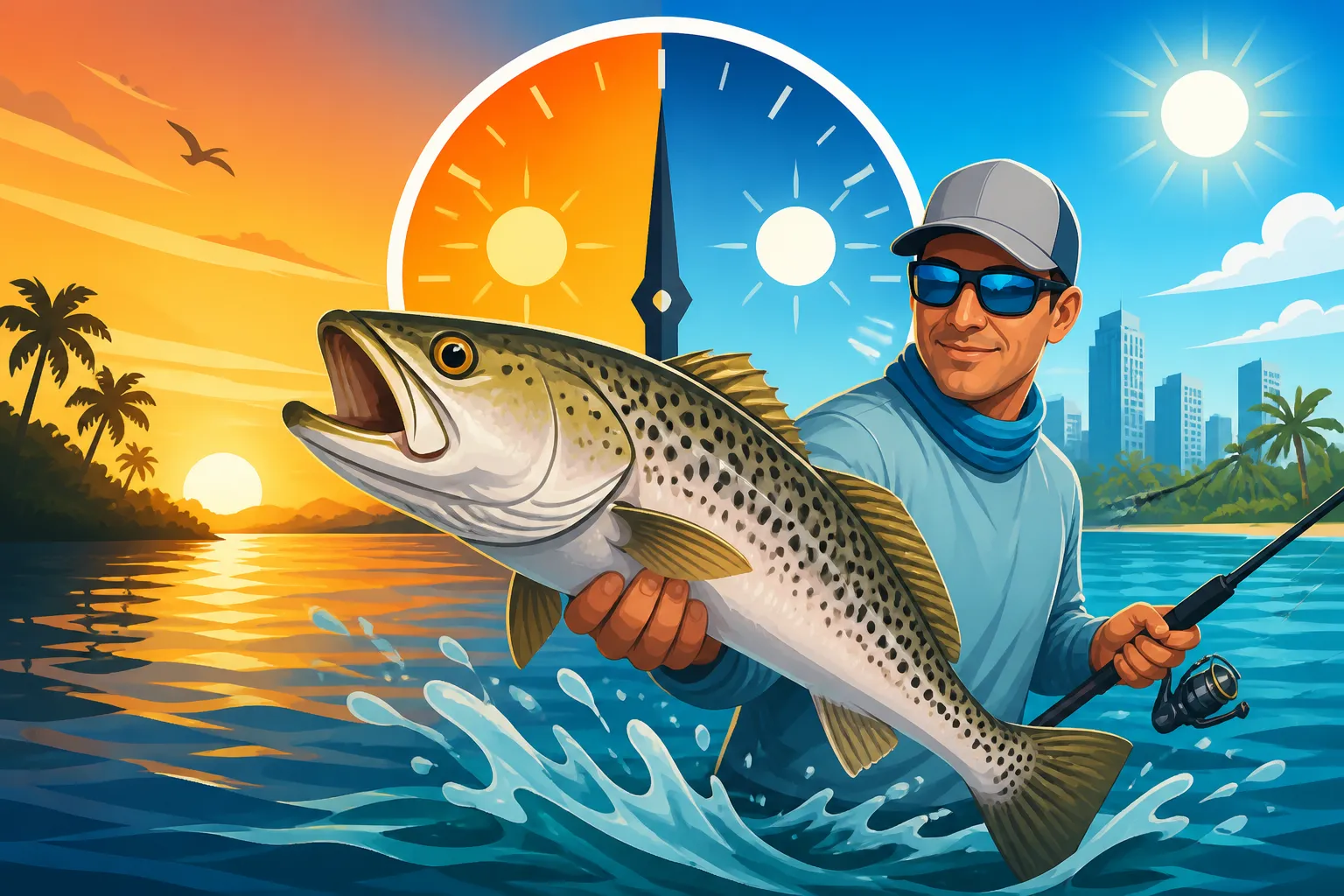
- Dawn and Dusk: These are classic "prime time" windows for all predatory fish, and big trout are no exception. The low light gives trout a significant advantage over their prey, allowing them to ambush with greater stealth. This is when topwater lures truly shine. The hour leading up to sunrise and the hour after sunset can be incredibly productive.
- Cloudy Days: Overcast conditions can extend the morning and evening bite windows throughout the day. The reduced light penetration makes trout feel more comfortable moving and feeding in shallower water.
- Night Fishing: As mentioned earlier, summer nights are excellent, but big trout can be caught after dark in any season. They become nocturnal hunters, especially around dock lights, bridge lights, or any artificial illumination that attracts baitfish. This is a fantastic strategy for avoiding the heat and boat traffic of the day. For detailed advice on this, check out What Time of Day Do Trout Bite Best in Florida? and Night Fishing Technique for Trout Under Dock Lights.
Weather's Impact on Trout Activity
Weather isn't just about comfort; it directly impacts fish behavior.
- Cold Fronts: A sudden drop in temperature, especially when accompanied by strong northerly winds, can temporarily shut down a hot trout bite. Trout will often move to deeper, more protected waters with a stable temperature, like dredged channels or warm mud flats. After a cold front, it's best to wait a day or two for the fish to settle and for the sun to warm the shallower areas, then fish slowly and deliberately. This is well explained in How Cold Fronts Affect Winter Fishing in Florida.
- Warm Fronts: Conversely, a warming trend after a cold snap can invigorate trout, making them more active and willing to chase.
- Wind: Wind can be a double-edged sword. A light breeze can create a desirable "chop" on the water's surface, breaking up the light and making it harder for trout's prey to spot them, leading to increased feeding. However, strong winds can make casting difficult, dirty the water, and push baitfish out of an area. Look for protected shorelines or calmer lee sides of islands during windy conditions.
Essential Gear and Tactics for Trophy Trout
Having the right gear and knowing how to use it makes all the difference when you're targeting big, wary trout.
Rods, Reels, and Lines for Big Trout
To handle a true gator trout, you don't need heavy offshore tackle, but you do need gear that's up to the task.
- Rods: A medium-light to medium power spinning rod, typically 7 to 7.5 feet in length, with a fast action tip is ideal. This combination allows for long casts with lighter lures while providing enough backbone to fight a strong fish and quickly steer it away from snags. Brands like St. Croix, G. Loomis, or Penn offer excellent options.
- Reels: Pair your rod with a quality 2500 or 3000 series spinning reel. Smooth drag is absolutely essential for fighting big trout on light line, as they have soft mouths that can tear easily. Shimano Stradic or Daiwa BG are popular choices.
- Line: Spool your reel with 10-15 lb braided line. Braid offers incredible sensitivity, thin diameter for long casts, and superior strength for its size. The low stretch of braid also helps detect subtle bites.
- Leaders: This is where many anglers miss out. A 20-30 lb fluorocarbon leader is non-negotiable for big trout. Fluorocarbon is nearly invisible underwater, extremely abrasion-resistant (important around oyster bars and rough grass), and provides a cushion against the braid's no-stretch properties. Tie your leader directly to your braid with an FG knot or a double uni knot. For detailed recommendations, see Best Rod and Reel Setup for Florida Inshore Fishing.
Top Baits and Lures That Fool Big Trout
Big trout are selective. While they'll eat a variety of things, certain baits and lures consistently produce better results for trophy fish.
- Live Bait: When in doubt, live bait is hard to beat.
- Pinfish: These are a favorite meal for big trout. Free-line a frisky pinfish over grass flats or suspend it under a popping cork.
- Shrimp: Always a classic. Live shrimp, especially larger ones, fished under a popping cork or on a weighted jig head, are deadly.
- Whitebait (Pilchards/Scaled Sardines): When these are abundant, free-lining a live pilchard is incredibly effective.
- Artificial Lures:
- Soft Plastics: Paddle tails (like the Z-Man MinnowZ or Gulp! Shrimp) fished on a 1/8 to 1/4 oz jig head are incredibly versatile. Work them with a slow twitch-and-pause retrieve. Jerkbaits (like a D.O.A. C.A.L. Shad Tail) rigged weedless can be deadly over shallow grass.
- Topwater Plugs: For those exhilarating low-light bites, walk-the-dog style lures (e.g., Heddon Super Spook Jr., MirrOLure MirrOmullet) or chuggers (e.g., Rapala Skitter Pop) are irresistible to aggressive trout.
- Suspending Twitch Baits: MirrOLure is a legendary brand for trout fishing, and their MirrOdine or MirrOmullet suspending baits are phenomenal. Twitch them slowly, letting them suspend in the water column for several seconds between twitches – this mimics an injured baitfish perfectly.
- For a deeper dive into bait selection, check out Best Bait for Trout Fishing in Florida.
The Art of Presentation and Stealth
Catching big trout isn't just about what you throw, but how you throw it. These fish are wary.
- Long Casts: Always try to make the longest cast possible, especially in clear water. This keeps your boat or kayak further away from the fish, reducing the chance of spooking them.
- Quiet Approach: Be mindful of noise. Dropping tackle, banging coolers, or running your trolling motor too aggressively can send big trout scurrying. Poling a flats boat or using a quiet electric motor is often best.
- Reading the Water: Look for signs of life: baitfish schooling, subtle swirls, or even the distinctive "pop" of a trout feeding on the surface. Pay attention to changes in bottom contour, darker spots in grass flats (potholes), or any irregularity that might hold fish.
- Patience and Persistence: Big trout don't always bite immediately. Sometimes, it takes multiple casts to the same spot, or a very slow, deliberate retrieve to entice a strike. Don't be afraid to experiment with retrieve speeds and lure colors until you find what they want. If you're struggling to crack the code, consider hiring a local expert through a service like FishingBooker. Their intimate knowledge of the bay can drastically shorten your learning curve.
Finding the Best Spots in Tampa Bay for Trout
Tampa Bay is massive, and while trout are widespread, certain areas consistently produce bigger fish.
Key Habitats and Structures
Tampa Bay is renowned for its expansive shallow water habitats, which are perfect for spotted seatrout.
- Extensive Grass Flats: These are the primary hunting grounds for trout. Look for areas with a healthy mix of turtle grass and shoal grass. Some of the most productive grass flats are found around Fort De Soto Park, the eastern side of Tampa Bay near Apollo Beach, and the extensive flats near Weedon Island Preserve in St. Petersburg. These areas offer vast stretches of ideal habitat where trout can spread out and ambush prey.
- Potholes and Channels within Flats: Trout, especially larger ones, love to sit on the edges of sandy potholes within grass flats. These depressions provide a perfect ambush point where they can dart out and grab baitfish moving along the grass edge. Similarly, deeper channels cutting through flats are highways for baitfish and often hold bigger trout waiting to pick them off.
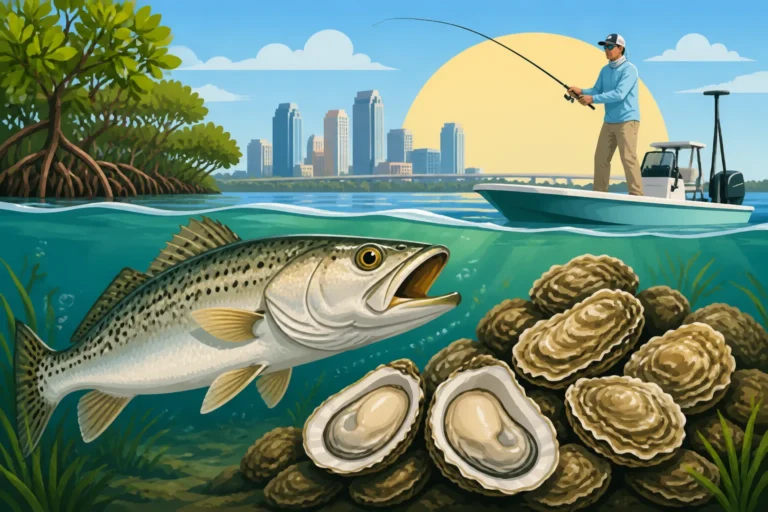
- Mangrove Edges and Oyster Bars: While typically associated more with snook and redfish, healthy mangrove shorelines and oyster bars with good tidal flow can absolutely hold big trout, especially during higher tides when they'll push far back into the cover. These areas provide excellent protection and a buffet of crustaceans and small fish. A deeper understanding of these locations can be found in our comprehensive Tampa Bay Fishing Guide.
Navigating Tampa Bay's Waters
Tampa Bay is a complex system of shallow flats, deep channels, bridges, and artificial reefs. Navigating it safely and effectively requires some homework.
- Marine Charts and GPS: Always have up-to-date marine charts (physical or on your GPS unit/phone app). These will show you depth changes, channels, spoil islands, and restricted areas. Navionics and Garmin are excellent for detailed marine cartography. Many of Tampa Bay's flats are extremely shallow at low tide, and running aground is a common, frustrating, and potentially damaging mistake.
- Local Knowledge: Nothing beats local knowledge. Spend time observing other anglers, talking to bait shop owners, and reading local fishing reports. Better yet, consider hiring a reputable local fishing guide for a day. They can put you on fish, teach you techniques specific to the area, and show you prime spots you might never find on your own. Platforms like FishingBooker make it incredibly easy to find and book highly-rated guides in the Tampa Bay area, specifically those specializing in trophy trout.
- Understanding "No Wake" Zones and Boat Traffic: Tampa Bay is a busy waterway. Be aware of no-wake zones, channel markers, and other boaters. A quiet approach is paramount to not spooking fish, so be mindful of your wake when near fishing grounds. When targeting those shallow Best Grass Flats in Tampa Bay for Trout, remember that loud motors will definitely send the fish running for cover.
Seasonal Big Trout Fishing Guide for Tampa Bay
| Season | Best Months | Water Temperature Range | Primary Locations | Best Baits/Lures | Key Considerations |
|---|---|---|---|---|---|
| Winter | December – February | 58-68°F | Deeper grass flats (4-8ft), channels, large potholes | Suspending twitch baits, soft plastics (slow retrieve), large live shrimp, pinfish. | Clearer water, slow retrieves, focus on sunny days, post-cold front. |
| Spring | March – May | 65-78°F | Shallower grass flats (2-4ft), oyster bars, mangrove edges, sandy bottoms. | Topwater plugs, soft plastics (twitch/pause), live pilchards, larger live shrimp. | Spawning activity, aggressive feeding, early morning/late evening topwater action. Be mindful of bag limits. |
| Summer | June – August | 78-88°F+ | Deeper channels, shaded areas, dock/bridge lights at night. | Deep-diving soft plastics, live pinfish/mullet on weighted rigs, jigs, night fishing. | Avoid midday heat, focus on dawn/dusk/night, seek cooler, deeper water with good flow. |
| Fall | September – November | 70-80°F | Mid-depth to shallow grass flats, mangrove lines, oyster beds. | Variety of lures (topwater, plastics, twitch baits), live pilchards, pinfish, threadfin herring. | Fish fattening up, abundant bait, highly active, wide range of effective techniques. Look for clear water post-front. |
Ultimately, consistently catching big trout in Tampa Bay is a blend of scientific understanding and practical experience. It’s about knowing their habits, respecting the bay's dynamic environment, and adapting your tactics to the specific conditions of the day. Don't get discouraged if you don't nail it every time; that's part of the challenge and the fun! Apply these seasonal, tidal, and tactical insights, and you'll dramatically increase your chances of hooking into that true gator trout you've been dreaming of. And if you're looking to cut down the learning curve and get straight to the action, consider booking a trip with a seasoned local guide. They live and breathe Tampa Bay fishing and can put you right on the fish, often teaching you invaluable lessons along the way.
Disclaimer
Fishing conditions and regulations in Florida can change. Always consult the latest rules and regulations from the Florida Fish and Wildlife Conservation Commission (FWC) before heading out on the water. This guide is for informational purposes only and does not constitute legal or professional advice.