Best Spots for Night Fishing Under Bridge Lights
There's nothing quite like the allure of the water at night, especially when you see those shimmering halos cast by bridge lights dancing on the surface. For many anglers, the thought of fishing after sunset often conjures images of spooky, quiet waters. But for those in the know, Florida's bridges, especially those illuminated, transform into bustling, vibrant ecosystems after dark, offering some of the most exciting and productive fishing opportunities the state has to offer. This guide will take you through why these glowing structures are fish magnets, where to find the best spots, what gear you'll need, and how to stay safe while experiencing the magic of night fishing under Florida's bridge lights.
Why Bridge Lights Are Night Fishing Goldmines
It’s easy to understand why bridge lights are so captivating to us, but for fish, they're not just pretty — they're a beacon signaling a feast. This isn't just a casual gathering; it's a fundamental aspect of the food chain playing out right before your eyes, offering an incredible advantage to anglers.
The Bioluminescence Buffet: How Lights Attract Bait
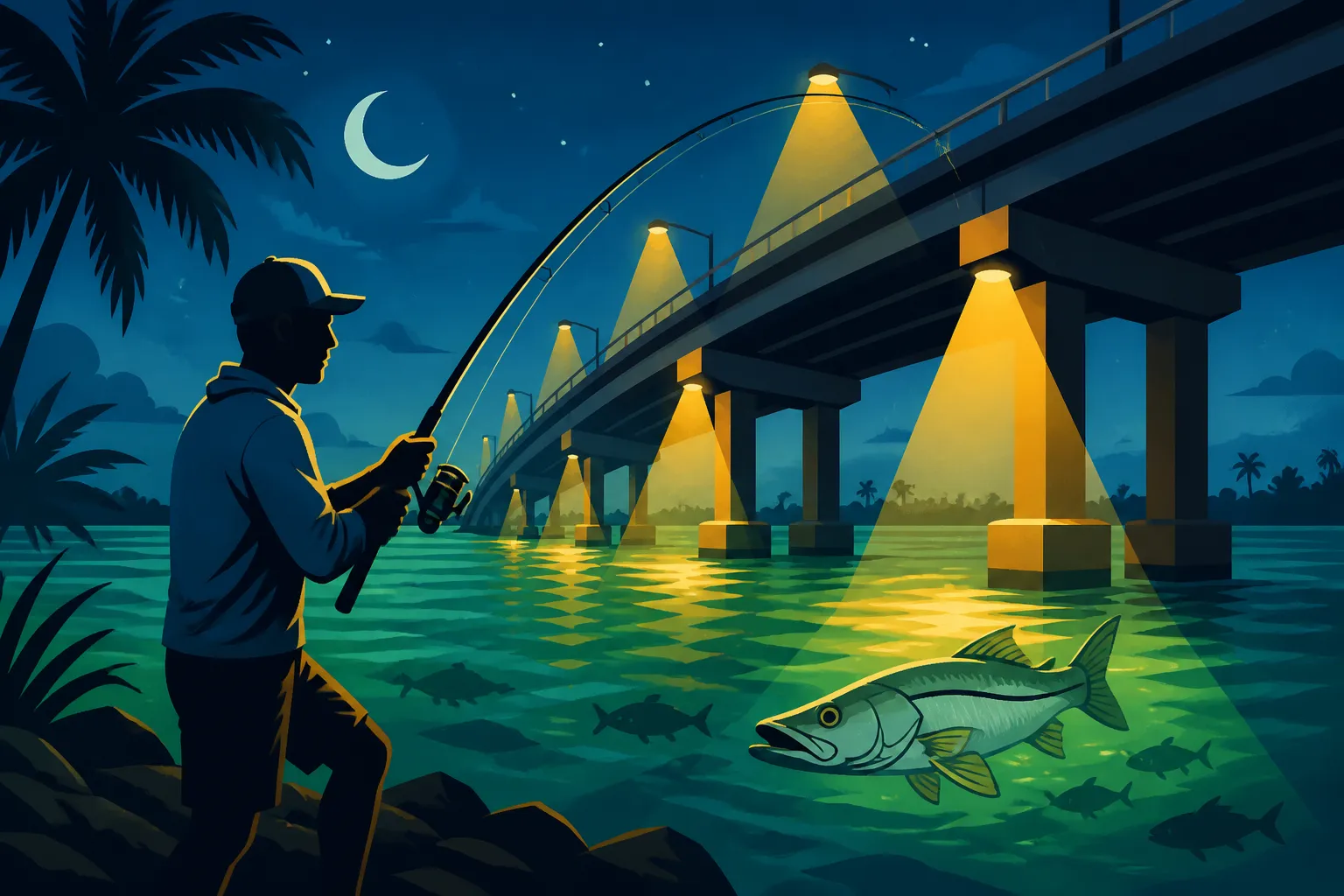
Imagine the vast, dark expanse of water. Then, suddenly, a column of light penetrates that darkness, illuminating a specific area. This is precisely what bridge lights do, and it kicks off an immediate chain reaction in the aquatic world. Plankton, microscopic organisms that drift in the water, are often attracted to light. While tiny, they form the base of the food web. Small baitfish, like pilchards, sardines, glass minnows, and finger mullet, are in turn drawn to these concentrations of plankton. They're seeking an easy meal, and the illuminated water becomes a visible smorgasbord for them. It’s like ringing a dinner bell in the middle of a dark room; everything that can see the light and is hungry will start moving towards it.
This concentration of baitfish isn't just random; it creates dense schools right under and around the light source. These tightly packed groups are more visible targets, creating a natural feeding station. Think of it as a brightly lit convenience store in a sleepy town – all the smaller critters flock to it, unaware they're becoming the main attraction for something much larger. Understanding this primary attraction is crucial, as it sets the stage for everything else that happens.
Predator Playground: Why Game Fish Gather
Once the baitfish are gathered, it's only a matter of time before the larger, predatory game fish move in. Species like snook, tarpon, redfish, speckled trout, jacks, snapper, and even the occasional small shark are opportunistic feeders. They know that where there's bait, there's a meal. The bridge lights don't just illuminate the bait; they also create defined shadows and edges, which are perfect ambush points for predators. These fish will lurk just outside the brightest part of the light, in the transition zones where the darkness meets the illumination, waiting for an unsuspecting baitfish to swim by.
It's a classic predator-prey scenario, magnified by the artificial light source. You'll often see explosive strikes right under the lights as a large snook or tarpon breaches the surface, scattering baitfish in a chaotic burst. This is the thrill of bridge light fishing: the visual confirmation of a thriving ecosystem, and the knowledge that a trophy fish could be hiding in the shadows just inches from the light. It's not uncommon to witness multiple species competing for the same bait, creating a dynamic and exciting fishing experience.
Current and Structure: Added Benefits
Beyond the light itself, the bridges offer inherent advantages that make them prime fishing locations, even during the day. The bridge pilings, fenders, and associated structures create complex underwater environments. These structures provide cover for fish, protecting them from strong currents and offering hiding spots from predators. They also become homes for various marine organisms, such as oysters, barnacles, and crabs, which serve as additional food sources.
Furthermore, bridges are often built over natural channels and passes where strong currents flow. These currents do a fantastic job of concentrating bait and carrying food directly to waiting fish. Fish don't have to work as hard to find a meal; they can simply hold in the eddies and current breaks behind the pilings, letting the food come to them. When you combine this natural hydrodynamic advantage with the artificial light attracting bait, you've got a perfect storm for active feeding. The synergy of light, structure, and current makes bridge lights one of the most consistently productive fishing spots in Florida, especially after the sun goes down.
Top Bridge Light Fishing Spots in South Florida
South Florida, with its extensive coastline and vibrant urban centers, is a mecca for bridge light fishing. From the historic spans of the Keys to the bustling waterways of Miami, these areas offer incredible opportunities for anglers looking for a nighttime thrill.
The Iconic Bridges of the Florida Keys
When you think of the Florida Keys, you probably picture crystal-clear water and sprawling bridges connecting the islands. Many of these bridges, particularly the older ones with their multitude of pilings and consistent illumination, are legendary night fishing spots. The Overseas Highway, stretching from Key Largo to Key West, offers countless opportunities.
One of the most famous areas is around Islamorada, where bridges like the Channel Two and Channel Five bridges offer excellent tidal flow and plenty of light. Anglers often target tarpon here during their migration, especially in the spring and early summer. You'll find snook and various snapper species year-round, hugging the shadow lines. Fishing these bridges often means anchoring or using a trolling motor to position yourself effectively to cast into the seams where light meets dark, or directly at the pilings. Many local guides specializing in Florida Tarpon Fishing Season Guide will tell you that the Keys' bridges become electric at night. Booking a guide through platforms like FishingBooker can give you an edge, as they know the specific tides and moon phases that make these spots truly shine.
Miami and Fort Lauderdale's Urban Glow
The metropolitan areas of Miami and Fort Lauderdale are crisscrossed with canals, rivers, and intracoastal waterways, all adorned with numerous bridges. While often overlooked by those heading to the Keys, these urban bridges offer fantastic and convenient night fishing. The abundance of light pollution from the cities themselves further enhances the glow under many of these structures.
Bridges over the Intracoastal Waterway in areas like Hollywood, Fort Lauderdale, and Miami Beach are prime targets. Here, you're likely to encounter a diverse range of species. Snook are prevalent, often ambushing baitfish that congregate in the current. Jacks, especially big crevalle jacks, will aggressively school through the lights, creating explosive topwater action. You might also find snapper, pompano, and even small sharks moving through. Access can sometimes be a challenge from land, but many anglers use small boats, kayaks, or even stand-up paddleboards to position themselves. Public parks near these bridges sometimes offer fishing access, but always check local regulations for specific bridge access points.
Southwest Florida's Coastal Connections
Moving to Florida's Gulf Coast, the bridges connecting the barrier islands of Southwest Florida, from Marco Island up to Sanibel and Captiva, are fantastic night fishing locales. The slower-moving, nutrient-rich waters of the Gulf often lead to different bait concentrations and species behavior compared to the Atlantic side.
Bridges around Naples, Fort Myers, and Port Charlotte are particularly productive. These areas are renowned for their snook populations, and night fishing under the bridge lights provides an excellent opportunity to target them. Redfish are also common, particularly in the calmer back bay areas connected by smaller bridges. Spotted seatrout will often patrol the edges of the lights, particularly over grass flats nearby. A popular technique here is to cast live shrimp or white bait, letting the current carry it into the shadows. Many of these bridges have pedestrian walkways, offering convenient land-based access, though boat access often allows for better positioning. Remember to consult Florida Fishing Regulations and Bag Limits before heading out, as slot limits and seasons for species like snook can vary by region.
Prime Bridge Light Fishing Destinations in Central Florida
Central Florida might be known for its theme parks, but it’s also home to some phenomenal bridge light fishing, particularly along its extensive coastlines and sprawling estuaries.
Tampa Bay's Sprawling Bridge Network
Tampa Bay is one of Florida's largest estuaries, and its vast network of bridges offers incredible night fishing opportunities. The iconic Sunshine Skyway Bridge, while mainly a pier fishing destination for many, has numerous smaller bridges and causeways leading up to it that are productive under lights. The bridges over the Interbay Peninsula and those crossing the various arms of the bay are also prime locations.
Here, anglers will find an abundance of snook, redfish, and especially large spotted seatrout. The expansive grass flats surrounding many of these bridges create an ideal feeding ground. Baitfish like scaled sardines and threadfin herring are plentiful, drawing in predators. Look for bridges that span deeper channels or have good tidal flow. Often, casting soft plastic jigs or live shiners into the illuminated water, or letting them drift into the darker edges, can be incredibly effective. The sheer size of Tampa Bay means there are countless options, so exploring different bridges on Best Time of Day to Fish in Florida and tide cycles can yield diverse results. When planning a trip, consider checking out local fishing reports or consulting with a guide you can find on FishingBooker, as they'll have the most up-to-date intel on where the bite is hot.
East Coast Inlets and Bridge Crossings
Central Florida's Atlantic Coast is punctuated by numerous inlets and rivers, each with bridges that light up at night. These dynamic environments, where ocean water meets estuarine systems, are highly productive. Sebastian Inlet, known as the "Snook Capital of the World," is a prime example. While the main inlet itself is famous, the bridges along the Indian River Lagoon and the Banana River nearby offer phenomenal night fishing under lights.
Besides snook, you'll find a strong presence of redfish, especially around the pilings and deeper holes. Tarpon can be seasonal visitors, particularly in the summer months. Spanish mackerel and bluefish will also dart through the lights, creating exciting surface action. Casting bucktail jigs, flair hawks, or live baits like finger mullet are popular and effective methods. The currents around inlets can be very strong, so heavy tackle and robust casting techniques are often required. Be mindful of boat traffic, especially around popular inlets, and ensure you have proper lighting on your vessel if fishing from a boat.
Other Central Florida Gems
Beyond the major coastal bays, Central Florida has other hidden (and not-so-hidden) gems for bridge light fishing. For instance, the bridges crossing the St. Johns River system, particularly closer to the coast near Jacksonville or along the larger lakes within the system, can offer excellent freshwater night fishing. While not saltwater species, bass and crappie are often attracted to bridge lights in these freshwater environments, feeding on insects and small baitfish that gather.
Even smaller coastal communities often have bridges over their intracoastal waterways or connecting their mainland to barrier islands. Take the bridges around Melbourne, for example, or those further north in Titusville. These can be less crowded than the more famous spots but still offer consistent action for trout, redfish, and snook. The key is to look for areas with good current flow and consistent lighting. Sometimes, the quieter, less-pressured bridges can yield some of the biggest surprises for patient anglers looking for a peaceful night under the glow.
Excellent Bridge Light Fishing Haunts in North Florida and the Panhandle
While often associated with cooler waters and different species than the tropical south, North Florida and the Panhandle still boast incredible opportunities for night fishing under bridge lights, each with its unique charm and target species.
Jacksonville and St. Augustine's Historic Waterways
The northeast coast of Florida, particularly around Jacksonville and St. Augustine, is rich with history and expansive waterways. The St. Johns River, a major artery, flows through Jacksonville, and its numerous bridges are illuminated, creating prime night fishing spots. The bridges over the Intracoastal Waterway also offer excellent prospects.
In these areas, you'll encounter a mix of estuarine and coastal species. Speckled trout are particularly abundant, often congregating in schools under the lights. Redfish, black drum, and flounder are also common catches, hugging the bottom and structure. During warmer months, you might even find snook pushing this far north, especially around the larger bridges near the ocean. Live shrimp, mud minnows, and soft plastic jigs are go-to baits here. The bridges over the St. Johns River, like the Dames Point Bridge or the Fuller Warren Bridge, create massive complexes with significant pilings and current breaks where fish will stack up. Anglers who focus on Night Fishing Technique for Trout Under Dock Lights will find similar principles apply to bridge lights in these northern waters.
The Panhandle's Gulf Coast Bridges
Florida's Panhandle, with its emerald green waters and sugar-white sand beaches, offers a different flavor of bridge light fishing. The bridges connecting the barrier islands, crossing major bays like Pensacola Bay, Choctawhatchee Bay, and St. Andrew Bay, become active feeding grounds after dark.
Species like speckled trout and redfish are the primary targets here, often found ambushing baitfish drawn to the light. Flounder will also lie in wait on the bottom, ready to snatch up a passing meal. Bridges near Destin, Panama City Beach, and Pensacola are excellent choices. Many of these bridges have ample light and good tidal flow. Casting small live baits, Gulp! shrimp, or grub jigs are effective. The clarity of the Panhandle waters means fish can be a bit warier, so a stealthy approach and lighter leader material can make a difference. These areas also see runs of Spanish mackerel and bluefish under the lights during certain seasons, providing fast-paced action. Consider checking out local bait and tackle shops for the freshest intel, or browse FishingBooker for guides who specialize in these Panhandle hotspots.
Big Bend Region's Unique Opportunities
Further south along Florida's Big Bend coast, a more remote and less populated area, the bridges crossing rivers and creeks that feed into the Gulf of Mexico offer a different, more serene night fishing experience. Places like Steinhatchee, Horseshoe Beach, and Cedar Key have smaller, less imposing bridges that can be incredibly productive.
While the species list might be similar – trout, redfish, and flounder – the environment feels wilder. Here, the focus is often on the transition zones where freshwater meets saltwater, which can concentrate baitfish even more. Many of these areas feature extensive oyster bars and grass flats adjacent to the bridges, providing ideal habitat. Live shrimp is a universal bait here, often fished under a popping cork or on a jig head. These locations are perfect for anglers looking to escape the crowds and enjoy a quieter night of fishing under the subtle glow of the bridge lights, with the added benefit of potentially catching some delicious fish for dinner.
Essential Gear and Techniques for Bridge Light Fishing
Night fishing under bridge lights requires specific gear and techniques to maximize your success and ensure a safe and enjoyable experience. It's not just about showing up with a rod and reel; it's about being prepared for the dark and understanding how fish react to the artificial light.
Choosing the Right Tackle for the Dark
Your tackle setup will greatly influence your success. For most bridge light fishing, a medium-light to medium action spinning rod, around 7 to 7.5 feet long, paired with a 2500-4000 series spinning reel, is a versatile choice. This setup offers enough backbone to handle larger snook or tarpon, while still being sensitive enough for trout or snapper. Spool your reel with 10-20 lb braided line, which offers excellent casting distance and sensitivity, crucial for feeling subtle bites in the dark. A fluorocarbon leader of 20-40 lb test is essential, as the clear water under the lights can make fish wary. Fluorocarbon is less visible to fish and more abrasion-resistant, protecting your main line from rubbing against barnacle-encrusted pilings.
When considering hooks, choose strong, sharp, circle hooks (1/0 to 4/0 depending on bait size and target species) for live bait, or quality jig heads (1/8 oz to 1/2 oz) for artificials. You'll also want an array of weights, from small split shots to heavier knocker rigs, to get your bait down in varying currents. Don't forget a headlamp or a small, portable floodlight to help you tie knots, unhook fish, and move around safely. However, try to avoid shining bright lights directly into the water as it can spook fish. Having a comfortable, non-slip pair of shoes is also critical, especially if fishing from concrete structures that can become slick at night. For more specific recommendations, checking a Best Rod for Inshore Fishing in Florida guide can help tailor your setup.
Live Bait vs. Artificial Lures Under Lights
Both live bait and artificial lures can be highly effective under bridge lights, and the best choice often depends on the species you're targeting and the conditions.
Live Bait: Live bait is often king, especially when fish are finicky. The real deal, whether it's a lively pilchard, a struggling shrimp, or a frisky finger mullet, is incredibly attractive to predators. These baits naturally mimic the distressed baitfish congregating under the lights.
- Shrimp: Always a fantastic option, especially for trout, redfish, snook, and snapper. Fish them on a light jig head, free-lined with a small split shot, or under a small cork if there's minimal current.
- Minnows/Pinfish/Mullet: Larger baitfish are excellent for bigger snook and tarpon. Rig them through the nose or back, allowing them to swim naturally. Let them drift into the shadows or along the current seams.
- Crabs: For targeting species like black drum or sheepshead, especially around barnacle-covered pilings, small pieces of crab or whole fiddler crabs can be irresistible.
Artificial Lures: When fish are aggressive, artificials can cover more water and often entice reaction strikes.
- Soft Plastic Jerkbaits/Grubs: White, silver, or glow-in-the-dark patterns are deadly. Rig them on a jig head and work them with a slow, erratic retrieve to imitate a wounded baitfish.
- Topwater Lures: Walk-the-dog style or poppers can be exhilarating for snook and jacks, especially when they're actively busting bait on the surface. The commotion can draw them out of the shadows. A Best Lure for Topwater Snook Fishing guide offers excellent insight here.
- Bucktail Jigs/Flair Hawks: These are excellent for punching through strong currents and getting down to deeper fish, or for targeting larger predators like tarpon that might be holding further back.
- Spoons: Casting a silver or gold spoon can imitate fleeing baitfish and is effective for Spanish mackerel and bluefish that slash through schools.
The key with both live bait and artificials is presentation. Cast past the light, letting your offering drift naturally into the illuminated zone or along the edges of the shadows. Experiment with retrieval speeds and depths until you find what the fish are keying in on.
Mastering the Cast and Presentation
Successful bridge light fishing often boils down to precise casting and natural presentation. Fish under bridge lights can be highly educated, especially in popular spots.
Casting:
- Accuracy is Key: You need to hit the shadow lines, the eddies behind pilings, or the current seams with precision. Practice casting at night to get a feel for judging distance and aim in low light.
- Quiet Entry: Try to make your cast as soft as possible. A loud splash can spook wary fish, especially in clearer water.
- Angle of Attack: Consider the current. Cast up-current and let your bait or lure drift naturally down into the strike zone. This mimics how real baitfish would move.
- Vary Your Casts: Don't just cast to the same spot repeatedly. Fan cast around the bridge, trying different distances and angles to locate where the fish are holding.
Presentation:
- Mimic Nature: Whether live or artificial, your bait should move like a real, vulnerable baitfish. This means avoiding jerky, unnatural movements.
- Slow and Steady: Often, a slower retrieve is more effective at night. Fish may not chase a fast-moving lure as readily in the dark.
- Work the Edges: The most productive areas are often just outside the brightest part of the light, in the transition zones where fish feel more secure ambushing prey.
- Feel for the Bite: At night, strikes can be subtle. Pay close attention to your line; any unnatural slack, twitch, or sudden weight could indicate a bite. Braided line's sensitivity is a huge advantage here.
- Hook Setting: When you feel a strike, a swift, firm hook set is usually necessary, especially for hard-mouthed fish like snook or tarpon.
It takes practice, but once you get the hang of it, fishing under bridge lights becomes incredibly rewarding. Always remember to pack essential items like extra leaders, hooks, and perhaps even a small first-aid kit, as handling sharp hooks and feisty fish in the dark can present challenges. Check out a guide on What to Pack for a Florida Offshore Fishing Trip for ideas on general items that translate well to any serious fishing trip.
| Species Targeted | Preferred Baits/Lures | Typical Tackle Setup | Notes |
|---|---|---|---|
| Snook | Live Pilchards, Shrimp, Finger Mullet; Soft Plastic Jerkbaits, Topwater Lures | 7-7.5 ft Med-Heavy Rod, 3000-4000 Reel, 20-30lb Braid, 30-50lb Fluoro Leader | Ambush predators, target shadow lines. |
| Spotted Seatrout | Live Shrimp, Gulp! Shrimp, Soft Plastic Grubs; Small Topwater Plugs | 7 ft Med-Light Rod, 2500-3000 Reel, 10-15lb Braid, 15-20lb Fluoro Leader | Often schools under lights, slow retrieve best. |
| Redfish | Live Pinfish, Cut Bait, Shrimp; Jig Heads with Soft Plastics, Gold Spoons | 7 ft Med-Heavy Rod, 3000-4000 Reel, 15-20lb Braid, 25-30lb Fluoro Leader | Bottom feeders, target pilings and deeper holes. |
| Tarpon | Live Mullet, Pilchards, Crabs; Large Soft Plastics, Bucktail Jigs | 7.5-8 ft Heavy Rod, 5000-6000 Reel, 50-80lb Braid, 60-80lb Fluoro Leader | Seasonal, powerful fighters, use strong gear. |
| Mangrove Snapper | Live Shrimp, Cut Bait; Small Jig Heads, Bottom Rigs | 6.5-7 ft Light-Med Rod, 2000-2500 Reel, 10-15lb Braid, 20lb Fluoro Leader | Structure-oriented, can be very wary. |
| Jacks (Crevalle) | Live Baitfish; Topwater Plugs, Spoons, Large Soft Plastics | 7 ft Med-Heavy Rod, 4000-5000 Reel, 20-30lb Braid, 30-40lb Fluoro Leader | Aggressive, fast-paced, hit anything. |
Safety Tips and Regulations for Night Fishing Under Bridges
Night fishing, especially under bridges, presents its own unique set of challenges and requires extra precautions. Ensuring your safety and adhering to local regulations are paramount for a positive experience.
Navigating the Night Safely
Fishing in the dark significantly reduces visibility, making navigation and general awareness more difficult.
- Personal Lighting: A reliable headlamp with red light options is invaluable. Red light preserves your night vision and is less likely to spook fish. Carry spare batteries or a backup light source.
- Situational Awareness: Always be aware of your surroundings, whether on land or water. Footing can be uneven or slippery on bridge walkways and seawalls. If fishing from a boat, maintain a keen eye for other vessels, channel markers, and submerged hazards.
- Boat Safety: If you're on a boat, ensure all navigation lights are fully functional and visible. Have a spotlight onboard for identifying markers or hazards. Carry all required safety gear, including life jackets for everyone on board (and wear them, especially if alone or in a strong current), a first-aid kit, a whistle or horn, and a fire extinguisher. Consider using a marine GPS or chartplotter to navigate safely in unfamiliar waters.
- Communication: Inform someone of your fishing plans – where you're going, when you expect to return. Carry a fully charged cell phone (in a waterproof case) or a VHF radio for emergencies.
- Weather Check: Always check the weather forecast before heading out. Night conditions can change rapidly, and storms, especially Florida's pop-up thunderstorms, can be disorienting and dangerous in the dark. Wind and strong currents are amplified at night.
- Secure Gear: It’s easy to trip over gear in the dark. Keep your fishing area tidy and secure anything that could be knocked over or blown away.
Understanding Local Regulations and Access
Florida's fishing regulations can be complex, and they don't stop just because the sun goes down. In fact, specific rules might even apply to bridge fishing.
- Licenses: First and foremost, you'll need a valid Florida Fishing License Guide, unless you fall under specific exemptions. This applies to both freshwater and saltwater species.
- Bag and Size Limits: All Florida's standard bag limits and size limits for various species, such as Florida Snook Size and Slot Limits or Florida Redfish Size and Bag Limits, apply at night. These regulations are in place to protect fish populations and ensure sustainable fishing for everyone. It's crucial to measure your catch accurately and release any undersized or oversized fish quickly and safely.
- Bridge-Specific Rules: Some bridges may have specific regulations regarding fishing from them at night, or even outright prohibit it. Look for signage or check with local authorities (such as county parks departments or the FWC) regarding access restrictions, parking regulations, or whether lights are turned off at a certain time. Certain parts of popular fishing bridges might be closed to the public after hours.
- Private Property: Be respectful of private property. Avoid trespassing to gain access to a bridge, and be mindful of noise levels, especially in residential areas near bridge access points.
- Catch and Release: Many anglers practice catch and release, especially for sensitive species or those that are out of season. If you're planning to release fish, review Catch and Release Best Practices for Snook to ensure you're doing so in a way that maximizes the fish's survival, even in low light. Have your de-hooking tools and measuring board ready.
Responsible Angling in Low Light
Beyond safety and rules, responsible angling is about being a good steward of the environment and a considerate fellow angler.
- Minimize Light Pollution: While bridge lights are great for fishing, avoid adding unnecessary personal light directly onto the water when possible. This can spook fish and disturb other anglers. Use your headlamp judiciously and turn it off when not actively using it.
- Leave No Trace: Pack out everything you pack in. This includes discarded fishing line, bait containers, food wrappers, and any other trash. Fishing line, in particular, is a hazard to wildlife.
- Noise Control: Keep noise levels down. Sound travels further over water at night, and excessive noise can not only disturb other anglers but also spook fish.
- Respect Other Anglers: Bridge light spots, especially the productive ones, can get crowded. Be courteous, maintain a reasonable distance from others, and avoid casting over their lines. A little camaraderie goes a long way.
- Careful Handling: When handling fish, especially in the dark, do so carefully to avoid injury to yourself or the fish. Always use a proper net or lip grippers for larger fish to ensure a safe landing and release.
By keeping these safety tips and regulations in mind, you can fully embrace the unique and rewarding experience of night fishing under Florida's enchanting bridge lights. Tight lines!
Disclaimer
The information provided in this guide is for general informational purposes only and is not intended as legal, safety, or professional advice. Fishing regulations, safety guidelines, and local access rules can change frequently. Always consult the latest regulations from the Florida Fish and Wildlife Conservation Commission (FWC) and local authorities before fishing. Prioritize your safety and the safety of others at all times.