Best Spots to Catch Sheepshead Around Docks
If you've ever tried to catch the elusive Sheepshead, you know they can be incredibly frustrating to find, let alone hook! These clever fish with their distinctive human-like teeth are notorious for stealing bait without you even feeling a bite. But don't despair! The secret often lies in knowing where to look, and in Florida, some of the most consistent hotspots for these "convict fish" are right around the countless docks lining our beautiful coastlines. This guide will walk you through exactly why docks are so productive, how to pick the best ones, and the techniques you'll need to finally outsmart them.
Why Docks Are Sheepshead Havens in Florida
Docks aren't just convenient places to tie up your boat or enjoy a sunset; they are bustling underwater cities for marine life, and Sheepshead absolutely thrive in these environments. Understanding why these structures are so attractive to Sheepshead is the first step to becoming a successful dockside angler.
Understanding Sheepshead Habitat Preferences
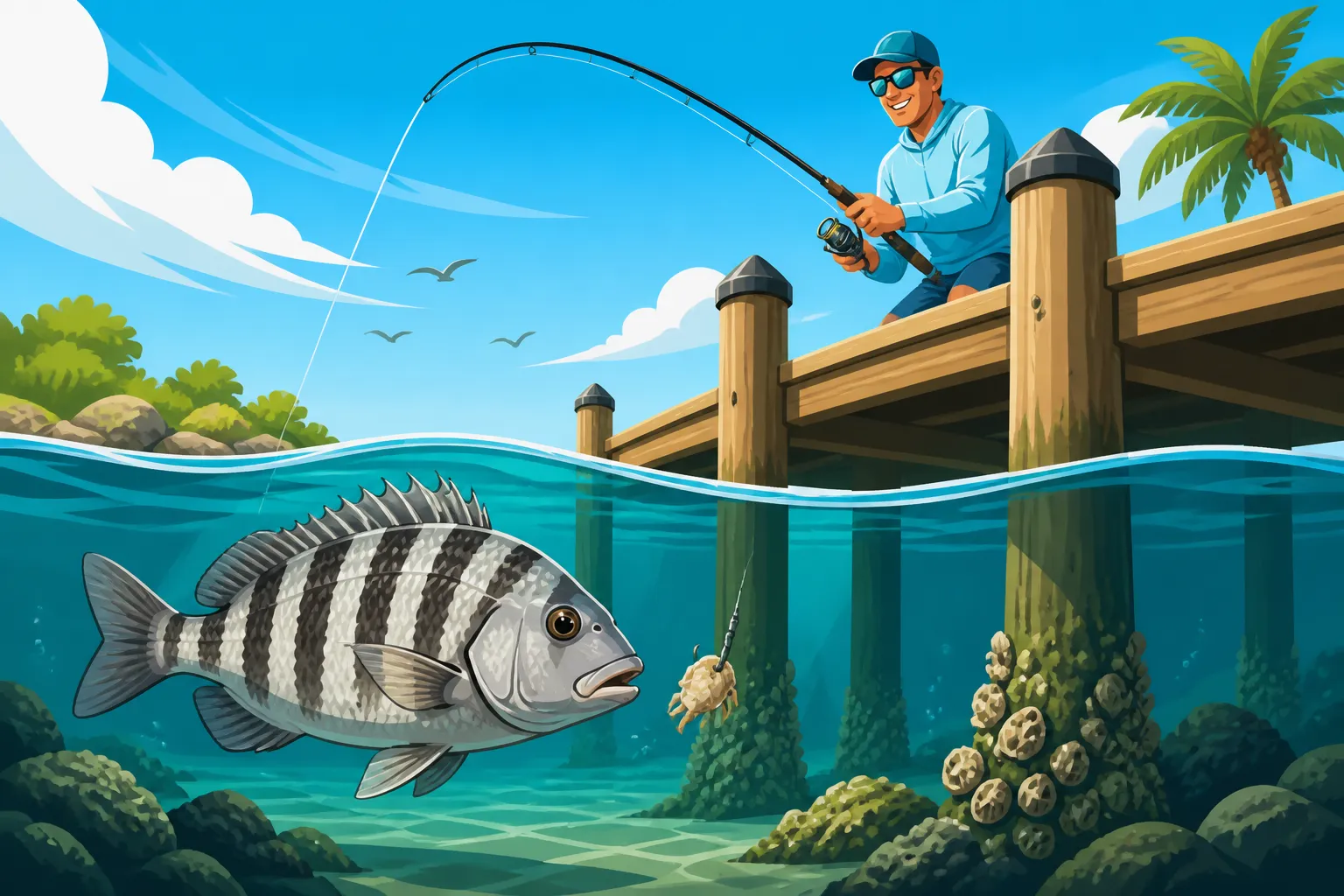
Sheepshead, often affectionately called "convict fish" due to their black and white striped bodies, are fundamentally structure-oriented feeders. They aren't going to be cruising open flats or suspended in deep water looking for their next meal. Instead, their entire lives revolve around hard structures that provide both food and protection. Think about it: a dock piling is essentially a vertical reef. It's an anchor point for all sorts of marine growth, from barnacles and oysters to small mussels and sponges.
This preference isn't random; it's deeply tied to their diet. Sheepshead are omnivores, but they have a particular fondness for invertebrates that cling to these structures. Their specialized, robust teeth and powerful jaws are perfectly designed for crushing shells and scraping off growth. They don't just visit docks; they live there, grazing continuously. The sheer abundance and variety of food available on and around dock pilings make them an irresistible buffet for Sheepshead throughout the year, especially in Florida's warm, nutrient-rich waters.
The Ecosystem of Docks and Pilings
Beyond just providing a food source, docks foster a complete ecosystem that benefits Sheepshead. The pilings, crossbeams, and even debris that accumulates around docks create complex habitats. These structures offer crucial protection from larger predators, giving smaller Sheepshead a safe nursery. For adults, the intricate network of wood or concrete provides ample ambush points and hiding spots, allowing them to dart out for a quick meal or retreat if danger approaches.
Furthermore, docks often create current breaks and eddies, concentrating food particles and smaller baitfish. As tides push and pull water through and around the pilings, these areas become natural feeding lanes. Oysters, barnacles, and other filter feeders flourish in these dynamic zones, further enriching the food supply for Sheepshead. This constant replenishment of food, combined with the structural complexity, makes docks exponentially more productive than barren stretches of shoreline. It's a self-sustaining pantry and fortress all rolled into one. Many excellent resources, including those found on FishingBooker, highlight how crucial understanding these micro-ecosystems is for targeting specific species like Sheepshead.
Scouting the Perfect Docks for Sheepshead Fishing
Not all docks are created equal when it comes to Sheepshead. While they love structure, some docks are undeniably more productive than others. Learning to identify these prime locations is a skill that will significantly improve your catch rates.
Looking for Specific Dock Characteristics
When you're eyeing up potential Sheepshead spots, there are a few key visual cues that should immediately grab your attention. First and foremost, look for older docks. Brand new, perfectly clean pilings haven't had enough time to grow the lush carpet of barnacles, oysters, and other marine invertebrates that Sheepshead adore. Weathered, moss-covered, and barnacle-encrusted pilings are like neon signs pointing to a Sheepshead feast. The more growth, the better! You might even spot clusters of oysters clinging to the pilings just above the waterline.
Beyond age, consider the dock's location relative to water features. Docks situated near channel edges, deep water drop-offs, or areas with noticeable tidal flow tend to be more productive. Stronger currents deliver more food and oxygen, and the deeper water provides thermal refuge and pathways for fish movement. Docks that extend into slightly murkier, brackish water can also be fantastic, as Sheepshead are very comfortable in these environments. Don't forget to look under the dock – shaded areas offer cool retreats and can hold fish, especially on bright, sunny days. Using satellite view on maps can help you spot these older, more complex dock systems and nearby features before you even leave home.
Geographic Hotspots for Dock Fishing Sheepshead
Florida is blessed with thousands of miles of coastline and countless docks, offering an abundance of Sheepshead opportunities. While they can be found statewide, certain regions and specific types of dock structures are particularly well-known for their Sheepshead populations.
In Central Florida, areas like Tampa Bay and Sarasota Bay are legendary for their dock and bridge fishing. The sheer volume of residential docks, combined with major bridge structures like the Sunshine Skyway and various causeways, creates endless Sheepshead habitat. Anglers in these regions often report great success fishing around the pilings of older fishing piers, public docks, and beneath bridges where barnacles flourish. You can often find a detailed Florida Shoreline Fishing License Explained guide for these areas if you plan to fish from shore.
Moving south, the Florida Keys are another prime Sheepshead destination, especially around the numerous boat docks, marinas, and bridge pilings that connect the islands. The clearer waters here allow you to sometimes sight-fish for them, adding to the excitement. Even further north, along the Atlantic coast, the Indian River Lagoon system, with its myriad residential canals and docks, holds significant Sheepshead numbers. In the Panhandle, spots around Destin, Panama City Beach, and Pensacola also offer excellent opportunities around their bay-side docks and public piers. When researching specific areas, online resources like FishingBooker can offer local insights from guides who regularly target Sheepshead around these very structures.
Mastering the Art of Dock Sheepshead Fishing
Catching Sheepshead around docks requires a delicate touch, precision, and the right gear. They are notorious bait stealers, but with the correct setup and technique, you can turn those frustrating nibbles into solid hook-ups.
Recommended Rods, Reels, and Lines
For dock fishing Sheepshead, sensitivity is key. You'll want a light to medium-light spinning rod, typically 6'6" to 7' long, with a fast action tip. The fast action allows you to feel those incredibly subtle bites and set the hook quickly. Pair this with a small, lightweight spinning reel in the 1000-2500 size range, spooled with 10-15 lb braided line. Braid offers superior sensitivity and minimal stretch, which is crucial for detecting those light taps.
Because Sheepshead are often found in clear water around abrasive structures, a fluorocarbon leader is non-negotiable. Use 15-20 lb fluorocarbon, about 18-24 inches long, tied directly to your braided mainline with an FG knot or a double uni knot. The fluorocarbon is nearly invisible underwater and offers excellent abrasion resistance against barnacles and pilings. For more general advice on setting up your gear, check out our guide on the Best Rod and Reel Setup for Florida Inshore Fishing.
The Best Baits and Rigs for Dock Sheepshead
When it comes to bait, Sheepshead are particular, but a few options consistently outperform others. Their absolute favorite, the undisputed champion, is the fiddler crab. Their hard shells and small size make them irresistible. Hook a fiddler crab through the corner of its mouth or through the bottom shell, making sure the hook point is exposed. If fiddler crabs are scarce, small, peeled pieces of shrimp (especially the tail section) are an excellent alternative. You can also try small pieces of clam, oyster, or even barnacles scraped directly from a nearby piling. Live shrimp is always a good bet for Florida inshore fishing and can be effective for Sheepshead, though they might pick it apart. For other live bait ideas, consider our Best Live Bait for Florida Inshore Fishing guide.
A simple knocker rig or a small Carolina rig works wonders for dock Sheepshead. The knocker rig involves threading your lead weight (1/4 to 1/2 oz egg sinker or similar) directly onto your main line, then tying a small swivel, followed by your fluorocarbon leader and hook. The weight sits directly on top of your hook, giving you maximum sensitivity. For hooks, use small but strong J-hooks or Kahle hooks in sizes #1 to #1/0. Sheepshead have tiny mouths with very hard, bony plates, so a small, sharp hook is essential for penetration. You need something that can get past those front teeth and into the corner of their jaw.
| Prime Dock Characteristics | Best Baits | Key Techniques |
|---|---|---|
| Old, barnacle-encrusted | Fiddler Crabs | Light tackle, sensitive rod |
| Near channel edges | Peeled Shrimp | Quick hook set, constant attention |
| Good tidal flow | Small Clams/Oysters | Vertical presentation, drop-and-wait |
| Shaded areas under dock | Scraped Barnacles | Minimal weight, feel for subtle taps |
| Abundant marine growth | Live Shrimp (pieces) | Stealthy approach, avoid spooking |
Tips for Successfully Hooking and Landing Sheepshead
Here's where the "convict fish" truly earn their reputation. Sheepshead are infamous nibblers. They'll mouth the bait, scrape it, and sometimes even suck it in and spit it out without you feeling much more than a faint tick or a slight increase in pressure. This is why a sensitive rod and braided line are so important. Don't wait for a huge tug! If you feel anything out of the ordinary—a slight twitch, a mushy feeling, or your line just feels "heavy"—set the hook immediately and firmly. Many experienced Sheepshead anglers say, "If you think it's a bite, it probably was a bite, and you're already too late!" The key is anticipation and a hair-trigger reaction.
Once hooked, Sheepshead put up a surprisingly strong fight, especially considering their size. They'll try to dive back into the pilings, so you need to apply constant pressure and steer them away from the structure. A quick retrieve is often necessary to get them away from snagging hazards. A good net is also invaluable for landing these fish, as their bony mouths can sometimes cause hooks to pull out at the last moment. Remember to check local Florida Fishing Regulations and Bag Limits before you head out, and release fish carefully if they don't meet the size requirements or you've reached your bag limit. Knowing how many sheepshead can you keep in Florida is essential for responsible angling.
Navigating Rules and Respect for Dockside Sheepshead
Fishing around docks often means navigating areas that are both public and private. It’s crucial to understand the rules and practice good etiquette to ensure these spots remain accessible for everyone.
Respecting Private Property and Public Access
This is paramount: never, ever fish from a private dock without explicit permission from the owner. Trespassing is illegal and can damage the reputation of all anglers. Most residential docks are private property, and fishing from them, or even casting onto them from your boat or kayak, can lead to serious issues.
Instead, focus on publicly accessible docks, piers, bridges, and shorelines. Florida has numerous fantastic public fishing piers, like the Skyway Fishing Pier State Park or the Naples Pier, which are specifically designed for public angling and often have abundant Sheepshead populations. You can also fish from public bridge walkways or public shorelines adjacent to docks, as long as you maintain a respectful distance from private property. Always be aware of signs indicating private property or "No Fishing" zones. Many city and county parks also offer public docks or fishing areas; these are excellent places to target Sheepshead without worry. For general information on where you can fish legally, check out our comprehensive Florida Fishing License Guide.
Understanding Florida Sheepshead Regulations
Like all species in Florida, Sheepshead are subject to specific fishing regulations designed to protect their populations. Before you cast a line, always double-check the current size and bag limits set by the Florida Fish and Wildlife Conservation Commission (FWC). These regulations can change, so it's good practice to verify them annually on the FWC website or app.
Typically, Sheepshead will have a minimum size limit (e.g., 12 inches total length) and a daily bag limit (e.g., 8 fish per person). Adhering to these limits is not just about avoiding fines; it's about being a responsible angler and contributing to the sustainability of the fishery for future generations. If you catch a Sheepshead that is undersized or if you've already met your bag limit, handle the fish carefully and release it promptly. Minimize its time out of water, use de-hooking tools if necessary, and ensure it swims away strongly. These practices are vital for conservation. You'll also want to make sure you have the correct Florida Saltwater Fishing License Rules covered, as Sheepshead are a saltwater species.
Disclaimer
Fishing regulations, seasons, and licensing requirements can change. Always check the latest guidelines from the Florida Fish and Wildlife Conservation Commission (FWC) before engaging in any fishing activities. This guide is for informational purposes only and does not constitute legal advice.