Fishing Rodman Reservoir for Big Bass
For any angler chasing that elusive lunker largemouth, the idea of a truly wild, untamed fishery teeming with giants is like a dream. But the reality is, many of Florida's prime bass spots can feel a bit crowded or overfished. That's where Rodman Reservoir steps in, offering a unique, often challenging, but incredibly rewarding experience for those determined to land a trophy. This guide is your in-depth look at what makes Rodman tick and how you can maximize your chances of connecting with a true Florida hog.
Understanding Rodman Reservoir's Unique Appeal for Trophy Bass
Rodman Reservoir isn't your typical Florida lake. It's a place with a fascinating history and a habitat that's specifically designed, almost accidentally, to produce some of the biggest largemouth bass you'll ever encounter. Forget manicured shorelines; Rodman is rugged, wild, and requires a certain respect and understanding to fish effectively.
The Reservoir's History and Habitat
Back in the late 1960s, the Rodman Dam was constructed as part of the ill-fated Cross Florida Barge Canal project, impounding the Ocklawaha River and creating what we now know as Rodman Reservoir. What makes it truly special are the massive areas of submerged timber – ancient cypress trees and hardwoods that were flooded and left standing. This dense, drowned forest provides incredible structure and cover, acting as a perfect ambush point for predatory bass and a sanctuary for their prey.
Adding to this unique environment, the Florida Fish and Wildlife Conservation Commission (FWC) periodically conducts drawdowns of the reservoir. These drawdowns, which lower the water levels significantly, are crucial for managing invasive aquatic vegetation like hydrilla and enhancing the overall health of the ecosystem. When the water returns, the newly exposed and refreshed substrate becomes a fertile ground for baitfish, while the dying vegetation creates vital nutrients. This cycle effectively "recharges" the reservoir, leading to explosive growth for the bass. Imagine a constant renewal program for giant bass – that's Rodman in a nutshell.
Why Rodman Produces Giants
So, with all that submerged timber and periodic drawdowns, why does Rodman consistently kick out monster bass? It comes down to a perfect storm of environmental factors. Firstly, the abundant and diverse forage base is critical. Think about the millions of shad, shiners, and other baitfish that thrive in this nutrient-rich water and among the dense cover. This provides a year-round buffet for largemouth bass, allowing them to grow at an incredible rate.
Secondly, the sheer amount of cover offers ideal conditions for bass to ambush prey and grow large while remaining relatively unpressured. While popular, Rodman isn't always easy to navigate, which means some of its most productive spots can remain untouched. These fish often have aggressive genetics, inherited from generations of top-tier Florida largemouth, and they feed constantly, becoming thick-bodied and powerful. Anglers looking to explore other top bass fishing locations in the state might want to check out our comprehensive guide on Best Bass Fishing Hot Spots on Lake Okeechobee, Florida for another perspective on Florida's trophy waters.
Prime Fishing Seasons and Conditions at Rodman
Knowing when to fish Rodman Reservoir is just as important as knowing how. The bass behavior changes dramatically with the seasons, water levels, and weather patterns, and understanding these shifts is key to a successful trip.
Best Times of Year to Target Big Bass
While you can catch bass in Rodman year-round, certain seasons offer a higher probability of landing that trophy-sized fish. The absolute prime time for big bass at Rodman is typically from late winter through early spring (roughly December to April). This is when the bass begin their pre-spawn and spawning rituals. As water temperatures start to rise into the 60s Fahrenheit, the biggest females move from deeper staging areas into shallower waters to feed heavily and eventually nest. During this period, they are at their heaviest and most aggressive.
Once the spawn is complete in late spring and early summer (May and June), the bass move into a post-spawn recovery phase, often retreating to the comfort of the submerged timber and hydrilla edges. They'll still eat, but often require more finesse. As Florida's notorious heat sets in during summer (July and August), the fishing can get tougher during the day, with early mornings and late evenings being most productive. The bass often seek deeper, cooler water or dense, shaded cover. In fall (September to November), as temperatures drop, the bass become more active again, chasing baitfish in preparation for winter, making it another excellent time for action. For a broader understanding of fishing seasons across the state, our Best Time of Year to Fish in Florida guide offers valuable insights.
Ideal Weather and Water Conditions
Beyond the seasons, specific weather and water conditions can significantly influence your success on Rodman. Stable weather patterns, especially a few consecutive days of mild temperatures after a cold front, are often ideal. Cold fronts, while temporarily shutting down fish, can also concentrate them, making them easier to target once the weather stabilizes and the sun comes out. Overcast days with a light breeze can also be highly productive, as the reduced sunlight can encourage bass to stay active longer in shallower areas.
Water levels, particularly after a drawdown and refill cycle, play a massive role. During a drawdown, the exposed timber and channels become more apparent, helping you scout future hotspots. After the refill, the newly inundated vegetation and structure create fresh feeding grounds. Heavy rains can temporarily muddy the water, which might make sight fishing difficult but can also trigger a bite, especially in areas with fresh inflows. Always keep an eye on water clarity; clearer water might call for more subtle presentations, while stained water allows for more aggressive, noisy baits.
Top Techniques and Baits for Rodman's Big Bass
Rodman Reservoir demands versatility. The varied habitat means you can't just stick to one technique. Having a diverse arsenal of approaches, from power fishing to more subtle presentations, will greatly increase your chances of success.
Finesse vs. Power Fishing
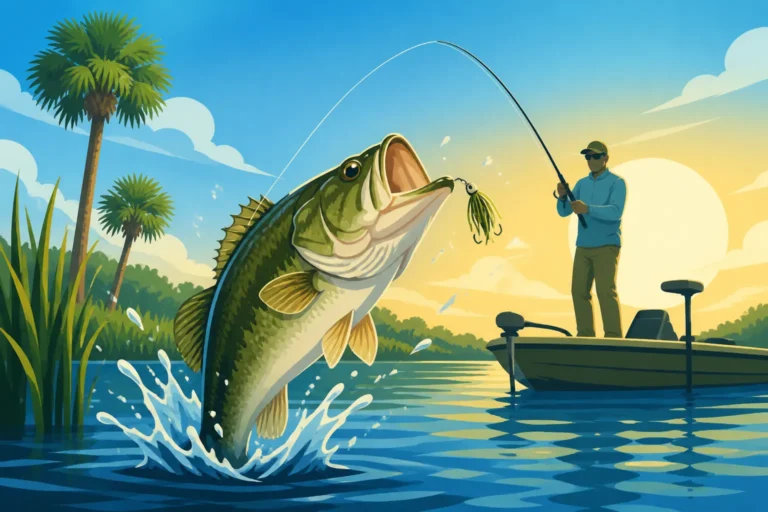
When it comes to tempting Rodman's big bass, there's a time and a place for both aggressive power fishing and subtle finesse tactics. Power fishing is often your go-to for covering vast areas of submerged timber and hydrilla, especially when bass are actively feeding or defending beds. Lures like heavy-duty frogs walked over thick mats, stout swim jigs punched through vegetation, or oversized spinnerbaits retrieved through submerged wood can provoke violent strikes. The key here is using strong gear and getting the fish out of the heavy cover quickly once hooked. This is where you might find success if you're trying to locate a school of fish or provoke a reaction strike from a territorial bass. For more detailed insights into various bass fishing techniques, check out our Florida Bass Fishing Techniques article.
On the flip side, finesse fishing becomes essential when the bite is tough, bass are pressured, or when you're targeting fish tucked deep into cover that refuse a more aggressive presentation. Weightless Senkos, shaky head worms, or small creature baits worked slowly and meticulously around the bases of cypress trees or in sparse hydrilla patches can be incredibly effective. Sometimes, a subtle twitch or a long pause is all it takes to get that finicky giant to commit. Remember, these bass are smart, and sometimes, less is more.
Live Bait Strategies
There's no denying it: when it comes to catching truly enormous largemouth bass in Florida, wild shiners are often the undisputed champions, and Rodman is no exception. These natural prey items are irresistible to big bass, especially during the cooler months and the pre-spawn period when bass are looking for a substantial meal. When using live bait, presentation is key. Many anglers will "free-line" shiners, letting them swim naturally near cover, or suspend them under a float or a balloon to keep them in the strike zone.
Rigging a shiner typically involves a large, stout circle hook through the nose or back, ensuring the bait can swim freely but is securely attached. A standard 7-8 foot medium-heavy to heavy action rod with a baitcasting reel spooled with 20-30 lb monofilament or fluorocarbon is a good setup. Be patient, let the bass take the shiner fully before setting the hook, and be prepared for a fight, because a big Rodman bass on live bait is an unforgettable experience. For more on the debate, our article on Live Bait vs Artificial Lures for Florida Inshore Fishing offers some interesting comparisons, though the principles apply broadly to freshwater too.
Lure Selection for Specific Cover
Rodman's diverse cover demands a tailored approach to lure selection. Each type of structure holds bass differently, and having the right bait for the job is crucial.
- Hydrilla Mats: For vast, thick mats of hydrilla, punching jigs with soft plastic trailers, or even heavy Texas-rigged creature baits, are excellent choices. Use heavy tungsten weights (1-2 oz) to penetrate the canopy and get your bait down to where the bass are hiding. Topwater frogs or rats walked across the top of these mats can also draw explosive strikes, especially during low light conditions.
- Submerged Timber: The drowned cypress and hardwoods are bass magnets. Lipless crankbaits ripped through the branches, spinnerbaits with large thumping blades, or weedless swim jigs can entice bass hidden within the wood. Crankbaits that deflect off the wood can trigger reaction strikes. Always be prepared to get snagged, and use braid for strength and sensitivity.
- Open Water Edges/Channels: While much of Rodman is covered, there are also open channels and edges where vegetation meets deeper water. In these areas, deeper diving crankbaits, ChatterBaits, or even Carolina-rigged soft plastics can be effective. During the colder months, slow-rolling a large paddle tail swimbait can also imitate a dying baitfish, attracting lethargic giants. Check out our Best Lures for Florida Bass Fishing guide for more specific recommendations.
Navigating and Accessing Rodman Reservoir
Getting onto Rodman Reservoir and knowing how to navigate its unique, often challenging, waters is a critical part of a successful fishing trip. This isn't a place for the faint of heart or those without a good understanding of boat operation in dense cover.
Boat Ramps and Access Points
While Rodman Reservoir offers some fantastic fishing, its rugged nature means access points are somewhat limited, and navigating can be tricky. The most popular and well-maintained public boat ramp is Kenwood Landing, located near Palatka. This ramp offers good concrete access and ample parking, making it a common starting point for many anglers. Another option is the ramp near Rodman Dam itself, which provides access to the lower end of the reservoir and the Ocklawaha River downstream.
It's vital to remember that water levels in Rodman can fluctuate, especially during drawdown periods, so always check local conditions before heading out. Some ramps might become unusable for larger boats during extreme low water. Smaller jon boats or shallow-draft bass boats are generally more suited to Rodman's conditions, as they can more easily navigate the narrow channels and submerged timber without fear of prop damage. For those interested in general boating access around Florida's renowned fishing destinations, a look at Best Public Boat Ramps on Lake Okeechobee offers a comparative perspective, highlighting the infrastructure differences you might encounter.
Hiring a Local Guide for Rodman
For anglers unfamiliar with Rodman Reservoir, or even seasoned pros looking to shorten the learning curve, hiring a local fishing guide is an incredibly wise investment. Rodman's labyrinthine network of submerged timber, shallow flats, and intricate channels can be intimidating and even dangerous for the uninitiated. A good guide not only knows the hotspots but, more importantly, knows how to safely navigate the reservoir and understand its ever-changing conditions.
Local guides spend countless hours on these waters and have an intimate knowledge of where the big bass are holding based on the time of year, water levels, and recent weather patterns. They can teach you the specific techniques that work best on Rodman, recommend the right baits, and help you understand the nuances of this unique fishery. A guide also typically provides all the necessary fishing gear, including specialized rods and reels designed for battling powerful bass in heavy cover, and live bait if that's your chosen method. When looking for an experienced Rodman guide, online platforms like FishingBooker are a great resource for finding reputable captains with a proven track record. You can read reviews, compare services, and book directly, ensuring you find someone who specializes in trophy bass on this challenging reservoir. This can significantly enhance your experience and increase your chances of landing that dream fish. Before booking, you might also want to review our tips on How to Find a Reputable Fishing Guide in Florida.
| Season | Primary Target Zone | Preferred Techniques | Best Baits (Live/Artificial) | Notes |
|---|---|---|---|---|
| Winter | Deeper channels, timber edges | Slow-rolling, live bait | Large Wild Shiners, Swimbaits | Pre-spawn, bass are heavy. Cold front impact. |
| Early Spring | Shallow flats, hydrilla edges | Punching, topwater, live bait | Frogs, Jigs, Wild Shiners | Spawn season. Highly aggressive bass. |
| Late Spring | Hydrilla, submerged timber | Finesse, reaction baits | Senkos, Lipless Crankbaits | Post-spawn recovery. Fish can be finicky. |
| Summer | Deepest cover, shaded areas | Punching, early/late topwater | Heavy Jigs, Frogs, Worms | Early mornings/evenings best. Seek shade. |
| Fall | Hydrilla edges, creek mouths | Spinnerbaits, ChatterBaits | Shiners, Crankbaits, Soft Plastics | Bass actively feeding before winter. |
Rodman Reservoir is a true gem in Florida's bass fishing landscape, a place where legends are born and trophy fish lurk around every corner of submerged timber. While it demands respect and careful navigation, the rewards for those who learn its secrets are immense. Whether you're a seasoned angler or a passionate beginner, Rodman offers an adventure unlike any other. Don't let its wild nature deter you; embrace the challenge, and you just might find yourself holding the biggest bass of your life. And remember, platforms like FishingBooker can connect you with guides who know this water like the back of their hand, making your trip both safer and more productive.
Disclaimer
Fishing conditions and regulations in Florida can change frequently. Always consult the latest rules and guidelines from the Florida Fish and Wildlife Conservation Commission (FWC) before heading out on any fishing trip. This guide is for informational purposes only and does not constitute official legal or safety advice.