Drift Fishing vs Anchoring for Grouper
Many anglers hitting the gorgeous waters of Florida for grouper often find themselves at a crossroads: should I drop anchor and stay put, or let the current and wind guide my boat over potential hotspots? It’s a classic dilemma, and honestly, there's no single "right" answer for every situation. This guide is designed to help you understand the nuances of both drift fishing and anchoring for grouper, empowering you to make the best decision for your next fishing adventure.
Understanding Drift Fishing for Grouper
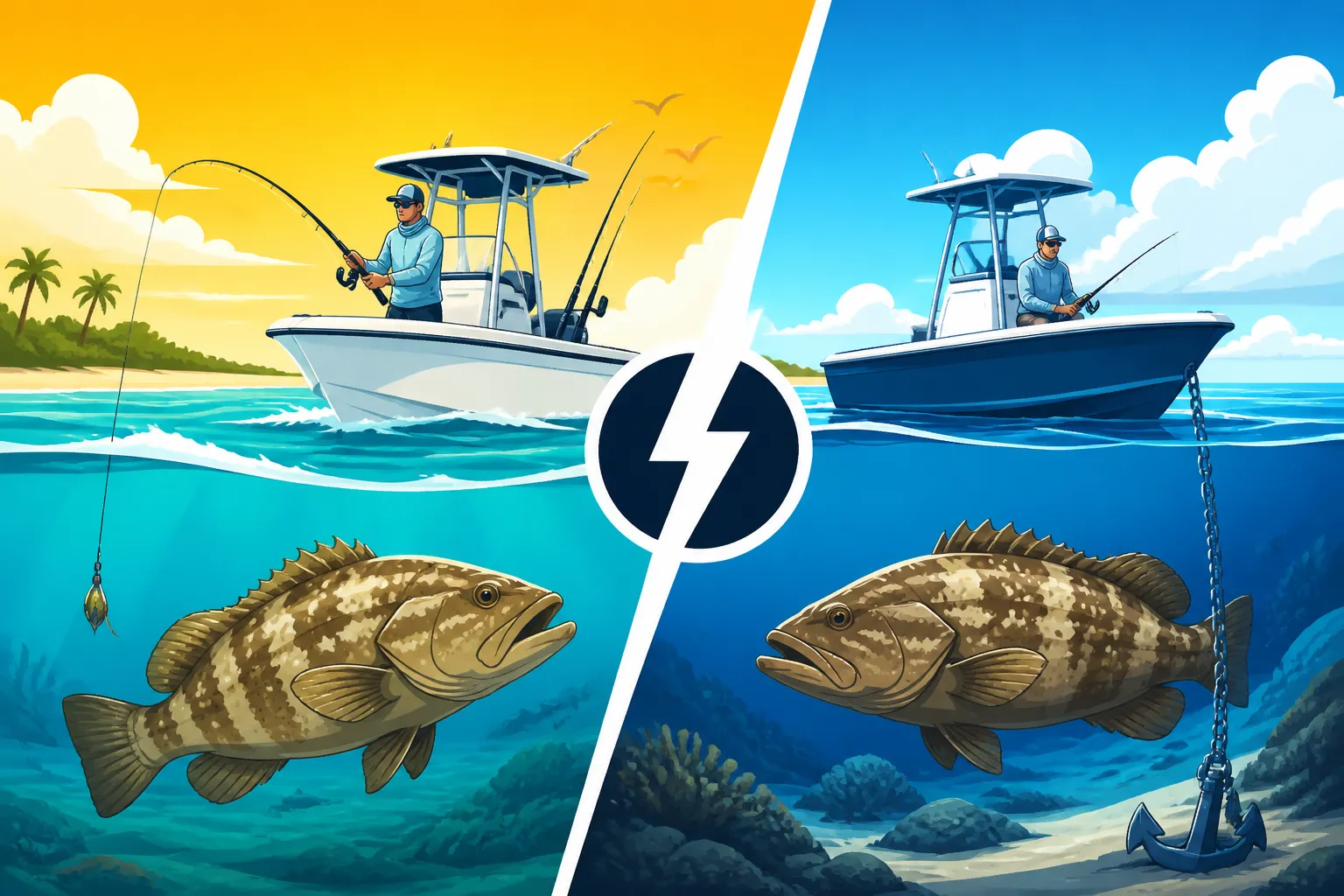
Drift fishing involves letting your boat move freely with the natural forces of wind and current, allowing your bait or lure to cover a larger area. For grouper, this method can be incredibly effective when you're searching for fish or when they're spread out over a wide patch of bottom structure.
The Dynamics of Drifting
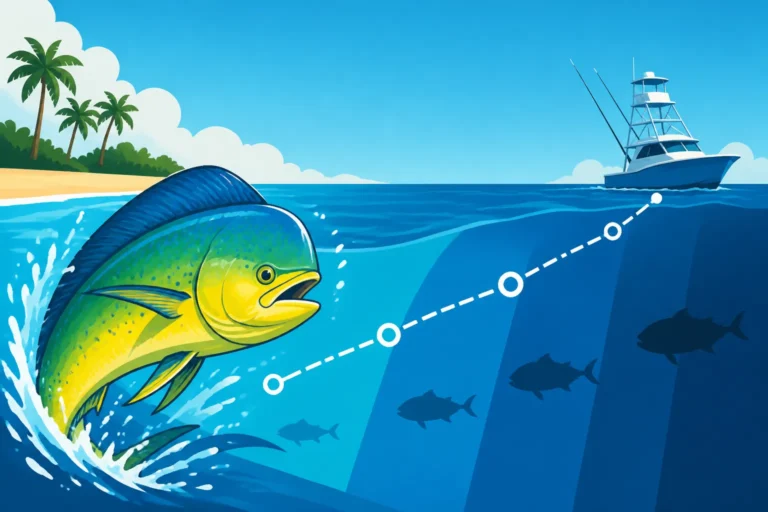
When you're drift fishing, your boat becomes an extension of your bait. Instead of waiting for the fish to come to you, you're taking your presentation directly to them. This means covering more ground, exploring various depths, and potentially stumbling upon hidden honey holes that might be missed by static fishing. You'll often use a drift sock or sea anchor to control your speed, especially on windy days or in strong currents, to ensure your bait stays in the strike zone and doesn't just zoom past the fish too quickly. Imagine your boat slowly gliding over a vast, uneven seabed, with your lines trailing behind, sweeping across rocky ledges, small wrecks, and coral patches where grouper love to hide. This constant movement can entice curious grouper to strike.
This dynamic approach means you're constantly evaluating the bottom contour with your fish finder. You're not just looking for fish marks, but also for the structure that holds them. If you spot a promising rock pile or a sudden depth change, you can adjust your drift, perhaps by momentarily slowing down or even steering a bit to ensure your bait passes directly over it. It’s a proactive way to fish, requiring constant engagement with your surroundings and your gear. The goal is to present your bait naturally as if it were a wounded prey item tumbling along the bottom.
When Drift Fishing Shines for Grouper
Drift fishing truly shines when you're exploring new areas, or when you know grouper are present but scattered. If you have a general idea of a good reef system or an expansive area of hard bottom, but don't know the exact "spot on the spot," drifting allows you to systematically prospect that entire zone. It's also excellent when the fish are actively feeding and moving, or when strong currents make anchoring difficult or impractical.
Think about those days when you've got a nice, steady breeze or a consistent current, but not so strong that it drags your bait away too fast. These are prime drift fishing conditions. You can cover acres of seabed in a single drift, increasing your odds of crossing paths with a hungry gag, red, or black grouper. Furthermore, if you’re fishing a structure that is long and narrow, like a sunken pipeline or a large natural ledge, drifting along its length is often far more productive than anchoring at one end. This technique is also fantastic for Florida Offshore Fishing Techniques, particularly when targeting larger, more mobile species that might be spread out over deeper water.
Essential Gear for a Successful Drift
To really make drift fishing work, you need the right tools. A good quality drift sock or sea anchor is paramount for controlling your boat's speed and direction, allowing your bait to sink effectively and stay in the strike zone. Without it, you might find your boat zipping across the surface while your bait struggles to reach the bottom. Heavy-duty rods and reels are a must for grouper, as these fish are notorious for trying to "rock you up" – diving back into their rocky lairs the moment they feel the hook. Look for stout rods with plenty of backbone and reels with smooth, powerful drags that can handle the sudden, intense runs of a big grouper. You can find excellent options for both on platforms like Amazon, ensuring you have reliable equipment.
Your terminal tackle needs to be robust as well. Strong monofilament or fluorocarbon leaders, heavy sinkers to keep your bait down, and appropriately sized hooks are crucial. Many anglers prefer circle hooks when bait fishing for grouper to ensure a solid hookset in the corner of the fish's mouth, making for easier release if needed and reducing gut-hooking. A reliable fish finder and GPS are also non-negotiable. Your fish finder helps you identify bottom structure and fish, while your GPS allows you to mark productive drifts and repeat them. Without these, you’re essentially fishing blind, which isn't a recipe for success with grouper.
The Art of Anchoring for Grouper
Anchoring for grouper is about precision and commitment. Once you've located a specific structure that you believe holds fish, you drop anchor and focus your efforts on that concentrated area. This method is all about presenting your bait directly to the fish in their living room.
Precision and Persistence with Anchoring
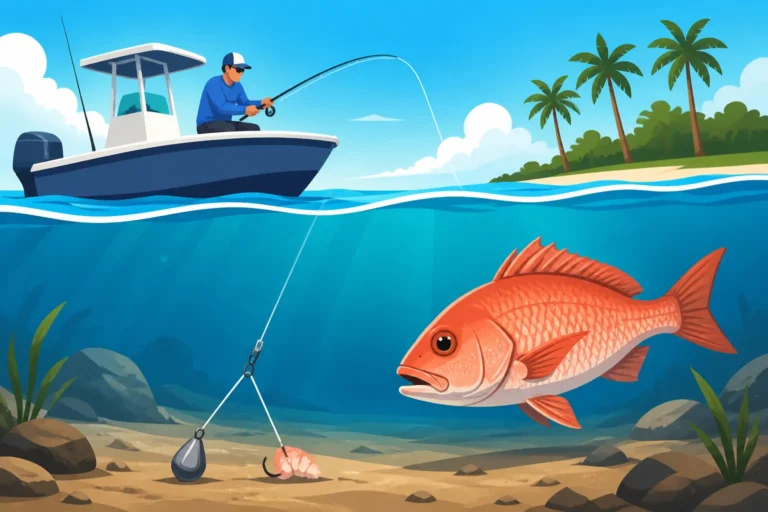
Anchoring transforms your boat into a stable fishing platform, allowing you to focus all your efforts on a very specific patch of bottom. The key here is precision: dropping your anchor exactly where you want to be, usually "up-current" or "up-wind" of the structure, so that your boat settles directly over or very close to it. This takes practice and good use of your electronics. Once positioned, you can deploy multiple lines, sometimes even chumming, to draw grouper out of their hiding spots.
This method thrives on patience and persistence. You’re not covering wide expanses; instead, you're systematically picking apart a known piece of structure. Many anglers use a tactic called "bouncing" or "snagging" their sinker on the bottom to ensure their bait is right in front of the grouper's nose. You’re often fishing vertically, dropping your bait straight down. This targeted approach can be incredibly rewarding when you've done your homework, identified a promising spot, and managed to set up perfectly. When it comes to Bottom Fishing Technique for Snapper and grouper, anchoring allows you to meticulously work a wreck or a reef.
Ideal Scenarios for Anchored Grouper Fishing
Anchoring is the go-to strategy when you've found a very specific, isolated piece of structure – perhaps a small rock pile, a distinct ledge, or a known wreck – that you know holds grouper. These are often "spot on the spot" locations that are too small or too precise to effectively fish with a drift. It's also preferred in calmer conditions or when currents are weak, allowing your boat to stay put without excessive drag on the anchor.
Consider a scenario where you’ve identified a lone concrete culvert or a small, distinct patch of coral on your fish finder. Drifting over such a small target would be hit-or-miss, at best. Anchoring allows you to sit right on top of it, dropping bait repeatedly into the strike zone. It’s also excellent when you want to deploy multiple lines, use chum, or when you have a group of anglers who all want to fish a concentrated area. If you’re fishing for specific species that tend to congregate in tight groups, like certain types of grouper, anchoring provides the stability needed for a prolonged assault on their habitat.
Anchoring Gear and Setup Considerations
The most critical piece of gear for anchoring is, obviously, a reliable anchor and anchor rode (chain and rope). Your anchor needs to be appropriately sized for your boat and the bottom conditions you expect. A heavier anchor and plenty of chain will help your anchor dig in and hold, even in stronger currents or surge. Many anglers carry multiple types of anchors (e.g., a Fortress anchor for sand/mud and a grapnel or reef anchor for rocky bottoms) to be prepared for different situations. Just like with drift fishing, you can find a vast array of anchor systems, including various chain lengths and rope types, on Amazon to suit your boat and fishing style.
Beyond the anchor, your rod and reel setup will be similar to drift fishing – heavy-duty to handle powerful grouper. However, since you're typically fishing more vertically, shorter, stiffer rods can sometimes be advantageous for powerful leverage. You might also consider specialized "bottom rigs" that keep your bait just off the bottom, preventing snags. A strong, reliable anchor winch or windlass can be a game-changer, saving your back from hauling up heavy anchor gear multiple times a day. And as always, a high-quality fish finder is crucial not just for finding the spot, but for monitoring the fish activity directly below your boat once you're anchored.
Drift Fishing vs. Anchoring: A Head-to-Head Comparison
Choosing between drift fishing and anchoring isn't about one being inherently better than the other; it's about understanding which method best suits the conditions, the specific spot, and your fishing goals on any given day.
Pros and Cons of Each Method
Let's break down the advantages and disadvantages of each technique to give you a clearer picture.
| Feature | Drift Fishing | Anchoring |
|---|---|---|
| Pros | Covers more ground, finds scattered fish, explores new areas, can be easier in strong currents. | Precision targeting, multiple lines in one spot, stable platform, effective for chumming. |
| Cons | Less precise, can miss small spots, can be difficult to control speed in high wind/current, requires more active boat handling. | Limited area coverage, difficult in very strong currents, can be challenging to set up perfectly, might spook fish if anchor drops too close. |
| Ideal Conditions | Moderate wind/current, searching for fish, widespread structure, mobile fish. | Calm conditions, precise targeting of small structure, localized fish, group fishing. |
| Fish Behavior | Good for active, scattered, or schooling fish. | Good for lethargic, bottom-dwelling, or structure-hugging fish. |
| Gear Intensity | Requires drift sock, good fish finder for constant monitoring. | Requires robust anchor system, often a windlass, precise GPS. |
Factors Influencing Your Choice on the Water
Several factors should weigh into your decision. First, consider the bottom structure. Is it a vast, sprawling reef system, or a tiny, isolated rock pile? Drifting is better for the former, anchoring for the latter. Second, current and wind conditions are critical. A strong current might make anchoring difficult to hold, favoring a controlled drift. Conversely, if there's no wind or current, drifting might be too slow to be effective, making anchoring the better option.
Third, think about the fish behavior. Are the grouper actively feeding and potentially moving around, or are they hunkered down in a specific spot? Active fish might respond better to a drifting bait, while sedentary fish near structure will likely require a precise presentation achievable by anchoring. Finally, your crew matters. If you have inexperienced anglers or kids, a stable anchored platform can be much easier to manage than a constantly moving boat. This is especially true for longer trips where comfort is key. When planning your trip, you might also want to consult resources like Best Time of Year to Fish in Florida to optimize your chances, regardless of the technique.
Combining Techniques for Maximum Success
Here's the secret sauce: the best grouper anglers often don't exclusively stick to one method. They combine them! You might start by drift fishing an area to locate productive spots. Once you get a few bites or mark a significant concentration of fish or structure on your fish finder, you can then hit the "mark" button on your GPS. Circle back upwind or up-current, and then drop anchor to precisely fish that hot zone. This hybrid approach allows you to efficiently scout a large area and then capitalize on specific finds.
For example, you could spend the first hour or two of your trip drifting a known ledge, covering a mile or two, and marking every promising rock pile or fish school. Then, after identifying the three best marks, you could spend the rest of your day precisely anchoring on each of those spots, methodically working them for bigger grouper. This maximizes your time and effort, leveraging the strengths of both Florida Inshore Fishing Techniques and offshore strategies. It’s about being adaptable and reading the conditions and fish behavior throughout your day on the water.
Maximizing Your Grouper Success in Florida
No matter which technique you favor, a few universal truths apply to grouper fishing in the Sunshine State. Remember, these are powerful fish, and successful angling often comes down to preparation and a deep understanding of their habits.
Interpreting Conditions for Grouper
Grouper are ambush predators, so understanding where they'll be hiding is key. They love structure – rocks, ledges, wrecks, artificial reefs – anything that provides cover and a place to dart out from to snatch prey. Water temperature, tide, and even moon phase can influence their activity. While specific seasonal details are beyond the scope here, generally, grouper activity can fluctuate with cooler or warmer water periods. On the Florida Fishing Seasons Explained page, you'll find more information on general patterns.
A good fish finder isn't just for locating spots; it's for interpreting the bottom. Are you seeing hard, rocky bottom with abrupt changes in depth? That’s prime grouper territory. Is there baitfish showing up around the structure? That’s an even better sign. Pay attention to current breaks around structure, as these are natural ambush points. Even seemingly minor changes in the current can create feeding lanes that grouper will exploit. Learning to read these subtle signs, both on your electronics and by observing the water's surface, will significantly improve your catch rates.
Best Practices for Grouper Anglers
Beyond choosing between drifting and anchoring, there are core principles that all successful grouper anglers adhere to. Always use fresh bait, whether it's live pinfish, grunts, sardines, or dead squid or cut bait. Grouper have keen senses, and a lively, fresh offering is hard to resist. Use the heaviest line and leader you can get away with for the conditions, as abrasion against rocky structure is common.
Furthermore, always be ready for the strike. Grouper hits are often sudden and violent. The moment you feel that unmistakable tug, set the hook hard and immediately start cranking, trying to turn the fish's head away from its hole. This initial fight, often called "pulling them out of the rocks," is crucial. If you let them get back to their lair, it's often game over. Finally, understand and respect Florida's fishing regulations, including size and bag limits for various grouper species, which can differ seasonally and by region. Learning about Florida Grouper Season Guide is a smart move before heading out. Releasing undersized fish quickly and carefully ensures the health of our fisheries for future generations.
Disclaimer
This article is for general informational purposes only and does not constitute professional advice. Laws, prices and regulations vary by location and change over time. Consult a qualified professional for guidance on your specific situation.