Best Month to Catch Cobia Near Florida Bridges
Oh, the thrill of seeing a big, brown ghost cruise under a Florida bridge! Cobia are such a fantastic sport fish, offering a serious fight and delicious table fare. But if you’ve spent hours casting around bridge pilings with no luck, you know the frustration. It’s all about timing, and knowing the best month to target these powerful fish near Florida's iconic bridges can make all the difference between a disappointing trip and a day you'll never forget. This guide is all about pinpointing that sweet spot, so you can increase your chances of hooking into one of these incredible creatures.
Understanding Cobia Behavior Near Florida Bridges
Before we dive into the "when," it's super important to understand the "why" behind cobia's presence around bridges. These fish aren't just there by accident; they utilize these structures for very specific reasons, and knowing those reasons helps us predict their movements and behavior. It’s like knowing your neighbor’s schedule – if you know they always walk their dog at 7 AM, you know when to catch them for a chat!
Why Cobia Love Bridges
Bridges, particularly the larger ones that span deep channels or connect major landmasses, create an ecosystem all their own. For cobia, these structures are a veritable buffet and a strategic hunting ground. The pilings and bridge decks provide ample shade, which is crucial in Florida’s often blazing sun. Fish, just like us, appreciate a little reprieve from the heat, and baitfish often congregate in these cooler, darker zones.
Beyond shade, bridges create distinct current breaks and eddies. As water flows around these massive obstructions, it creates areas where smaller baitfish can rest and school up. This, of course, attracts larger predators like cobia. They use these current breaks as ambush points, lurking out of sight, ready to dart out and snatch an unsuspecting meal. Think of it as a natural fast-food drive-thru for them! Plus, the structures themselves often have barnacles, mussels, and other marine growth that attract crabs and smaller fish, further enhancing the food chain right at the pilings. They are truly vibrant underwater habitats, which is why they're also fantastic spots for Florida Shoreline Fishing License Explained opportunities and for targeting many other species.
Seasonal Migrations and Water Temperature
Cobia are a migratory species, and their movements up and down the Florida coasts are heavily influenced by water temperature. They are what we call "thermally sensitive," meaning they prefer a specific range of water temperatures. Too cold, and they'll head south; too hot, and they might seek deeper, cooler waters or push further north. This is why understanding Florida Fishing Seasons Explained is so critical for any species.
Typically, cobia prefer water temperatures in the mid-60s to low 70s Fahrenheit. When the water in the shallower inshore areas and around the bridges hits this sweet spot, that's when you'll see a significant increase in their numbers. They move from their offshore wintering grounds closer to the coast, often utilizing these bridge structures as pit stops or feeding grounds during their journey. This migratory pattern is a key factor in determining the best time to target them, as it dictates when they'll actually be within casting distance of a bridge.
The Prime Time for Cobia Near Florida Bridges
Alright, let's get down to brass tacks. While you can certainly stumble upon a cobia at other times of the year, there's one season that stands head and shoulders above the rest for targeting them around Florida bridges.
The Spring Sweet Spot March to May
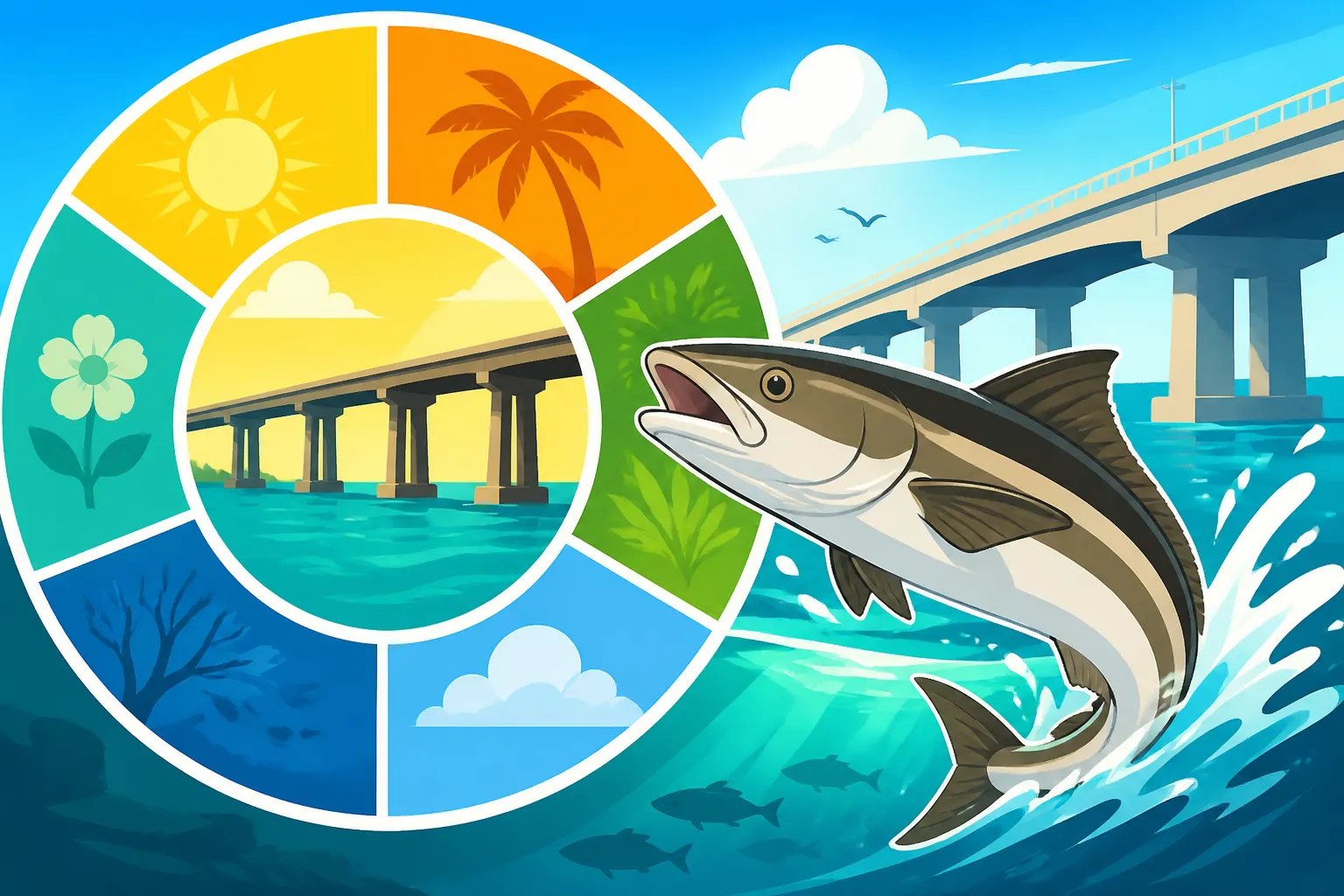
Without a doubt, the absolute best months to catch cobia near Florida bridges are March, April, and May. This three-month window is prime time, often referred to as "cobia season" by many seasoned Florida anglers. Here’s why:
As winter loosens its grip and the Gulf and Atlantic waters begin to warm consistently, usually starting in late February or early March, cobia start their annual migration. They move north along both coasts, often traveling in large schools or as solitary cruisers. These fish are hungry from their winter lull and are actively searching for food, making them more willing to strike.
During these spring months, the water temperatures are typically in that ideal range of 65-75°F. This brings them out of their deeper, offshore haunts and closer to shore, particularly to structures like bridges, jetties, and channel markers. They'll cruise alongside bridge pilings, often near the surface, or linger in the shadows, waiting for baitfish, crabs, or shrimp to come by. The visibility also tends to be clearer in spring, allowing anglers to sight-fish for them more effectively – a truly exhilarating experience! Many anglers plan their trips around this window, often combining it with other prime species because it's truly a great Best Time of Year to Fish in Florida.
Secondary Opportunities Fall and Winter
While spring is the undisputed champion, that's not to say you can't find cobia near bridges at other times. They can be a bit more elusive, but secondary opportunities do exist:
- Fall (September – November): As temperatures start to cool down, cobia will often make a reverse migration, heading south to their wintering grounds. This can create another, albeit less consistent, opportunity to target them around bridges. They might not be as numerous as in spring, and their presence can be more sporadic, but if you hit it right, you can still find some solid fish. The cooling water can trigger another feeding frenzy before they settle into deeper offshore areas.
- Winter (December – February): Catching cobia near bridges in winter is challenging, especially in North and Central Florida. The colder water pushes most of them offshore or further south. However, in the very southern parts of Florida, particularly the Florida Keys and parts of Southwest Florida, you might still find resident cobia lingering around bridges or deeper channels during warmer spells. It's often a "needle in a haystack" situation, but a warm winter day could surprise you. You're more likely to find them offshore in deeper water during these months, or closer to major passes where the warmer currents might funnel through.
To put it simply, if you want your best shot at a bridge cobia, mark your calendar for spring.
Here’s a quick overview of cobia activity near Florida bridges by season:
| Season | Months | Typical Water Temp (°F) | Cobia Activity Near Bridges | Notes |
|---|---|---|---|---|
| Spring | March, April, May | 65-75 | Peak Activity | Migratory surge, actively feeding, often sight-fished. |
| Summer | June, July, August | 78-88+ | Low to Moderate | Seek deeper, cooler water; more offshore. |
| Fall | September, October, November | 70-80 | Moderate | Southward migration, more sporadic. |
| Winter | December, January, February | 55-68 | Low | Mostly offshore or far south; very rare in northern areas. |
Essential Techniques and Gear for Bridge Cobia
Catching cobia from a bridge requires a bit of specific know-how and the right tackle. These fish are strong, can be unpredictable, and are notorious for wrapping lines around pilings, so being prepared is key. If you're going after one of these, you'll also want to be aware of the Florida Cobia Fishing Guide to ensure you're compliant with all regulations.
Live Bait Strategies
Live bait is often the most effective way to entice a cobia, especially the larger, warier ones. They are opportunistic feeders, and a struggling live baitfish is hard for them to resist.
- Eels: This is often considered the gold standard for cobia bait. Eels are tough, wiggly, and cobia absolutely love them. You can hook them through the lips or the eye socket with a stout circle hook (6/0 to 8/0 is common). Let them swim naturally near the pilings or in the current. Many anglers swear by the effectiveness of a live eel for bringing out the biggest cobia from under the bridge shadows.
- Pinfish and Grunts: These hardy baitfish are readily available and also highly effective. Hook them through the nose or dorsal fin. They swim well and can attract attention. You can sometimes catch these right near the bridge with sabiki rigs.
- Crabs: Live crabs, particularly blue crabs or fiddler crabs, are another excellent option, especially if you see cobia cruising near the bottom. Hook them through one of the points on their shell or the back leg.
When presenting live bait from a bridge, you often want to free-line it with minimal weight or just enough to get it down to the desired depth. Allow the bait to drift naturally with the current alongside the pilings. Keep your rod tip high and be ready for a powerful strike – cobia hit hard! For a deeper dive into bait selection, you might want to check out Best Bait for Cobia Fishing in Florida.
Artificial Lures and Presentations
Sometimes, live bait isn't available, or you prefer the challenge of artificials. Cobia can be caught on lures, particularly if they are actively feeding or you are sight-fishing.
- Jigs: Heavy bucktail jigs (1-3 oz) or soft plastic swimbaits rigged on heavy jig heads are very popular. Colors like white, chartreuse, pink, or natural baitfish patterns work well. Cast them near the pilings and let them sink, then work them back with a twitch-and-retrieve motion, mimicking a dying baitfish. Sometimes, tipping a jig with a piece of cut squid or a live shrimp can add extra scent and appeal.
- Eel Imitations: Soft plastic eel imitations, like those from Z-Man or Bass Assassin, can be incredibly effective when worked slowly along the bottom or jigged near structure. These can be particularly good if live eels are scarce. You can often find a great selection of these on Amazon.
- Topwater Plugs: If you spot a cobia cruising on the surface, a large topwater plug or popper can sometimes elicit an explosive strike. This is sight-fishing at its finest and incredibly exciting.
The key with artificials is to be versatile and observe the fish's behavior. If they're following but not committing, try changing your retrieve speed, lure color, or even the type of lure entirely.
Tackle Recommendations
Cobia are brutes, plain and simple. They are strong, have incredible stamina, and are notorious for trying to rub your line off on bridge pilings. You need gear that can stand up to the punishment.
- Rods: A medium-heavy to heavy spinning or conventional rod, typically 7 to 8 feet long, is ideal. You need backbone to turn these fish away from structure. A rod with a fast action will give you the sensitivity to feel subtle bites and the power to set the hook.
- Reels: Pair your rod with a sturdy reel. For spinning setups, a 6000 to 8000 series reel from brands like Penn, Shimano, or Daiwa is a good choice. For conventional, a reel capable of holding a good amount of heavy line and delivering strong drag is necessary. Line capacity is important because these fish can make long runs.
- Line: Braided line is highly recommended for its strength and sensitivity. You'll want 50-80 lb test braid. This strong mainline is crucial when fishing around abrasive bridge pilings. A fluorocarbon leader of 60-100 lb test, typically 3-6 feet long, is then tied to your braid using a strong knot like an FG or Alberto knot. The fluorocarbon provides abrasion resistance and is nearly invisible in the water. For a more general guide, check out Best Rod and Reel Setup for Florida Inshore Fishing.
- Hooks: Use strong, sharp circle hooks sized 6/0 to 8/0 for live bait. Treble hooks on artificial lures should also be stout enough to handle a powerful fish.
- Gaff/Net: A long-handled gaff or a large, sturdy landing net is essential for landing a cobia from a bridge. Trying to hand-line a thrashing cobia up onto a bridge deck is a recipe for disaster.
Remember, fishing around bridges means you’ll be dealing with strong currents, often high fishing pressure, and the inherent danger of traffic above. Always prioritize safety, and be mindful of other anglers.
Key Florida Bridges for Cobia Fishing
Florida is blessed with countless bridges, but some are undoubtedly more renowned for their cobia potential than others. These bridges often span deeper channels, are located along known migratory routes, or simply hold a consistent population of baitfish.
Gulf Coast Hotspots
The Gulf Coast of Florida is famous for its spring cobia run, and several bridges become prime targets during these months.
- Sunshine Skyway Bridge (St. Petersburg/Bradenton): This iconic bridge is arguably one of the most famous cobia spots in Florida. Its sheer size and location at the mouth of Tampa Bay, a major migratory pathway, make it a magnet for cobia. Anglers fish from the fishing piers located on both the north and south sides of the bridge, or from boats drifting near the pilings. The deeper waters and strong currents here funnel bait and, consequently, hungry cobia. Many specific areas around the Skyway offer excellent Best Piers for Fishing Without a Boat access.
- Bridges in Charlotte Harbor: Bridges around Punta Gorda and Port Charlotte, leading into Charlotte Harbor, can be excellent. The harbor itself is a vast estuary that draws in a lot of marine life, and the bridges serve as perfect ambush points as cobia move in and out of the harbor.
- Cortez Bridge (Bradenton Beach): Connecting Bradenton Beach to Cortez, this bridge, while smaller than the Skyway, sees a good number of cobia, especially during the spring migration. Anglers often fish from boats near the pilings or from the nearby shoreline access points. The intricate network of grass flats and channels nearby provides a rich food source.
- Destin Bridge (Destin Pass): The bridges spanning the Destin Pass in the Florida Panhandle are another hotspot. This deep pass connects the Gulf to the Choctawhatchee Bay, creating a natural highway for migratory fish. Cobia are frequently spotted and caught here during their spring and fall runs.
When fishing these Gulf Coast bridges, keep an eye out for manta rays. Cobia often swim with these gentle giants, using them as mobile feeding platforms, so if you spot a ray, there might be a cobia riding underneath!
Atlantic Coast Favorites
The Atlantic side of Florida also boasts fantastic bridge fishing for cobia, especially as the fish migrate up the coast.
- Sebastian Inlet Bridge (Sebastian Inlet State Park): This is another legendary fishing spot, well-known for its snook, but also a fantastic cobia destination. The strong currents, deep water, and abundant baitfish make it a prime location. Anglers often target cobia from the jetties or by casting from boats near the bridge. The Sebastian Inlet Fishing Guide in Florida provides even more detail on the incredible fishing opportunities here.
- St. Augustine Bridges: The various bridges around St. Augustine, particularly the Bridge of Lions and the 312 Bridge, can hold cobia during their migrations. These bridges span productive waters with good tidal flow, creating ideal conditions.
- Indian River Lagoon Bridges: Throughout the extensive Indian River Lagoon system, numerous smaller bridges connect causeways and islands. While perhaps not as famous for large numbers of cobia as the larger coastal bridges, many of these smaller structures can hold resident cobia or intercept migratory fish, especially in areas with deeper channels and good bait concentrations.
- Fort Pierce Inlet Bridge: Similar to Sebastian Inlet, the Fort Pierce Inlet offers strong currents and a direct connection to the Atlantic, making its bridge a good spot for cobia during the migratory periods.
When fishing any of these bridges, remember that safety is paramount. Strong currents, boat traffic, and fishing from elevated positions require extra caution. Always wear a life jacket if on a boat, be aware of your surroundings, and respect local regulations. Also, always have a pair of quality polarized sunglasses, which you can easily find on Amazon, to spot those brown ghosts cruising below. For more general information about targeting structure, you can learn about Best Bridges for Shore Fishing in Florida.
Disclaimer
Fishing in Florida requires adherence to specific regulations and licensing requirements set by the Florida Fish and Wildlife Conservation Commission (FWC). These rules, including bag limits, size restrictions, and seasons, can change. Always consult the latest FWC guidelines before heading out on the water. This guide is for informational purposes only and does not substitute for official regulations.