How to Find Bait Fish Schools From a Boat
There’s nothing quite as frustrating as heading out onto the beautiful Florida waters, boat fueled and ready, only to spend precious fishing time endlessly searching for bait. You know those big fish are out there, but without a lively school of bait to draw them in, it feels like you're throwing a needle in a haystack. This comprehensive guide will walk you through proven strategies and techniques to confidently locate bait fish schools from your boat, turning those fruitless searches into successful fishing trips.
Understanding Baitfish Behavior and Habitats
To find bait, you first have to think like bait! These small, schooling fish aren't just swimming around aimlessly. They have specific behaviors and preferred habitats driven by their need to find food and avoid becoming food themselves. Understanding these patterns is your first and most crucial step in locating them.
Different Types of Common Florida Baitfish
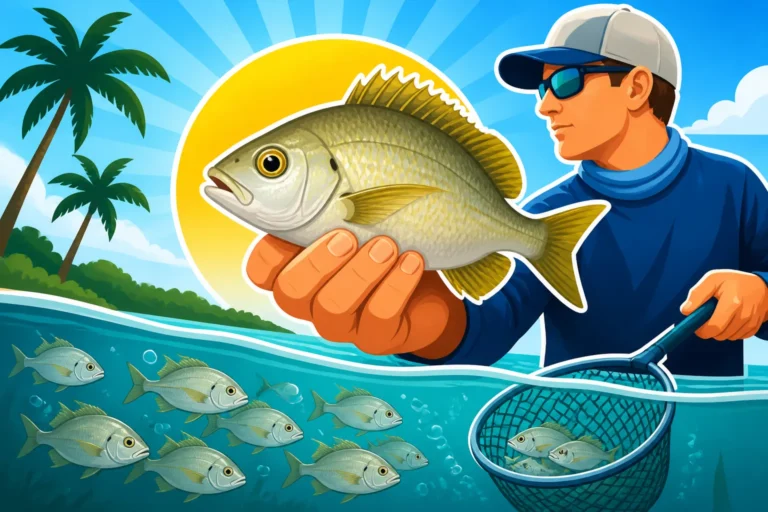
Florida's waters are teeming with a variety of baitfish, and each type has its own quirks. Knowing what you're looking for can significantly narrow down your search. For instance, tiny glass minnows or scaled sardines, often called "greenbacks" in saltwater, tend to congregate in massive, shimmering schools in open water or along grass flats. Threadfin herring, another popular choice, also form huge schools and are commonly found in slightly deeper, more open bay areas or near structures like channel markers. In freshwater, you might be looking for shiners, shad, or small sunfish, which often relate to weed lines, submerged timber, or drop-offs. Each species has a niche, and knowing that niche helps you focus your attention.
Environmental Factors Influencing Bait Movement
Baitfish movements are heavily influenced by environmental conditions, acting as invisible currents that push and pull them across the landscape. Tides, for saltwater anglers, are a massive factor. An incoming tide, for example, often pushes bait into shallow areas like grass flats or along mangrove shorelines, bringing them closer to ambush predators. Conversely, an outgoing tide can pull them out of these areas, funneling them into passes or along channel edges. Water temperature is another critical element; baitfish, like most fish, have preferred temperature ranges, and a sudden cold snap can send them scurrying to warmer, deeper pockets, while too-hot summer water might drive them to areas with more current or shade. Even water clarity plays a role; clearer water might mean bait are more spread out, while murky conditions can cause them to ball up more tightly. Keeping an eye on these factors will give you a significant edge. Best Tides for Inshore Fishing in Florida is a great resource to help you understand these movements better.
Seasonal Patterns and Preferred Depths
Just like bigger game fish, baitfish follow seasonal patterns, moving based on spawning cycles, water temperatures, and food availability. In the spring and fall, when water temperatures are mild, baitfish are often more active and widespread, congregating in large schools in a variety of depths. During the scorching Florida summer, they might seek deeper, cooler waters, or conversely, hug the shallow, oxygenated edges of flats during early mornings or late evenings. Winter can see them pushed into warmer channels, residential canals, or deeper holes, especially after a strong cold front. Understanding these large-scale movements means you won't waste time searching for shallow-water bait in the dead of winter or deep-water bait in the middle of a spring spawn. Knowing the Best Time of Year to Fish in Florida generally will also give you clues as to baitfish abundance and location.
Visual Cues: What to Look For on the Water
Once you understand the "why" behind bait movements, it's time to learn the "what" – what visual signals give away their presence. Your eyes are your most powerful tool on the water, capable of spotting subtle clues that electronics might miss.
Birds: Your Feathered Fishing Buddies
Birds are often the angler's best friend when it comes to locating baitfish. Seabirds like terns, gulls, and pelicans have an incredible knack for finding bait, and they’re not shy about showing you where they are. If you see birds diving aggressively into the water, especially in a concentrated area, that's almost always a tell-tale sign of baitfish being pushed to the surface by predators from below. Pay attention to how they're acting:
- Circling and Hovering: This often means they've spotted bait, but perhaps it's a bit deeper, or the predators haven't pushed them up yet. It's a "heads up" signal.
- Aggressive Diving: This is your green light! They are actively feeding on bait that's being forced to the surface, likely by game fish. Get there fast, but approach cautiously to avoid spooking the school.
- Sitting on the Water: Sometimes, a raft of birds just sitting on the surface can indicate that bait was recently there or is just below the surface, waiting to be driven up again. It's a good place to slow down and observe.
Don't just look for diving birds, though. Even birds resting on channel markers or snags in an area where you don't typically see them could be a sign that baitfish are holding nearby.
Surface Activity and Water Color Changes
Beyond birds, the water itself tells a story. Look for ripples, splashes, or subtle disturbances on the surface.
- Nervous Water: This is a classic indicator. It looks like a patch of water is "boiling" or has a textured appearance, even on a calm day. This is caused by a large school of baitfish moving just beneath the surface, creating tiny wakes or pushing water around. It might be subtle at first glance, but once you train your eye, it becomes obvious.
- Jumping Bait: The most unmistakable sign! If baitfish are leaping out of the water en masse, they're almost certainly fleeing from larger predatory fish. This is often accompanied by aggressive splashes from the game fish themselves. This is an immediate call to action for you.
- Color Changes in the Water: Sometimes, a very dense school of baitfish can actually change the color of the water. This might appear as a darker, almost reddish-brown or silver patch in an otherwise clear expanse. This is more common with very large, tightly packed schools like threadfin herring. How to Read Water Color for Fish Location can give you more insight into this visual cue.
Structure and Cover as Bait Magnets
Baitfish, much like the larger fish that hunt them, love structure and cover. These areas provide shelter from currents, ambush points for feeding, and sometimes even sources of food.
- Mangrove Shorelines and Docks: These are prime locations in saltwater. Mangrove roots offer protection, and docks often have barnacles and other small organisms that baitfish feed on. The shade from overhanging mangroves or dock pilings also provides refuge from the sun and aerial predators. Often, you'll see small schools of minnows flickering around pilings or hugging the shaded edges.
- Channel Markers and Buoys: In open water, any fixed object becomes an aggregation point. Channel markers and buoys can accumulate algae and small marine life, attracting baitfish, which in turn attract larger fish. Slow down as you pass these and look for activity.
- Grass Flats and Oyster Bars: Vast expanses of seagrass are nurseries and feeding grounds for countless baitfish. They provide excellent camouflage and a steady food supply. Oyster bars offer similar advantages. You might not see the bait directly, but nervous water or subtle flickers within the grass are good indicators.
- Bridges and Jetties: These large structures provide current breaks, deep water access, and plenty of vertical structure where baitfish can hide. The lights on bridges at night can be especially effective at attracting bait.
When approaching any of these structures, maintain a keen eye on the water's surface for any of the signs mentioned above.
Electronic Tools and Techniques for Locating Bait
While visual cues are fantastic, sometimes bait schools hold deeper or in less obvious locations. This is where your boat's electronics really shine, giving you an underwater view of the action.
Interpreting Your Fish Finder (Sonar)
Your fish finder is an invaluable tool for seeing what's beneath the surface. Learning to interpret its readings for baitfish schools is key.
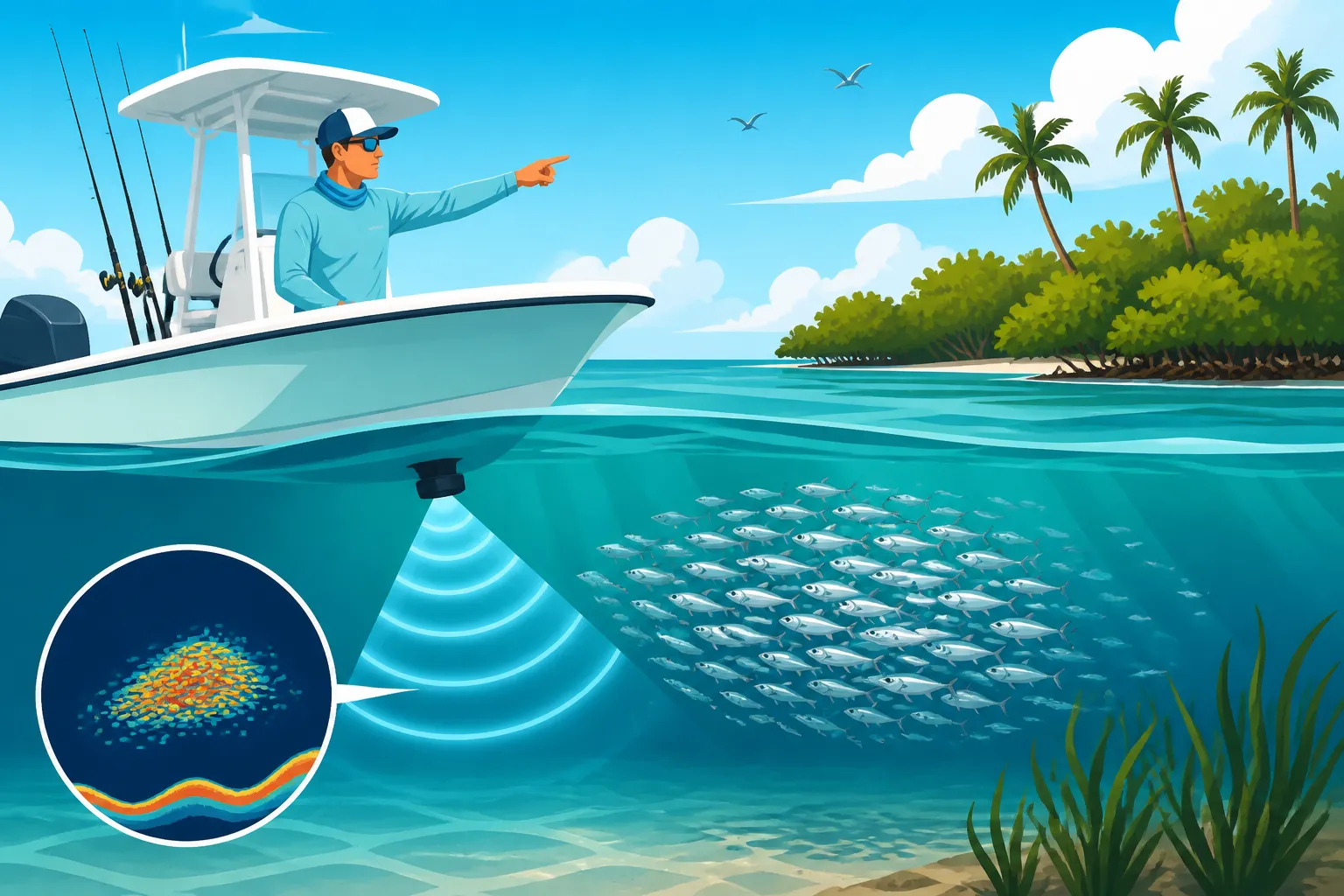
- Arches vs. Clouds: Game fish usually appear as distinct arches on your sonar screen. Baitfish, however, often show up as dense, amorphous "clouds," "balls," or even solid lines if the school is particularly large and tightly packed. These clouds can be suspended at various depths, from just below the surface to right on the bottom.
- Depth and Density: Pay attention to the depth where you're marking these clouds. If they're tightly packed and suspended in the middle of the water column, it often means they're being pursued by predators. If they're spread out or hugging the bottom, they might be more relaxed. The denser the cloud, the more baitfish are present.
- Predator Marks Below/Around Bait: The most exciting scenario is when you see those distinct game fish arches directly below or even within the baitfish cloud. This is a clear indication that larger fish are actively feeding on the bait, making it an excellent spot to drop a line.
Many modern fish finders offer different display modes. Experiment with them to find what works best for identifying bait schools in your area. You can find excellent quality fish finders from brands like Garmin or Humminbird, often available on Amazon, with various features to suit different budgets and needs.
Side Scan and Down Imaging
For an even more detailed view, many contemporary fish finders come equipped with side scan or down imaging capabilities. These technologies provide photographic-like images of the bottom and water column.
- Side Scan: This technology allows you to "see" out to the sides of your boat, covering a much wider area than traditional 2D sonar. Bait schools can appear as long, streaky patches or dense masses off to the left or right of your vessel. This is incredibly useful for covering large flats or searching along channel edges without having to drive directly over the top of every potential spot. It helps you find those subtle edges where bait might be holding.
- Down Imaging: Down imaging gives you a clearer, more detailed view directly below your boat, making it easier to distinguish baitfish from structure or other clutter. You'll see those bait balls with remarkable clarity, sometimes even being able to discern individual fish within the school if the resolution is high enough.
Using these advanced sonar technologies can really cut down on your search time and help you locate those elusive schools holding just outside your traditional sonar cone.
GPS and Chartplotters for Recalling Spots
A good GPS and chartplotter aren't just for navigation; they're essential tools for remembering where you found bait.
- Marking Waypoints: Whenever you find a significant bait school, whether visually or with your electronics, immediately mark a waypoint on your GPS. Give it a descriptive name like "Bait School 10am" or "Threadfins by Marker 5." Over time, you'll build a valuable library of bait-holding locations.
- Tracking Patterns: By marking these spots, you can start to identify patterns. Do bait schools consistently show up in a particular channel on an outgoing tide? Do they always school up around a specific grass flat when the water temperature hits a certain point? Your GPS data helps you connect the dots and predict future bait locations.
- Route Planning: When you head out for your next trip, you can review your saved waypoints and plan a route that takes you through known bait-holding areas. This proactive approach saves time and increases your chances of success.
Pairing your understanding of bait behavior with the power of your electronics creates a formidable bait-finding system.
Practical Strategies for Successful Bait Locating
Knowing where to look and what tools to use is great, but putting it all into practice requires a systematic approach. Here’s how to effectively incorporate these techniques into your fishing routine.
The Systematic Search Approach
Don't just motor around aimlessly hoping to stumble upon bait. Have a plan.
- Start with Known Areas: If you've found bait in a particular area before (using those GPS waypoints!), start there. Baitfish often return to productive grounds, especially if conditions are similar.
- Observe Before Acting: As you approach a potential bait-holding zone, slow down. Kill the main engine and drift, or use your trolling motor. Scan the horizon for birds. Look for nervous water or jumping bait. Check your sonar. Give the area time to reveal itself. Sometimes, the bait might be temporarily pushed down, only to resurface minutes later.
- Grid Search if Necessary: If you're in a promising area but not seeing immediate signs, try a systematic grid search. Slowly move your boat in a zigzag pattern or parallel lines, constantly scanning with your eyes and monitoring your fish finder. This ensures you cover the area thoroughly without missing a crucial school. This is especially effective in large, open bay systems or over extensive grass flats where bait might be more dispersed.
Remember, patience and keen observation are your best friends during the search phase.
Stealth and Approach Techniques
Once you spot a bait school, the worst thing you can do is charge in full throttle and spook them.
- Slow Down and Approach Upwind/Upcurrent: Always approach a bait school slowly, ideally from upwind or upcurrent. This allows your boat to drift towards them quietly, and any disturbance you make will drift away from the bait, not towards them.
- Use a Trolling Motor: An electric trolling motor is invaluable for a stealthy approach. It's quiet and allows for precise boat control, letting you position your boat perfectly for a cast net throw or a jigging session without sending the school scattering.
- Polarized Sunglasses are a Must: In clear Florida waters, a good pair of polarized sunglasses will cut through the glare, allowing you to spot baitfish schools just under the surface that you might otherwise miss. They make a huge difference in seeing those subtle color changes or nervous water. You can find excellent quality polarized sunglasses, often specifically designed for fishing, on Amazon.
A quiet approach ensures the bait stays put, increasing your chances of gathering enough for your day's fishing. How to Pole a Flats Boat Quietly offers more tips on stealthy approaches in shallow waters.
Methods for Catching Bait
Spotting them is one thing; catching them is another!
- Cast Netting: The most common and often most effective method for catching schooling baitfish like pilchards, threadfins, or mullet in shallow or mid-water depths. Practice your throw on land first to ensure you can open the net fully. Look for dense schools near the surface, cast, let it sink, and retrieve. The size of your cast net will depend on the bait you're targeting and your strength. You can find a wide range of cast nets on Amazon, from smaller beginner models to larger, heavier professional ones. Cast Netting for Bait in Florida Waters has more in-depth advice on this technique.
- Sabiki Rigs: For baitfish holding deeper or when cast netting isn't feasible, a sabiki rig is an excellent choice. This is a multi-hook rig with small, flashy flies designed to imitate tiny baitfish. Drop it into a marked bait school, jig gently, and you can often catch multiple baitfish at once. This works great for threadfins, pinfish, or even small sardines.
- Chumming: Sometimes, you can draw baitfish to your boat, especially if they are scattered or holding just out of reach. Using a chum bag filled with ground fish, oats, or commercial chum (which you can also find on Amazon) can attract bait to your boat. Hang it off the side, let the scent trail work, and watch for the bait to appear. Once they're in range, you can use a cast net or sabiki rig. How to Chum for Fish From a Boat goes into more detail on effective chumming strategies.
| Baitfish Type | Common Habitats | Visual Cues | Electronic Cues | Best Catch Method |
|---|---|---|---|---|
| Scaled Sardines/Pilchards | Grass flats, near docks, open bay | Nervous water, jumping, birds diving | Dense, suspended clouds on sonar | Cast Net, Sabiki Rig |
| Threadfin Herring | Open bays, channels, deeper flats | Large, dark "boils," birds diving | Very dense, large clouds or solid lines on sonar | Cast Net, Sabiki Rig |
| Finger Mullet | Mangrove shorelines, shallow flats, canal edges | Skipping on surface, subtle ripples, dark schools | Less distinct on sonar, often near bottom/structure | Cast Net |
| Pinfish/Grunts | Grassy bottoms, oyster bars, rocky areas | Often no surface sign; sometimes small splashes | Clumped on bottom/structure on sonar | Sabiki Rig, Small Hooks |
| Shad/Shiners (Freshwater) | Weed lines, submerged timber, creek mouths | Flickering, ripples near cover | Small clouds near structure/bottom on sonar | Cast Net, Sabiki Rig |
Maintaining Your Bait and Your Spot
Once you've gone to the effort of locating and catching bait, keeping it healthy and alive is crucial for a productive fishing day.
Livewell Management
A good livewell is worth its weight in gold.
- Circulation and Aeration: Ensure your livewell has excellent water circulation and aeration. Oxygen is vital for baitfish survival. Many livewells have pumps that draw in fresh water and aerate it.
- Temperature Control: In the summer heat, baitfish can stress quickly. Consider adding frozen water bottles to your livewell to keep the water temperature down, especially if you're carrying a lot of bait. Avoid using ice directly unless it's made from freshwater, as chlorinated ice can be harmful.
- Avoid Overcrowding: It's tempting to fill your livewell to the brim, but overcrowding quickly depletes oxygen and stresses the bait, leading to premature death. It's better to have a healthy, lively half-well of bait than a full well of dying fish.
Proper livewell management means your hard-won bait remains fresh and energetic, making them more attractive to game fish.
Stealth After Bait Acquisition
Just because you've caught your bait doesn't mean the larger fish have left the area.
- Re-observe the Area: After netting bait, take a moment to re-scan the area. Often, the commotion of the cast net or jigging will temporarily spook game fish, but they might return quickly if the bait school remains or if another school moves in.
- Move Cautiously: If you plan to fish the spot where you found bait, do so cautiously. Don't blast off at full speed. Consider drifting or using your trolling motor to position yourself.
- Mark the Spot: If it was a particularly productive bait spot, make sure your GPS waypoint is accurate. This intelligence will serve you well on future trips.
Remember, finding bait is only the first step. The ultimate goal is to catch those magnificent Florida game fish, and that means respecting both the bait and the environment around it.
Disclaimer
This article is for general informational purposes only and does not constitute professional advice. Laws, prices and regulations vary by location and change over time. Consult a qualified professional for guidance on your specific situation.