Best Tides for Inshore Fishing in Florida
Have you ever planned an eagerly anticipated fishing trip, woken up before dawn, loaded all your gear, and then spent hours on the water without so much as a nibble? It's incredibly frustrating, making you wonder if you're doing something wrong or if the fish just packed up and left. More often than not, the culprit isn't your bait or your technique, but simply missing the optimal tidal window. Understanding the rhythm of Florida's tides is arguably one of the most critical elements to consistent success in our bountiful inshore waters, and this guide will break down everything you need to know to time your trips perfectly.
Understanding Florida's Tides and Why They're So Crucial
Tides are the daily rise and fall of sea levels, primarily influenced by the gravitational pull of the moon and, to a lesser extent, the sun. In Florida, with its extensive coastline and intricate networks of estuaries, bays, and inlets, these subtle shifts create dynamic environments that profoundly impact where and how fish feed. Ignoring the tides is like trying to drive a car without knowing how to put it in gear – you're just not going to get anywhere. Many anglers, especially those new to Florida's unique fishing landscape, often underestimate just how vital this natural cycle is to their success, leading to those frustrating, fishless days.
The Basic Mechanics of Tides
Imagine the ocean as a giant bathtub, and the moon is gently rocking it back and forth. As the moon's gravity pulls on the Earth, it creates a bulge of water on the side of the Earth facing the moon, resulting in a high tide. Simultaneously, another bulge forms on the opposite side due to inertia. In between these bulges, the water level is lower, causing low tides. As the Earth rotates, coastal areas pass through these bulges and dips, giving us our twice-daily high and low tides. However, the exact timing and height of these tides are also affected by the sun's gravitational pull and local geography, which is why Florida's tidal patterns can be so wonderfully complex and region-specific.
Current Flow and Bait Movement
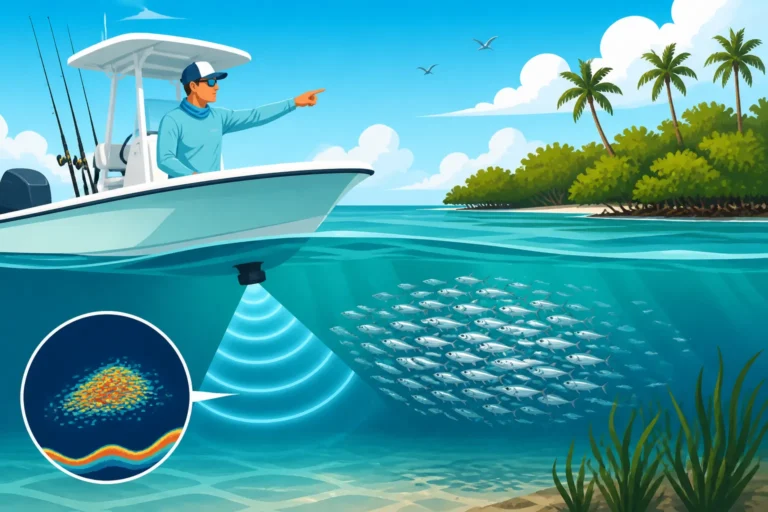
The most direct impact of tides on fishing is the creation of current. When the tide is rising or falling, water is constantly moving in or out of an area. This movement is a massive buffet bell for baitfish and, consequently, for the predatory species we love to target, like snook, redfish, and trout. The moving water dislodges crabs, shrimp, and smaller baitfish from their hiding spots, carrying them along with the flow. Think of it like a conveyor belt of food. Game fish instinctively position themselves to intercept this passing smorgasbord, expending less energy while maximizing their feeding opportunities. Without current, bait often disperses or settles, making it harder for predators to find a meal, and making your lures much less appealing.
Predator Ambush Points
Understanding tidal flow also helps you identify prime ambush points for predatory fish. As the current moves, fish don't just swim aimlessly; they use structure to their advantage. Mangrove shorelines, oyster bars, channel edges, bridge pilings, and even submerged structures like fallen trees become strategic hunting grounds. On an incoming tide, redfish might push deep into the mangroves, tailing and rooting for crabs. During an outgoing tide, snook often stack up along creek mouths and channel edges, waiting for bait to be flushed out. Knowing these patterns allows you to anticipate where the fish will be, placing your bait or lure right in their strike zone. Without tidal movement, these ambush points lose their effectiveness, as fish aren't compelled to gather in such predictable locations.
Reading and Interpreting Florida Tide Charts
Deciphering a tide chart might seem like cracking a secret code at first, but it's a fundamental skill for any serious inshore angler in Florida. These charts provide predictions for high and low tides, along with their times and heights, for specific locations. There are numerous resources available, from physical tide tables you can pick up at local bait shops to sophisticated apps that offer real-time data and even current predictions. Learning to use these tools is a game-changer; it moves your fishing from hopeful guessing to strategic planning.
High Tide vs. Low Tide and Slack Water
A tide chart primarily shows you the times and heights of high tides and low tides. High tide is when the water reaches its maximum level, and low tide is when it's at its minimum. In between these two points, the water is either rising (incoming or flood tide) or falling (outgoing or ebb tide).
The periods around the exact peak of high tide and the exact bottom of low tide are known as "slack tide." During slack tide, the water movement slows down considerably, often becoming almost still. This can be a challenging time to fish in many inshore scenarios because, as we discussed, active current is often key to bait movement and fish feeding. However, don't write off slack tide entirely – it sometimes presents unique opportunities for different species or techniques, particularly if you're targeting areas where fish are congregated due to deeper holes or specific structures they hold on to.
Interpreting Current Strength and Speed
Beyond just high and low times, many advanced tide apps and charts, especially those focused on specific passes or inlets, will also predict current speed or strength. This is incredibly valuable. A strong current can be excellent for flushing out bait and getting fish active, but a too strong current can make it difficult to present your bait naturally or even hold your position. Conversely, a very weak current might not be enough to stimulate a feeding frenzy.
Look for predictions that give you current velocity, often measured in knots. Ideally, you want moving water—typically from 0.5 to 2 knots—depending on the location and target species. For example, a super-strong "rip" might be too much for presenting a live shrimp, but perfect for freelining a large baitfish for a massive tarpon. Some apps, like the popular Navionics Boating app or Fishing Points, will even provide visual representations of current direction and speed, which can be incredibly helpful for visualizing the conditions. Don't be afraid to experiment and observe how different current strengths affect your local spots.
Utilizing Online Resources and Mobile Apps
Gone are the days when you had to rely solely on paper tide charts. While those are still perfectly valid, the digital age has brought a wealth of convenient resources right to your fingertips. Websites like Tides4Fishing.com offer comprehensive tidal predictions for countless locations in Florida, often including moon phases, solunar tables, and even weather predictions. For mobile users, a quick search on your app store will reveal dozens of tide and fishing apps. Some popular choices include Amazon-available apps like Fishing Points, Fishbrain, or Tide Charts Near Me. These apps often allow you to save your favorite fishing spots and get instant, location-based tide data, making on-the-go planning a breeze. Many of these premium apps offer additional features like satellite imagery overlays and detailed nautical charts, which can further enhance your understanding of how tides interact with the underwater topography of your chosen spot. Choosing a good app is like having a seasoned local guide in your pocket, constantly whispering the best times to hit the water.
Best Tidal Stages for Different Inshore Species
Not all fish react to the tides in the same way, nor do all locations fish best on the same tidal stage. What works wonders for redfish pushing into the grass flats might be a dud for snook hiding in a deep channel. Understanding the preferences of your target species and matching them to the tidal phase is a critical component of successful inshore fishing. This is where local knowledge and observation really pay off.
Incoming Tide Advantages
The incoming, or flood, tide is often celebrated by inshore anglers for a few key reasons. As water pushes in from the deeper channels and ocean, it brings with it cooler, cleaner, and often more oxygenated water. This influx can invigorate baitfish and their predators.
- Access to New Feeding Grounds: For species like redfish and sometimes snook, the rising water allows them to move into shallow areas they couldn't access at low tide. This includes mangrove root systems, flooded grass flats, and oyster bars that become prime feeding grounds as the water covers them. Anglers often look for "tailing" redfish in these areas, where their tails break the surface as they root for crabs and shrimp. This offers a fantastic sight-fishing opportunity.
- Concentration of Bait: As the tide floods into creeks and estuaries, it often pushes baitfish and crustaceans ahead of it, concentrating them in certain areas. This makes it easier for predators to ambush them. Look for pinch points or bottlenecks where the water flows faster, as these can become feeding highways.
- Cooler Water: Especially during Florida's hot summers, the incoming tide can bring in cooler water from the Gulf or Atlantic, which can stimulate fish activity that might have slowed down during the stagnant, warm slack water. This is particularly true for trout and redfish on the open flats.
Outgoing Tide Advantages
While incoming tides have their perks, the outgoing, or ebb, tide is arguably just as productive, if not more so, for many of Florida's popular inshore species. As the water recedes, it reverses the process, flushing bait out of shallow areas and concentrating predators.
- Flushing Out Bait: As water drains from the flats, creeks, and estuaries, it literally "flushes" baitfish, shrimp, and crabs out into deeper channels, creek mouths, and bay entrances. Snook, in particular, are masters at positioning themselves at these natural funnels, waiting for an easy meal to be delivered directly to them. This is often an ideal time for targeting larger snook with live baits or artificial lures mimicking fleeing prey.
- Exposing Structure: As the tide drops, certain structures like oyster bars, rock piles, and submerged timber become more prominent or even fully exposed. This can concentrate baitfish around the remaining deeper water pockets and provides obvious ambush points for predators. Anglers can also scout new spots at low tide that might be hidden at high tide. Learning to identify these key structures during a low tide can give you a significant advantage when the water rises again.
- Concentrated Fish: As water levels drop, fish have fewer places to hide and are often forced into deeper pockets, channels, or along the edges of flats. This can make them easier to locate, especially if you know where those deeper areas are. For species like flounder, waiting on the bottom near these drop-offs for bait to be washed over them is a classic feeding strategy.
Here's a quick look at how different tidal movements can influence your fishing for some popular Florida inshore species:
| Tidal Stage | Snook | Redfish | Spotted Seatrout | Flounder |
|---|---|---|---|---|
| Incoming | Move into mangroves and shallow structures, active feeding in current. | Push onto grass flats, tailing for crustaceans, feeding near mangrove lines. | Disperse onto grass flats, feeding in schools, especially on cooler water. | Move closer to shorelines and channel edges, foraging for smaller bait. |
| Outgoing | Ambush points at creek mouths, channel edges, and passes as bait flushes out. | Stage along creek mouths, deeper edges of flats, and oyster bars. | Position along drop-offs, channel edges, and grass lines as bait exits. | Burrow in sandy/muddy bottoms near drop-offs, ambushing exiting bait. |
| Slack High | May hold in deeper pockets near structure, less active feeding. | Can be harder to find, may hold tight to structure or in shaded areas. | Often spread out and less active, may sit in deeper grass patches. | Less active, may be buried deeper in the sand/mud. |
| Slack Low | Can be found in deeper holes or cuts; slower bite. | Can be concentrated in potholes or deeper depressions; wary. | Often found in deeper channels or sandy potholes; a bit more sluggish. | Very hard to tempt, often buried and waiting for next movement. |
Note: These are general guidelines. Local conditions, moon phase, temperature, and specific structure can always influence fish behavior.
Targeting Fish on Moving Water
The common thread here is "moving water." While slack tide can offer opportunities, particularly for deep-water species or specific techniques like soaking cut bait in a hole, the most active feeding windows for most inshore species occur when the tide is either rising or falling. The general rule of thumb is to fish the first few hours of an incoming tide and the last few hours of an outgoing tide. These are the periods when the current is typically strongest, creating that desirable "bait conveyor belt" effect.
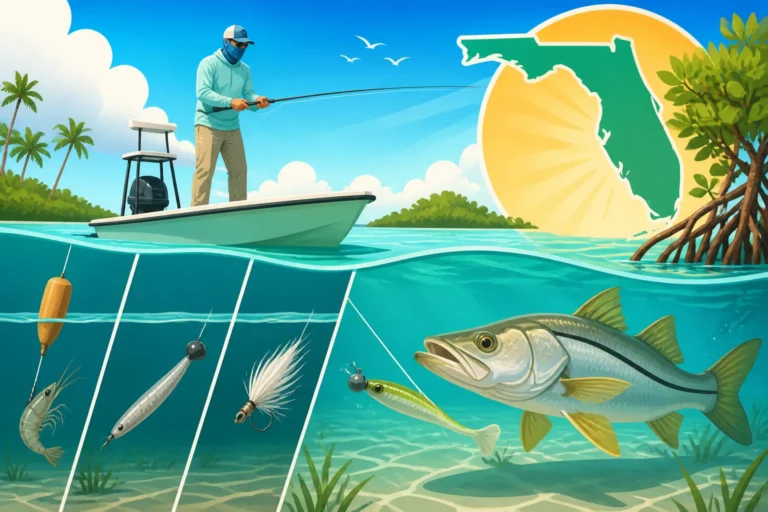
When fishing moving water, consider how you present your bait or lure. Allow the current to do some of the work, carrying your offering naturally. This could mean using a lighter jig head, a free-lined live bait, or a soft plastic lure that drifts enticingly with the flow. Always cast upstream or upcurrent and work your bait back, mimicking an injured or disoriented baitfish struggling against the flow. For more specific tactics, you might want to explore articles like "How to Fish an Outgoing Tide" or "How to Fish an Incoming Tide" to fine-tune your approach.
Regional Tidal Differences Across Florida
Florida's unique geography, with its long Gulf and Atlantic coastlines, means that tidal patterns are not uniform across the entire state. What's true for the Florida Keys might be entirely different from the Panhandle or the St. Johns River. Recognizing these regional distinctions is crucial for applying your tidal knowledge effectively. Simply put, a tide chart for Tampa Bay won't do you any good if you're fishing in Jacksonville.
Gulf Coast Tides
The Gulf Coast of Florida, stretching from the Panhandle down to the Everglades, generally experiences a simpler, often "mixed diurnal" or "diurnal" tidal pattern. This means there's often one high tide and one low tide per day, or sometimes two highs and two lows of unequal magnitude. The tidal range (the difference between high and low) is typically much smaller than on the Atlantic side, often only a foot or two in many areas like Tampa Bay or Charlotte Harbor.
Because of this smaller range, the current generated by these tides can be less pronounced. This means that even subtle changes in water movement become incredibly important. Anglers on the Gulf Coast often pay closer attention to wind direction and strength, as wind can significantly influence water levels and currents in shallower, enclosed bays. For Gulf Coast fishing, focusing on points where the water does funnel, such as passes, creek mouths, and around oyster bars, becomes paramount. The "moving water" principle still applies, but you might be looking for more gentle flows rather than raging currents. This is why knowing "Best Tides for Inshore Fishing in Florida" for your specific region is so important.
Atlantic Coast Tides
In stark contrast, Florida's Atlantic Coast, from Jacksonville down to the Florida Keys, experiences a more classic "semidiurnal" tidal pattern, characterized by two high tides and two low tides of roughly equal height each day. The tidal range here can be much greater, often 3-6 feet or more, depending on the location and specific astronomical factors. This larger range means more significant water movement and stronger currents, especially in inlets and rivers.
For anglers on the Atlantic side, understanding the timing of these strong currents is critical. In places like Sebastian Inlet or Ponce Inlet, the outgoing tide can create powerful rips that flush bait out of the Indian River Lagoon or Mosquito Lagoon, making for incredible snook and redfish action. However, these strong currents also require heavier tackle and different techniques to keep your bait in the strike zone. The windows of opportunity around peak current are often shorter, but more intense. Using a precise tide chart, which you can easily find through various apps on Amazon or online, is non-negotiable for Atlantic Coast anglers.
Florida Keys and South Florida Tides
The Florida Keys and much of South Florida, while technically on the Atlantic side, have their own unique tidal complexities due to the proximity to the Gulf Stream and the intricate network of islands and channels. The tides here are often influenced by both Atlantic and Gulf waters, resulting in sometimes unpredictable patterns, especially in the backcountry.
In the Keys, for instance, the tide pushing over the shallow flats can create strong currents, which are ideal for sight-fishing for bonefish and permit. However, predicting the exact flow on a given flat can be tricky, as currents might not always align perfectly with the published high and low tide times. Local knowledge, acquired through guides or extensive personal experience, becomes incredibly valuable here. You'll often hear guides talk about "pressure" on the flats rather than just strict tide times, referring to the water movement across vast, shallow areas. This is where understanding "What Tide Is Best for Snook Fishing" can vary wildly depending on whether you're in a deep channel or a super-shallow flat.
Planning Your Fishing Trip Around the Tides
So, you've absorbed all this knowledge about tides – now what? The real magic happens when you integrate this understanding into your actual trip planning. It's not enough to just know when high tide is; you need to leverage that information to pick the best time for your target species in your chosen location. This strategic thinking transforms a casual outing into a highly productive fishing adventure.
Combining Tides with Other Factors
While tides are paramount, they are rarely the only factor influencing fish behavior. Successful anglers always consider a confluence of conditions.
- Moon Phase: The moon not only dictates the tides but also influences their strength. Full and new moons (known as "spring tides") create stronger gravitational pulls, resulting in higher high tides and lower low tides, and consequently, more vigorous currents. Quarter moons ("neap tides") produce weaker tides and less current. Understanding the moon's phase, which is often listed on tide charts or apps, can help you predict how strong the tidal movement will be on a given day.
- Time of Day: While the tide might be ideal, the time of day can significantly impact visibility and fish activity. Early morning and late evening (dawn and dusk) often offer lower light conditions, which can be prime feeding times for many inshore predators, regardless of the tide. Combining an optimal tide with low light can lead to explosive action.
- Weather and Temperature: Cold fronts can shut down fish activity, even on a perfect tide. Conversely, a warm, cloudy day with a good tide can be fantastic. Wind direction and speed can also push bait, create chop (which provides cover for predators), or make certain areas unfishable. Heavy rain can also affect salinity and water clarity, impacting fish behavior. When planning, always check the weather alongside your tide chart.
- Barometric Pressure: While harder to predict or influence, stable or rising barometric pressure often corresponds to active feeding, whereas rapidly falling pressure (before a storm, for example) can make fish lethargic. Many anglers use a barometer or check weather apps that include pressure readings to add another layer to their planning.
Using Local Knowledge and Observation
Tide charts are predictions, and while usually accurate, local conditions can always introduce variations. This is where local knowledge and keen observation come into play.
- Talk to Locals: The best source of information is often the people who fish an area regularly. Chat with bait shop owners, other anglers at the boat ramp, or even fishing guides. They can offer insights into how certain spots fish on specific tides or if recent weather patterns have altered the usual bite. This is also why reading articles like "Florida Inshore Fishing Techniques" from seasoned local bloggers can be invaluable.
- Observe the Water: Pay attention to the water itself when you're out. Are the currents strong or weak? Which way is the bait moving? Are birds diving, indicating baitfish? Are there any visible fish wakes or tails? Over time, you'll develop an intuitive sense of how a particular spot fishes on different tidal stages. Keep a fishing log, noting the tide, moon phase, weather, and your success (or lack thereof). This personal data will become your most valuable guide.
- Scout at Different Tides: If you have the opportunity, visit your favorite fishing spots at both high and low tide. This will give you a better understanding of the underwater structure, where the deeper channels are, and how the current flows around various obstacles. What looks like an open flat at high tide might reveal a hidden oyster bar or pothole at low tide that acts as a fish magnet.
Where to Buy Reliable Tide Information
As mentioned earlier, you've got plenty of options. For general planning, many local tackle shops give out free paper tide charts, and most local newspapers in coastal areas will publish them. Online, government agencies like NOAA (National Oceanic and Atmospheric Administration) provide highly accurate tide predictions for numerous locations. For a more personalized experience, dedicated fishing apps are highly recommended. You can often find a wide selection of these apps, some free and some paid, on platforms like Amazon or your smartphone's app store. Look for apps that offer not just tide times but also current predictions, moon phases, and ideally, solunar tables that predict peak feeding times. Some popular choices include Fishbrain, Tide Charts Near Me, and Saltwater Tides. Investing a few dollars in a reliable app can truly transform your fishing success.
Final Thoughts on Timing the Tides
Mastering the tides isn't something you learn overnight; it's a continuous process of learning, observing, and adapting. Florida's inshore fishing is incredibly diverse, and what works in one estuary might be completely different just a few miles away. However, by understanding the fundamental principles of tidal influence, diligently checking your tide charts, and paying close attention to the nuances of your chosen fishing grounds, you'll dramatically increase your chances of having those unforgettable, fish-filled days on the water. Don't let another trip pass by without considering the tide – it's the heartbeat of Florida's inshore fishery, and learning to dance to its rhythm is the key to unlocking its secrets.
Disclaimer
The information provided in this guide is for general informational purposes only and does not constitute professional fishing advice. Fishing conditions, regulations, and fish behavior can change rapidly. Always consult current Florida Fish and Wildlife Conservation Commission (FWC) regulations before fishing and be aware of all local and federal guidelines. Fishing inherently involves risks, and safety precautions should always be observed.