How to Fish an Outgoing Tide
Oh, the outgoing tide! If you've spent any time on the water in Florida, you've probably heard anglers whisper about it with a mix of reverence and frustration. It can be a magical time, with fish seemingly appearing out of nowhere to feed aggressively, or it can feel like trying to fish in a bathtub drain if you don't know what you're doing. This guide is all about demystifying the outgoing tide, helping you understand why it's often so productive, and giving you the strategies you need to maximize your success when the water starts to run out.
Understanding the Outgoing Tide Phenomenon
Before we can even think about casting a line, we need to grasp what an outgoing tide really is and how it influences our beloved Florida waters. It's more than just water moving; it's a fundamental shift in the aquatic ecosystem that triggers a cascade of events for baitfish and predators alike.
Defining the Movement
Simply put, an outgoing tide, also known as an ebb tide, is when the water level is falling, and the water is moving out from shore, bays, rivers, and inlets, heading back towards the open ocean. This movement is a critical part of the larger tidal cycle, which is primarily driven by the gravitational pull of the moon and, to a lesser extent, the sun. We experience two high tides and two low tides each day, and in between those high and low points, the water is either coming in (incoming or flood tide) or going out (outgoing or ebb tide).
It's not just a gentle lowering of the water level. This outward flow can create significant currents, especially in constricted areas like inlets, channels, and river mouths. Imagine a giant bathtub slowly draining – all the water has to go somewhere, and it often picks up speed as it funnels through narrower passages. The strength of this current can vary wildly depending on the lunar phase, with new and full moons bringing stronger "spring tides" and quarter moons bringing weaker "neap tides." Understanding these nuances, perhaps by checking a reliable marine forecast or tide chart app, can make a huge difference in your fishing plans.
Key Features of the Outgoing Tide
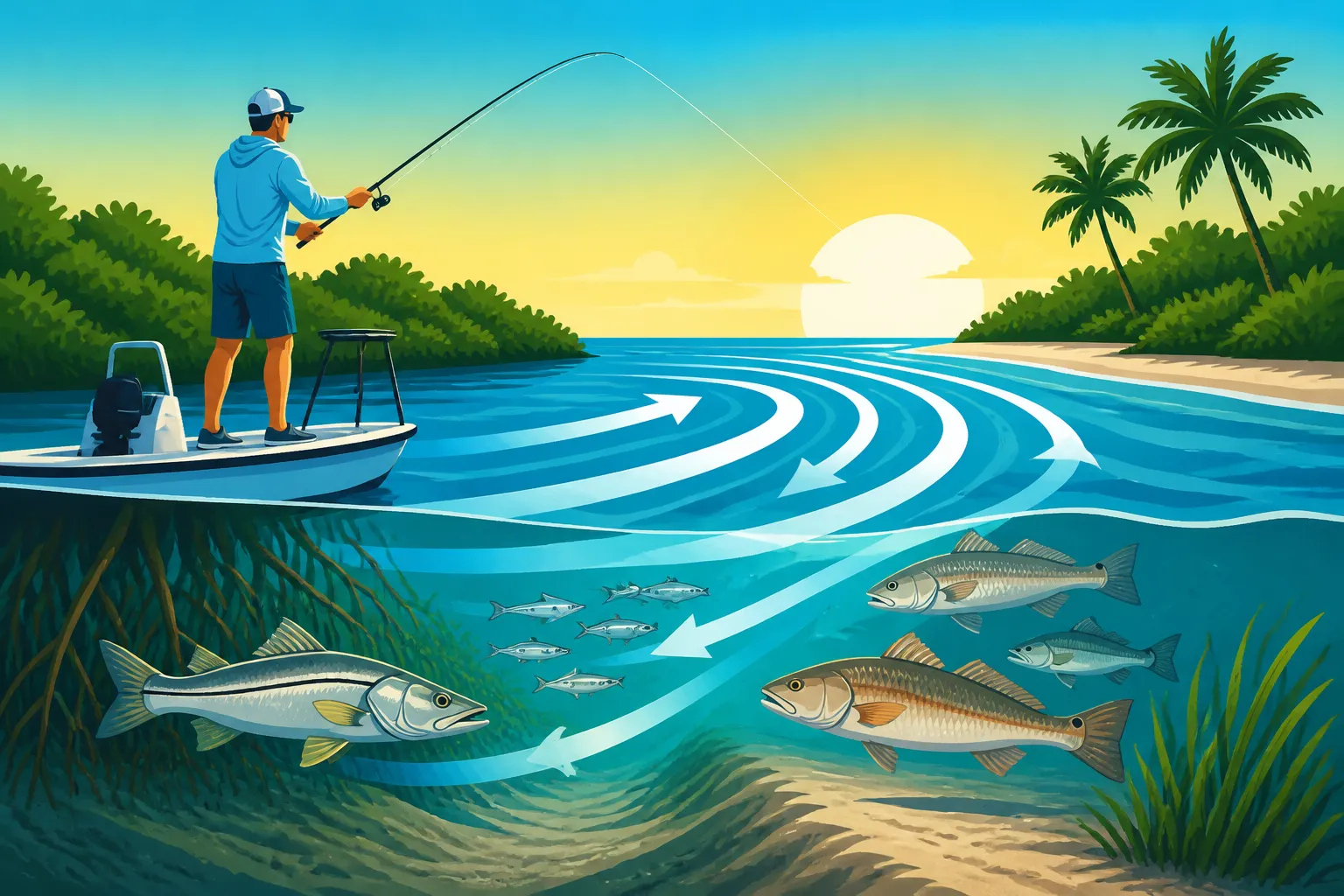
The outgoing tide isn't just a uniform retreat of water. It comes with several distinct characteristics that are crucial for anglers to understand. Firstly, the water level drops, exposing oyster bars, mangrove roots, and other structures that were submerged at high tide. This forces baitfish and crustaceans out of their hiding spots, making them vulnerable. Secondly, the current becomes a dominant factor. This current acts like a conveyor belt, carrying nutrients, baitfish, and debris from calmer backwaters out into more open areas.
Think of those grassy flats or oyster beds that were teeming with life an hour ago. As the water recedes, all those little critters – shrimp, crabs, small baitfish – that were hiding among the blades of grass or in the nooks of the oyster shells suddenly find their world shrinking. They have to move, often into deeper channels or along the edges of the now-exposed structure. This mass exodus of potential food is like ringing a dinner bell for predatory fish. The strength of this current, as discussed in "Best Tides for Inshore Fishing in Florida", directly impacts how active and where fish will position themselves to feed.
Why Outgoing Tides are so Good for Fishing in Florida
Florida's coastal ecosystems thrive on tidal movements, and the outgoing tide, in particular, creates some of the most consistent and productive fishing scenarios you'll find. It’s not just angler folklore; there’s solid ecological reasoning behind why this phase of the tide is often a hot ticket for a variety of species.
The "Flushing" Effect
One of the primary reasons outgoing tides are so effective is what we call the "flushing" effect. As the water drains from vast estuaries, shallow flats, and intricate mangrove systems, it literally flushes baitfish, shrimp, crabs, and other small organisms out into deeper channels, along current edges, and near the mouths of creeks and rivers. Imagine all the little creatures that sought refuge and food in the high-tide haven of the mangroves or over the seagrass beds. As the water level drops, they lose their cover and are compelled to move, often directly into the path of waiting predators.
This creates a high-density, low-effort feeding opportunity for species like snook, redfish, and trout. They don't have to hunt as hard; the current brings the food right to them. This flushing action also carries out nutrients and can sometimes stir up the bottom, making it easier for bottom feeders to find a meal. From the Ten Thousand Islands to the Indian River Lagoon, this pattern repeats daily, offering predictable feeding patterns for savvy anglers.
Concentrated Bait and Predators
The outgoing tide isn't just about bait being flushed out; it's also about predators positioning themselves strategically to take advantage of this bounty. As the water pulls out, fish tend to concentrate in predictable areas. These are often choke points, ambush spots, or deeper holes where they can lie in wait, expending minimal energy while a steady stream of food washes past them. This concentration makes locating fish much easier for anglers.
Consider a major inlet on Florida's coast. During an outgoing tide, all the water from miles of bays and backwaters funnels through that single opening. Naturally, all the bait being flushed out will also pass through that same inlet, and you can bet that larger predatory fish like tarpon, snook, and even offshore species that cruise closer to shore will be waiting there. Similarly, along mangrove lines or oyster bars, predatory fish will set up shop on the downstream side, using the current to their advantage, grabbing whatever edible morsels come swirling by. Knowing these key ambush points is vital, especially when employing "Florida Inshore Fishing Techniques."
Best Strategies and Techniques for Fishing an Outgoing Tide
Now that we understand the "why," let's dive into the "how." Fishing an outgoing tide effectively requires a combination of reading the water, choosing the right spots, and presenting your bait or lure in a way that appeals to actively feeding fish.
Targeting Structure and Ambush Points
When the tide is running out, fish are less likely to be scattered aimlessly. Instead, they'll gravitate towards structure and specific ambush points where they can effortlessly intercept prey. This includes deep holes, channel edges, oyster bars, docks, bridge pilings, and mangrove points.
- Inlets and Passes: These are prime outgoing tide locations. As massive amounts of water rush through, they become funnels for bait. Target eddies, current seams, and the deeper edges of the channel. Fish will often hold just out of the strongest current, darting out to grab food that passes by. For species like snook, the turbulent water around the mouths of inlets can be incredibly productive.
- Bridge Pilings and Docks: These man-made structures provide excellent current breaks and ambush points. Cast your bait or lure upstream of the pilings and let the current carry it naturally past the structure where fish might be holding. The same applies to docks, especially those with deeper water underneath or nearby. This is a fantastic strategy when you're exploring "Best Bridges for Shore Fishing in Florida".
- Mangrove Edges and Creeks: As the water drains from the mangroves, fish will position themselves along the outside edges or at the mouths of feeder creeks. They wait for the shrimp, crabs, and baitfish to be flushed out. Present your offering tight to these edges, allowing it to drift out naturally with the current.
- Oyster Bars and Rocks: These natural formations also provide current breaks and are magnets for bait. Fish the deeper cuts or channels immediately adjacent to the bars, or cast up onto the bar as the tide begins to fall, then slowly work your lure off the edge.
Reading the Current and Presentation
Understanding the current is perhaps the most critical skill for fishing an outgoing tide. The current tells you where the bait is going, and therefore, where the fish will be waiting. It also dictates how you should present your bait or lure.
- Current Seams and Eddies: Look for areas where the strong current meets calmer water, creating a visible seam or a swirling eddy. These are high-percentage spots. Baitfish often get disoriented in these areas, making them easy targets. Predators will sit just inside the calmer water, waiting for prey to drift into their strike zone.
- Upcurrent Casts: Generally, you want to cast upcurrent from where you suspect fish are holding. This allows your bait or lure to drift naturally with the current, imitating a struggling or disoriented baitfish. If you're using live bait like a pilchard or a shrimp, let it drift freely with minimal weight. For artificials, match the retrieve speed to the current, trying to keep your lure in the strike zone as long as possible.
- Slowing Down: With a strong outgoing current, it can be tempting to reel quickly, but often, slowing down your retrieve or using heavier jigs to maintain bottom contact is key. Fish don't want to chase something that's zooming by; they want an easy meal.
- Slack Tide vs. Strong Current: While a strong current can be great, there's also a brief period of "slack tide" at the very peak of high or low tide when the water movement slows or stops. Sometimes, this lull can offer a short window of opportunity as fish relax their ambush positions and might be more willing to move and hunt. However, for sheer consistent action, many anglers prefer the moving water. The article "Why Slack Tide Is the Worst Time to Fish" delves into this more deeply, but a brief slack period at the peak of an outgoing can sometimes offer a chance before the full current takes hold.
Bait and Lure Choices for Outgoing Tides
The best bait and lure choices for an outgoing tide often mirror what the local fish are naturally feeding on, with an emphasis on baits that are robust enough to handle the current or lures that can imitate disoriented prey.
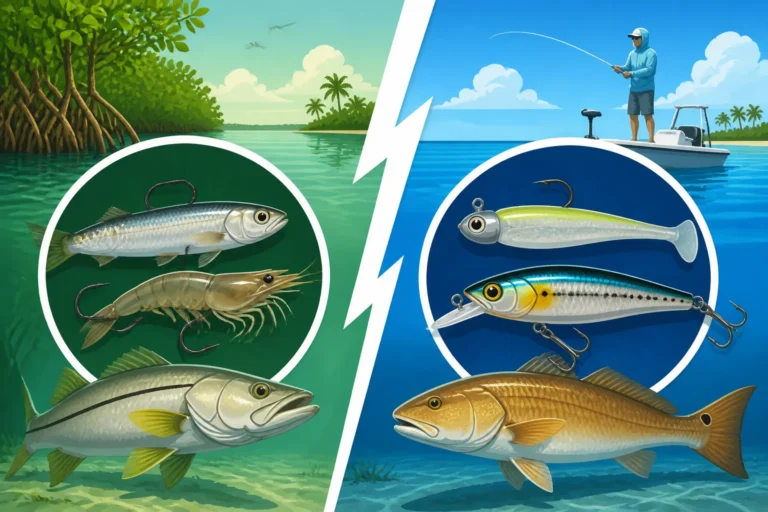
- Live Bait: Live shrimp, pilchards, mullets, and pinfish are absolute gold during an outgoing tide. Fished on a simple jig head, knocker rig, or free-lined with a small weight, they perfectly imitate the distressed bait being flushed out. For example, if you're targeting snook, a live pilchard allowed to drift naturally near a current break is incredibly effective. The article "Best Bait for Snook Fishing in Florida" provides more insights into effective bait choices.
- Soft Plastics: Paddle tails, jerkbaits, and grub tails rigged on a jig head are fantastic artificial options. Choose jig head weights that allow you to maintain contact with the bottom or the desired depth without getting swept away too quickly. Colors should match local baitfish or provide a strong contrast in murky water.
- Topwater Lures: If the outgoing tide creates enough turbulence or brings bait to the surface, topwater plugs can be explosive. Cast them near current seams or structure and work them slowly, letting them drift with the current between twitches. This can be especially effective for redfish and trout.
- Spoons and Jigs: Metal spoons that mimic fleeing baitfish or heavy bucktail jigs can also be very productive, especially when targeting fish holding in deeper channels or near structure. The flash and vibration of a spoon can draw attention, while a jig can be bounced along the bottom in strong currents.
| Fishing Spot/Condition | Fish Behavior During Outgoing Tide | Recommended Strategy |
|---|---|---|
| Inlets/Channels | Predators ambush bait flushed out. | Fish current seams, deep edges. |
| Mangrove Lines | Bait exits cover, fish wait at edges. | Cast tight to mangroves, let drift. |
| Bridge Pilings | Fish shelter from current, wait for food. | Cast upcurrent, drift bait past pilings. |
| Oyster Bars | Bait forced off exposed bar into deeper cuts. | Fish cuts and edges of the bar. |
| Shallow Flats | Fish move to deeper channels or adjacent structure. | Target grass edges, potholes, deeper trenches. |
| Strong Current | Fish seek current breaks, conserve energy. | Use heavier weights/jigs, present slow & deep. |
| Weaker Current | Fish might roam more, still use current. | Lighter tackle, broader search pattern. |
Gear and Other Considerations for Outgoing Tide Fishing
Having the right tackle and being mindful of other environmental factors can significantly impact your success when fishing an outgoing tide. It’s not just about what you throw, but how you’re equipped to handle the conditions.
Essential Tackle
Fishing in strong currents, which often accompany an outgoing tide, demands specific gear considerations. You'll want a setup that can handle the increased drag and potential for larger, current-fighting fish.
- Rods and Reels: A medium to medium-heavy spinning rod (7-foot to 7-foot 6-inch) paired with a sturdy reel in the 3000-4000 size range is a versatile choice for most inshore Florida fishing during an outgoing tide. This combination provides the power to cast heavier baits or lures against the wind and current, and the backbone to fight fish in moving water. For those pursuing larger species in stronger currents, like big snook or tarpon in an inlet, you might even consider a heavier conventional setup.
- Line: Braided line is almost always preferred for its lack of stretch and thin diameter, which helps with casting distance and sensitivity. A 15-20 lb braid is a good all-around choice. You’ll definitely want to tie on a fluorocarbon leader (20-40 lb test) for abrasion resistance against structures and stealth, especially in clearer water. The length of your leader might need to be adjusted; a longer leader (2-3 feet) can sometimes provide a more natural presentation.
- Weights and Hooks: Be prepared with a variety of jig head weights, from 1/8 oz for lighter currents and shallow flats to 1/2 oz or even heavier for deep channels and strong rips. Live bait rigs will typically benefit from a sufficient weight to get your bait down but not so much that it pins the bait to the bottom, inhibiting its natural movement. Circle hooks are excellent for live bait, promoting jaw hookups and easier release, which is particularly important for protected species.
- Accessories: Don't forget essentials like a good pair of pliers for hook removal, a net or a lip gripper for landing fish safely, and polarized sunglasses to cut the glare and spot those subtle current seams or lurking predators. Carrying extra leaders and various weights is a must when dealing with varying currents. You can find many of these essential items conveniently on Amazon, often with reviews that can help you choose the best options for Florida conditions.
Safety First and Environmental Awareness
The Florida sun, strong currents, and dynamic coastal environments all present potential challenges. Always prioritize safety, and remember your role as a responsible angler.
- Sun Protection: Florida sunshine is no joke, even on cloudy days. Wide-brimmed hats, long-sleeved UPF-rated clothing, sunscreen, and polarized sunglasses are not optional; they're essential for a comfortable and safe day on the water.
- Wading Safely: If you plan on wading during an outgoing tide, be acutely aware of the bottom composition. Mud can be soft and lead to getting stuck, while oyster shells are razor-sharp. Shuffle your feet to avoid stingrays, and know your limits, especially as the water recedes and exposes potentially tricky terrain. Strong currents can also make wading dangerous, so always assess the conditions before stepping into the water.
- Tide Charts and Local Knowledge: Always consult a tide chart before heading out. Knowing the exact times of high and low tide, and the strength of the predicted current, is paramount. Complement this with local knowledge; conditions can vary significantly even within a few miles. Chatting with local bait shop owners or other anglers can provide invaluable insights into specific areas or "hot spots." Apps are also very helpful for real-time tide data, many of which are available for download from major app stores or through devices purchased on Amazon.
- Conservation and Regulations: Be keenly aware of Florida's fishing regulations and bag limits, which can vary by species, region, and season. The outgoing tide often concentrates fish, making it easier to catch them, but this also means responsible angling is even more critical. Practice proper catch and release techniques, especially for vulnerable species like snook and redfish. For detailed information, check out articles like "Florida Fishing Regulations and Bag Limits" or "Florida Saltwater Fishing License Rules".
Fishing an outgoing tide in Florida is a truly rewarding experience when approached with knowledge and respect for the environment. By understanding the dynamics of the water, targeting the right spots, and using appropriate techniques, you'll significantly increase your chances of a successful and memorable day on the water.
Disclaimer
This article is for general informational purposes only and does not constitute professional advice. Laws, prices and regulations vary by location and change over time. Consult a qualified professional for guidance on your specific situation.