How to Troll for Kingfish
There's nothing quite like the thrill of a kingfish absolutely screaming line off your reel, a true testament to the power and speed of these amazing fish. But getting to that point can feel a bit daunting, especially when you're thinking about all the variables of offshore trolling in Florida's vast waters. This guide is here to demystify the process, walking you through everything you need to know to consistently hook up with king mackerel.
Unraveling Kingfish Behavior for Successful Trolling
King mackerel, often affectionately called "kings," are one of Florida's most sought-after game fish, known for their blistering runs and delicious fillets. Understanding their habits and where they prefer to hang out is the first step to a successful trolling trip.
King Mackerel's Habits and Prime Locations
King mackerel are highly migratory fish, constantly on the move in search of baitfish and comfortable water temperatures. In Florida, you'll find them cruising both the Atlantic and Gulf coasts. They're typically found in nearshore to offshore waters, usually within sight of land, but sometimes further out over deeper reefs and wrecks. They love structure, so areas around natural reefs, artificial wrecks, and even channel edges are prime real estate. Look for areas where currents create eddies or baitfish congregate, as these are kingfish feeding zones. They are ambush predators with incredible speed, often charging through schools of bait, slashing with their razor-sharp teeth. This aggressive feeding behavior makes them an ideal target for trolling, as a properly presented bait or lure can quickly draw a violent strike. If you're looking for more general information on these incredible fish, our detailed Florida King Mackerel Fishing Guide provides a wealth of knowledge on their characteristics and biology.
Their movements are heavily influenced by water temperature, often following baitfish schools as the seasons change. During spring and fall, you'll see massive migrations as they move north or south along the coasts. Keep an eye on local fishing reports, as these can provide invaluable real-time insights into where the fish are holding and what they're biting on. Finding the bait is often key to finding the kings; if you see diving birds or baitfish showering on the surface, you can bet there are predators nearby.
Optimal Seasons and Conditions for Trolling
While kingfish can be caught year-round in some parts of Florida, their activity peaks during specific seasons, mainly spring and fall. These are the migratory periods when large schools of kingfish move through coastal waters, offering anglers some of the best opportunities. In spring, as waters warm, they push north, and in fall, they head south as temperatures drop. Our comprehensive Best Month to Catch King Mackerel in Florida article dives deeper into the seasonal specifics for different regions of the state.
Beyond the season, daily conditions play a huge role. Early mornings and late afternoons are often the most productive times, mirroring many other predatory fish that prefer lower light conditions to hunt. However, kingfish can bite all day, especially if there's a strong current, active bait, or overcast skies. Look for clear, green-blue water – kingfish are sight feeders and prefer good visibility. Strong tidal movements or current lines where different water masses meet can also be fantastic spots, as these often concentrate baitfish and provide ambush points for kings. Don't be afraid of a bit of chop; a slight swell can often make your baits and lures look more natural and enticing. For a broader understanding of how the seasons impact all types of fishing in the state, check out our Florida Fishing Seasons Explained. Even during summer, when the heat is on, kings can still be caught, but you might need to adjust your approach, as detailed in our guide on How Hot Weather Affects Summer Fishing in Florida.
Essential Gear and Rigging for King Mackerel Trolling
Having the right equipment is crucial for tackling these fast, toothy predators. You need gear that can handle the initial explosive strike, the powerful runs, and the sharp teeth of a kingfish. Skimping on tackle here often leads to disappointment and lost fish.
Selecting the Right Rods, Reels, and Line
For trolling kingfish, you'll want a medium-heavy to heavy conventional or spinning setup. Conventional reels, often mounted on stout boat rods (around 7 feet in length), are traditional for trolling due to their power and line capacity. Look for reels with a smooth, reliable drag system, as a kingfish's first run can easily spool a lesser reel. Shimano's TLD series or Penn's Squall are popular choices that offer durability and performance without breaking the bank. For spinning gear, a 6000-8000 series reel paired with a matching heavy-action rod can also work, especially for lighter trolling or when you anticipate casting to schools of fish. Many anglers find excellent deals on robust trolling setups and individual components on Amazon, offering a wide range of reputable brands to explore.
Line selection is paramount. Spool your reels with 30-50 pound braided line for its sensitivity and incredible strength-to-diameter ratio. This allows for more line capacity and better feel. Crucially, attach a monofilament or fluorocarbon leader of 30-80 pounds, several yards long, to the braid using a strong knot like an FG or Alberto. This provides some stretch and shock absorption. The business end of your rig, however, must include wire leader. Kingfish have incredibly sharp teeth that will slice through mono or fluoro instantly. Typically, a section of #4 to #6 wire (around 30-60 lb test) is used directly preceding the hook. Our article on Best Rod and Reel Setup for Florida Offshore Fishing offers more in-depth advice on selecting the right combinations for various offshore species, which certainly applies to kingfish.
Crafting Effective Trolling Rigs with Baits and Lures
Kingfish are opportunistic feeders, and both live baits and artificial lures can be highly effective when trolled correctly. The key is to present them in a way that mimics a wounded or fleeing baitfish.
Live Bait Rigs: Live baits are often kingfish candy. Pogies (menhaden), cigar minnows, blue runners, and goggle-eyes are all prime choices. A classic setup is the "stinger rig." This involves a single hook (usually 3/0-5/0 treble or J-hook) through the nose or upper jaw of the bait, followed by a short section of wire (about 6-12 inches) connected to a second, free-swinging treble hook (the "stinger"). This stinger hook is placed near the tail of the bait, ensuring a hookup when a kingfish short-strikes. You can buy pre-made stinger rigs from tackle shops or assemble your own with wire and hooks, easily found on Amazon.
Artificial Lures: Spoons, diving plugs, and skirted baits are also fantastic. Large, flashy trolling spoons like Clark Spoons (sizes 0-3) or Drone Spoons are very popular, especially when pulled behind a planer or trolling weight to get them down to depth. Diving plugs like Rapala X-Raps or Nomad Design lures that run at specific depths can be deadly. Choose natural baitfish colors or bright, attention-grabbing patterns like chartreuse or pink. When using artificials, a wire leader is still essential; many come pre-rigged with wire, but always check.
Here's a quick reference for common kingfish trolling rigs:
| Rig Type | Primary Bait/Lure | Typical Depth | Advantages | Disadvantages |
|---|---|---|---|---|
| Live Bait Stinger | Live pogies, cigar minnows | Surface-Mid | Highly effective, natural presentation | Requires live bait, bait can foul |
| Dead Bait Duster | Dead ballyhoo, cigar minnow | Surface-Mid | Good flash and movement, easier to maintain | Less natural than live bait |
| Trolling Spoon | Clark, Drone Spoons | Mid-Deep | Durable, covers water, no bait needed | Less natural, can twist line |
| Diving Plug | Rapala X-Rap, Nomad Diver | Mid-Deep | Consistent depth, mimics baitfish | Can be expensive, limited to specific depths |
| Planer/Downrigger | Any of the above | Deep | Precise depth control, clears prop wash | More complex setup, adds drag |
The absolute necessity of a wire leader cannot be overstated when targeting kingfish. These fish have teeth designed to shear through baitfish, and monofilament or fluorocarbon line is no match. Our article, Do You Need Steel Leader for Florida Saltwater Fishing?, delves into why wire is so crucial for toothy predators in saltwater.
Mastering the Art of Trolling for Kingfish
Once you have your gear ready and understand where kingfish like to be, it's time to put your boat in motion and execute your trolling plan. Trolling is more than just dragging lines; it's a strategic dance with the ocean.
Trolling Speed, Boat Control, and Spread Management
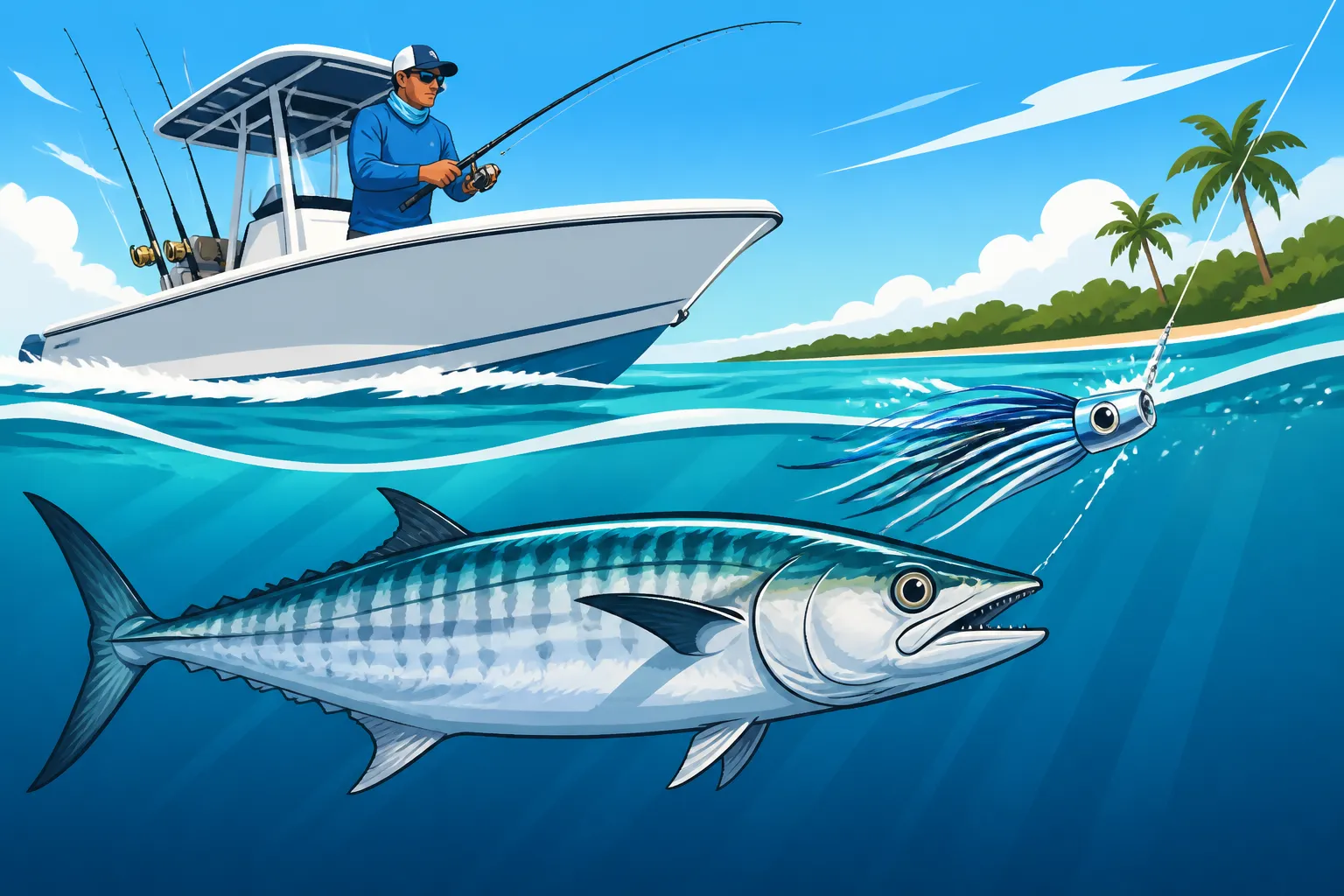
The optimal trolling speed for kingfish typically ranges from 2 to 8 knots, but this is highly variable and depends heavily on the type of bait or lure you're using and the prevailing conditions. When using live baits, a slower "slow troll" speed of 2-4 knots is usually best, allowing the bait to swim naturally. If you're pulling artificial lures like spoons or diving plugs, you might need to bump up the speed to 5-8 knots to get the desired action. The best approach is to experiment; watch your baits and lures in the water next to the boat and adjust your speed until they look alive and enticing.
Boat control is critical. Instead of just running in a straight line, employ S-turns and zig-zag patterns. This makes your baits and lures speed up and slow down, rise and fall, mimicking erratic baitfish and often triggering strikes. These changes in direction also cause your lines to spread out wider, covering a broader swath of water. When rigging your lines, try to stagger them at different distances behind the boat and at varying depths. This "spread" prevents tangles and allows you to present offerings across the water column simultaneously. You might have one bait just behind the prop wash, another further back, and one deep on a downrigger. This strategy is part of a broader set of skills covered in our guide to Trolling Technique for Offshore Fishing.
Identifying Hotspots and Reading the Water
Modern electronics, like fish finders and GPS, are invaluable tools for locating kingfish. Use your fish finder to identify bait schools, subsurface structure, and even individual fish. Mark these spots on your GPS so you can make repeated passes. Kingfish frequently patrol around natural and artificial reefs, ledges, and wrecks – any structure that holds bait. Areas where color changes occur in the water or where a strong current line forms can also concentrate bait and, by extension, kingfish.
Beyond electronics, always be observant of your surroundings. Look for diving birds, which often indicate bait schools being pushed to the surface by predators, including kingfish. Keep an eye out for surface commotion, like showering baitfish, which is a sure sign that something is actively hunting below. Pay attention to changes in water temperature; even a slight drop or rise can signal a productive zone. Sometimes, just scanning the horizon with good polarized sunglasses can reveal subtle signs of life that lead you to a hotspot. Florida offers an incredible array of prime locations, which you can learn more about in our guide to Best Saltwater Fishing Spots in Florida.
Common Pitfalls and Conservation for Kingfish Anglers
Even experienced anglers can make mistakes, and understanding common pitfalls can save you time, effort, and fish. Moreover, being a responsible angler is essential to ensure healthy kingfish populations for future generations.
Avoiding Trolling Mistakes and Gear Malfunctions
One of the most common mistakes is failing to adapt to conditions. Trolling at the same speed with the same lure, even if there are no bites, is a recipe for a slow day. Be willing to change your speed, try different lures or baits, and adjust your depth. If the bait changes in the area, try to "match the hatch" by using lures or baits that resemble what the kings are currently feeding on.
Another frequent issue is using inadequate gear. Kingfish hit hard and fight dirty, often making long, blistering runs. An improperly set drag or a reel with insufficient line capacity can lead to heartbreak. Always test your drag before heading out and ensure your knots are strong. And, as mentioned repeatedly, neglecting wire leader is the cardinal sin of kingfish trolling. Their teeth are unforgiving. Double-check your wire connections and ensure the wire is free of kinks or abrasions. If you're finding your gear isn't holding up, or you need to replace components regularly, browsing for durable, high-quality terminal tackle and leader material on Amazon can ensure you're always prepared.
Responsible Angling and Florida Regulations
Being a responsible angler means understanding and adhering to the Florida Fish and Wildlife Conservation Commission (FWC) regulations. These rules are in place to protect kingfish stocks and ensure sustainable fishing. Regulations often include specific bag limits (how many fish you can keep), size restrictions (minimum and sometimes maximum lengths), and occasional seasonal closures. These can vary between the Atlantic and Gulf coasts, so always check the latest FWC guidelines before you head out. Ignorance of the law is not an excuse, and violating regulations can result in hefty fines. For a comprehensive overview of all the rules, be sure to consult our detailed guide on Florida Fishing Regulations and Bag Limits.
If you're practicing catch and release, which is common for smaller fish or when you've already filled your limit, handle kingfish with care. While kingfish are generally hardy, minimizing their time out of the water, supporting their body weight, and using de-hooking tools can significantly increase their chances of survival. Avoid touching their gills, and if possible, release them quickly. Even for species not specifically targeted for catch and release, applying these best practices helps maintain a healthy ecosystem, a principle explored further in our article on Catch and Release Best Practices for Snook. By understanding and respecting these powerful fish and their environment, you contribute to a thriving fishery for everyone.
Disclaimer
The information provided in this guide is for general informational purposes only and is not intended as legal or professional advice. Fishing regulations, license requirements, and best practices can change frequently. Always consult the latest Florida Fish and Wildlife Conservation Commission (FWC) regulations or other relevant authorities before engaging in any fishing activities. The author and publisher are not responsible for any actions taken based on the information provided.