How to Tell a Gag Grouper From a Red Grouper
There’s nothing quite like the thrill of a big strike offshore, feeling that heavy pull, and knowing you’ve got a real fighter on the end of your line. But once you reel in that beautiful grouper, a common question pops up: "Is this a Gag or a Red?" In Florida, knowing the difference isn't just about curiosity; it's absolutely crucial for following regulations and avoiding costly mistakes. This guide is here to walk you through the clear, unmistakable features that will help you confidently identify whether you've landed a Gag Grouper or a Red Grouper.
Navigating the Grouper Maze: Why Identification Matters in Florida Fishing
Florida's waters are teeming with incredible fish, and groupers are certainly a fan favorite, both for their challenging fight and their delicious fillets. However, the Sunshine State takes its fisheries management very seriously, and that means specific rules for specific species. Trying to distinguish between a Gag and a Red Grouper can feel like navigating a maze, especially when they're both strong, brown-ish fish from the same family. But trust me, once you know what to look for, it becomes much easier, and it’s a skill every responsible angler needs to master.
Understanding Fishing Regulations and Bag Limits
The primary reason accurate identification is so vital boils down to the law. Gag Grouper and Red Grouper often have different minimum size limits, different daily bag limits, and even different open and closed seasons. What might be perfectly legal to keep for one species could land you a hefty fine for the other. Imagine heading home with a cooler full of fish, only to realize later that a few of them were the wrong size or species for the current regulations – that's a headache no one wants. Checking the current rules for both Gag Grouper Size and Bag Limits and Red Snapper Size and Bag Limits (while Red Snapper are different, understanding specific limits for different species is key) before you even leave the dock is a habit worth forming. These regulations are designed to protect fish populations and ensure healthy fishing for generations to come, and our compliance is a big part of that.
The Role of Conservation
Beyond avoiding fines, accurately identifying your catch plays a significant role in conservation. Each grouper species has its own ecological niche and reproductive patterns. Conservation efforts rely on data about population sizes, catch rates, and the health of specific species. When anglers correctly identify and report their catches (or practice responsible catch-and-release), they contribute to a clearer picture for fisheries scientists. This data directly influences decisions about seasons, bag limits, and other protective measures. It's a testament to the idea that every angler can be a steward of our natural resources, ensuring that the thrill of hooking a grouper remains a possibility for years to come. Think of it as doing your part for the future of Florida Grouper Fishing Guide.
The Distinctive Traits of a Florida Gag Grouper
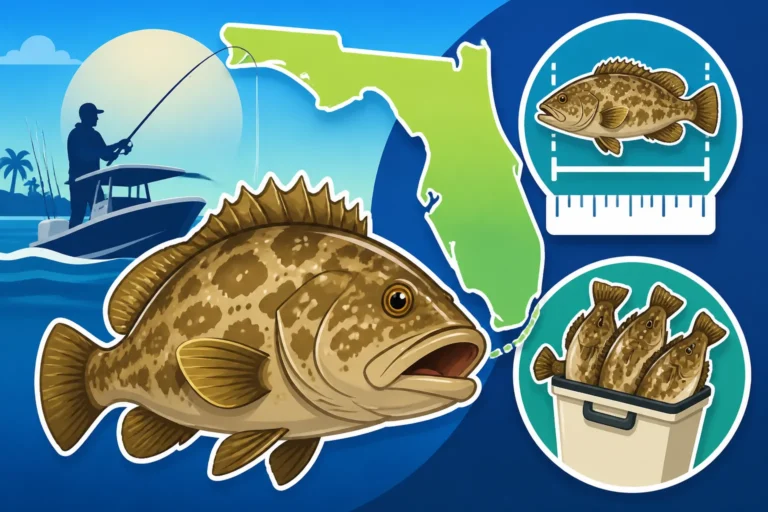
Gag Grouper, often simply called "Gags" by local anglers, are a highly prized catch in Florida. They are known for their powerful runs and their tendency to try and "gag" you in the rocks or structure, hence the name. But beyond their fighting prowess, they have some very specific physical characteristics that, once you learn them, make identification pretty straightforward.
Jawline and Mouth Structure
One of the absolute easiest ways to identify a Gag Grouper is by its jawline. If you look at a Gag's mouth, you'll notice that the upper jaw extends noticeably past the rear edge of the eye. It's almost like their mouth is a bit oversized for their head, giving them a slightly elongated, almost aggressive look to their jaw. Run your finger along the corner of their mouth, and you'll feel that it goes back further than their eye. This is a consistent and reliable differentiator. They also have a more pointed snout compared to some other grouper species, which complements that longer jaw. When you're trying to figure it out on the boat, this is often the first thing experienced captains and anglers will check.
Tail Shape and Fin Edges
The tail fin of a Gag Grouper offers another clear clue. Their tail is distinctly concave, meaning it has a noticeable inward curve, almost like a crescent moon shape. It's not straight, and it's certainly not convex (curved outward). You'll often hear anglers describe it as a "forked" tail, though it's more of a shallow fork than a deep V. Additionally, pay attention to the dorsal and anal fins. The spiny dorsal fin of a Gag Grouper typically has a slightly darkened or dusky edge, and the soft-rayed portions of both the dorsal and anal fins often have a somewhat angular, almost pointed appearance, rather than being broadly rounded. If you're looking for a good field guide to help with these details, you can often find excellent options on platforms like Amazon.
Coloration and Markings
Gag Grouper usually have a mottled pattern of olive, gray, and brown over a lighter background. This camouflage helps them blend in with rocky bottoms and ledges. The key visual here is the worm-like or wavy markings that often appear on their sides and head. These aren't distinct spots, but rather irregular, interconnected patterns that look a bit like mazes or scribbles. These markings can sometimes be subtle, especially if the fish has been stressed or is in varying water conditions, but they are generally present. The belly tends to be a lighter, whitish color, contrasting with the darker top and sides. While coloration can vary slightly based on habitat and depth, these "worm-track" markings are a hallmark of the Gag.
Unmistakable Features of the Florida Red Grouper
Red Grouper are another fantastic species common in Florida's Gulf and Atlantic waters. While they share the general "grouper" body shape, they have several distinct features that set them apart from their Gag cousins. They are often found in similar habitats, making correct identification all the more important when you're pulling them up from deeper wrecks or ledges.
Eye Color and Distinctive Spots
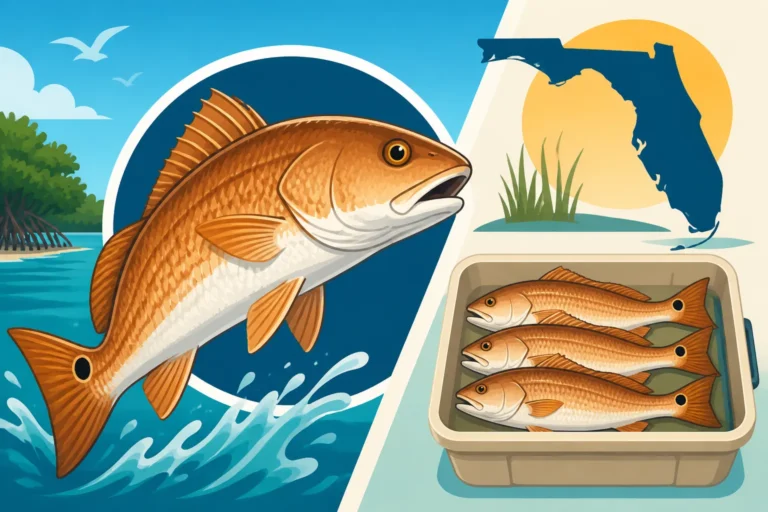
One of the most immediate visual cues for a Red Grouper is their eye. While Gags tend to have darker, sometimes duller eyes, Red Grouper often have eyes that are a brighter, almost golden or reddish-brown hue. This subtle difference can be helpful. Even more reliably, look closely at their sides. Red Grouper are characterized by numerous small, irregular white spots scattered over their head and body. These aren't the worm-like markings of a Gag; instead, they appear more like small, faded "paint splatters" or faint white dots. These spots are usually most prominent on the upper half of their body. Some Red Grouper may also exhibit faint reticulated patterns, but the overall impression is of small white spots, not connected worm-like lines.
Pectoral Fin and Fin Edges
The pectoral fins (the fins on their sides, behind the gills) of a Red Grouper are a crucial identifier. Unlike the Gags, the pectoral fins of a Red Grouper are typically longer than the pelvic fins (the fins underneath, closer to the head). This might sound like a small detail, but it's a consistent one. Their fins, especially the soft-rayed dorsal and anal fins, also tend to be more rounded at the edges, lacking the angularity often seen in Gags. Pay close attention to these subtle differences in fin shape and length, as they are reliable markers even when coloration might be tricky due. Having a waterproof fish identification card, easily purchased from a retailer like Amazon, can be a lifesaver for quickly referencing these details on the boat.
Overall Body Color and Texture
As their name suggests, Red Grouper often display a predominant reddish-brown or reddish-orange coloration. This can range from a deep brick red to a lighter, almost pinkish hue, particularly on their undersides. However, it's important to remember that fish coloration can vary significantly with depth, water clarity, and even the fish's stress levels. A Red Grouper caught from deeper, darker waters might appear more uniformly red, while one from shallower, clearer areas might have more pronounced mottling. Another interesting, though harder to quantify, feature is a slightly rougher or coarser feel to their scales compared to the smoother skin of a Gag. While not an official ID method, it's something experienced anglers sometimes notice. These characteristics are key to understanding Florida Grouper Season Guide and making sure you're compliant.
Side-by-Side Showdown: Gag vs. Red Grouper
When you have both species side-by-side, the differences truly pop. But in the heat of the moment, with a feisty fish on deck, a quick reference can be a game-changer. Here's a comparative breakdown to help solidify your identification skills.
| Feature | Gag Grouper | Red Grouper |
|---|---|---|
| Upper Jaw | Extends noticeably past the rear edge of eye | Does not extend past the rear edge of eye |
| Tail Fin | Distinctly concave (forked/crescent shape) | More straight or slightly convex/rounded |
| Body Markings | Wavy, worm-like, interconnected patterns | Small, irregular white spots (paint splatters) |
| Pectoral Fins | Shorter, generally not longer than pelvic fins | Longer than pelvic fins |
| Dorsal/Anal Fins | Often angular/pointed edges, dusky tips | More broadly rounded edges |
| Overall Color | Mottled olive, gray, brown; lighter belly | Reddish-brown to orange-red; often mottled |
Habitat and Preferred Depths
Knowing where you typically find each species can also offer a hint, though there's certainly overlap. Gag Grouper tend to prefer shallower, inshore to nearshore waters, often around rocky outcroppings, ledges, and artificial reefs in depths ranging from 20 to 200 feet, but commonly shallower than 100 feet. They are very structure-oriented and will quickly try to "rock you" (run into structure to break the line) once hooked. Red Grouper, on the other hand, generally inhabit deeper, offshore waters, favoring hard bottom, coral reefs, and rocky ledges in depths from 60 to 500 feet, though they are frequently found in the 100-200 foot range. They are less likely to "rock you up" immediately, often making more of a straight pull. Understanding these preferences can give you a clue about what you've likely hooked, especially if you're fishing a known best offshore fishing spots in Florida.
Behavior and Fight Style
While not a definitive identification method, the way a fish fights can sometimes offer a strong clue to its species, especially if you've caught a lot of them. Gag Grouper are infamous for their initial, incredibly powerful downward run, trying to get back to their rocky lair as fast as possible. This is where anglers often get "smoked" (line broken) if they're not quick to turn the fish's head. They fight hard and dirty, using structure to their advantage. Red Grouper also pull hard, but their fight is often described as more of a steady, determined pull rather than the frantic, structure-seeking dash of a Gag. They'll often stay higher in the water column longer, giving you a better chance to reel them in without losing them to the bottom. Of course, individual fish can always surprise you, but these general behavioral patterns can be helpful hints when you’re trying to quickly identify your catch on a Florida Deep Sea Fishing Charter Guide.
When Identification Gets Tricky: Tips for Anglers
Even with all these distinct features, there are times when telling a Gag from a Red can be genuinely challenging. Environmental factors, the size of the fish, and even the stress of being caught can temporarily alter a grouper's appearance. Don't feel discouraged if you find yourself double-checking; even seasoned pros sometimes have to take a closer look.
Juvenile Grouper Identification
One of the biggest culprits for confusion is juvenile fish. Young Gag and Red Grouper might not have their adult markings or fin shapes fully developed. A small Gag might have less pronounced worm-like patterns, and its tail might seem less distinctly concave. Similarly, a young Red Grouper's white spots might be very faint, and its reddish hue less vibrant. In these cases, it's best to err on the side of caution. If you're truly unsure, assume it's the species with the more restrictive regulations or consider releasing the fish to grow larger. When you’re learning, consider taking a picture with your phone (many apps exist for fish identification) or even better, fishing with an experienced guide who can walk you through the nuances.
Environmental Color Variations
Fish coloration is often adapted for camouflage, and this means it can change depending on their immediate surroundings. A Gag Grouper caught over a dark, rocky bottom might appear much darker and more muted than one caught over a lighter, sandy patch near a reef. The same goes for Red Grouper; their reddish tones can be more vibrant or subdued based on the depth and light penetration. This is why relying on multiple identification cues – jawline, tail shape, fin length, and markings – is always more reliable than just color alone. Always cross-reference several features, and if in doubt, check the Florida Fishing Regulations and Bag Limits to ensure you're compliant.
For any angler in Florida, learning to differentiate between a Gag Grouper and a Red Grouper is an essential skill. It not only keeps you on the right side of the law but also deepens your understanding and appreciation for these magnificent fish and the crucial conservation efforts that protect them. With a keen eye for jawlines, fin shapes, and subtle patterns, you'll soon be able to confidently identify your grouper catch, ensuring a rewarding and responsible fishing experience every time you hit the water.
Disclaimer
This article is for general informational purposes only and does not constitute professional advice. Laws, prices and regulations vary by location and change over time. Consult a qualified professional for guidance on your specific situation.