Red Snapper Size and Bag Limits
Oh, the elusive Florida red snapper! If there's one fish that sparks passion, frustration, and a whole lot of head-scratching among anglers, it's often the red snapper. Trying to navigate the ever-changing size and bag limits, especially when you factor in state versus federal waters and fluctuating season dates, can feel like trying to solve a complex puzzle while bobbing on the open ocean. This comprehensive guide is here to untangle those confusing regulations, helping you understand exactly what you need to know to fish for Florida red snapper legally and responsibly.
Why Red Snapper Regulations Exist: Protecting a Prized Species
It’s easy to get frustrated when seasons are short or limits seem restrictive, but trust me, these rules aren't there just to make our lives harder. Red snapper are one of Florida's most iconic and delicious offshore species, and their populations have seen their fair share of ups and downs over the years. The regulations are a direct response to ensure we can keep catching these incredible fish for generations to come.
The History of Overfishing and Its Impact
Believe it or not, red snapper were once so abundant that they were a cornerstone of commercial fishing. But like many prized species, their popularity led to intense fishing pressure. Decades ago, without the robust management we have today, populations plummeted. Anglers could go out and barely find them, which was heartbreaking for everyone who loves these waters. That stark reality was a wake-up call, proving that without careful limits, even the most plentiful fish can disappear.
The Role of Science in Management Decisions
Today, the rules we fish by are heavily influenced by science. Biologists from state and federal agencies constantly monitor red snapper populations, looking at things like spawning success, juvenile survival rates, and the overall health of the stock. They use this data to recommend seasons, size limits, and bag limits that are designed to allow the population to recover and remain sustainable. It's a delicate balance, and those in charge are always trying to find the sweet spot that allows for recreational fishing while also prioritizing the long-term health of the species. It’s a huge undertaking that involves a lot of smart folks trying to do right by the fish and the anglers. You can learn more about the broader rules in our guide to Florida Fishing Regulations and Bag Limits.
Understanding Red Snapper Size Limits in Florida
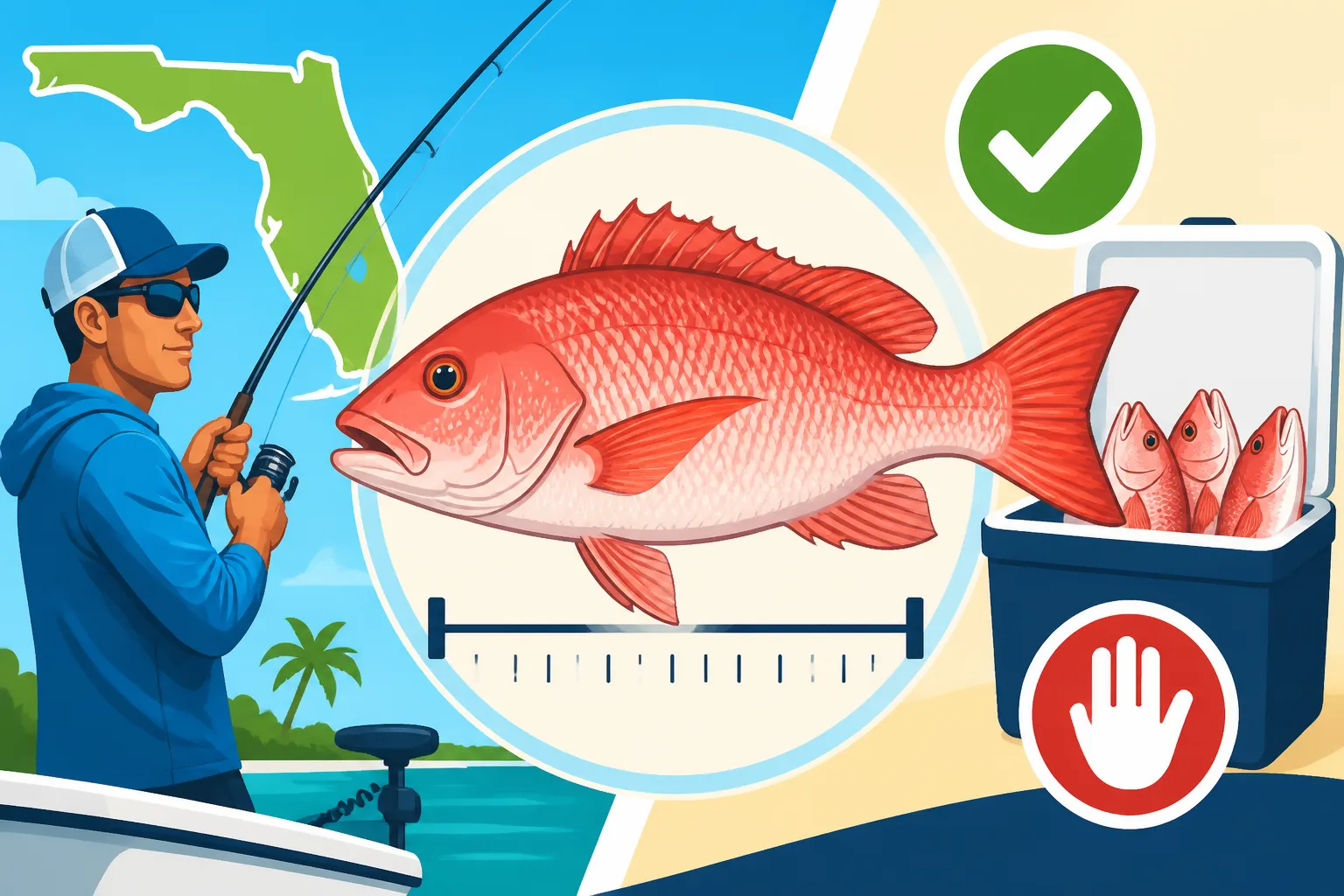
One of the most crucial rules you need to follow when targeting red snapper is the minimum size limit. This regulation is designed to protect juvenile fish, allowing them to grow large enough to spawn at least once, contributing new fish to the population before they can be harvested. Catching an undersized fish happens to everyone, but knowing how to measure correctly and what to do when it occurs is key.
Measuring Your Catch Correctly
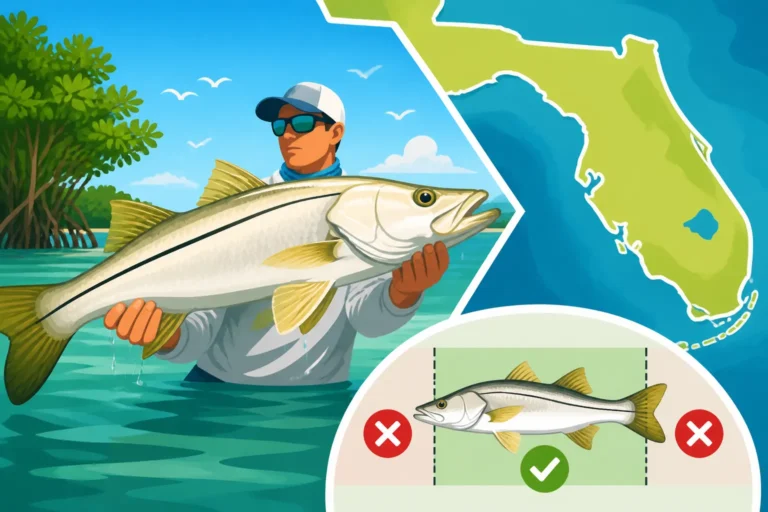
When you pull a red snapper aboard, the first thing to do (after admiring its beauty, of course!) is to measure it accurately. Florida’s red snapper size limits are typically measured as "total length," which means from the most forward point of the head to the farthest tip of the tail, with the tail squeezed together. You want to lay the fish flat on a measuring board or against a tape measure, ensuring you're getting an honest measurement. Having a reliable, easy-to-read measuring device is essential – you can find a wide variety of sturdy fish rulers and measuring mats on Amazon that are perfect for this. Don't eyeball it; an inch can make all the difference, and a conservation officer certainly won't accept "close enough" as an excuse.
Penalties for Undersized Fish
Let's be blunt: keeping an undersized red snapper is a serious offense, and the consequences can be steep. Florida Fish and Wildlife Conservation Commission (FWC) officers are out there, and they take these regulations very seriously. If you're caught with an undersized fish, you could face hefty fines, confiscation of your catch and gear, and even the loss of your fishing privileges. It's simply not worth the risk. If you catch a fish that's too small, dehook it carefully while it's still in the water or as quickly as possible on deck, and then release it immediately. Every released fish is a potential future keeper, so handle them with care. Our detailed article on Red Snapper Minimum Size gives even more precise information on current regulations.
Understanding Red Snapper Bag Limits in Florida
Beyond size, you also have to pay close attention to bag limits. This rule dictates how many red snapper each person can keep per day. It’s a vital tool for managing the total number of fish harvested, preventing any single angler or group from taking too many and putting undue pressure on the stock.
Individual vs. Vessel Limits
When it comes to bag limits, Florida typically sets a "per person" limit, often one or two fish per person per day during the open season. However, there can also be a "vessel limit," which is the maximum number of fish that can be on a single boat, regardless of how many people are aboard. For example, if the limit is one fish per person, and you have six people on your boat, your boat might be allowed to keep six fish. But if you have ten people on board, and the vessel limit is six, you can still only keep six fish total. It’s important to clarify both before you head out, especially if you're fishing with a larger group. These limits are designed to make sure that everyone gets a fair shot and that the resource isn't over-harvested.
Catch-and-Release Considerations
Even if you’ve already filled your bag limit, you might still hook into another red snapper. In such cases, it's absolutely crucial to practice proper catch-and-release techniques. Red snapper live in deeper waters, and when brought to the surface quickly, they can suffer from barotrauma – a condition caused by the rapid change in pressure, which can inflate their swim bladder and push out their stomach or eyes. To give these fish the best chance of survival, use dehooking tools to minimize handling and consider using a descending device or venting tool to help them recover and swim back down. These tools are readily available on Amazon and are a small investment for the health of the fishery. Remember, even if you can't keep them, every fish deserves to be treated with respect.
State vs. Federal Waters: A Critical Distinction for Red Snapper
This is where things can get particularly confusing, so pay close attention. Florida has its own set of fishing regulations for state waters, but once you venture into federal waters, the rules change, and federal agencies like NOAA Fisheries take over. For red snapper, these differences are incredibly important, and misunderstanding them can land you in serious trouble.
Defining the Boundaries
In the Gulf of Mexico, Florida's state waters extend 9 nautical miles from shore. Beyond that, you're in federal waters. On the Atlantic coast, state waters only extend 3 nautical miles from shore. It’s a significant difference that often catches anglers off guard. Many popular fishing spots for red snapper are in federal waters, especially in the Gulf. This means that a charter boat leaving a Florida port might be fishing under federal regulations for the majority of their trip, even if they started in state waters. Always know your GPS coordinates and refer to nautical charts to understand exactly where you are fishing. State Waters vs Federal Waters Fishing Rules in Florida provides an even deeper dive into this often-misunderstood topic.
Navigating the Different Rules
The reason this distinction is so critical for red snapper is that state and federal seasons, size limits, and bag limits often differ. Sometimes, Florida will have an extended red snapper season in state waters after the federal season has closed, or vice-versa. Or, one might have a slightly different size limit. You absolutely must know which jurisdiction you are in and adhere to those specific rules. If you're heading out with a fishing charter, your captain will handle all this for you, as they are professionals who live and breathe these regulations. But if you're running your own boat, the responsibility falls squarely on your shoulders. Checking the FWC website (for state waters) and the Gulf of Mexico Fishery Management Council or South Atlantic Fishery Management Council websites (for federal waters) right before your trip is non-negotiable.
Red Snapper Season Dates: Why They Vary So Much
If there’s one thing guaranteed to spark discussion among Florida anglers, it’s the red snapper season dates. They seem to shift every year, and often feel incredibly short. This isn't arbitrary; it's a direct result of complex scientific assessments and management goals.
Gulf of Mexico Specifics
The Gulf of Mexico red snapper season is notorious for being brief, often just a few weeks or even a handful of weekend days, especially for recreational anglers. This is largely due to the robust recovery of the Gulf red snapper population, which has led to a much higher harvestable quota. However, because so many anglers want to catch these fish, that quota gets met very quickly. Federal managers, in conjunction with state agencies, work hard to forecast when that quota will be reached and set the season accordingly. It’s a juggling act to provide fishing opportunities while ensuring the total catch stays within sustainable limits. Our article, Why Red Snapper Season Is So Short in the Gulf, elaborates on the factors at play here.
Atlantic Coast Specifics
The Atlantic red snapper fishery has a different story. Historically, populations on the Atlantic side were in much worse shape, leading to prolonged closures. While the population is showing signs of recovery, seasons on the Atlantic coast tend to be even more conservative and shorter than in the Gulf, if they are open at all. This difference in management reflects the different stock assessments and recovery rates for the two distinct populations. Why Atlantic Red Snapper Season Differs From Gulf Season offers more context. Always check both state and federal regulations for the Atlantic before planning a trip, as you might find some years are entirely closed to harvest, while others offer very limited windows.
How Seasons Are Announced and Tracked
Knowing when the season will open (and close!) requires diligence. The Florida Fish and Wildlife Conservation Commission (FWC) typically announces state water seasons well in advance. For federal waters in the Gulf, NOAA Fisheries, working with the Gulf of Mexico Fishery Management Council, makes the announcements. These often come out just a few months before the season starts, or even closer to the date, which can be challenging for planning. The best way to stay informed is to sign up for email alerts from FWC and NOAA Fisheries, and regularly check their websites. Many tackle shops and fishing forums also spread the word, but always verify information directly from the official sources.
| Category | Gulf of Mexico State Waters | Gulf of Mexico Federal Waters | Atlantic State Waters | Atlantic Federal Waters |
|---|---|---|---|---|
| Boundary from Shore | 9 nautical miles | > 9 nautical miles | 3 nautical miles | > 3 nautical miles |
| Typical Season | Variable, often short | Variable, often very short | Very limited or closed | Very limited or closed |
| Bag Limit | Usually 1-2 fish per person | Usually 1-2 fish per person | Varies (often 1 or 0) | Varies (often 1 or 0) |
| Minimum Size Limit | Varies | Varies | Varies | Varies |
| Governing Authority | FWC | NOAA Fisheries (GMFMC) | FWC | NOAA Fisheries (SAFMC) |
| Primary Method | Offshore Bottom Fishing | Offshore Bottom Fishing | Offshore Bottom Fishing | Offshore Bottom Fishing |
| Tools for Release | Descending devices | Descending devices | Descending devices | Descending devices |
Responsible Angling: Gear and Best Practices for Red Snapper
Catching red snapper is a fantastic experience, but because of the specific challenges of deepwater fishing and their status as a managed species, responsible angling practices are more important than ever. Being a good steward of the resource means using the right gear and techniques to ensure the survival of released fish.
Minimizing Barotrauma
As mentioned earlier, barotrauma is a major concern when deep dropping for red snapper. When you reel a fish up from 100 feet or more, the pressure change can cause its internal organs to expand. This makes it difficult for the fish to swim back down, leaving it vulnerable to predators or death. Using a descending device (like a seaqualizer, pressurezeer, or simple weighted hook system) to send the fish back down to depth is highly recommended. Many captains and serious anglers consider these essential tools. You can find various options for descending devices and venting tools on Amazon, and familiarizing yourself with their use before you hit the water is a smart move. When bringing the fish up, try to do so at a steady, not excessively fast, pace, and avoid excessive fight time if possible.
Choosing the Right Gear for a Quick Release
Selecting the appropriate tackle can also make a big difference in ensuring a healthy release. Heavy-duty conventional gear with strong braided line and a fluorocarbon leader is typically used for red snapper. This setup allows you to quickly bring fish to the surface, reducing the fight time and subsequent stress. Using circle hooks is also a non-negotiable best practice for red snapper and many other reef fish. Circle hooks are designed to hook fish in the corner of the mouth, greatly reducing the chance of gut-hooking, which significantly improves a fish's survival rate upon release. Always opt for circle hooks when bottom fishing. Bottom Fishing Technique for Snapper offers great advice on how to rig your setup properly. Don't skimp on quality; good hooks and strong line mean less broken off gear in the water and more successful, healthy catches.
Navigating the regulations for Florida red snapper can feel like a lot, but with a bit of homework and the right approach, you'll be well on your way to enjoying a successful and responsible fishing trip. Always double-check those current regulations right before you leave the dock, because these seasons can change quickly!
Disclaimer
This article is for general informational purposes only and does not constitute professional advice. Laws, prices and regulations vary by location and change over time. Consult a qualified professional for guidance on your specific situation.