Best Time to Avoid Afternoon Storms While Fishing
Florida afternoon storms driven by summer heat and sea breeze convergence explained for planning safer fishing trips.
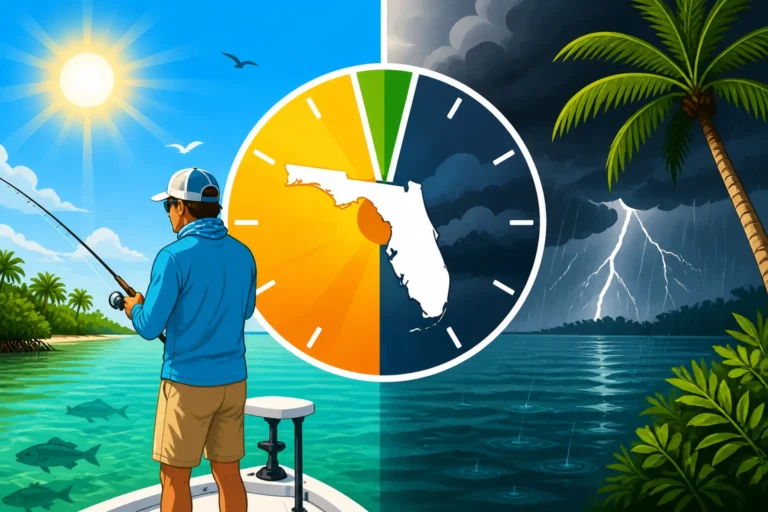
Florida afternoon storms driven by summer heat and sea breeze convergence explained for planning safer fishing trips.
Florida summer thunderstorms affect fish behavior and water temperature, dictating strategic fishing times and safety measures.
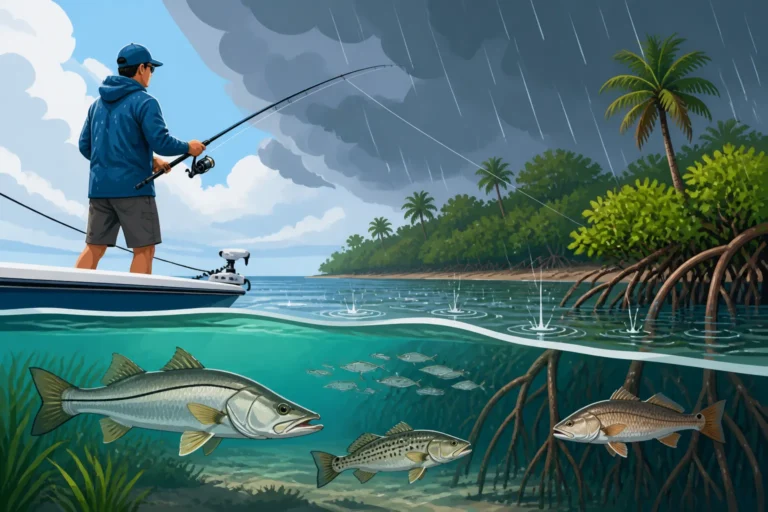
Rain alters temperature, clarity, and salinity in Tampa Bay and Indian River Lagoon, changing snook and redfish behavior.
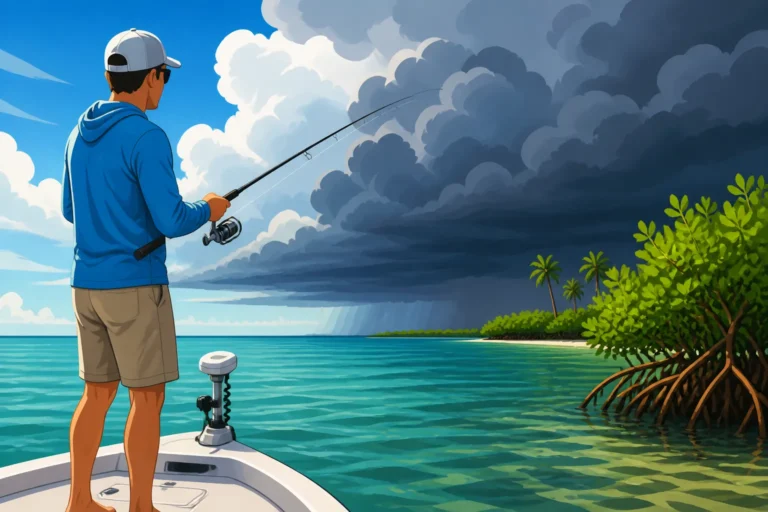
Falling barometric pressure triggers aggressive feeding in snook, redfish, trout, and bass before an approaching storm arrives.
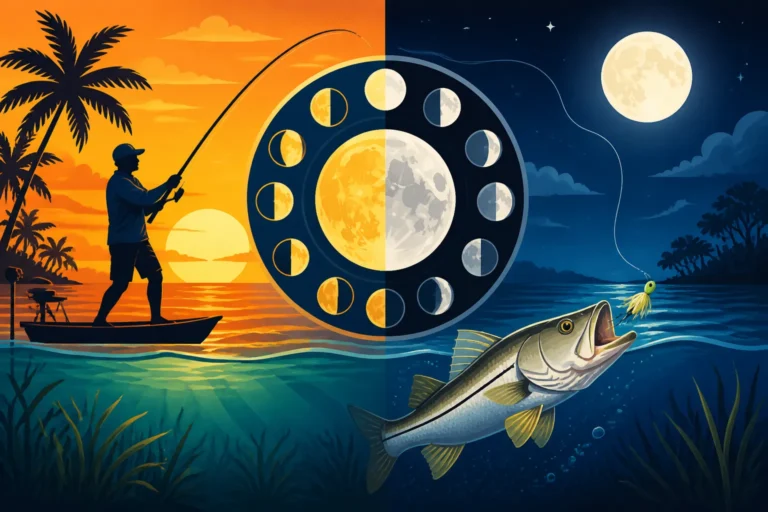
Moon phase impacts on Florida fishing, including Tampa Bay tides and moonlight for snook and redfish, explain fish behavior.
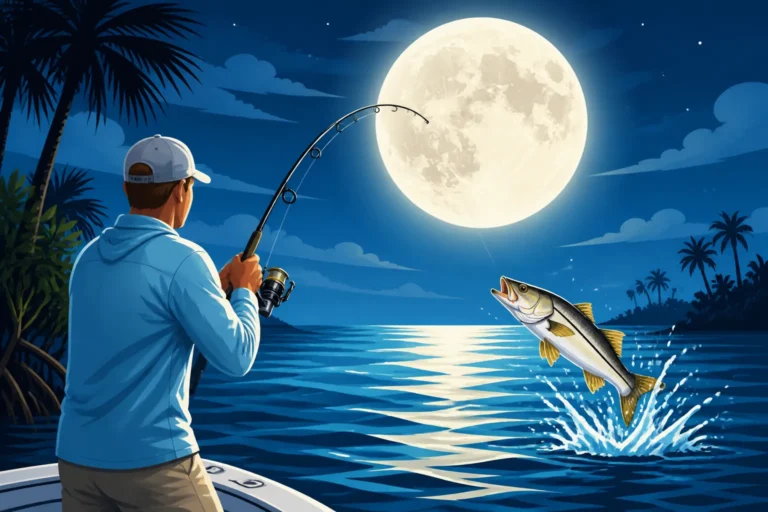
Florida full moon fishing strategies explain tidal extremes, lunar pull, and nocturnal feeding habits for snook and bass.
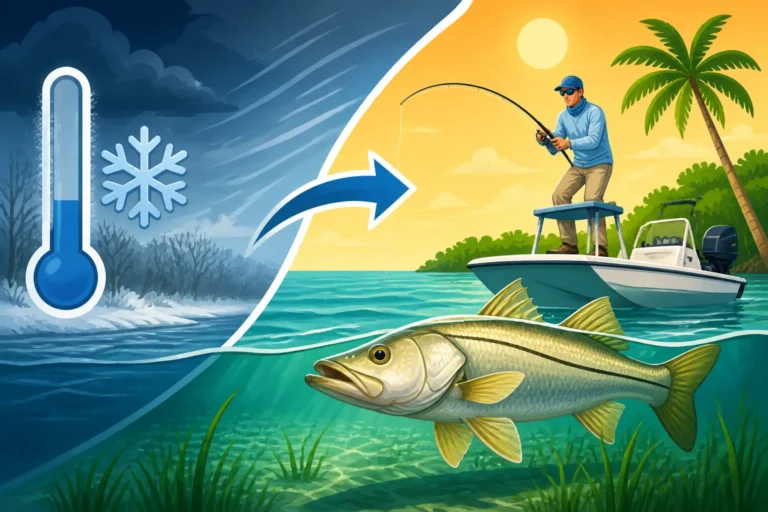
Florida game fish behavior changes after a cold front drops shallow water temperatures by up to twenty degrees.
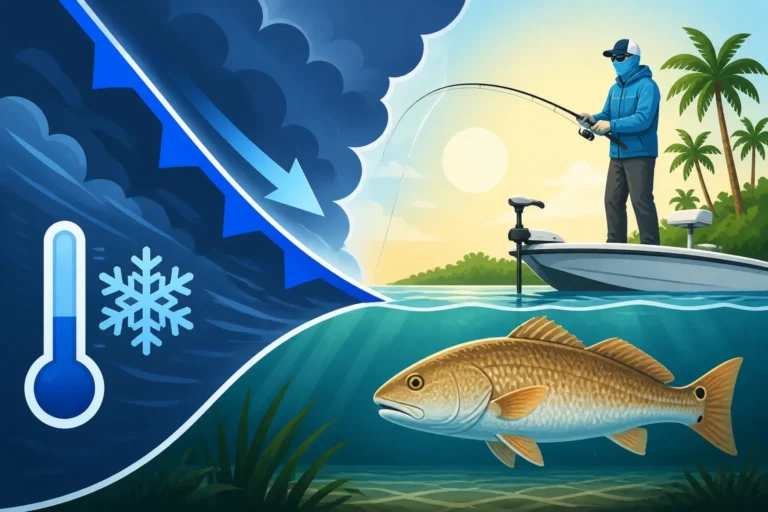
Florida winter cold fronts drop water temperatures rapidly, causing fish to become lethargic and alter their feeding behavior.
Hot weather changes fish metabolism and oxygen levels, shifting Florida summer fishing patterns to dawn, dusk, and night hours.

Proper on-boat fish handling methods and coolers protect your Florida catch from warm air, bacteria, and rapid spoilage.