Best Time to Avoid Afternoon Storms While Fishing
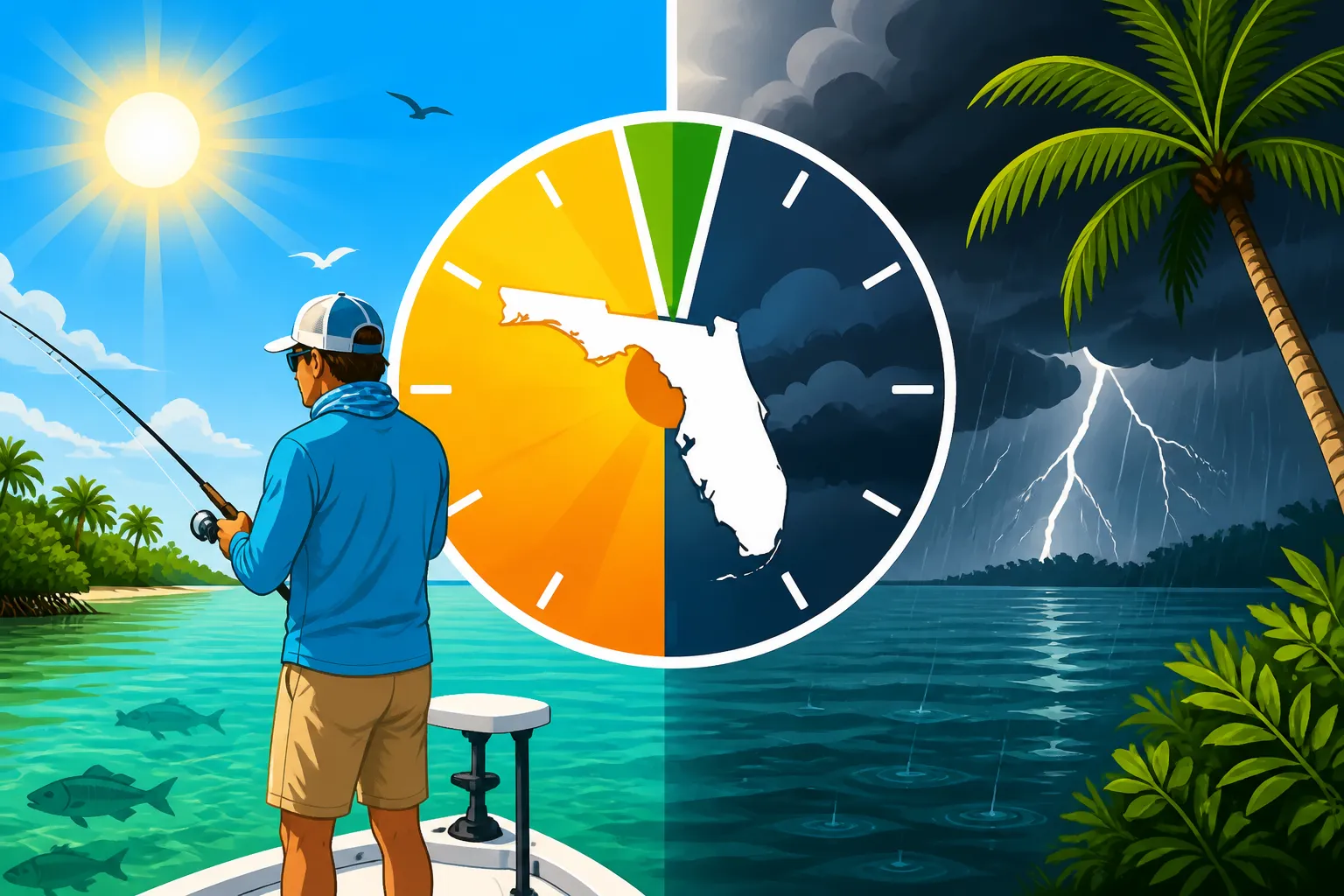
Oh, the classic Florida afternoon thunderstorm! If you've spent any time fishing in the Sunshine State, you know that feeling: the morning starts clear and beautiful, then around lunchtime, those innocent-looking cumulus clouds start to build, and before you know it, the sky is rumbling and the rain is coming down in sheets. It can quickly turn a peaceful day on the water into a dash for safety, ruining your fishing plans and potentially putting you in harm's way. This guide is all about helping you understand these predictable weather patterns so you can schedule your fishing trips smarter, making the most of your time on Florida's incredible waters while staying safe.
Understanding Florida's Weather Patterns and Afternoon Storms
Florida's weather is famous for its afternoon thunderstorms, especially during the warmer months. These aren't just random occurrences; they follow a pretty consistent pattern driven by the state's unique geography and climate. Knowing this pattern is your first line of defense in avoiding them.
The Anatomy of a Florida Summer Storm
Most of those intense, pop-up thunderstorms we experience in Florida, particularly from late spring through early fall, are what we call "convective" storms. They're born from heat and humidity, which Florida has in abundance. Here's how it usually plays out:
- Morning Sun and Heat: The day often starts with clear skies. The sun beats down, heating the land and the vast bodies of water surrounding Florida. This warm air, especially over land, begins to rise.
- Sea Breeze Convergence: This is the real star of the show. As the land heats up faster than the ocean or gulf, the cooler, denser air over the water starts to move inland to replace the rising warm air. This is the sea breeze, and Florida, being a peninsula, gets two of them pushing inland from opposite coasts. When these two sea breezes collide somewhere over the interior of the state, they force even more warm, moist air upwards.
- Cloud Formation and Build-up: This rising, moisture-rich air cools as it ascends, condenses, and forms towering cumulus clouds. These quickly develop into cumulonimbus clouds – the massive, dark thunderheads we all recognize.
- The Downpour: Once these clouds reach a critical mass, usually by early to mid-afternoon, they unleash their energy in the form of heavy rain, lightning, and often gusty winds. These storms can be incredibly localized, dumping inches of rain in one spot while a mile away, it's barely sprinkling.
This whole process is why so many Floridians jokingly set their watches by the 3 PM thunderstorm during summer. It's a daily ritual in many parts of the state.
Seasonal Variations in Storm Activity
While the summer (roughly June through September) is definitely peak season for these afternoon deluges, Florida's weather isn't entirely static.
- Summer (June – September): This is the prime time for those classic, sea-breeze driven afternoon thunderstorms. High humidity, intense heat, and the regular convergence of sea breezes make them almost a daily occurrence. If you're planning a fishing trip during these months, morning is absolutely your best friend. Even if a storm isn't directly overhead, the humidity can be oppressive, so consider How Hot Weather Affects Summer Fishing in Florida might impact your strategy.
- Fall (October – November): As the temperatures start to cool slightly and cold fronts become more frequent, the sea breeze effect weakens. While you can still get pop-up showers, the intense, widespread afternoon thunderstorms become less common. You might find longer stretches of clear weather, making for more flexible fishing hours.
- Winter (December – February): Winter sees the fewest afternoon thunderstorms. Cold fronts are the dominant weather pattern, often bringing stable, drier air. When rain does occur, it's typically associated with a frontal system passing through, bringing widespread but often less intense rain for a longer duration, rather than a quick, violent afternoon storm. This can be a fantastic time for fishing, especially when considering Fishing After a Cold Snap in Florida.
- Spring (March – May): Spring is a transitional period. Early spring can feel a lot like winter, with clear, cool days. As May approaches and temperatures climb, the sea breeze storms start to make their return, building up in frequency as summer nears.
Why Afternoon is Peak Time for These Storms
The reason afternoons are the peak time ties directly into the "anatomy" we just discussed – it's all about the sun's energy. The land needs time to absorb enough solar radiation to really heat up. Typically, the maximum surface heating occurs in the early afternoon, usually between 1 PM and 3 PM. This is when the temperature difference between the land and the surrounding water is greatest, leading to the strongest sea breeze development and subsequent convergence.
Think about it like boiling a pot of water: it doesn't just instantly boil. It needs time to absorb heat before it starts bubbling. Similarly, Florida's atmosphere needs several hours of intense solar heating to generate the convective energy required to build those massive storm clouds. By late afternoon, the sun starts to drop, the heating diminishes, and the storms, having expended their energy, usually dissipate, leaving behind a refreshed, cooler evening.
Strategies for Scheduling Your Fishing Trip to Avoid Storms
Knowing why Florida's afternoon storms happen is helpful, but the real trick is knowing how to use that knowledge to plan your fishing adventures. It's all about proactive scheduling and constant vigilance.
The Early Bird Gets the Fish
This is arguably the most critical piece of advice for summer fishing in Florida: fish early. The period from dawn until about noon or 1 PM is generally your safest bet for avoiding the worst of the afternoon storm activity.
- Calmer Waters and Cooler Temps: Mornings often bring calmer winds and cooler air temperatures, which not only make for a more pleasant fishing experience for you but also tend to be prime feeding times for many species before the heat of the day sets in. Fish like snook, redfish, and trout are often more active in the cooler, lower light conditions of early morning. You might even find it's the Best Time of Day to Fish in Florida.
- Less Storm Development: As we explored, the atmospheric conditions conducive to storm development haven't fully ramped up yet in the early morning. The land hasn't had enough time to heat up significantly, and the sea breezes are typically still forming or haven't fully converged with enough intensity to trigger widespread storm activity. By getting out on the water at first light and planning to be off or very near a safe harbor by early afternoon, you drastically reduce your chances of being caught in a squall.
- Maximizing Productive Hours: Even if a storm does eventually roll in during the late afternoon, you've already maximized your productive fishing hours. You've had a solid morning of casting, reeling, and hopefully, catching, allowing you to retreat gracefully rather than frantically.
Monitoring Weather Forecasts and Radar
While the "fish early" rule is a great general guideline, technology offers invaluable tools for fine-tuning your plans. Never head out without checking the forecast, and certainly don't rely on just one source.
- Hourly Forecasts: Pay close attention to hourly forecasts for your specific fishing location. Many weather apps and websites provide detailed predictions for precipitation chances, wind direction, and wind speed hour by hour. Look for the predicted "rain chance" percentages and the timing of any expected thunderstorms. If you see probabilities climbing above 30-40% by noon, it's a strong indicator that afternoon storms are likely.
- Radar Applications: This is your secret weapon. Live weather radar allows you to see exactly where storms are forming and moving. Applications like the NOAA Weather Radar Live or the local news apps are fantastic for this. Before you leave the dock, check the radar. While you're on the water, pull it up frequently on your phone or marine electronics if you have them. Look for:
- Developing Cells: See small, isolated green areas starting to pop up? Keep an eye on them. Green indicates light rain, yellow is moderate, and red/purple means heavy downpours and potential severe weather.
- Direction of Movement: Most storms in Florida move from east to west or northeast to southwest, pushed by the prevailing winds aloft. Knowing this can help you predict if a storm developing inland is heading towards your fishing spot or if one offshore is moving towards the coast.
- Clear Lanes: Sometimes, there will be clear lanes between storm cells. If you're on a larger body of water, knowing where these gaps are might help you navigate to a safer area, but always err on the side of caution.
- Marine Forecasts: For saltwater anglers, don't just look at the land forecast. Always check the marine forecast which provides details on wave height, sea state, and specific wind predictions for coastal waters. These can be crucial for offshore trips or even nearshore fishing when high winds can make conditions unsafe.
- Weather Radios: Having a small, battery-powered weather radio, especially a NOAA weather radio, is a wise backup, especially if you venture into areas with spotty cell service. These provide continuous broadcasts of local weather information and alerts. Many anglers also find waterproof cases for their phones handy, which you can find on Amazon.
Local Knowledge and Reading the Sky
Even with all the modern tech, nothing beats good old-fashioned local knowledge and the ability to "read the sky." Experienced Florida anglers develop an instinct for predicting weather.
- Talk to the Locals: Before you launch, chat with bait shop owners, other anglers at the ramp, or even your fishing guide. They often have an intimate understanding of micro-climates and how specific areas tend to get impacted by storms. They'll tell you if it's "looking squally" today. If you're considering a trip to a specific area like the Everglades, talking to a guide familiar with Flamingo Everglades Fishing Guide-specific weather patterns is invaluable.
- Cloud Watching 101:
- Puffy White Clouds: These are normal cumulus clouds, often indicating fair weather, but if they start building vertically and horizontally quickly after lunchtime, they're signaling trouble.
- Darkening Bases: If the underside of the clouds starts to darken and look ominous, that's a red flag.
- Anvil Shape: A cumulonimbus cloud with a flat, anvil-shaped top indicates a mature thunderstorm that's actively producing lightning and heavy rain.
- Mammatus Clouds: These bubbly, pouch-like formations on the underside of a storm cloud often indicate severe weather and strong downdrafts.
- Wind Shifts: Pay attention to wind shifts. A sudden, noticeable change in wind direction, especially if it shifts from a steady sea breeze to a swirling or gusty pattern, can precede a storm. If the wind suddenly dies down to an eerie calm, it can also be a precursor to a strong downdraft from a nearby storm.
- Humidity Spike: Sometimes, you can feel the air get heavier and muggier just before a storm cell approaches. Your skin might feel sticky, and the air seems to hang motionless.
- Barometer Reading: While not as immediate as radar, a steadily falling barometer reading throughout the morning indicates a higher probability of storm development. Some modern marine GPS units include a barometer, or you can get a standalone unit.
Here's a quick comparison of planning strategies:
| Strategy | Best Use Case | Key Advantage | Limitations |
|---|---|---|---|
| Early Morning Start | All fishing trips, especially summer/spring | Avoids peak storm development hours, cooler temps | Requires early wake-up, storms can form early |
| Hourly Forecasts | General planning, specific timing for rain chances | Provides predictive data, easy access | Can be inaccurate for localized pop-up storms |
| Live Weather Radar | On-the-fly decision making, monitoring storm movement | Real-time visual of actual storm activity | Requires good cell signal or marine electronics |
| Local Knowledge | Understanding micro-climates, general trends | Insight from experienced locals, nuanced advice | Not always available, can be anecdotal |
| Reading the Sky/Winds | Constant personal vigilance, immediate warning | No tech needed, direct observation | Requires experience to interpret accurately |
What to Do If You're Caught in a Storm (Safety First!)
Despite all your best planning and monitoring, sometimes Florida weather throws a curveball. You might be out there, having a fantastic time, when suddenly, the sky turns dark faster than you expected. In these situations, safety becomes your absolute top priority. No fish is worth risking your life.
On the Water Safety Protocols
If you find yourself caught in a sudden storm while on your boat, here are the crucial steps to take:
- Seek Shelter Immediately: The moment you see lightning or hear thunder, or if the clouds are building rapidly and look menacing, head for the nearest safe harbor, marina, or even a sturdy bridge. Don't wait until the downpour starts. If you're far offshore, sometimes heading towards a major port or a large, protected cove is the best bet.
- Lightning Safety: This is the biggest threat. Lightning can strike anywhere on the water.
- Avoid Tall Objects: Stay away from your boat's tallest points (t-tops, rod holders, antennas, outriggers) if possible.
- Stay Low and Dry: Get low in the boat, preferably in a cabin if you have one. If not, sit on a cushion or anything that provides insulation from the boat's hull.
- Don't Touch Metal: Avoid contact with metal parts of the boat, including your fishing rods. Put all rods away in a horizontal position. Many anglers carry a designated "lightning rod" of PVC pipe to stand taller than other metal objects on the boat, but this is a controversial practice and relying on getting off the water is always superior.
- Disconnect Electronics: If practical, disconnect sensitive electronic equipment (GPS, fish finder, radio) from antennas to protect them from surges.
- Secure Loose Gear: Before the winds and rain pick up, make sure everything is stowed and secured. Rods, tackle boxes, coolers, hats – anything that can blow away or shift needs to be tied down or placed in a secure compartment. A sudden gust can turn a tackle box into a dangerous projectile.
- Head into Waves (If Necessary): If the seas become rough, try to orient your boat to take the waves on the bow (front) at a slight angle. This helps to reduce pounding and prevents waves from breaking over the stern (back), which can swamp the boat. Reduce your speed to a safe level, just enough to maintain steerage.
- Life Jackets On: Ensure everyone on board is wearing a U.S. Coast Guard-approved life jacket, especially if conditions are deteriorating rapidly. Even strong swimmers can be quickly overcome in rough seas.
- Communicate: Let someone on shore know your situation. Use your VHF radio (channel 16 for emergencies) or your cell phone if you have service. Tell them your location and your intentions.
Remember that Florida Charter Boat Fishing License Rules, while usually covering the angler on a guided trip, don't protect you from the weather. Your captain will prioritize your safety, but you should also be aware.
Shoreline and Pier Safety Tips
If you're fishing from a pier, bridge, or the shoreline, you still need to take storms seriously.
- Piers are Lightning Rods: Piers, especially those with tall light poles or structures, are extremely dangerous during a lightning storm. The moment you hear thunder or see lightning, get off the pier immediately. Don't linger to pack up your gear; grab essentials and go. Many popular spots, like those discussed in Best Pier Fishing Spots in Florida, have specific weather protocols.
- Seek Sturdy Shelter: Head for a permanent, enclosed structure, like a designated storm shelter, a visitor center, or your car. A car with windows rolled up provides good lightning protection (the metal cage acts as a Faraday cage). Avoid isolated trees, small open-sided gazebos, or flimsy structures – these offer little to no protection.
- Distance from Water: While on shore, try to move away from the immediate waterfront. Lightning can strike the water and travel through it, so being close to the water's edge can still be risky.
- When to Call It a Day: If the weather forecast is grim, or if you see consistent storm development, don't try to "wait it out." Sometimes, the best fishing decision is to call it a day and reschedule. There's always another day to catch fish, but you only have one life.
Essential Gear for Unexpected Weather
Being prepared with the right gear can make an unexpected storm much more manageable, even if you can't entirely avoid it.
- Quality Rain Gear: A good set of waterproof and windproof rain gear is essential. This includes a jacket and pants. Modern fishing rain gear is breathable, so it won't feel like you're wearing a sauna suit. Brands like Frogg Toggs or Grundens offer excellent protection.
- Dry Bag: Keep your phone, wallet, keys, and any other water-sensitive electronics or documents in a waterproof dry bag. You can find many options on Amazon that are affordable and effective.
- First Aid Kit: Always have a basic first aid kit on board or in your tackle bag. Storms can bring rough conditions, and minor injuries are more likely.
- Communication Devices:
- VHF Radio: For boaters, a marine VHF radio is crucial. It works beyond cell service range and allows direct communication with the Coast Guard and other vessels.
- Fully Charged Cell Phone: While not always reliable offshore, a fully charged cell phone is vital for contacting family or emergency services in areas with coverage. Consider a portable power bank for recharging, also readily available on Amazon.
- Whistle or Air Horn: In case of fog or distress, these can help you signal your location.
- Extra Layers: Even in Florida, a strong storm can drop temperatures quickly. Having a dry long-sleeved shirt or light jacket packed in your dry bag can be a comfort.
- Sun Protection (Even on Stormy Days): Don't forget sunscreen and a hat. Even on cloudy or stormy days, UV rays can still penetrate, and you might spend hours under the sun before the storm hits. It's an often-overlooked aspect of What to Bring on a Florida Fishing Charter.
By understanding the rhythms of Florida's weather, planning your trips strategically, and being prepared for the unexpected, you can significantly increase your chances of having a successful and, most importantly, safe fishing experience in the Sunshine State.
Disclaimer
This article is for general informational purposes only and does not constitute professional advice. Laws, prices and regulations vary by location and change over time. Consult a qualified professional for guidance on your specific situation.