Where Fish Go During a Cold Snap in Florida
When a cold snap hits Florida, it can feel like the fishing just shuts down completely. One day you're having a blast reeling in snook or bass, and the next, the water feels like a freezer, and you can't get a bite to save your life. It’s a common frustration for anglers, both seasoned and new, because our warm waters usually mean consistent action. But the truth is, the fish don't just vanish into thin air; they simply change their behavior and relocate to specific, more hospitable areas. This guide will dive deep into understanding these environmental shifts and reveal where different Florida fish species retreat during those chilly conditions, helping you adapt your strategies and still find success on the water.
Understanding Florida's Cold Snaps and Their Impact on Fish
Florida is famous for its sunshine and warm weather, but every now and then, especially from late fall through early spring, we get hit with a cold snap. These events can drastically change the fishing scene almost overnight. Understanding what a cold snap actually means for our unique ecosystem and why fish react the way they do is the first step to figuring out where they've gone.
What Constitutes a "Cold Snap" in Florida?
Unlike up north where cold is the norm, a "cold snap" in Florida doesn't necessarily mean freezing temperatures for weeks on end. Here, it’s all about the sudden and significant drop in water temperature. A typical Florida winter day might see air temperatures in the 60s or 70s, keeping our shallow waters relatively comfortable. A cold snap, however, is characterized by persistent air temperatures dipping into the 40s or even 30s for several days, often accompanied by strong northerly winds.
This kind of weather rapidly cools the shallowest waters first, like those expansive grass flats and skinny canals. The impact is most profound in areas that rely heavily on solar radiation to maintain their warmth. While a few degrees might not seem like much to us, for a fish, it can be the difference between a comfortable feeding zone and a life-threatening environment. The longer and more severe the cold air persists, the more extensive the water temperature drop becomes, pushing fish to seek out any available thermal refuge.
Why Fish React So Drastically to Temperature Changes
Fish are what we call poikilothermic, or cold-blooded, which means their body temperature is regulated by the temperature of the water around them. They don't have the internal furnace to generate their own heat like mammals do. Because of this, even a slight change in water temperature can have a profound effect on their physiology and behavior.
When water temperatures drop significantly, a fish's metabolism slows down dramatically. Imagine trying to run a marathon in freezing mud – you just can't perform at your peak! Their digestion slows, their need to feed decreases, and their overall activity levels plummet. This lethargy makes them much less likely to chase down prey or strike at a fast-moving lure. Beyond metabolism, extreme cold can directly stress fish, impacting their immune systems and making them vulnerable to disease. In severe, prolonged cold snaps, especially in very shallow waters, fish can become stunned or even die due to thermal shock. This is why you'll often hear about What Happens to Snook During a Cold Snap? and the protective measures taken during these times. Their instinct kicks in, driving them to find warmer, more stable water to conserve energy and survive.
Freshwater Fish: Seeking Refuge from the Chill
Florida's freshwater systems, from vast lakes to intricate canal networks, are incredibly diverse. When the mercury drops, the fish inhabiting these waters employ various strategies to cope with the cold, often moving to specific areas that offer a thermal advantage.
Deep Water and Structure for Bass and Panfish
For our beloved largemouth bass, and many panfish species like bluegill and crappie, the initial reaction to a cold snap is often a move to deeper water. Think about it: deeper water has a greater thermal mass, meaning it cools down much slower than the shallow, exposed flats.
Largemouth bass, in particular, will seek out the deepest available structures. This includes creek channels, submerged ledges, brush piles, and fallen timber. If you're fishing a lake like Lake Okeechobee, you'll find them retreating into the deeper channels that crisscross the lake, or congregating along the edges of hydrilla beds that drop off into deeper water. They become less active, often suspending in these deeper areas, conserving energy. Your presentation needs to be slow and deliberate, mimicking a struggling baitfish or worm. Instead of aggressive topwater bites, you'll be feeling subtle taps on a jig or a Texas-rigged worm.
Panfish, being smaller and more susceptible to temperature fluctuations, will also school up in these deeper, more stable environments. Look for them tightly packed around bridge pilings, under docks, or in the deeper pockets of retention ponds. Their metabolism slows to a crawl, and they might barely move to intercept a bait, making a tiny jig or a piece of live worm presented almost motionless key to success.
Canals and Runoff Ponds as Thermal Havens
South Florida's extensive canal systems become absolute magnets for many freshwater species during a cold snap. These canals, often with darker, muddy bottoms and surrounded by urban development, tend to absorb and retain heat better than larger, open bodies of water. The sheer volume of water in deeper canals also offers more thermal stability.
This is especially true for exotic species like the peacock bass, which are highly sensitive to cold water. They'll pack into deep canal bends, residential seawalls, and under bridges, sometimes in astonishing numbers, seeking any refuge from the chill. These areas become prime targets for anglers looking to catch these vibrant fish, though their activity will still be reduced. Targeting these fish often involves casting small jigs or slow-moving jerkbaits directly into these congregating zones.
Even smaller runoff ponds or community lakes, particularly those with deep sections and darker bottoms, can offer thermal havens. These areas might not seem like much, but the slightly warmer water can provide a critical sanctuary for bass, panfish, and even tilapia when temperatures plummet. Anglers should concentrate their efforts on the deepest parts of these ponds, especially those with some form of cover like submerged trees or culverts.
Saltwater Fish: The Great Migration and Deeper Retreats
The ocean and its estuaries are vast, but saltwater fish are just as sensitive to cold as their freshwater cousins. When a cold snap hits Florida's coasts, many species embark on a "great migration" to find warmer water, while others simply tuck into the deepest, most protected corners they can find.
Inshore Species: Snook, Redfish, and Trout in Their Winter Haunts
Our inshore superstars—snook, redfish, and spotted seatrout—are particularly vulnerable to cold snaps because they inhabit shallow estuaries that cool rapidly.
-
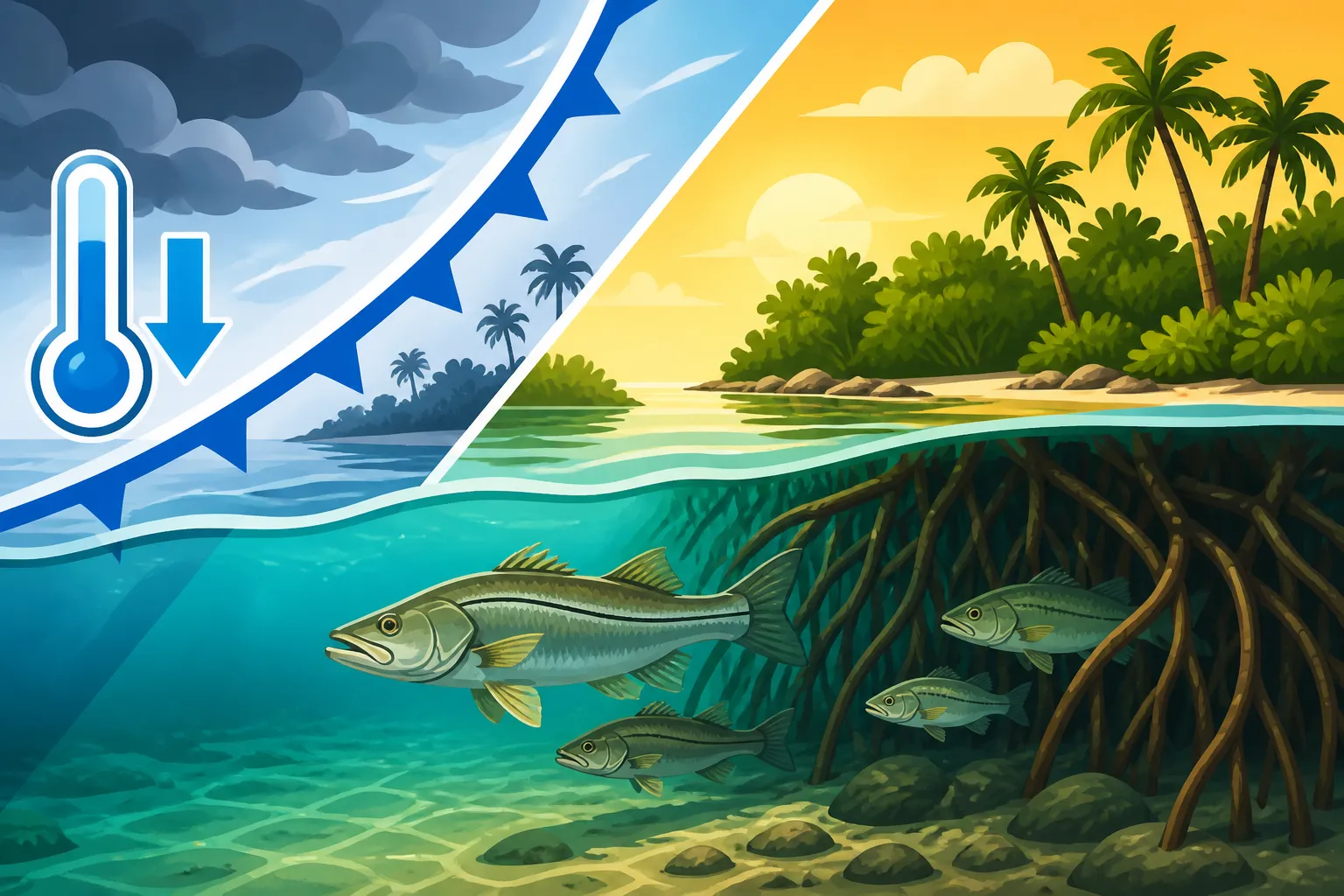
Snook: These tropical fish are notorious for their cold sensitivity. During a severe cold snap, snook will often make what anglers call the "snook slide." They'll move out of open bays and shallow flats and migrate en masse into residential canals, deep creek channels, river systems, and even around industrial warm-water discharges like those from power plants. These locations offer slightly warmer, more stable water. Finding them piled up in these areas can lead to incredible, albeit ethical, fishing. Many regions have Florida Snook Season Closures by Region during these colder months specifically to protect these vulnerable fish. When fishing for them, a slow presentation with live bait like shrimp or a MirrOLure suspending twitchbait can be incredibly effective.
-
Redfish: While a bit more tolerant of cold than snook, redfish still seek warmth. They'll move from open grass flats into deeper, protected coves, muddy-bottomed creek channels, and around oyster bars that absorb heat from the sun. Look for areas with dark mud bottoms, as these tend to warm up faster during sunny afternoons, even after a cold morning. Their metabolism will also slow, so a weighted jig with a Gulp! shrimp or a slow-fished cut bait like a chunk of mullet or ladyfish is a good bet. Consider how Best Bait for Redfish Fishing in Florida changes in colder water—often smaller, more natural presentations are preferred.
-
Spotted Seatrout: These popular inshore fish also shift their patterns. Instead of scattering across vast shallow flats, they'll congregate in deeper grass flats, potholes within those flats, and protected creek mouths. The mantra "deep grass" becomes key during winter. This is why we often explain Why Grass Flats Hold More Trout in Winter while conversely, Why Trout Move to Deeper Water in Summer to escape the heat. Trout become lethargic, so a slow-moving live shrimp under a popping cork, or a soft plastic grub jigged slowly along the bottom, can entice a strike.
The critical factor for these inshore species is finding areas with thermal stability. Tidal creeks with deep bends, residential docks that offer overhead cover and dark bottom, and protected backcountry bays often hold the warmest water and the most concentrated fish during these chilly periods.
Offshore Species: Moving Deeper or Further South
For species that typically inhabit offshore waters, the impact of a cold snap can vary, but generally, they also seek more stable thermal environments.
-
Grouper and Snapper: Fish like gag grouper, red grouper, and various snapper species (mangrove, lane, mutton) live on reefs, wrecks, and rocky bottoms in both state and federal waters. While they are in deeper, more stable water already, a severe surface cold snap can sometimes influence them to move to even deeper ledges or structures where water temperatures are more consistently warm. The general consensus is that these fish simply become less active and feed less aggressively rather than undertaking massive migrations. Anglers targeting them will need to use slower jigging techniques or present cut bait on the bottom with less animation. Knowing the seasonal patterns outlined in guides like Florida Grouper Season Guide and Florida Red Snapper Season Guide is still crucial, as these regulations often align with periods of fish vulnerability or spawning.
-
Pelagic Species: Highly migratory fish such as mahi-mahi (dolphin), king mackerel, and wahoo are generally less affected by localized cold snaps as they have the ability to move vast distances to stay in warmer water. When a cold front pushes down the Florida peninsula, these species will typically follow the warmer currents further offshore or south along the coast. If you're targeting these, you might need to run further out or head south to find where the warmer water mass is holding. This is why understanding larger oceanographic patterns is crucial for offshore anglers, particularly during transitional seasons.
Strategies for Anglers During a Cold Snap
Knowing where fish go is only half the battle; the other half is understanding how to catch them when they're hunkered down and lethargic. Adapting your techniques and choosing the right gear can turn a seemingly hopeless fishing day into a successful one.
Slowing Down Your Approach and Bait Presentation
During a cold snap, fish are often sluggish, conserving energy, and not actively chasing prey. This means your approach as an angler needs to mirror their subdued state.
- Slow Down Everything: Forget fast retrieves and aggressive topwater blow-ups. Think slow, slower, and then even slower. Whether you're fishing a soft plastic lure for bass or a jig for trout, minimal movement is key. Let the bait sit for extended periods on the bottom, or twitch it just enough to simulate a weak, injured prey item. This is particularly true for live baits as well. A frisky live shrimp might get ignored, but one that's barely kicking could be irresistible.
- Small and Natural: Smaller baits and lures often work best. A downsized jig, a tiny soft plastic, or a single live shrimp on a light wire hook can be more appealing to a lethargic fish than a large, imposing meal. For Best Bait for Snook Fishing in Florida or Best Bait for Redfish Fishing in Florida in cold conditions, consider smaller pilchards or scaled sardines, or even cut bait presented on the bottom.
- Patience is a Virtue: You'll need more patience than usual. Fish might take longer to decide to bite, and strikes can be incredibly subtle. Pay close attention to your line for the slightest twitch or unusual movement, which might be a fish mouthing the bait without fully committing.
- Check Water Temperatures: Carrying a simple water thermometer is invaluable. Knowing the exact temperature can help you pinpoint thermal refuges and confirm if an area is indeed warmer than surrounding waters. This precision can guide your efforts and make a significant difference.
Targeting Specific Locations Known for Winter Holds
As we've discussed, fish don't just randomly spread out; they concentrate in specific areas when it's cold. Your strategy should revolve around finding and effectively fishing these winter holds.
- Deep Pockets and Channels: Focus on the deepest parts of lakes, rivers, and canals. These areas offer thermal stability. For freshwater, this might be the bends in a river or the submerged creek channels in a large lake. In saltwater, target deep residential canals, protected marinas, and the deeper edges of oyster bars.
- Warm Water Discharges: If available, areas around power plant outflows or natural warm springs are absolute hot spots. The outflowing warm water creates an irresistible draw for cold-stressed fish, often leading to large congregations of snook, tarpon, and various other species.
- Dark Bottoms and Structure: Look for areas with dark mud or sand bottoms, as these absorb solar radiation and can warm up a few degrees more than light-colored bottoms. Docks, bridges, and seawalls also provide cover and can hold warmth, especially if they have deeper water underneath. Fishing areas with good structure concentration, even in otherwise shallow zones, can provide enough cover for fish to hunker down.
- Mid-Day Sunshine: Fish the warmest part of the day, which is usually mid-afternoon after the sun has had a chance to warm the water. Early mornings after a cold night can be particularly tough, as fish will be at their most lethargic.
Remember that adapting to these conditions is part of what makes Best Time of Year to Fish in Florida such a dynamic topic. While some times are easier, with the right approach, you can find success year-round.
Gear Considerations for Cold Weather Fishing
Beyond your typical rod and reel setup, a few gear considerations can make a significant difference in your comfort and success during a cold snap.
- Sensitive Rods and Line: Because bites can be incredibly subtle, a sensitive rod with a fast action will help you detect those faint taps. Pair it with a low-stretch line like braided line with a fluorocarbon leader (check out options on Amazon for great deals on these). Fluorocarbon is nearly invisible underwater and has excellent abrasion resistance, which is perfect when fishing around structure.
- Appropriate Lures: Stock your tackle box with lures designed for slow presentations. Suspending jerkbaits (which stay at a specific depth when paused), soft plastic jigs, and small, slow-sinking swimbaits are excellent choices. Don't forget live bait—shrimp, pilchards, or mud minnows can often outperform artificials when fish are finicky.
- Personal Comfort: This might seem obvious, but staying warm yourself is crucial for staying focused and patient. Layered clothing, waterproof outerwear, warm hats, and gloves are essential. You can find excellent quality insulated jackets and gloves on Amazon that are perfect for those surprisingly chilly Florida mornings. A thermos with hot coffee or soup can also be a real morale booster when the air is crisp. Remember, How Cold Fronts Affect Winter Fishing in Florida extends to angler comfort too!
| Fish Species | Typical Cold Snap Retreats | Preferred Bait/Lure (Cold Weather) | Key Tactics |
|---|---|---|---|
| Largemouth Bass | Deep channels, ledges, brush piles, submerged timber | Slow-fished jigs, Texas-rigged worms, suspending jerkbaits | Fish deepest structure, slow retrieve, long pauses |
| Peacock Bass | Deep canals, residential seawalls, under bridges | Small jigs, slow-moving jerkbaits, live shiners | Target concentrated schools, precise casts |
| Snook | Residential canals, deep creeks, rivers, warm water outflows | Live shrimp, MirrOLure suspending twitchbaits | Slow presentation, focus on structure/thermal holds |
| Redfish | Deeper channels, muddy bottoms, protected coves, oyster bars | Weighted jigs w/ soft plastics, cut bait (mullet, ladyfish) | Slow bottom retrieve, target dark, sun-warmed areas |
| Spotted Seatrout | Deeper grass flats, potholes, protected creek mouths | Live shrimp under popping cork, slow-jigged soft plastics | Work deep grass patiently, use light tackle |
| Grouper/Snapper | Deeper reefs, wrecks, offshore ledges | Live/cut bait on bottom rigs, slow vertical jigs | Deeper water fishing, less aggressive action |
Conclusion
A cold snap in Florida doesn't have to mean the end of your fishing trip. While it certainly changes the game, understanding where different fish species go to find refuge is the key to unlocking success. Whether it's bass retreating to deep lake channels, snook piling into warm-water canals, or redfish tucking into muddy creek bends, the fish are still there. They're just adapting to the conditions, and as savvy anglers, we need to adapt our strategies right along with them. By slowing down your presentations, focusing on those crucial thermal sanctuaries, and being patient, you can absolutely still enjoy productive and rewarding fishing, even when the thermometer takes an unexpected dip.
Disclaimer
This article is for general informational purposes only and does not constitute professional advice. Laws, prices and regulations vary by location and change over time. Consult a qualified professional for guidance on your specific situation.