Best Bait for Snook Fishing in Florida
If you've spent any time trying to land a snook in Florida, you know the frustration of throwing everything but the kitchen sink at them and coming up empty-handed. These intelligent, powerful fish can be incredibly picky, leaving many anglers scratching their heads about what bait truly works best. It's not just about what's alive or shiny; it's about presentation, timing, and understanding what makes a snook decide it's time to strike. This comprehensive guide is dedicated to demystifying the snook's palate, helping you choose the right bait to entice these elusive predators.
Deciphering the Snook's Dinner Preferences
Before we even talk about specific baits, it's vital to get inside the head of a snook. These fish aren't just swimming around waiting for any meal; they are ambush predators with a keen sense of their surroundings and a well-developed hunting strategy. Understanding their natural behavior will dramatically improve your bait selection and presentation, turning frustrating outings into productive ones.
Their Opportunistic and Varied Diet
Snook are incredibly opportunistic feeders, meaning they'll eat just about anything that presents itself as an easy meal, from small baitfish to crustaceans and even smaller invertebrates. Their diet largely depends on what's available in their immediate environment. If you're fishing in an area flush with pilchards, chances are snook there are accustomed to feeding on them. If shrimp are abundant, they'll happily slurp those up. This adaptability is what makes them such formidable predators and, at times, such a challenge for anglers. They don't stick to a single menu item, which means you need to be observant and flexible. The key takeaway here is to "match the hatch" – or, in fishing terms, match your bait to the predominant forage in the area you're targeting. This common-sense approach often yields the best results.
Habitat and Ambush Tactics
Snook are masters of camouflage and ambush. They love structure – think mangrove shorelines, dock pilings, bridge fenders, rock piles, and submerged fallen trees. These areas provide them with cover from which they can dart out and surprise unsuspecting prey. They often position themselves in current breaks or shaded areas, expending minimal energy while waiting for a meal to drift by. Their strong, streamlined bodies are built for short, explosive bursts of speed. Because they primarily rely on sight and vibrations to hunt, the way your bait moves and its profile are just as important as the bait itself. A bait that appears distressed, disoriented, or simply a juicy target moving naturally with the current is far more likely to trigger a strike than something that looks unnatural or out of place. This predatory behavior also informs how you should present your bait, ensuring it looks like an easy mark for a hungry snook. For a deeper dive into where these fish hang out, check out our guide on Where Do Snook Live in Florida?.
The Irresistible Allure of Live Bait
For many seasoned Florida snook anglers, live bait is, hands down, the most effective method. Nothing truly replicates the natural scent, movement, and distress signals of a live fish or shrimp struggling on the end of your line. While artificial lures can be incredibly effective, especially in certain situations, live bait often provides a significant edge, particularly when snook are being finicky or pressured.
Top Live Bait Choices for Snook
When it comes to live bait, variety is the spice of life, but a few options stand out as perennial favorites for snook. These baits are the equivalent of a gourmet meal to a snook, almost guaranteeing a reaction if presented correctly.
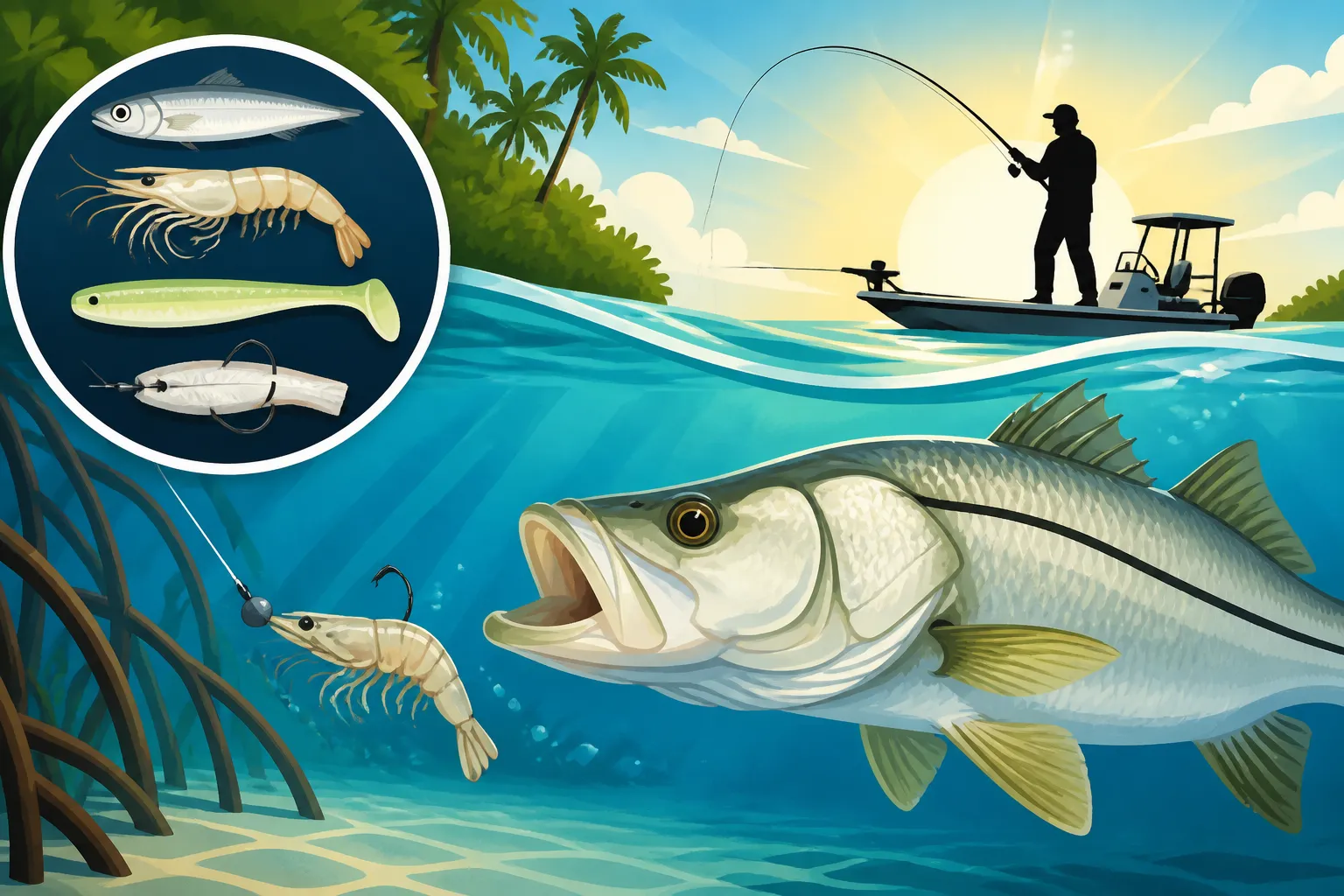
- Pilchards (Whitebait/Scaled Sardines): These small, silvery baitfish are probably the most popular live bait for snook on Florida's west coast and throughout many inshore areas. Snook absolutely gorge themselves on pilchards. They're relatively easy to catch with a cast net, especially during warmer months, and their frantic swimming action on a hook is irresistible. A lively pilchard struggling near a mangrove root or dock piling is practically a guaranteed bite. You can rig them through the nose, back, or tail, depending on how you want them to swim and the current conditions. If you're looking for Best Live Bait for Florida Inshore Fishing in general, pilchards are always at the top of the list.
- Pinfish: Another excellent choice, particularly for larger snook, pinfish are heartier than pilchards and can withstand a little more abuse. They're common in grass flats and near structure. Snook will readily eat a pinfish, and their broad profile and strong swimming make them a substantial meal. They're fantastic for fishing around heavier cover, where a more robust bait is needed. For specific techniques on rigging this tough bait, you might want to look into How to Rig a Pinfish for Snook.
- Shrimp: Live shrimp are the universal candy for nearly every inshore species in Florida, and snook are no exception. While they might attract smaller snook, a big, juicy live shrimp drifting under a popping cork or free-lined near structure can trigger savage strikes from larger fish too. They are incredibly versatile and readily available at most bait shops, making them a convenient option. They're particularly effective in clearer water or when snook are less aggressive.
- Mullet: Larger snook, especially those found in estuaries or around river mouths, often key in on mullet. Finger mullet (small mullet) are excellent baits, but even larger live mullet can tempt trophy-sized snook. They are very hardy and cast well, making them suitable for covering more ground or fishing in areas with strong currents.
Here's a quick comparison of these top live bait options:
| Bait Type | Primary Target Size | Availability | Durability | Common Rigging | Ideal Conditions |
|---|---|---|---|---|---|
| Pilchards | All snook sizes | Catch with cast net | Low | Nose, back, tail | Warmer water, active fish |
| Pinfish | Medium to large | Catch with cast net, trap | High | Nose, back | Around heavy structure, strong current |
| Shrimp | All snook sizes | Bait shops, cast net | Medium | Tail, head (under cork) | Clearer water, less aggressive fish |
| Finger Mullet | Medium to large | Catch with cast net | High | Nose, back | Estuaries, river mouths, strong current |
Rigging Techniques for Live Bait
Presenting your live bait naturally is paramount to success. A poorly rigged bait looks unnatural and will be ignored by wary snook.
- Free-lining: This is often the most effective and natural presentation. A single circle hook (usually 2/0 to 4/0, depending on bait size) through the bait's nose or just behind the dorsal fin allows it to swim freely. No weight, no float – just the bait and the line. This is ideal when snook are actively feeding on the surface or near the surface, or when fishing in areas with light current where the bait can drift naturally into position. It's especially effective along mangrove lines or shallow grass flats. For light tackle setups, consider checking out our article on What Pound Test Line for Snook Fishing?.
- Under a Popping Cork: When snook are in deeper water or you need to cover more area, a popping cork can be very effective. The cork creates a "chugging" sound that mimics feeding activity or the splash of a struggling baitfish, drawing attention to your live shrimp or pilchard suspended below. This is fantastic over grass flats, near oyster bars, or even around docks. The key is to pop it erratically, letting the bait settle for a moment before popping again.
- Weighted Rig: Sometimes, you need to get your bait down into the water column, especially in deeper channels, strong currents, or around deep structure. A small split shot or a knocker rig (a sliding sinker directly above the hook) can help. The goal is just enough weight to get the bait to the desired depth without impeding its natural movement too much. Be mindful of the current; too much weight will pin the bait to the bottom, making it look unnatural.
Remember, the goal with live bait is to let it do the work. Give it plenty of line to swim, but always be ready for a strike. Snook hit hard and fast!
Casting and Retrieving: The World of Artificial Lures
While live bait holds a special place, artificial lures offer incredible versatility, allowing you to cover vast amounts of water, fish specific depths, and mimic a variety of forage. Plus, there's a certain satisfaction that comes from fooling a powerful snook on a perfectly presented artificial. The key is to understand what each lure type is designed to do and how to work it effectively. Many anglers find a lot of success with brands like D.O.A. Lures or MirrOlure, which are widely available at local tackle shops and on Amazon.
Top Lure Types for Snook
The world of artificial lures for snook is vast, but some designs consistently prove their worth. Each has its specific strengths and ideal situations.
- Soft Plastic Swimbaits and Jerkbaits: These are arguably the most versatile and effective artificial lures for snook. Brands like D.O.A. C.A.L. Series or Gulp! Shrimp are household names for a reason. They come in various shapes, sizes, and colors, often rigged on a jig head to control depth. The beauty of soft plastics lies in their realistic look and feel, and the ability to impart subtle, lifelike action with rod tip twitches. You can mimic a fleeing baitfish, a struggling shrimp, or even a bottom-dwelling creature. They are fantastic for working mangrove edges, grass flats, and around dock lights at night.
- Topwater Plugs: There’s nothing quite like the explosive strike of a snook blowing up on a topwater lure. These lures, like the Heddon Super Spook or MirrOlure Top Dog, are designed to create a commotion on the surface, imitating a wounded baitfish. They are most effective during low-light conditions (dawn, dusk) or when snook are actively feeding near the surface. The "walk-the-dog" retrieve, where you twitch the rod tip while reeling in slack, makes the lure dance side-to-side, which snook find irresistible. For more on this exhilarating technique, check out Topwater Lure Fishing for Snook.
- Hard Plastic Suspending/Sinking Plugs: These lures, often referred to as twitchbaits or jerkbaits, dive below the surface and can be suspended at a certain depth or slowly sink. Brands like MirrOlure MirrOdine or Rapala X-Rap are highly effective. They mimic baitfish incredibly well and are excellent for probing slightly deeper water, working current lines, or when snook are holding deeper in the water column. A twitch-twitch-pause retrieve is often deadly, making the lure dart and suspend enticingly.
- Jigs (Bucktails and Soft Plastic Tail Jigs): Jigs are simple yet incredibly effective. A bucktail jig, often tipped with a piece of shrimp or a soft plastic trailer, can be bounced along the bottom or jigged through the middle of the water column. Soft plastic tail jigs, often resembling shrimp or baitfish, are fantastic for mimicking bottom-dwelling prey or for casting into heavy cover. The key to jig fishing is feeling the bottom and imparting subtle movements that make the lure look alive.
Techniques for Presenting Artificials
Just having the right lure isn't enough; knowing how to work it is crucial. Your retrieve needs to breathe life into the plastic or wood, making it appear as a natural, easy meal.
- Vary Your Retrieve: Snook can be particular. One day they might want a fast, erratic retrieve, the next a slow, deliberate one. Don't be afraid to experiment. Start with a medium retrieve, then speed it up, slow it down, add pauses, or sudden jerks. Pay attention to what triggers strikes. Sometimes, simply letting a soft plastic jig head sink all the way to the bottom and giving it a small twitch is all it takes.
- Work the Edges and Structure: Remember, snook are ambush predators. Cast your lures tight to mangrove roots, under docks, along seawalls, and near any submerged structure. Retrieve the lure so it comes out of the cover, as if a baitfish is trying to escape. This predatory instinct is what you're trying to exploit. Precision casting is a huge advantage here.
- "Match the Hatch" with Lures: Just like with live bait, consider what the snook are likely feeding on. If you see schools of small baitfish, use a lure that's similar in size and color. If shrimp are abundant, a realistic shrimp imitation soft plastic will likely perform better than a large topwater plug. This ecological awareness makes a huge difference in your success rate. For those looking to explore different lure options, Amazon offers a wide selection, often with good deals on popular brands and styles.
Reading the Water: Matching Your Bait to the Conditions
Snook fishing is rarely a "one-size-fits-all" endeavor. What works brilliantly one day might be completely ignored the next. The most successful anglers are those who constantly observe and adapt their bait choices and presentations based on the prevailing conditions.
Tides and Water Flow
Florida's tides and currents play an enormous role in snook behavior and, consequently, your bait choice. Snook often use current to their advantage, positioning themselves to ambush prey.
- Incoming Tide: An incoming tide often brings in clearer, cooler water and pushes baitfish into shallower areas. This can be a prime time for snook, as new food sources become available. During an incoming tide, live pilchards or small soft plastics that mimic baitfish can be incredibly effective, fished along the edges of grass flats or mangrove shorelines as the water rises. The movement of the water helps disperse the scent of live bait and gives artificials a more natural drift. Understanding What Tide Is Best for Snook Fishing? is crucial for planning your trips.
- Outgoing Tide: An outgoing tide often pulls baitfish out of the shallower backwaters, concentrating them in bottlenecks like creek mouths, cuts, and around points. This can create feeding frenzies for snook. Larger live baits, like pinfish or mullet, or fast-moving artificials such as suspending plugs or even topwaters, can shine here. The strong current can make live bait drift naturally, creating an irresistible target.
- Slack Tide: This can be the slowest time for snook fishing, as the lack of current means less bait movement and less ambush opportunity for the snook. During slack tide, slower, more subtle presentations might be necessary. A free-lined live shrimp or a very slowly worked soft plastic on a light jig head, fished right in the snook's face, might be your best bet. Snook are still there, but they might not be as actively hunting.
Time of Day and Water Clarity
Beyond the tides, other environmental factors heavily influence snook feeding patterns and how they react to different baits.
- Low Light Conditions (Dawn/Dusk): These are prime times for snook fishing. The reduced light gives snook an advantage over their prey, and they often become much more active. Topwater lures are especially effective during these periods, creating a silhouette and commotion that stands out against the dim sky. Live bait also works exceptionally well, as snook are actively hunting. Even at night, particularly around dock lights or bridge pilings, snook will feed aggressively, making soft plastics or even small live shrimp very productive. This aligns with general advice on the Best Time of Day to Fish in Florida.
- Bright Sun and Clear Water: When the sun is high and the water is gin clear, snook can become very spooky and wary. They have excellent eyesight, and anything unnatural will send them scattering. This is when smaller, more natural-looking live baits (like shrimp or very small pilchards) or realistic soft plastics (with natural colors) presented subtly are best. Long casts and a stealthy approach are critical. Avoid anything too flashy or noisy unless you're specifically trying to draw them out from heavy cover.
- Cloudy/Overcast Conditions: Overcast skies mimic low-light conditions, often extending the "prime" feeding window throughout the day. Snook might be less wary in these conditions, and you can often get away with bolder presentations. Lures with some flash or vibration can be good, and both live bait and artificials typically perform well.
- Murky or Stained Water: In stained or murky water, snook rely more on vibration and scent than sight. This is where scented soft plastics (like Gulp! products available on Amazon), or larger, noisier topwater lures can be effective. Live bait, with its natural scent trail, also has a distinct advantage. Focus on baits that displace a lot of water or have built-in rattles to help snook locate them. You might need to slow down your retrieve, too, giving the fish more time to find your offering.
Ultimately, the best bait for snook fishing in Florida isn't a single answer, but a strategic choice based on understanding the snook itself and adapting to the constantly changing conditions of its environment.
Disclaimer
Fishing regulations, including size and bag limits for snook and other species, can change frequently. Always consult the latest Florida Fish and Wildlife Conservation Commission (FWC) rules and regulations before heading out on the water. This guide is for informational purposes only and does not constitute legal advice regarding fishing regulations.