Fishing Around Algae Blooms in Florida
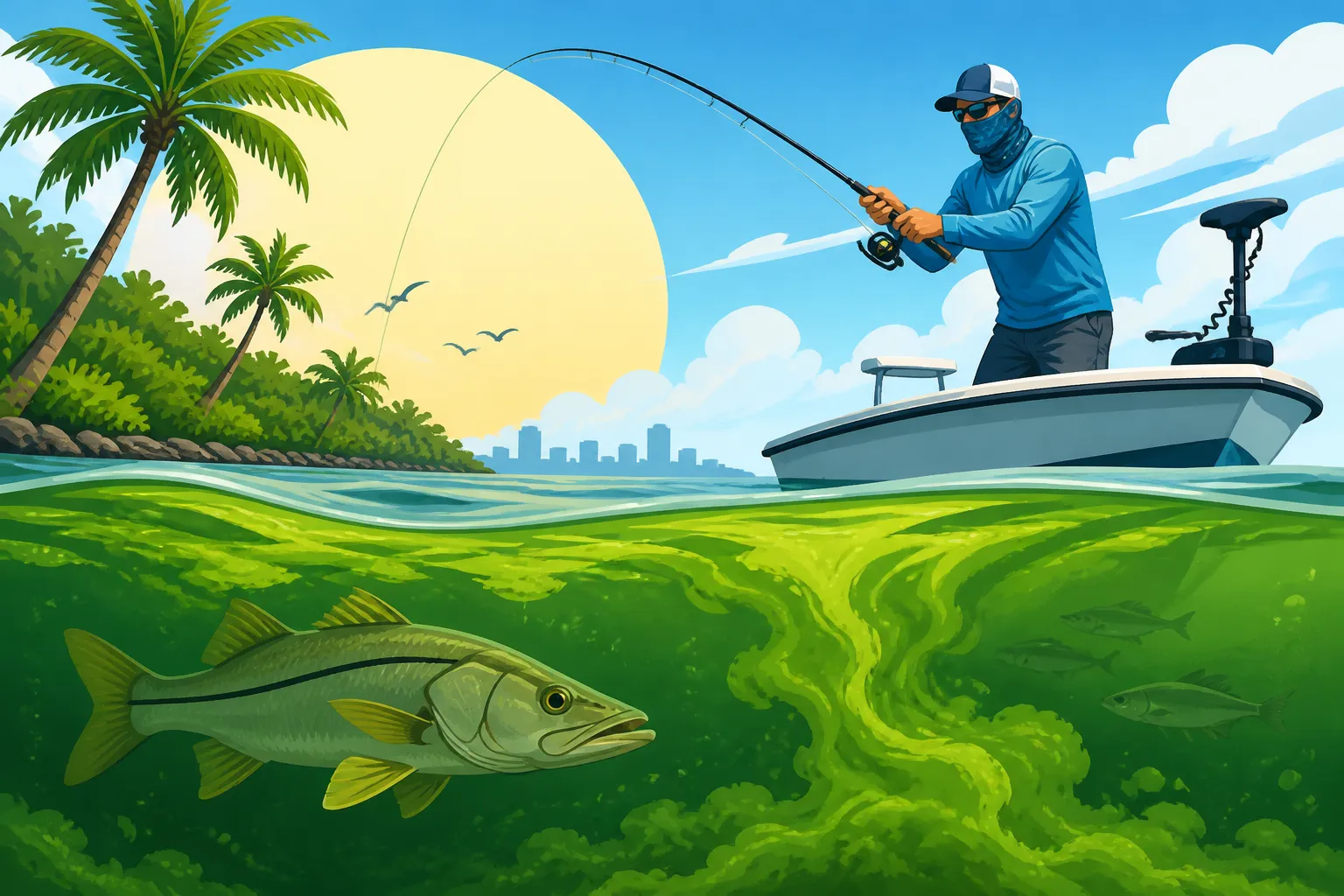
One of the most disheartening things for any angler in Florida is planning a fantastic fishing trip, only to arrive and find the water choked with an ugly, green, or brown mess – an algae bloom. These natural phenomena, often worsened by human activity, can turn vibrant fishing grounds into barren, uninviting stretches, leaving you wondering if it's even worth casting a line. This guide is here to help you understand what algae blooms mean for your fishing, how to adapt your strategy, and most importantly, how to stay safe while navigating these challenging conditions.
What are Algae Blooms and Why They Matter to Anglers?
When we talk about algae blooms in Florida, we're usually referring to a rapid increase in the population of algae or cyanobacteria (often called blue-green algae) in a body of water. They can occur in both freshwater and saltwater and range from visually unappealing, harmless patches to dense, toxic events that devastate marine life and impact human health. For us anglers, understanding these blooms isn't just about spotting discolored water; it's about recognizing how they fundamentally alter the environment fish depend on, directly affecting our chances of a successful and enjoyable day on the water.
Understanding the Basics of Algae Blooms
At its simplest, an algae bloom is like a population explosion in the microscopic plant world of our waterways. It happens when conditions are just right: plenty of sunlight, warm water temperatures, and, critically, an abundance of nutrients like nitrogen and phosphorus. Think of it like fertilizing a garden – but on a massive, aquatic scale. These nutrients often come from runoff from agricultural areas, urban landscapes, and even our own backyards, making these blooms more frequent and severe than they might otherwise be.
In Florida, we encounter a few main types. In freshwater lakes and rivers, you'll often hear about "blue-green algae," which is actually a type of bacteria called cyanobacteria. They can form thick mats that look like pea soup or spilled paint on the surface. In saltwater, particularly along our coasts, the most infamous is "red tide," caused by a specific type of marine algae called Karenia brevis. Regardless of the specific organism, the underlying cause and the resulting impacts on the ecosystem can be quite similar, primarily involving oxygen depletion and, in many cases, toxin production. These aren't just pretty colors in the water; they're indicators of significant changes happening beneath the surface, changes that every angler needs to be aware of.
The Difference Between Nuisance Algae and Harmful Algal Blooms (HABs)
It's important to distinguish between a harmless, albeit unsightly, algae growth and a truly harmful algal bloom (HAB). Not all green water is bad, and sometimes what looks like a minor bloom might actually be more dangerous than it appears. Nuisance algae might simply be a patch of harmless green slime that reduces water clarity and can be a bit of a pain to fish through, but it doesn't pose a direct threat to fish or humans beyond aesthetic issues and possibly localized oxygen depletion as it decays.
Harmful Algal Blooms (HABs), on the other hand, are the real troublemakers. These blooms produce toxins that can be detrimental or even deadly to fish, marine mammals, birds, and humans. Florida's notorious red tide, for example, produces brevetoxins that can cause massive fish kills, irritate human respiratory systems (making breathing difficult for some), and contaminate shellfish. Similarly, blue-green algae in freshwater can produce hepatotoxins (affecting the liver) and neurotoxins (affecting the nervous system). Anglers need to be especially cautious around HABs. If you see numerous dead fish, experience respiratory irritation, or observe brightly colored water (red, green, brown, or even milky white), it's highly likely you're dealing with a HAB. Always check local advisories from the Florida Fish and Wildlife Conservation Commission (FWC) or county health departments before heading out, as they often provide crucial updates on bloom locations and severity. This quick check can save your trip – and your health. If you want to know How to Check Red Tide Conditions Before a Trip, it's always best to be informed.
The Impact of Algae Blooms on Fish and Fishing
Algae blooms don't just make the water look ugly; they fundamentally disrupt the aquatic ecosystem, forcing fish to change their behavior, suffer health consequences, or even die. This has a direct and often frustrating impact on anglers, turning what should be a productive day into a puzzling and often fruitless endeavor. Understanding these impacts is the first step in figuring out how to adapt your fishing strategy.
How Blooms Affect Fish Behavior and Health
The primary way algae blooms harm fish is through oxygen depletion. As the dense algae bloom eventually dies, the decomposition process consumes vast amounts of dissolved oxygen in the water. This creates areas of hypoxia (low oxygen) or even anoxia (no oxygen), which fish cannot tolerate. They'll either flee these zones in search of clearer, more oxygenated water, or if trapped, they will suffocate, leading to the heartbreaking sight of widespread fish kills. You might notice fish exhibiting stressed behavior, gasping at the surface, or lethargically swimming.
Beyond oxygen deprivation, many HABs, particularly red tide and toxic blue-green algae, release potent toxins. These toxins can directly poison fish, attacking their nervous systems, livers, or other organs. Even if a fish isn't killed outright, exposure can weaken them, impair their ability to feed, reproduce, or escape predators. Imagine trying to hunt for food when you're constantly struggling to breathe or feeling poisoned – that's often the reality for fish in bloom-affected waters. This direct physiological stress changes everything about their normal routines, making them less likely to bite and harder to locate.
Impact on Anglers and Fishing Success
For us anglers, the immediate impact of an algae bloom is often frustration. When fish are either dead, fleeing, or too stressed to feed, your usual honey holes can become ghost towns. Water clarity plummets, making it difficult for fish to see your lures and for you to spot any signs of active fish. The thick algal mats can foul your lines, clog your engine's cooling system, and make casting a messy chore.
Beyond the immediate challenges, there's the broader psychological toll. The sight of dead fish, the smell of decaying algae, and the knowledge that the ecosystem is struggling can certainly dampen the spirit of any fishing trip. What was once a pristine fishing paradise can become an unpleasant environment, making it hard to enjoy the peace and solitude we often seek on the water. It’s enough to make you pack up and head home before you even wet a line, but don't despair just yet – there are still ways to find success, or at least a good time, even when conditions are tough.
Strategies for Fishing During an Algae Bloom
So, you've arrived at your favorite spot, and it's looking pretty green, or worse, reddish-brown. Don't throw in the towel just yet! While fishing during an active, severe algae bloom can be incredibly challenging, it's not always impossible to find fish. The key is to be adaptable, think like a fish, and prioritize safety. Often, success hinges on your willingness to scout new areas or completely change your approach.
Locating Fish Away from the Bloom's Core
When a bloom takes hold, fish aren't going to stick around to suffocate or get poisoned. They're going to seek refuge in areas with better water quality. This means your first strategy is to become a scout. Look for water that appears clearer, has more oxygen, and is less affected by the bloom.
- Move to areas with strong currents: Tidal flushing in saltwater estuaries or strong river currents in freshwater can help dilute or move blooms, creating pockets of clearer water. Think about inlets, passes, and main river channels where water exchange is constant. These currents can also concentrate baitfish, which in turn attract game fish.
- Seek deeper water: Algae blooms often congregate on the surface, especially blue-green algae, and decaying algae can settle on the bottom. However, there might be a "sweet spot" in the middle depths where oxygen levels are acceptable and toxins are less concentrated. This requires a bit of experimentation with your depth finder.
- Head offshore (for saltwater anglers): If the inshore waters are heavily affected by red tide, consider venturing further offshore. Often, the bloom is concentrated closer to the coast, and venturing a few miles out can put you into cleaner, fishable water. However, offshore conditions can be unpredictable, so make sure your boat and skills are up to the task.
- Change water bodies entirely: Sometimes, the best strategy is to abandon the affected area altogether and seek out a different lake, river, or even a different coast (Atlantic vs. Gulf). If saltwater is experiencing a severe red tide, maybe it’s time to explore Best Freshwater Fishing Lakes in Florida. Conversely, if a freshwater lake is choked with blue-green algae, perhaps a trip to Best Saltwater Fishing Spots in Florida is in order. Online resources, apps, and local bait shops are invaluable for getting up-to-date reports on water conditions.
Adjusting Your Techniques and Tackle
Even if you find clearer water, the ambient conditions might still be influenced by the bloom. Water clarity might still be reduced, and fish might be more lethargic. This calls for adjustments to your usual techniques.
- Lure Selection for Low Visibility: With reduced water clarity, fish rely more on scent and vibration than sight. Consider using lures that have a strong rattle, a prominent thumping action, or are infused with scent. Brighter, more contrasting colors can also stand out better in murky water. Think about chartreuse, white, or firetiger patterns. If you need some ideas, our guide on Best Lure Color for Murky Water in Florida can offer some fantastic suggestions.
- Slower Presentation: Stressed or lethargic fish are less likely to chase down fast-moving baits. Slow down your retrieve, let your baits sit longer, and work your lures with subtle twitches rather than aggressive jerks. Bottom fishing with a weighted rig might be more effective than working the water column.
- Bait Choices: In affected areas, live bait might be difficult to acquire, or it might die quickly due to poor water quality. This is where artificial lures can shine, especially those with built-in scent or the ability to hold scent attractants. However, sometimes a dead bait, like a chunk of mullet or ladyfish, presented naturally on the bottom, can still entice a sluggish bite. Our article on Live Bait vs Artificial Lures for Florida Inshore Fishing explores this dilemma in more detail.
- Targeting Resilient Species: Some fish species are more tolerant of degraded water quality than others. Catfish, for example, are famously resilient and can often be found biting even in less-than-ideal conditions in freshwater. In saltwater, some species might be more affected than others, so research which fish are still being caught successfully in nearby, relatively unaffected areas. Mastering Florida Inshore Fishing Techniques will give you a versatile toolkit for these adaptive situations.
Considering Alternative Fishing Options
Sometimes, no matter how much you try to adapt, the bloom is just too widespread or severe. In these situations, the most realistic and enjoyable option might be to pivot entirely to a different type of fishing or even a different activity.
- Freshwater vs. Saltwater Switch: If saltwater red tide is severe on one coast, consider heading to Florida's incredible freshwater fisheries. Targeting largemouth bass on a central Florida lake like Toho or Kissimmee can offer an entirely different, and often very productive, experience. We have a great Florida Largemouth Bass Fishing Guide that can get you started, or explore specific spots like Best Bass Fishing Hot Spots on Lake Okeechobee, Florida. Conversely, if freshwater blue-green algae has your local lake locked down, a trip to the coast for some pier fishing or a short offshore excursion could be the answer, provided the saltwater is clear.
- Explore Unaffected Zones: Florida is a big state with diverse fishing opportunities. A bloom affecting the southwest coast might not be present on the southeast coast, or vice versa. Utilize the FWC's bloom tracker and local reports to find areas that are currently clear. Sometimes, driving an extra hour or two can make all the difference between a bust and a fantastic day.
- Delay or Reschedule: While disappointing, sometimes the most responsible and practical decision is to simply delay your trip or reschedule for another time when conditions are better. Fishing shouldn't feel like a chore or a risk to your health. Use this time to clean and organize your tackle, read up on new techniques, or plan your next adventure for clearer waters. You can even find some great deals on new gear on platforms like Amazon to prepare for when the waters clear up!
Staying Safe and Responsible When Fishing Near Blooms
Fishing around algae blooms, especially harmful ones, isn't just about catching fish; it's about protecting yourself, your fellow anglers, and the environment. Ignoring health warnings or contributing to the problem can have serious consequences. As responsible stewards of Florida's amazing fisheries, we all have a role to play in staying safe and minimizing our impact.
Health and Safety Precautions
Your health should always be your top priority when encountering an algae bloom. Harmful algal blooms can pose significant risks, even if you don't directly consume affected fish.
- Avoid Contact with Bloom Water: This is crucial. If the water looks discolored, scummy, or you see dead fish, avoid direct skin contact. Do not swim, wade, or allow pets to enter the water. If your skin does come into contact, wash it immediately and thoroughly with clean fresh water and soap.
- Beware of Respiratory Irritation: Red tides, in particular, can release airborne toxins that cause respiratory issues, especially for people with asthma or other lung conditions. If you start coughing, sneezing, or experiencing eye irritation, it's a clear sign that you should leave the area. Consider wearing a mask if you must be in an affected area, and monitor advisories closely.
- Be Cautious About Eating Fish: While consuming recreationally caught fish during a bloom can be complex, a general rule of thumb is to avoid eating fish, especially bottom-feeders or filter-feeders, caught from actively blooming or fish-kill affected waters. Toxins can accumulate in the flesh, internal organs, or even the gills of fish. Even if the flesh seems clear, it's a risk. Shellfish are particularly prone to accumulating toxins, so always avoid consuming recreationally harvested shellfish from areas impacted by HABs. Always check FWC and local health department guidelines for specific recommendations on seafood safety.
- Wash Hands and Equipment: After fishing in bloom-affected areas, thoroughly wash your hands with soap and water before eating or touching your face. Clean all your fishing gear, including rods, reels, nets, and coolers. This prevents any potential spread of toxins or harmful bacteria and helps maintain your equipment. A good waterproof bag, easily found on Amazon, can keep your essentials safe and clean.
- Monitor Local Advisories: This cannot be stressed enough. Organizations like the FWC and local health departments provide up-to-date information on bloom locations, types, and health warnings. Make it a habit to check these resources before every trip.
Ethical Considerations and Conservation
As anglers, we have a responsibility to not only enjoy the resource but also to protect it. Our actions during and after an algae bloom can have a lasting impact.
- Practice Catch and Release Thoughtfully: If you do manage to catch fish in a bloom-affected area, assess its health. If the fish appears stressed, disoriented, or lethargic, it's often best to release it quickly and gently, assuming it's legal to do so. Our guide on Catch and Release Best Practices for Snook offers some great tips for handling fish with care. However, if fish appear heavily impacted or are actively dying, it might be more ethical to simply refrain from fishing in that particular spot.
- Report Observations: Be an extra set of eyes for environmental agencies. If you witness a significant fish kill, unusual water discoloration, or severe respiratory irritation that hasn't been widely reported, contact the FWC or your local environmental protection department. Your report can help scientists and managers respond more effectively.
- Support Conservation Efforts: Algae blooms are complex issues, often exacerbated by human activities. Supporting organizations that work on water quality improvement, nutrient reduction, and habitat restoration is vital. Understanding How Florida Fishing License Fees Fund Conservation can also highlight how your participation directly contributes to these efforts.
- Minimize Your Own Impact: On a personal level, consider your own contributions to nutrient pollution. Choose phosphate-free fertilizers for your lawn, properly dispose of pet waste, and maintain your septic system. Every little bit helps in reducing the nutrient load that fuels these blooms in the first place. Invest in environmentally friendly tackle and gear, many of which are available on Amazon.
- Respect Regulations: Always adhere to Florida Fishing Regulations and Bag Limits, especially during challenging times. Regulations are in place to protect fish populations and ensure sustainable fishing for everyone.
| Bloom Type | Common Location | Primary Concern | Impact on Fishing | Safety Precautions |
|---|---|---|---|---|
| Blue-Green Algae (HAB) | Freshwater Lakes/Rivers | Toxins (liver, neuro) | Fish kills, avoidance, low oxygen | Avoid contact, don't eat fish from actively blooming water |
| Red Tide (HAB) | Saltwater Coasts | Neurotoxins, respiratory irritation | Fish kills, avoidance, water clarity | Avoid contact, don't eat shellfish, wash fish thoroughly, check advisories |
| Nuisance Green Algae | Freshwater/Saltwater | Oxygen depletion, visibility | Minor fish displacement, fouled lines | Generally safe, but can be unsightly; wash equipment |
Fishing around algae blooms in Florida certainly presents a challenge, but with the right knowledge, safety precautions, and a flexible mindset, you can still find ways to enjoy your passion or make the best of a difficult situation. Stay informed, stay safe, and keep those lines wet in the right places!
Disclaimer
This article is for general informational purposes only and does not constitute professional advice. Laws, prices and regulations vary by location and change over time. Consult a qualified professional for guidance on your specific situation.