Why Atlantic Red Snapper Season Differs From Gulf Season
If you've ever tried to plan a fishing trip for Red Snapper in Florida, you've probably run into a wall of confusion. It's incredibly frustrating to hear different season dates or bag limits depending on whether you're looking at the Gulf Coast or the Atlantic Coast. This guide aims to unravel that mystery, explaining exactly why the regulations for Red Snapper differ so significantly between Florida's two vast and distinct coastlines.
The Head-Scratching Reality of Florida's Dual Red Snapper Seasons
Florida is a long state, blessed with an incredible amount of coastline touching two entirely different bodies of water: the Gulf of Mexico and the Atlantic Ocean. While it might seem logical that a fish species like Red Snapper would be managed uniformly across the entire state, the reality is far more complex. Anglers often express exasperation when they realize the rules they learned for a trip out of Destin don't apply at all if they're fishing near Fort Pierce. This dual reality isn't just a quirk; it's a fundamental aspect of how these valuable fish stocks are managed.
A Tale of Two Coasts: Why It Feels So Confusing
Imagine trying to plan your dream Red Snapper trip. You're scrolling through forums, checking official government websites, and suddenly you're faced with two completely different sets of season dates, size limits, and even bag limits. One website might say the Gulf season is open for a few precious days in the summer, while another indicates the Atlantic season might be open for a longer, albeit still limited, stretch. It can feel like you need a law degree just to figure out when and where you can legally drop a line for these highly sought-after fish. This immediate pain point for anglers is very real, often leading to missed opportunities or, worse, accidental violations. The sheer logistical challenge of keeping up with regulations that change not just annually, but also regionally, can be a major deterrent for even the most passionate fishermen. For many, it feels like an unnecessary hurdle in enjoying the sport they love.
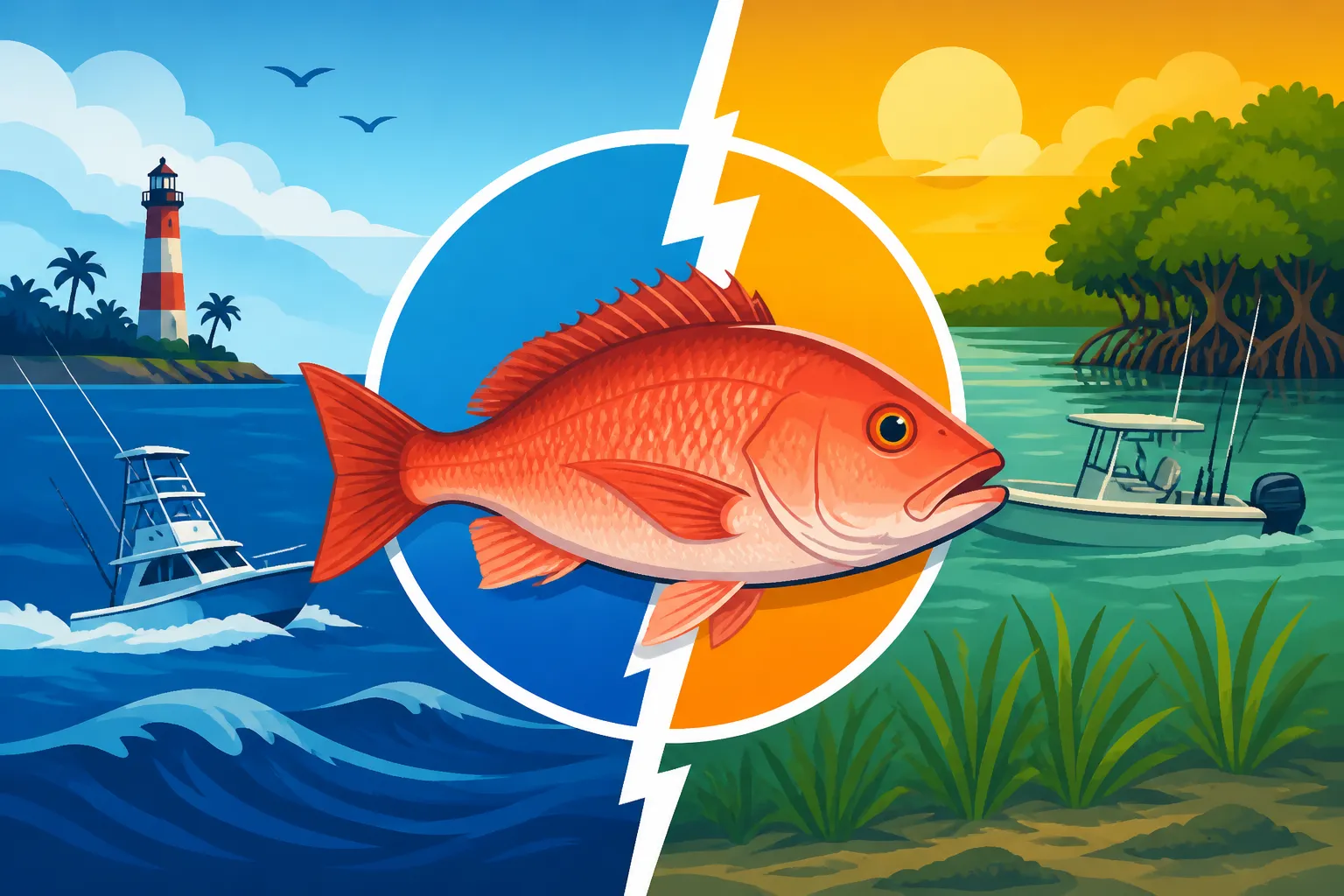
The truth is, Florida’s unique geography means it straddles two distinct marine ecosystems. The Gulf Coast, with its vast continental shelf, deep offshore waters, and complex current systems, is biologically different from the Atlantic Coast, where the continental shelf drops off more quickly, and the Gulf Stream plays a dominant role. These differences mean that the fish populations themselves, and the pressures they face, aren't uniform, necessitating varied management strategies. Trying to apply a one-size-fits-all approach across such diverse environments would simply not be effective for conservation or angler access. Florida Saltwater Fishing License Rules outlines some of the general requirements, but specific species like Red Snapper add layers of complexity.
Beyond State Lines: The Federal Waters Factor
Adding another layer to this already intricate puzzle is the distinction between state waters and federal waters. This isn't just a small detail; it's a monumental one that dramatically impacts Red Snapper regulations. In Florida, state waters extend up to 9 nautical miles offshore in the Gulf of Mexico and up to 3 nautical miles offshore in the Atlantic Ocean. Beyond these lines, you enter federal waters, which are governed by federal agencies and their respective regional councils.
So, you might be fishing just a few miles offshore from Sarasota, thinking you're still under Florida's state regulations, only to find that if you cross that invisible 9-mile line into federal territory, an entirely different set of rules kicks in. The federal season might be closed even if the state season is open, or vice-versa. This can be incredibly tricky for recreational anglers, especially those without advanced GPS systems or a clear understanding of marine navigation. Many passionate anglers turn to resources like detailed marine charts, which you can often find on Amazon, to help them keep track of these invisible boundaries. For a full breakdown of these distinctions, check out State Waters vs Federal Waters Fishing Rules in Florida. Understanding this boundary is paramount because being caught with a regulated species like Red Snapper in closed federal waters, even if your state waters license is valid, can lead to significant penalties.
Understanding the Core Differences: Biology, Management, and Politics
The reasons behind the differing Red Snapper seasons in the Gulf and Atlantic are multifaceted, stemming from fundamental biological distinctions, separate management structures, and the unique socio-economic pressures each region faces. It's not just arbitrary rule-making; it's a complex dance of science, policy, and stakeholder interests.
Distinct Fish Stocks and Ecosystems
Perhaps the most crucial biological factor is that the Red Snapper in the Gulf of Mexico are considered a genetically distinct population from those in the Atlantic Ocean. While they are the same species, Lutjanus campechanus, years of scientific research, including genetic studies, have shown that these two populations do not interbreed significantly. They have different spawning cycles, growth rates, and inhabit slightly different ecological niches within their respective environments.
Think of it like two separate herds of deer living in different mountain ranges. While they are both deer, their health, population size, and environmental challenges might be entirely different, requiring tailored management strategies for each herd. Similarly, the Gulf's vast, relatively shallow continental shelf provides extensive habitat for Red Snapper, while the Atlantic's narrower shelf and proximity to the deep-water Gulf Stream present a different set of conditions. Because these are two separate biological units, they are managed independently to ensure the sustainability of each stock. This scientific understanding is the bedrock upon which all subsequent regulations are built.
Divergent Management Agencies and Philosophies
Further complicating matters, and a direct result of the distinct fish stocks, are the separate governmental bodies responsible for managing them. In the Gulf of Mexico, Red Snapper are primarily managed by the Gulf of Mexico Fishery Management Council (GMFMC) in conjunction with NOAA Fisheries. This council is comprised of representatives from the five Gulf states (Florida, Alabama, Mississippi, Louisiana, and Texas), and they make decisions based on scientific assessments of the Gulf Red Snapper stock. The historical context here is also critical: the Gulf Red Snapper stock faced severe overfishing decades ago, leading to very stringent, and often controversial, management measures aimed at rebuilding the population. This history continues to shape current regulations. Why Red Snapper Season Is So Short in the Gulf delves deeper into these specific challenges.
On the Atlantic side, the South Atlantic Fishery Management Council (SAFMC) is responsible for Red Snapper management, working with NOAA Fisheries for the region spanning from North Carolina to Florida's Atlantic coast. Their management approach and historical challenges have been different. While Atlantic Red Snapper also faced overfishing, the specifics of their recovery timeline, fishing pressure, and stock assessments have led to a different set of regulations. Each council operates independently, with its own scientific advisory panels, public hearings, and decision-making processes. This means that even if both stocks are deemed healthy, the councils might choose different paths to allocate fishing opportunities or set seasons, reflecting the priorities and concerns of their respective constituents. To understand the federal approach, reading How NOAA Sets Florida's Red Snapper Season Length can provide valuable insight.
The Socio-Economic and Political Landscape
Beyond biology and management structures, the differing seasons are also heavily influenced by socio-economic factors and intense political advocacy. Fishing for Red Snapper is a significant economic driver in both regions, supporting charter boat operations, bait and tackle shops, marinas, and coastal tourism.
In the Gulf, the Red Snapper fishery has been historically massive, with a large number of commercial and recreational participants. The allocation of fishing quotas between these groups, and among the individual states, is a constant source of debate and political lobbying. The recreational sector, in particular, has seen its federal season shrink dramatically in recent years, leading to calls for more state control over federal waters or different allocation methods. This intense competition for a limited resource, combined with the shared management responsibilities among five states, creates a highly charged and often contentious political environment that impacts season length and timing.
On the Atlantic side, while Red Snapper are also highly valued, the scale and intensity of the fishery, and its associated political dynamics, have historically been different. While still a valuable fishery, it hasn't experienced the same level of federal vs. state debate or the same level of overfishing as the Gulf historically did. This might lead to different regulatory outcomes, even for a healthy stock. Both councils are constantly balancing the need for conservation with the economic needs of their fishing communities, and these balances often tip differently in each region.
Practical Implications for Anglers: Navigating the Regulations
For those of us who just want to get out on the water and enjoy a day of fishing, these complexities can feel daunting. But arming yourself with knowledge and adopting a proactive approach can make all the difference. Understanding how to navigate these rules isn't just about avoiding fines; it's about ensuring you have a successful and legal fishing experience.
Checking the Regulations: Your Pre-Trip Checklist
The single most important piece of advice any veteran angler will give you regarding Red Snapper is this: ALWAYS check the current regulations immediately before your trip. This isn't a suggestion; it's a necessity. Seasons can be incredibly short, sometimes announced with little lead time, and can change even mid-year if quotas are met faster than anticipated.
Here's your pre-trip checklist:
- Identify Your Fishing Area: Are you planning to fish on the Gulf Coast or the Atlantic Coast?
- Determine Your Water Type: Will you be in state waters or federal waters? This is crucial. If unsure, assume federal rules might apply, as they are often more restrictive.
- Consult Official Sources:
- For Florida-specific state waters regulations, the Florida Fish and Wildlife Conservation Commission (FWC) website is your go-to.
- For federal waters (Gulf), check the Gulf of Mexico Fishery Management Council website and NOAA Fisheries.
- For federal waters (Atlantic), check the South Atlantic Fishery Management Council website and NOAA Fisheries.
- Many anglers also use the FWC's Fish Rules App, which can update regulations in real-time based on your GPS location, though it's always wise to cross-reference with the official websites.
- Confirm Season Dates, Bag Limits, and Size Limits: Don't just check one; check all three. A fish might be in season, but if it's too small or you've exceeded the daily limit, it's still illegal to keep.
It’s a good idea to have a backup plan. If Red Snapper season is closed or looks too complex for your trip, consider targeting other delicious species. Having a reliable fish identification book, which you can easily find on Amazon, can be a lifesaver for identifying your catch and understanding its associated rules. Florida Fishing Regulations and Bag Limits provides a broader overview of various species.
State Waters vs. Federal Waters: Know Your Boundaries
We've touched on this, but it bears repeating with emphasis: knowing whether you are in state or federal waters is critical for Red Snapper. Florida's state waters extend 9 nautical miles into the Gulf and 3 nautical miles into the Atlantic. Beyond these points, federal regulations apply, regardless of whether you launched from a Florida port.
This means you could be legally fishing for Red Snapper in Florida state waters, then motor out a few more miles to try a different spot, inadvertently entering federal waters where the season for Red Snapper might be completely closed. Enforcement officers routinely patrol these boundaries, and ignorance of the law is not an excuse. Investing in a marine GPS system or a chartplotter with up-to-date nautical charts is highly recommended for anyone venturing offshore. For those sticking closer to shore, even a simple phone app can sometimes help, but you might want to invest in a waterproof case for your phone, readily available on Amazon, for added protection. The distinction is absolutely key for species like Red Snapper, which have separate management plans for these zones.
Charter Boats and Their Licenses
If you're opting for a charter fishing trip, the good news is that the captain typically handles the licensing and permits for the vessel. Most federally permitted charter boats operate under a specific federal permit that allows their passengers to retain Red Snapper during the federal season, even if individual anglers wouldn't normally possess such a permit.
However, this doesn't mean you're entirely off the hook. You should still ensure that the charter boat you book is legitimately licensed and permitted for the waters you intend to fish. A reputable captain will be transparent about their permits and the regulations they operate under. Also, while the boat is covered, you, as an individual angler, will still need a valid Florida saltwater fishing license, unless otherwise exempt. Do You Need a License to Fish From a Charter Boat in Florida? explains this in detail. It’s always best practice to ask your captain directly about the current Red Snapper rules for the specific trip you've booked. This ensures everyone is on the same page and helps avoid any unpleasant surprises once you're back at the dock.
Why These Differences Matter for Conservation
While the differing Red Snapper seasons can be a pain point for anglers, these distinct management approaches are fundamentally rooted in sound conservation principles. The goal is not to confuse fishermen but to ensure the long-term health and abundance of these valuable fish for future generations.
Ensuring Sustainable Populations for Both Coasts
By treating the Gulf and Atlantic Red Snapper as separate stocks, management bodies can tailor their conservation efforts to the specific needs and health of each population. If, for example, the Gulf stock is recovering faster due to more aggressive management actions or better environmental conditions, its season might be cautiously expanded. Conversely, if the Atlantic stock faces new challenges, its season might be adjusted more conservatively. This granular approach prevents one stock's recovery from being hindered by the struggles of another.
This flexibility allows for a more responsive and scientifically sound approach to fisheries management. It avoids a scenario where, to protect a struggling Gulf stock, healthy Atlantic fish are unnecessarily restricted, or vice-versa. Florida Red Snapper Fishing Guide offers more insights into the species itself and its conservation needs. The councils and FWC are constantly monitoring populations, conducting scientific assessments, and adjusting regulations to meet conservation targets. This commitment to data-driven decision-making, even when it results in complex and varied rules, is essential for keeping Red Snapper a viable fishery far into the future.
The Future of Red Snapper Fishing
The ongoing efforts to refine Red Snapper management are always in motion. Both the Gulf and Atlantic councils are continually evaluating data, holding public hearings, and considering new strategies to balance conservation with recreational and commercial fishing opportunities. Debates about allocation between user groups, the role of state vs. federal management, and the accuracy of stock assessments are constant.
As anglers, staying informed and participating in public comment periods (even if virtually) is vital. Your voice can contribute to the future of these fisheries. While the current system can feel intricate, the underlying intent is to ensure that Florida's waters remain vibrant and productive, offering the thrilling experience of catching a Red Snapper for generations to come. Having reliable gear for checking boundaries, like a good GPS unit, or simply staying informed with up-to-date charts, sometimes found on Amazon, is invaluable. The long-term health of these fisheries truly depends on this adaptive and regionally specific management.
Summary of Gulf vs. Atlantic Red Snapper Management Factors
To help clarify the core distinctions, here's a quick overview of the main factors influencing Red Snapper seasons in Florida's Gulf and Atlantic waters:
| Feature | Gulf of Mexico Red Snapper | Atlantic Red Snapper |
|---|---|---|
| Primary Management Body | Gulf of Mexico Fishery Management Council | South Atlantic Fishery Management Council |
| Fish Stock | Independent stock, considered distinct | Independent stock, considered distinct |
| Historical Pressure | Historically higher, leading to stricter regulations | Managed more consistently, but still subject to review |
| Season Length (General) | Often very short, highly variable year-to-year | Can be longer, but also subject to change |
| State Waters (Florida) | Up to 9 nautical miles offshore | Up to 3 nautical miles offshore |
| Federal Waters | Beyond 9 nautical miles | Beyond 3 nautical miles |
| Regulatory Complexity | High, due to state/federal splits and catch share debates | Moderate, but still requires careful checking |
This table highlights why you can't just assume the rules are the same, even within the same state. Each coast has its own unique set of circumstances that dictate when and how you can pursue this incredible game fish.
Disclaimer
This article is for general informational purposes only and does not constitute professional advice. Laws, prices and regulations vary by location and change over time. Consult a qualified professional for guidance on your specific situation.