Is It Legal to Keep a Bull Shark in Florida?
The thrill of hooking into something powerful, something that truly tests your tackle and your grit, is what draws many anglers to the majestic waters of Florida. And for some, that quest eventually leads to sharks, particularly the formidable bull shark. But a common question, and one filled with understandable confusion, is whether you can actually keep a bull shark once you've battled it to the boat. This guide is here to untangle the complexities of Florida's shark fishing regulations, specifically addressing the legality of keeping a bull shark, so you can enjoy your time on the water responsibly and within the law.
Understanding Shark Fishing Regulations in Florida
Fishing for sharks in Florida's diverse waters is an incredibly popular activity, but it comes with a stringent set of rules designed to protect these vital predators and maintain healthy marine ecosystems. It's not like reeling in a snapper or a seatrout where the general bag limits might be more straightforward. Sharks are often apex predators, slow to reproduce, and play a crucial role in ocean health, which means they receive a lot of attention from wildlife managers.
Why Shark Regulations Are So Strict
You might wonder why shark fishing has so many more hoops to jump through than, say, targeting bass. The reason is multifaceted. Firstly, many shark species are highly migratory, crossing state and even international boundaries, making their management complex. Secondly, their life history characteristics – like reaching maturity late, having long gestation periods, and producing fewer offspring – make them particularly vulnerable to overfishing. A species like a bull shark can live for many years, but if too many are removed, their populations struggle to rebound quickly. Thirdly, there's the perception and public safety aspect; while most sharks caught by anglers are not dangerous to humans, regulations help manage interactions and promote safe practices. The Florida Fish and Wildlife Conservation Commission (FWC) takes all these factors into account when crafting regulations, which are frequently updated. This means what was legal last year might not be this year, so staying informed is paramount. This isn't just about fines; it's about protecting the very fish we love to pursue.
The Role of the Florida Fish and Wildlife Conservation Commission (FWC)
The FWC is the primary authority for setting and enforcing recreational fishing regulations in Florida's state waters. They are responsible for managing fish and wildlife resources for their long-term well-being and for the benefit of people. When it comes to sharks, they work with federal agencies like the National Oceanic and Atmospheric Administration (NOAA) Fisheries, especially when sharks venture into federal waters, which extend beyond three nautical miles in the Atlantic and nine nautical miles in the Gulf of Mexico. The FWC continually monitors shark populations, conducts research, and uses scientific data to inform their decisions on everything from catch limits to closed seasons and gear restrictions. They also manage programs like the Shore-Based Shark Fishing Permit, which is a specific, additional requirement for anyone fishing for sharks from shore. This highlights that shark fishing isn't just another casual outing; it requires specialized knowledge and permits. You can learn more about general fishing rules in our Florida Fishing Regulations and Bag Limits guide.
Can You Keep a Bull Shark in Florida?
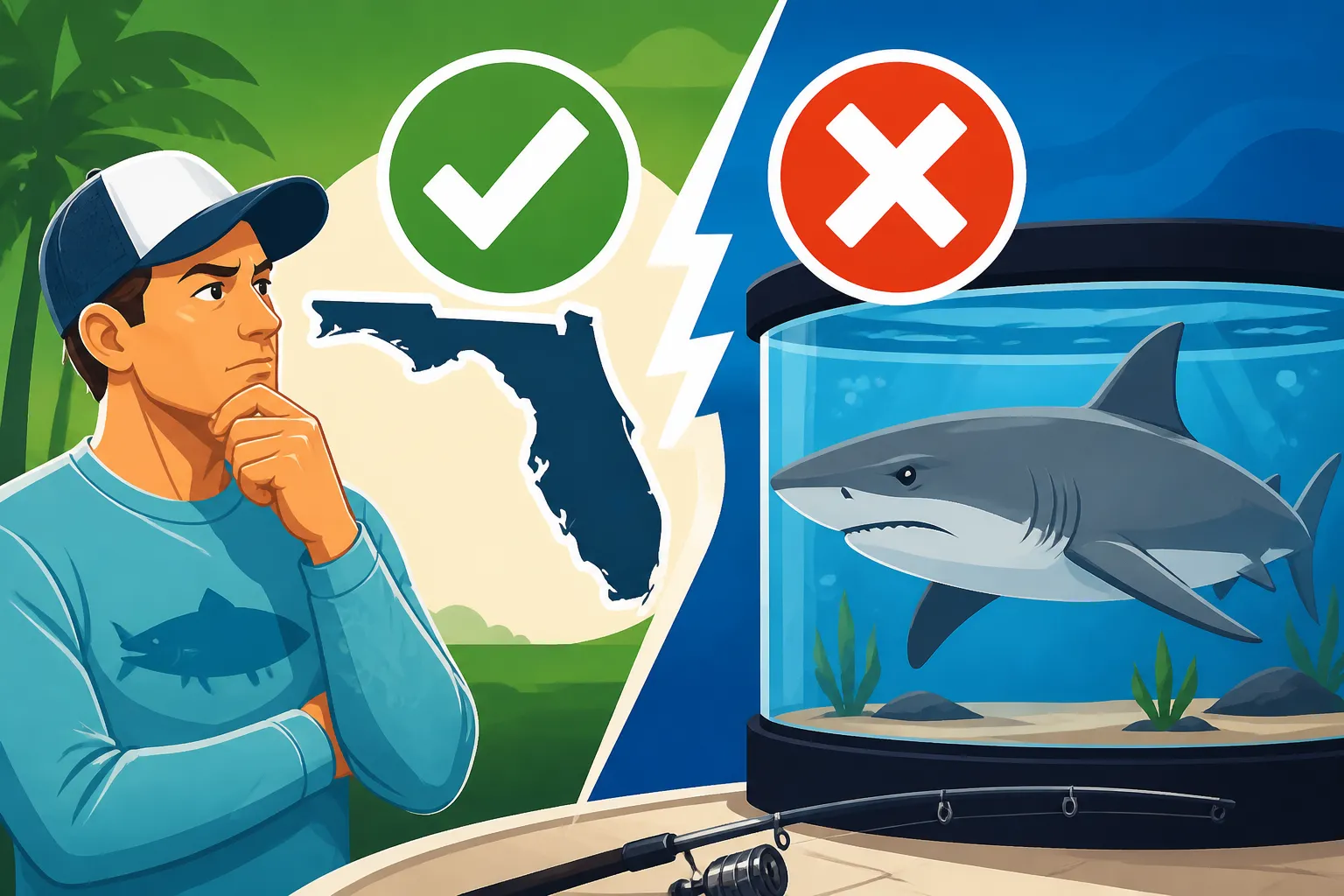
Now, let's get down to the brass tacks: the bull shark. The short answer to whether you can keep a bull shark in Florida is nuanced, but generally, it's highly restricted and often discouraged, with very specific conditions that must be met. Florida's regulations on sharks are among the most detailed, categorizing sharks into groups like prohibited species, those with specific size and bag limits, and those that are strictly catch-and-release.
Prohibited Shark Species and Exceptions
Florida maintains a list of prohibited shark species that you cannot harvest, possess, or land. This list typically includes highly vulnerable species or those that are particularly important ecologically. While the bull shark is not always on the prohibited list itself, it often falls under strict management categories that make keeping one exceedingly rare and difficult for recreational anglers.
It's crucial to understand that even if a species isn't strictly "prohibited," it might have such tight restrictions – like a single-digit bag limit per boat per day for all legal shark species combined, or minimum sizes that are rarely met by the average recreational catch – that keeping one becomes practically impossible or simply not worth the hassle for most anglers. For example, some sharks might be legal to harvest, but only with a specific permit, during a limited season, or if they exceed a massive length. It’s also vital to remember that all sharks, regardless of species, must remain intact until they are brought to the dock. This means no filleting at sea!
Bull Shark Specific Regulations: Size and Bag Limits
For bull sharks, specifically, they are generally part of the "unregulated" or "other" shark categories, meaning they can be harvested under certain conditions, but these conditions are extremely tight. Here's what you need to know:
- Shark Identification: First and foremost, you must be able to correctly identify a bull shark. There are many shark species that look similar, and misidentification can lead to serious penalties. Knowing the difference between a bull shark and a sandbar shark, for instance, is absolutely critical.
- Size Limit: Bull sharks typically fall under a minimum size limit. This limit is often substantial, measured from the tip of the nose to the fork of the tail. For example, the current federal regulation for many species in the "large coastal shark" management group (which bull sharks are part of) often sets a minimum size in the mid-50 to mid-60 inch range. This is a big fish! Many bull sharks encountered by recreational anglers, especially closer to shore or in estuaries, may not meet this minimum size. Always check the most current FWC regulations for the precise legal size, as these figures can change.
- Bag Limit: The recreational bag limit for most legal shark species is incredibly restrictive. Often, it's a "one shark per person per day" limit, or even "one shark per vessel per day," regardless of how many anglers are on board, and this applies to all legal shark species combined, not just bull sharks. This means if someone on your boat catches and keeps a blacktip, you've met your vessel limit for the day for that specific category of sharks.
- Special Permits/Endorsements: Beyond a standard Florida Saltwater Fishing License Rules, recreational anglers targeting or harvesting sharks from shore must possess a Shore-Based Shark Fishing Permit. While this permit is primarily for shore-based fishing, it underscores the increased regulatory scrutiny around sharks. Always ensure you have all required licenses and permits, as catching any fish without the proper documentation can lead to What Happens If You Fish Without a License.
Let's illustrate with a hypothetical scenario. Imagine you're out fishing from a boat in the Gulf of Mexico. You hook into a bull shark that measures exactly 58 inches to the fork. You know the federal minimum size for large coastal sharks is 54 inches. If you have your fishing license and are the only one on the boat, and no one else has kept a shark that day, you could potentially keep that one bull shark. However, this scenario is rare, and the FWC strongly advocates for catch and release for many shark species due to population concerns.
To make things clearer, here's a simplified table of how shark categories might look, keeping in mind that actual sizes and bag limits are subject to change and should always be verified with the FWC directly:
| Shark Category | Example Species | Legal to Keep? | Typical Minimum Size (Fork Length) | Typical Bag Limit (per person/vessel) | Notes |
|---|---|---|---|---|---|
| Prohibited Species | Sand Tiger, Lemon, White | No | N/A | Zero | Must be immediately released unharmed. |
| Large Coastal (Recreational) | Bull, Blacktip, Tiger | Yes, with limits | Often 54-64 inches | One per person OR one per vessel | Specific regulations vary by species; some may be catch & release only. |
| Small Coastal (Recreational) | Bonnethead, Finetooth | Yes, with limits | Often 24-36 inches | Vary, usually higher than large coastals | Generally more liberal, but still regulated. |
| Pelagic (Recreational) | Mako, Thresher | Yes, with limits | Vary widely | Vary widely | Offshore species, often with federal rules. |
Disclaimer: This table is for illustrative purposes only. Always consult current FWC and NOAA Fisheries regulations before fishing for sharks.
As you can see, even for "legal to keep" categories, the conditions are very specific. Often, recreational anglers prefer to release all sharks simply because of these complexities.
Responsible Catch and Release Practices for Sharks
Given the strict regulations and the conservation importance of sharks, many anglers choose to practice catch and release, even for legally harvestable species. This is not only admirable but often the most practical approach. However, releasing a large, powerful shark safely for both the angler and the fish requires skill and the right equipment.
Essential Gear for Safe Shark Release
Having the correct gear is paramount for ensuring a quick and safe release. Without it, you risk unnecessarily harming the shark or putting yourself in danger.
- Heavy Duty Tackle: This isn't just about landing the fish; it's about landing it quickly to minimize stress. Use heavy rods, reels, and line that match the potential size of the shark. This prevents prolonged fights that can exhaust the shark beyond recovery. You can find robust options for rods, reels, and strong braided line on retailers like Amazon or at your local bait and tackle shop.
- Circle Hooks: Using non-stainless steel, non-offset circle hooks is often a regulation for shark fishing and is always best practice. Circle hooks significantly reduce gut hooking, as they are designed to hook in the corner of the shark's mouth. This greatly increases the chances of a healthy release. Many experienced anglers pre-rig their leaders with these hooks, which you can easily purchase online or at Bass Pro Shops.
- Long-Handled Dehooking Tool: This is non-negotiable. A sturdy, long-handled dehooker allows you to remove the hook without putting your hands near the shark's mouth. This is critical for both your safety and the shark's. Make sure it's robust enough for heavy-gauge hooks. You can find quality dehooking tools on Amazon.
- Bolt Cutters or Heavy-Duty Wire Cutters: In cases where a hook is too deep to remove safely, cutting the leader as close to the hook as possible is the next best option. The hook will eventually rust out. Ensure your cutters are strong enough to snip heavy mono or wire leader.
- Gloves and Pliers: Heavy-duty gloves protect your hands from sharp fins and gill plates. Pliers can assist in bending hooks or handling leader.
- Tail Rope (for larger sharks): For very large sharks, a tail rope can help secure the animal alongside the boat, allowing for safer hook removal while keeping the shark in the water, minimizing its time out of its natural environment.
Best Practices for Minimizing Stress and Injury
The goal of catch and release is to ensure the shark swims away healthy and ready to fight another day.
- Minimize Fight Time: As mentioned, use appropriate tackle to bring the shark in as quickly as possible. A long, drawn-out fight can cause lactic acid buildup in the shark's muscles, leading to exhaustion and potentially death after release.
- Keep the Shark in the Water: Whenever possible, avoid dragging the shark onto the boat or beach. For boat anglers, try to release the shark boatside. For shore anglers, quickly unhook it in the wash before a wave recedes. If you must bring it out of the water briefly, do so only for a quick measurement and hook removal, and support its body weight evenly.
- Handle with Care: If you need to handle the shark, do so gently. Avoid touching its gills or eyes. Support its belly, especially for larger sharks, to prevent internal organ damage. Never lift a large shark by its tail alone.
- Proper Hook Removal: Use your long-handled dehooker. If the hook is visible and easily accessible, gently twist and remove it. If it's deeply swallowed or difficult to access, cut the leader as close to the hook as possible. Never try to yank out a deeply embedded hook.
- Revive if Necessary: If the shark appears lethargic, hold it upright in the water, facing into the current (or gently move it back and forth if there's no current) to force water over its gills. This helps revive it. Only release the shark when it shows strong signs of recovery and can swim away under its own power.
- Avoid Excessive Photo Ops: While a photo is tempting, prolonged time out of water is detrimental. Get your shot quickly and prioritize the shark's release. For more general advice on handling fish, our guide on Catch and Release Best Practices for Snook offers useful tips that can be adapted.
Potential Consequences of Illegal Shark Harvesting
Attempting to keep a bull shark, or any shark, outside of Florida's strict regulations carries significant risks and penalties. Wildlife enforcement officers, like those with the FWC, are highly trained and take violations seriously, especially when it comes to protected or highly regulated species like sharks.
Fines and Penalties for Violations
The consequences for violating shark fishing regulations can range from substantial monetary fines to more severe legal actions.
- Fines: Expect fines to be in the hundreds to thousands of dollars, depending on the severity of the offense. Factors like the species, size (e.g., keeping an undersized shark), location (e.g., fishing in a protected area), and whether it's a first offense or a repeat violation will influence the amount. For example, if you're found with a prohibited shark species, the fine will be significantly higher than if you mistakenly keep a legal shark that is undersized. Our guide on Penalty for Fishing Without a License in Florida gives you a sense of the costs involved with other fishing infractions.
- Confiscation of Gear and Catch: Wildlife officers have the authority to confiscate your catch, and potentially even your fishing gear, vessel, or vehicle used in the commission of the offense.
- Loss of Fishing Privileges: Violations can lead to the suspension or revocation of your fishing license for a period of time, meaning you won't be allowed to fish in Florida waters.
- Criminal Charges: In more egregious cases, such as multiple offenses, commercial poaching, or harming a critically endangered species, you could face criminal charges, which might include jail time. While rare for a single recreational violation, it's a serious possibility if the breach is severe enough.
The Importance of Knowing the Rules
It cannot be stressed enough: ignorance of the law is not an excuse. As an angler, it is your responsibility to know and understand the regulations before you cast a line, especially when targeting complex species like sharks. The FWC makes all its regulations publicly available online, and they are regularly updated. It's a good habit to check the FWC website or use their official Go Outdoors Florida app before every fishing trip to ensure you have the most current information. This applies not just to sharks but to all species, from Florida Snook Slot Limit Explained to how many spotted seatrout you can keep. Always verify. The rules concerning Florida Fishing License Age Requirements and other demographics also apply.
Fishing in Florida is an incredible privilege, and respecting the regulations ensures that these amazing natural resources are available for future generations to enjoy. When it comes to bull sharks, the general rule of thumb for recreational anglers should be: admire them, catch them responsibly, and then let them go. The vast majority of the time, that's the only legal and ethical choice. If you're ever in doubt about a specific species or regulation, err on the side of caution and practice catch and release.
Disclaimer
This article is for general informational purposes only and does not constitute professional advice. Laws, prices and regulations vary by location and change over time. Consult a qualified professional for guidance on your specific situation.