Which Sharks Are Illegal to Keep in Florida?
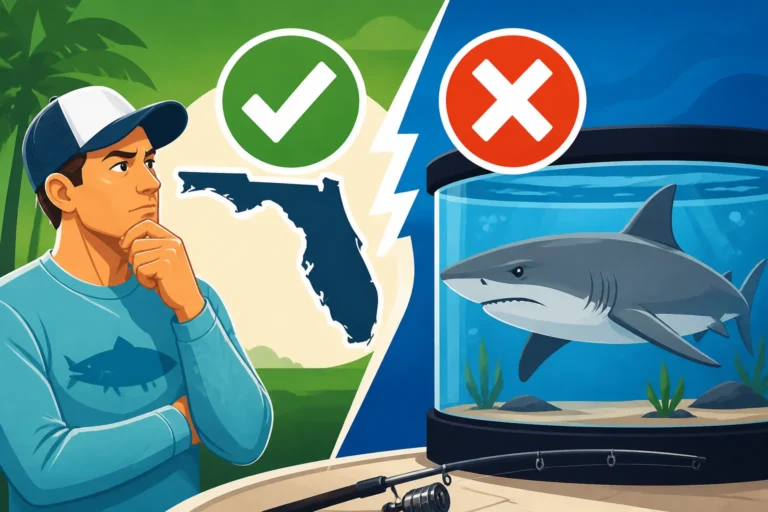
There’s nothing quite like the thrill of feeling a powerful tug on your line, the adrenaline rush as you battle something strong and wild beneath the waves. But for many anglers in Florida, especially when targeting sharks, that excitement can quickly turn into anxiety. It's tough to keep up with all the changing rules and regulations, and the last thing anyone wants is to accidentally keep a protected shark species and face a hefty fine or worse. This guide is here to untangle that confusion, walking you through exactly which sharks are illegal to keep in Florida, and what you need to know to fish responsibly and legally.
The Importance of Knowing Florida's Shark Rules: A Real Angler's Dilemma
Let's be real, fishing in Florida is a privilege, and with that comes a responsibility to protect our incredible marine environment. Sharks, often misunderstood, are vital to the health of our ocean ecosystems. They're apex predators, keeping other fish populations in check and ensuring the balance of marine life. This is precisely why Florida, through the Florida Fish and Wildlife Conservation Commission (FWC), has put in place strict regulations, including outright prohibitions on harvesting certain shark species.
It's not just about avoiding a ticket; it's about being a good steward of the resource. Imagine spending a beautiful day out on the water, hooking into a magnificent shark, only to realize too late that it's a species you're legally forbidden to keep. The frustration of having to release a fish you might have thought was a legal catch is real, and it’s why understanding these rules before you even cast a line is so crucial. Getting caught with a prohibited shark can lead to significant penalties, making an otherwise perfect day on the water turn sour in an instant. This knowledge empowers you to make informed decisions and contribute to the conservation efforts that keep Florida's waters teeming with life for generations to come.
Why Regulations Exist: Beyond Just "Don't Catch This"
The rules around shark fishing aren't arbitrary. They're based on scientific research regarding shark populations, reproductive rates, and overall vulnerability. Many of the sharks on the prohibited list are either slow to reproduce, have small populations, or play unique roles in their habitats that make them particularly susceptible to overfishing. Take, for example, species that are long-lived and mature late; removing too many of these can have devastating, long-lasting effects on their numbers. Conservation efforts also consider the role sharks play in the food chain, preventing ecosystem imbalances that could impact other popular game fish species.
Another major factor is the difficulty in identification for many anglers. Some shark species look incredibly similar, especially to the untrained eye, making it easy to mistake a prohibited species for a legal one. These regulations help create a clearer line, reducing accidental harvests and providing a buffer for vulnerable populations. It’s also about ensuring the safety of both anglers and sharks during the catch and release process. Knowing you must release a certain shark means you approach the fight and handling with that specific goal in mind, minimizing harm to the animal. For more on the big picture, you might find How Florida Fishing License Fees Fund Conservation interesting.
The Role of State and Federal Waters
It’s also important to remember that Florida's fishing regulations apply primarily in state waters, which extend 3 nautical miles into the Atlantic Ocean and 9 nautical miles into the Gulf of Mexico. Beyond these boundaries, you enter federal waters, where federal regulations, often set by NOAA Fisheries, take precedence. While Florida's regulations are usually consistent with, or even more stringent than, federal rules for prohibited species, it's always good practice to consult both sets of guidelines if you plan to fish offshore. The last thing you want is to be compliant in state waters only to unknowingly violate a federal rule a few miles further out. Understanding the distinction between State Waters vs Federal Waters Fishing Rules in Florida is absolutely critical for offshore anglers targeting sharks.
Shark Species Absolutely Prohibited from Harvest in Florida
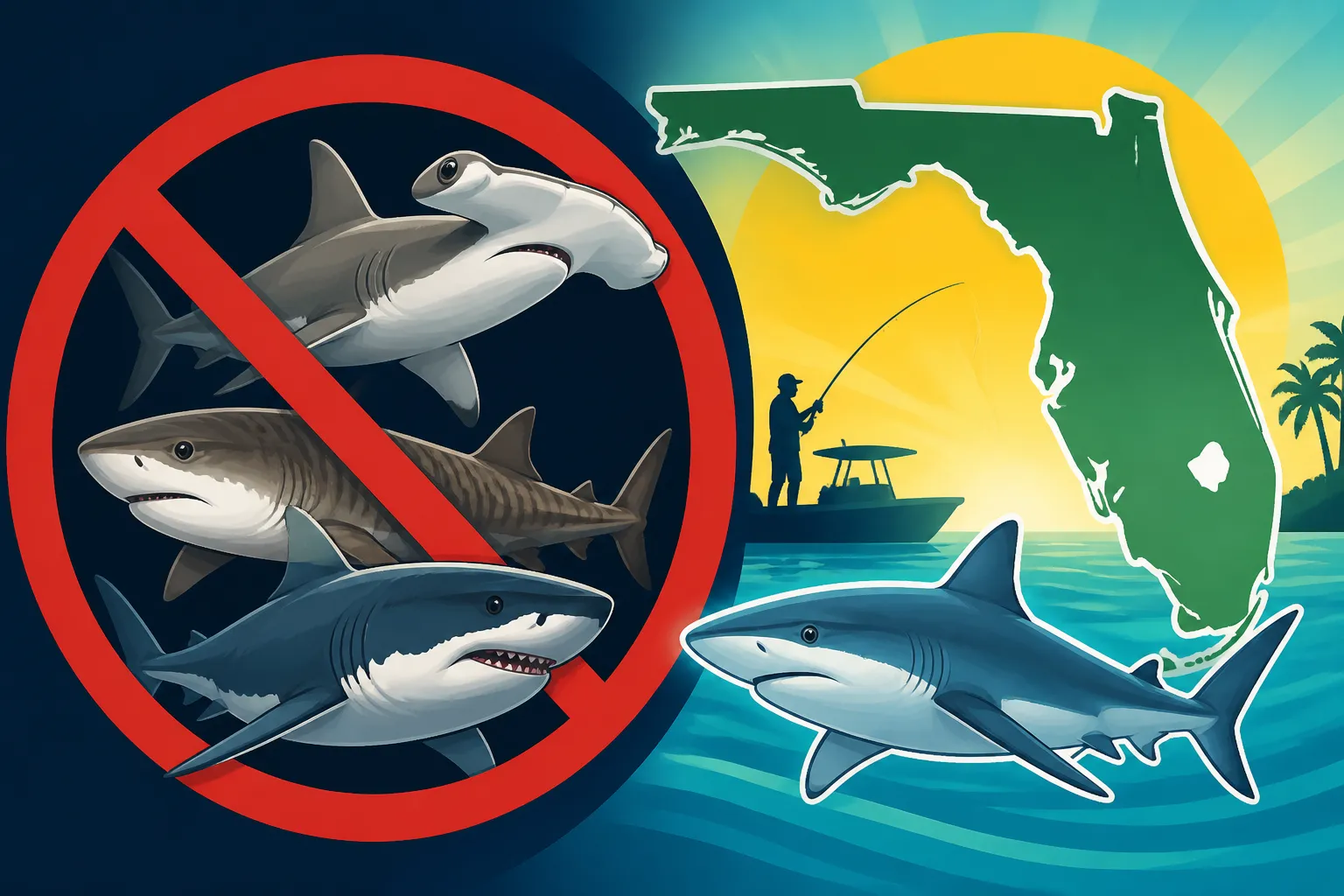
When we talk about sharks that are "illegal to keep" in Florida, we're primarily referring to those on the FWC's Prohibited Species list. These are sharks that you absolutely cannot harvest, possess, or land. If you catch one of these, you must release it immediately and with minimal harm. This list includes some iconic and critically important species.
Let's break down the main culprits that you need to be aware of:
Atlantic Angel Shark
These unique sharks are often mistaken for rays due to their flattened bodies and broad pectoral fins. They spend much of their time buried in the sand on the seafloor, ambushing prey. They might not be what you picture when you hear "shark," but they are sharks nonetheless, and they are fully protected. Their camouflage makes them masters of disguise, which can sometimes lead to accidental catches by bottom fishermen. If you reel in something that looks like a flattened shark-ray hybrid, assume it's an Atlantic Angel Shark and release it gently. They are not to be confused with common rays, which have different regulations.
Basking Shark
These gentle giants are the second-largest fish in the world, filter-feeding on plankton. They are rarely encountered by recreational anglers, as they prefer cooler, offshore waters, but their size makes them unmistakable. If you're lucky enough to see one, let alone hook into one (which would be extremely rare and accidental), remember they are fully protected. Their massive size alone is enough to warrant extreme caution and a swift, safe release.
Bigeye Sand Tiger
These deepwater sharks are also not commonly encountered by recreational anglers due to their preferred habitat. However, if by some rare chance you bring one up, they are a federally protected species and absolutely prohibited from harvest. Their distinctive teeth are a key identifier.
Caribbean Reef Shark
As their name suggests, these sharks are residents of tropical reef systems, particularly common in the Florida Keys. They are a medium-to-large shark species, often seen by divers. They play a crucial role in maintaining healthy reef ecosystems, and as such, they are entirely protected in Florida waters. If you're fishing near reefs, be aware that you might encounter one.
Dusky Shark
The Dusky Shark is a large, migratory shark species that has experienced significant population declines due to historical overfishing. They are characterized by a ridge between their dorsal fins and broadly triangular teeth. Because of their vulnerable status, Dusky Sharks are strictly prohibited from harvest in both state and federal waters. They are often caught incidentally by anglers targeting other species, so quick and accurate identification is key. Always have a good shark identification guide with you, perhaps one you ordered from Amazon, to quickly confirm species before deciding on release.
Great Hammerhead, Scalloped Hammerhead, and Smooth Hammerhead
All three of these magnificent hammerhead species are prohibited from harvest in Florida. Hammerheads are easily identifiable by their distinctive flattened, hammer-shaped heads (cephalofoils). They are migratory and often found in coastal and offshore waters. The Great Hammerhead is the largest of the three and is a truly impressive catch. Due to their vulnerability and slow reproductive rates, all hammerheads are strictly protected. Handling these powerful fish can be challenging, so equip yourself with the right tools for a quick release, like dehookers and line cutters, which you can find easily on Amazon.
Longfin Mako Shark
While its cousin, the Shortfin Mako, has specific regulations (which we'll touch on later), the Longfin Mako Shark is fully prohibited from harvest. It's an oceanic species, usually found further offshore in warmer waters. They are often confused with Shortfin Makos, so careful identification is crucial. Look for its much longer pectoral fins, which are roughly the same length as its head.
Sand Tiger Shark
Similar in name to the Bigeye Sand Tiger, the common Sand Tiger Shark is another prohibited species. They are often found in coastal waters, sometimes even near inlets and sounds. They have a distinctive, often menacing appearance with protruding, spiky teeth, even when their mouth is closed. Despite their fierce look, they are generally docile towards humans. Due to population concerns, they are fully protected.
Smalltooth Sawfish
This critically endangered species, while technically a ray, is often mistaken for a shark and falls under similar protections. Its long, toothed rostrum (saw) makes it unmistakable. Any encounter with a Smalltooth Sawfish, whether intentional or accidental, requires immediate release with absolutely no attempt to lift it from the water or harm its saw. They are one of Florida's most iconic and vulnerable species.
White Shark (Great White)
The legendary Great White Shark is, as expected, fully protected and prohibited from harvest. While more commonly associated with colder waters, they do venture into Florida's offshore waters, particularly during migration. Encountering one is rare, but if you do, it must be released immediately.
Important Considerations for Shark Anglers
Knowing which sharks are off-limits is just the first step. Responsible shark fishing involves more than just identifying species; it’s about proper handling, using the right gear, and understanding the broader regulatory landscape. Your approach to targeting these powerful fish can make all the difference in their survival after release.
Quick and Proper Identification
This is arguably the most critical skill for any shark angler. Many shark species look similar, especially when they're thrashing at the side of a boat or pier. Investing in a good waterproof shark identification guide is highly recommended. These guides often feature detailed illustrations and key distinguishing characteristics to help you make a positive ID quickly. Keep it handy, perhaps even laminated, so you can reference it on the water. When in doubt, always err on the side of caution and release the shark immediately. There's no shame in playing it safe to protect a potentially prohibited species.
Using Appropriate Gear and Handling for Release
If you're specifically targeting sharks, especially larger ones, you need gear that can handle the fight while also facilitating a quick release. This means heavy-duty tackle that can land the fish efficiently, minimizing exhaustion for both you and the shark. Circle hooks are mandatory for shark fishing in Florida when using natural bait. These hooks are designed to hook fish in the corner of the mouth, reducing the chance of gut-hooking, which significantly increases post-release mortality. You can find a wide selection of quality circle hooks on Amazon.
When it comes to handling, avoid bringing large sharks fully out of the water, especially those that are prohibited. If a shark is too large to safely bring aboard, cut the leader as close to the hook as possible. If the shark is smaller and can be safely brought boatside, use a dehooking tool to remove the hook while keeping the shark in the water. Never gaff a shark you intend to release. Support the shark horizontally if you must briefly handle it, avoiding contact with its gills or eyes. For more general advice on responsible angling, check out Catch and Release Best Practices for Snook, many of which apply to sharks as well.
Understanding the Mandatory Shark Landings Permit
Beyond specific species, any angler (including those on a vessel licensed to operate as a for-hire fishing guide or charter boat) who harvests certain regulated sharks from state or federal waters is required to have a Gulf Reef Fish Angler or State Reef Fish Angler designation on their Florida fishing license. This is crucial for tracking harvests and managing populations. Even if you're targeting legal species, you need to understand the Florida Fishing License Guide and ensure you have the correct endorsements if you plan to keep any shark species that fall under these regulations. It's a layer of regulation designed to help FWC monitor fishing pressure on these sensitive populations.
| Prohibited Shark Species in Florida Waters | Key Identification Notes | Action if Caught |
|---|---|---|
| Atlantic Angel Shark | Flattened body, looks like a ray, but is a shark | Immediate, gentle release |
| Basking Shark | Massive size, filter feeder, rarely caught | Immediate, gentle release |
| Bigeye Sand Tiger | Deepwater species, not common nearshore | Immediate, gentle release |
| Caribbean Reef Shark | Common on reefs, medium-large shark | Immediate, gentle release |
| Dusky Shark | Ridge between dorsal fins, vulnerable species | Immediate, gentle release |
| Great Hammerhead | Largest hammerhead, distinct "hammer" head | Immediate, gentle release |
| Scalloped Hammerhead | Indent in center of "hammer" head | Immediate, gentle release |
| Smooth Hammerhead | No indent in center of "hammer" head | Immediate, gentle release |
| Longfin Mako Shark | Pectoral fins as long as head, oceanic | Immediate, gentle release |
| Sand Tiger Shark | Protruding, spiky teeth, coastal habitat | Immediate, gentle release |
| Smalltooth Sawfish | Critically endangered ray, long toothed "saw" | Immediate release, do not remove from water |
| White Shark (Great White) | Iconic large predator, rare in FL waters | Immediate, gentle release |
Beyond Prohibited: Strictly Regulated Sharks and Essential Best Practices
While the focus here is on sharks that are illegal to keep, it's equally important to understand that many other shark species are subject to extremely strict regulations. These aren't prohibited entirely, but they have complex rules regarding size limits, bag limits, and often, specific seasons. Mistaking a prohibited shark for a regulated one, or simply not knowing the regulations for a legal shark, can still lead to serious trouble. For a more general overview of rules, consult Florida Fishing Regulations and Bag Limits.
Species with Strict Size and Bag Limits
For many shark species that can be harvested, you'll find very specific requirements. For instance, species like Blacktip Sharks, Spinner Sharks, and Bull Sharks often have minimum size limits (e.g., 54 inches fork length for many species) and daily bag limits (e.g., one shark per person per day or two sharks per vessel per day, whichever is less). These limits are in place to ensure sustainable harvesting and to protect younger, smaller sharks, allowing them to grow and reproduce.
It’s crucial to know how to measure a shark correctly (from the tip of the snout to the fork of the tail, known as fork length). Always have a measuring tape with you. If you're on a charter boat, the captain will be well-versed in these rules; otherwise, it’s on you. The penalties for keeping an undersized fish apply just as strictly to sharks as they do to other species. What Happens If You Keep an Undersized Fish in Florida? covers this in more detail.
The Special Case of Regional Regulations
Sometimes, regulations can even vary by region or specific bodies of water. For example, during certain times of the year or in particular areas, even otherwise legal shark species might be subject to additional restrictions or closures. This is why staying up-to-date with the FWC's current regulations is paramount. Always check the latest recreational fishing regulations before each trip, particularly if you're venturing to a new area of the state.
Minimizing Impact: Catch and Release Beyond Prohibited Species
Even when targeting legal-to-keep sharks, many ethical anglers practice catch and release for most of their catches. Sharks, especially large ones, can be challenging to handle and can suffer from extended fights or improper handling. If you choose to release a legal shark, ensure you do so as quickly and carefully as possible.
Here are some best practices:
- Keep the shark in the water: Avoid removing sharks from the water, especially larger ones, as this puts immense stress on their internal organs.
- Use dehooking tools: These tools allow you to remove hooks quickly and safely without putting your hands near sharp teeth. They're an essential piece of equipment for any shark angler and can be easily purchased through Amazon.
- Cut the line: If a hook is deeply embedded and cannot be removed without causing further harm, cut the leader as close to the hook as possible. Circle hooks will often rust out, allowing the shark to shed them.
- Revive if necessary: If a shark seems sluggish after a long fight, gently hold it by the tail and jaw, moving it back and forth to force water over its gills until it regains strength and swims off on its own.
These practices not only ensure the survival of released sharks but also promote a healthier fishery overall.
How to Stay Informed About Shark Fishing Rules
Navigating Florida’s fishing regulations, especially for sharks, can feel like a full-time job. Rules change, seasons open and close, and species statuses can be updated. But don't despair! There are straightforward ways to ensure you're always fishing by the book. It's not about memorizing every single rule, but knowing where to quickly find the most current and accurate information.
The Florida Fish and Wildlife Conservation Commission (FWC) is Your Best Friend
The FWC is the authoritative source for all Florida fishing regulations. They constantly update their rules to reflect the latest scientific data and conservation needs.
Here's how you can best utilize their resources:
- Website: The FWC website is a treasure trove of information. They have dedicated sections for saltwater and freshwater regulations, including detailed guides on shark fishing. Make it a habit to check their site before any fishing trip, especially if you're targeting specific species or visiting a new area.
- Regulations Pamphlet: FWC publishes an annual recreational fishing regulations pamphlet. While the most up-to-date changes might be on their website, these pamphlets provide an excellent overview that you can keep in your tackle box or boat.
- Go Outdoors Florida App: FWC has a mobile app, "Go Outdoors Florida," which allows you to purchase licenses, view your current licenses, and access current regulations right from your phone. This is incredibly convenient when you're on the water and need a quick reference. You can even use it to store a digital version of your Florida Fishing License Guide.
- Call Them: If you have specific questions that aren't clearly answered online, don't hesitate to call the FWC customer service line. Their staff are usually very helpful and can provide clarifications. The Florida Fishing License Customer Service Number is a good resource for general inquiries.
Remember, ignorance of the law is not an excuse. Taking a few minutes to confirm current regulations before you head out can save you a lot of headache and potential fines.
Local Bait and Tackle Shops
Your local bait and tackle shop owners and staff are often goldmines of information. They deal with these regulations every day and hear about changes in real-time. Many shops will have copies of the FWC regulations pamphlet, and they can offer practical advice on what's biting, what gear to use, and often, what specific rules are currently being emphasized by local law enforcement. It's a great way to get both official information and local insights. When you're looking for Where to Buy a Florida Fishing License Near You, these shops are often official vendors too.
Fishing Forums and Community Groups
While not official sources, local online fishing forums and social media groups can be great places to hear about recent regulation changes, discussions on identification, and best practices from fellow anglers. Just be sure to always cross-reference any information you find there with official FWC sources. It's good for getting a pulse on what anglers are talking about and any recent enforcement trends, but never rely solely on anecdotal evidence.
Staying informed is part of being a responsible and successful angler in Florida. It means you can enjoy the thrill of shark fishing with confidence, knowing you're protecting these incredible creatures and preserving the sport for future generations.
Disclaimer
This article is for general informational purposes only and does not constitute professional advice. Laws, prices and regulations vary by location and change over time. Consult a qualified professional for guidance on your specific situation.