How to Identify a Snook vs Tarpon
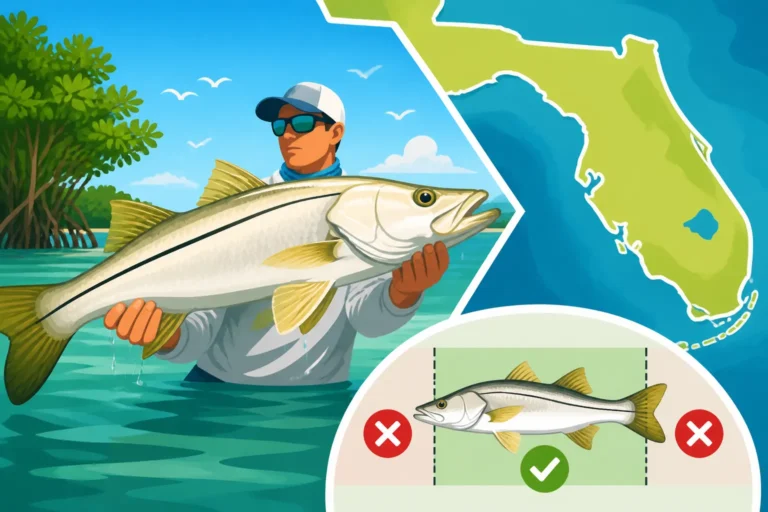
It can be incredibly frustrating to be out on the water, reeling in a powerful fish, only to stare at it and wonder, "Is that a snook or a tarpon?" Many anglers, especially those new to Florida's diverse fisheries, struggle to tell these two magnificent species apart, given their similar silver sheen and impressive fighting capabilities. This guide is here to unravel that mystery, providing clear, definitive characteristics that will help you confidently identify whether you've hooked a majestic tarpon or a feisty snook, ensuring you follow proper regulations and appreciate your catch for what it truly is.
The Common Confusion: Why Anglers Mix Them Up
It's completely understandable why these two iconic Florida game fish often get mistaken for one another. Both snook and tarpon are known for their strong runs, acrobatic jumps, and shimmering silver scales. They frequently inhabit some of the same brackish water environments, like mangrove estuaries, canals, and river mouths, especially when they are younger. Imagine a perfect Florida morning: the sun is just rising, casting a golden glow over the calm, glassy water, and you've got a reel screaming. You finally get the fish to the boat, and it's a long, silver specimen. In the excitement, without knowing the tell-tale signs, it's easy to jump to conclusions or simply be unsure. This ambiguity isn't just a minor detail; misidentification can lead to inadvertently violating regulations, as both species have very specific rules regarding their handling and harvest.
Shared Habitats and General Appearance
One of the biggest reasons for the confusion stems from their overlapping territories. While large, mature tarpon are often found offshore or in expansive open bays, juvenile tarpon frequent the same mangrove-lined creeks and canals that snook call home. Picture yourself casting a topwater lure along a shaded canal bank in Miami, and suddenly, a massive swirl erupts. The initial flash of silver and the sheer power might make you think "tarpon," even if it turns out to be a trophy snook. Both fish also possess that classic, sleek, torpedo-shaped body that screams "predator," contributing further to the initial visual puzzle. They're both built for speed and power, and frankly, they both look incredibly cool.
The "Silver King" vs. the "Linesider" Misconception
The nicknames themselves offer clues, but sometimes the sheer excitement of a catch overshadows memory. Tarpon are famously known as the "Silver King" for their formidable size and impressive, shimmering scales. Snook, on the other hand, are often called "Linesiders" because of their very distinctive lateral line. However, in the heat of the moment, with adrenaline pumping, an angler might focus on the general "silver" aspect of both fish, rather than the specific details. Plus, if you're a newer angler, those nicknames might not yet be ingrained, making immediate identification even trickier. It takes a bit of practice and keen observation to really commit these differences to memory, and that's perfectly normal.
Key Visual Differences: What to Look For
When you've got one of these beauties on the line or in your net, there are a few surefire visual cues you can check immediately. These aren't subtle hints; they're distinct features that, once you know them, make telling a snook from a tarpon almost second nature. You'll be able to confidently identify your catch and even impress your fishing buddies with your newfound knowledge.
The Snook's Distinctive Lateral Line
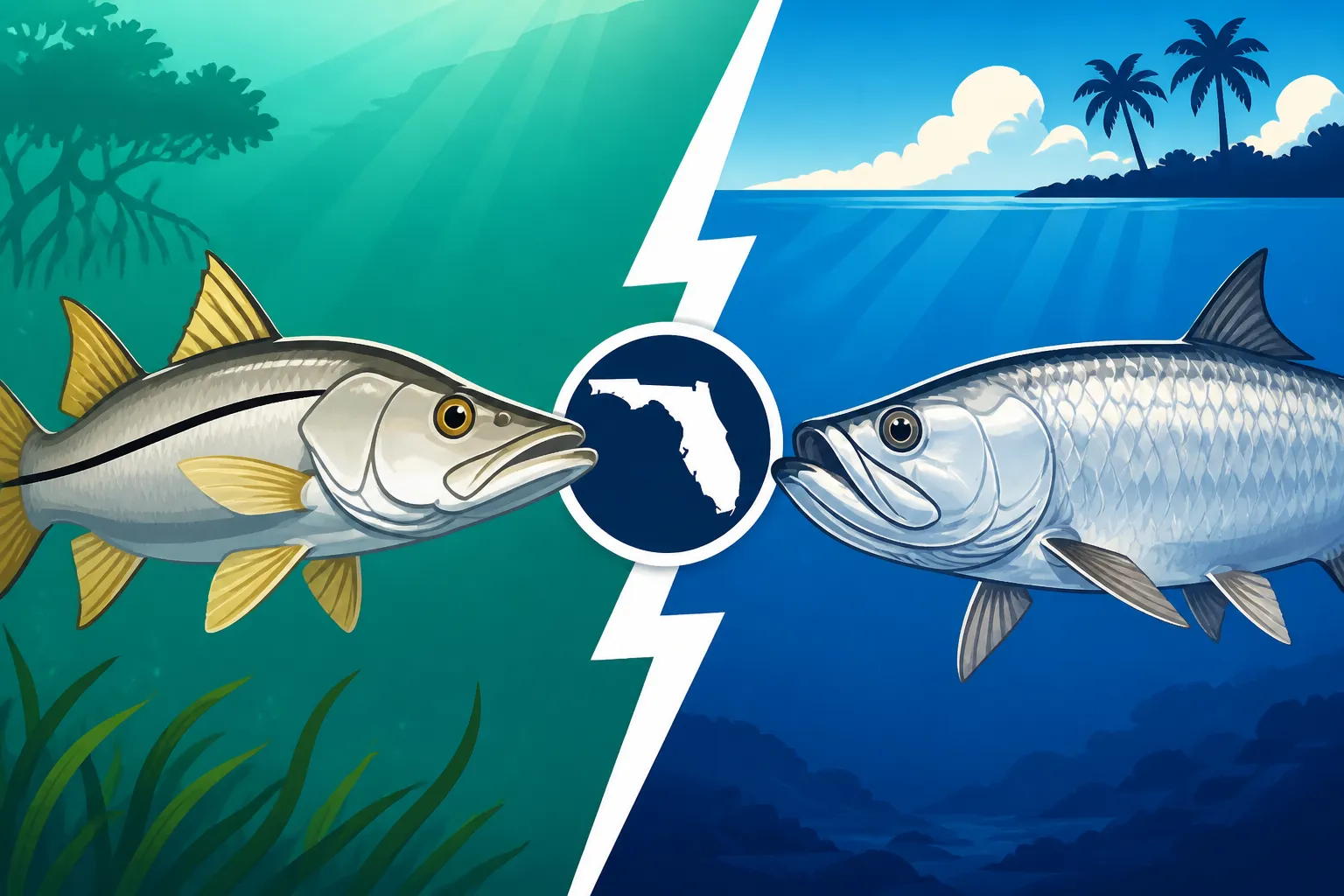
This is perhaps the most obvious and defining characteristic of a snook. Every snook, without exception, has a prominent, jet-black lateral line that runs from its gill plate all the way down its side to the end of its tail. It's so dark and pronounced that it almost looks like someone drew a perfect black stripe with a marker. This line is actually a sensory organ that helps the fish detect vibrations in the water, but for us anglers, it's an unmistakable identifier.
Imagine you've just brought a fish boatside near a dock light in the Indian River Lagoon Fishing Guide, and it's shimmering silver. Before you even look at its mouth, scan its side. If you see that bold, black line cutting through the silver, you've got a snook, plain and simple. Even if the fish is thrashing, that line usually stands out. Florida Snook Fishing Guide mentions that this feature is the easiest way to tell it apart.
Tarpon's Upward-Facing Mouth and Large Scales
Tarpon have a truly unique mouth. It's large, bony, and distinctly upward-facing. Think of it like a giant vacuum cleaner nozzle pointed slightly upwards. This adaptation allows them to gulp air at the surface, which is a common behavior you'll observe if you spend time fishing for them. Their lower jaw protrudes noticeably beyond the upper jaw. They also have huge, iridescent silver scales that are much larger and thicker than a snook's scales. These scales often look like shining armor plates and are a big part of why they're called the "Silver King."
If you've got a fish that looks like it's constantly staring at the sky with a massive, bony mouth, and its body is covered in dinner-plate-sized scales, you're almost certainly looking at a tarpon. Florida Tarpon Fishing Guide highlights this mouth structure as key to their feeding habits and identification.
Snook's Forked Tail and Divided Dorsal Fin
Take a closer look at the tail fin. A snook will have a noticeably forked tail, meaning it's divided into two distinct lobes. While not as deeply forked as some pelagic species, it's definitely not rounded or emarginate. Their dorsal fin is also split into two distinct parts: a spiny anterior dorsal fin and a softer-rayed posterior dorsal fin.
Picture a snook you've just landed near some mangroves. As you get a good look, you'll see that "V" shape in its tail and two separate dorsal fins. These subtle anatomical differences are consistent across all snook species found in Florida, from the common snook to the smaller fat snook.
Tarpon's Single Dorsal Fin and Elongated Ray
Tarpon, in contrast to snook, have a single dorsal fin. However, this isn't just any single dorsal fin; it has a very distinct, elongated last ray that trails back almost like a thin whip. This feature, sometimes called a "filamental ray," is a dead giveaway for a tarpon. Their tail fin is also deeply forked, much more so than a snook's, indicating their power and speed in open water.
Imagine observing a tarpon as it leaps from the water, a truly spectacular sight. If you pay close attention to its dorsal fin during its aerial display, you'll often see that trailing filament, fluttering in the air. This, combined with its deeply forked tail, confirms your magnificent catch.
Here's a quick comparison table to keep handy:
| Feature | Snook (Centropomus undecimalis) | Tarpon (Megalops atlanticus) |
|---|---|---|
| Lateral Line | Prominent, jet-black, distinct | Indistinct or absent |
| Mouth | Large, elongated, lower jaw slightly protruding, but more horizontal | Large, bony, distinctly upward-facing, lower jaw protrudes significantly |
| Dorsal Fin | Two distinct fins (spiny and soft-rayed) | One single dorsal fin with an elongated last ray |
| Tail Fin | Forked, but less deeply than tarpon | Deeply forked |
| Scales | Smaller, smoother, still silvery | Very large, thick, iridescent silver |
| Body Shape | Sleek, elongated | Robust, powerful, often thicker-bodied for its length |
Behavioral Traits and Habitat Preferences
Beyond their physical appearance, snook and tarpon exhibit distinct behaviors and tend to prefer slightly different environments, which can also help you identify them before you even get a hook in them. Observing these patterns can give you a heads-up on what you might be targeting.
Snook: Ambush Predators in Structure
Snook are classic ambush predators. They love structure – think mangrove roots, dock pilings, submerged trees, canal junctions, and even bridge fenders. They'll typically lie in wait, hidden from view, until an unsuspecting baitfish or shrimp swims by, then explode from cover to strike. This behavior means you're often targeting snook by casting close to or under these structures.
If you're fishing a tidal creek in the Everglades and repeatedly getting strikes right next to a gnarly root system, chances are good you're on a snook. They aren't usually found cruising open flats in large schools like tarpon often do. Their territorial nature means they'll often hold in the same spots, waiting for the current to bring them a meal. This preference for tight cover also means they are incredibly challenging to land, as they'll immediately try to "grenade" you back into the structure, often chafing your line.
Tarpon: Schooling and "Rolling" at the Surface
Tarpon, especially larger ones, are often found in open water, cruising in schools along beaches, passes, and expansive flats. They are famous for their "rolling" behavior, where they come to the surface, gulp air, and then submerge. This is a common sight in places like Boca Grande Pass Tarpon Fishing in Southwest Florida or the backcountry of the Florida Keys. This gulping of air helps them survive in low-oxygen environments, but it also gives away their presence to observant anglers.
If you see several large, dark shapes breaking the surface, slowly coming up for air, and then disappearing again, you've spotted tarpon. They don't typically hide deep within dense mangrove roots like snook; instead, they prefer to roam. When hooked, they're renowned for their explosive, acrobatic jumps, often clearing the water entirely multiple times during a fight. This aerial display is far less common for snook, which tend to stay closer to the water's surface or even below it during a fight.
Dietary Preferences: A Subtle Clue
While both are opportunistic feeders, there are slight differences in their preferred diets that can offer another clue. Snook are primarily piscivores, meaning they eat fish, but they also love shrimp and crabs. They're particularly fond of smaller baitfish like pilchards, mullet, and pinfish. Their elongated mouth and powerful jaws are perfectly suited for engulfing these prey items in tight quarters.
Tarpon have a more varied diet depending on their size and location. While they also love mullet and pilchards, larger tarpon will readily consume crabs, especially during their migrations, and even smaller fish like ladyfish. Their upward-facing mouth is perfect for sucking in prey from the surface, but they'll also feed actively subsurface. Understanding what bait they're likely to strike can sometimes give you a hint of what species might be lurking beneath. For example, a big live crab drifted in a pass might be more appealing to a migrating tarpon than a snook. Best Bait for Snook Fishing in Florida and Best Bait for Tarpon Fishing in Florida delve deeper into these preferences.
The Importance of Correct Identification for Regulations
Beyond just knowing what you've caught, accurately identifying snook and tarpon is absolutely critical for compliance with Florida fishing regulations. Both species are highly managed, with specific seasons, size limits, and bag limits that can vary by region. Misidentification can lead to serious fines and penalties, and it also undermines conservation efforts.
Snook Regulations: Size, Season, and Harvest Limits
Snook are strictly regulated in Florida, and for good reason—they are highly prized game fish and sensitive to environmental changes. They have specific slot limits, meaning the fish must be within a certain length range to be legally harvested. Anything too short or too long must be immediately released. Additionally, snook seasons are closed for significant portions of the year, particularly during cooler months when they are more vulnerable to cold snaps, and typically during their spawning aggregation periods in summer. The rules can even vary between Florida's Gulf Coast and Atlantic Coast.
For example, if you catch a fish and think it's a tarpon (which is almost exclusively catch-and-release), but it's actually a legal-sized snook in season, you might release it unknowingly, missing an opportunity to harvest. Conversely, if you keep a fish thinking it's a legal snook, but it's undersized or caught during a closed season, you could face legal trouble. Always check current regulations before heading out. Florida Snook Size and Slot Limits and Florida Snook Closed Season Dates are essential reads.
Tarpon Regulations: Primarily Catch-and-Release
Tarpon fishing in Florida is almost entirely a catch-and-release fishery. Harvesting a tarpon is highly restricted and generally requires a special permit for a single fish per person, per year, and only under very specific circumstances (often for record-breaking fish). For the vast majority of recreational anglers, any tarpon caught must be immediately and carefully released. They are truly the "Silver King" of sport fishing, valued more for their fight and beauty than for their table fare.
If you mistakenly identify a tarpon as a snook and attempt to keep it, you'd be in serious violation. The emphasis on careful handling and immediate release for tarpon is paramount to ensuring the health of the species. This means minimizing their time out of the water, avoiding dragging them onto surfaces, and using appropriate dehooking tools. Knowing Florida Fishing Regulations and Bag Limits is crucial for all anglers, but especially when targeting these two species.
What Happens If You Catch the Wrong Fish?
So, you're out there, and despite your best efforts, you've made a mistake. What then? The best course of action is always to release the fish quickly and safely, even if you are unsure. If you suspect it might be a snook and you're outside the slot or season, or if you think it's a tarpon, a quick, gentle release is the safest bet for both you and the fish. Conservation officers take these regulations seriously.
Having a measuring device readily available and knowing the rules before you cast a line is your best defense. If you're using tackle that you bought from a place like Amazon or a local tackle shop, make sure it's appropriate for safely handling and releasing these powerful fish. Always err on the side of caution.
Fishing Techniques and Gear Considerations
The subtle differences in behavior and habitat between snook and tarpon also influence the fishing techniques and gear you might choose. While there's overlap, optimizing your setup can increase your chances of success for your target species and help with identification by narrowing down what you're likely to catch.
Targeting Snook: Accuracy and Structure Fishing
When targeting snook, precision casting is key. You'll often be trying to place your lure or bait right up against or under heavy cover. This calls for accurate casts and quick retrieves. Light to medium-heavy spinning or baitcasting gear is typically used, paired with braided line for sensitivity and strength, and a fluorocarbon leader for abrasion resistance against sharp structures and the snook's rough mouth. You'll often be using lures like soft plastic paddletails, jerkbaits, topwater plugs, or live bait like pilchards or shrimp.
Imagine you're fishing a mangrove creek system in Southwest Florida. You're using a medium-heavy rod and a 3000-series reel, throwing a weedless soft plastic. You specifically cast to a dark shadow under an overhanging mangrove branch. This setup and technique are prime for snook. Best Rod and Reel Setup for Florida Inshore Fishing offers more specific advice.
Targeting Tarpon: Mobility and Power
Tarpon fishing often requires a different approach, especially for larger fish. While juvenile tarpon can be found in snook-like habitats, big tarpon require heavier gear. If you're sight fishing for tarpon on the flats, a strong fly rod or heavy spinning tackle might be your choice. For passes or open water, even heavier conventional gear might be necessary to handle their immense power and jumps. Live bait like mullet, threadfin herring, or crabs are popular, as are large artificials. Mobility is often key, as you might need to quickly move the boat to stay with a "rolling" school or chase a hooked fish.
Consider a scenario in the Florida Keys during the Florida Tarpon Migration Timing. You're anchored in a pass, floating a live mullet out. You're using a heavy-duty spinning reel spooled with 50-pound braid and a thick fluorocarbon leader. This is the kind of setup you'd prepare for a serious tarpon encounter. You're anticipating long runs and spectacular jumps.
The Right Tools for the Job
Regardless of whether you're explicitly targeting snook or tarpon, having versatile gear is beneficial for Florida's diverse waters. A good quality rod and reel that can handle a strong fight from either species is important. Many anglers will carry a variety of lures and baits, keeping an eye on the water for signs of either fish. For safe release, especially with tarpon, a good set of dehooking pliers and a lip gaff (for tarpon, if you're planning to bring it boat-side for a photo, which should be done very quickly and carefully) are essential. You can find many of these crucial fishing accessories on Amazon, ensuring you're well-equipped for whatever Florida's waters throw at you.
Conservation and Angler Ethics
As responsible anglers, our role extends beyond just catching fish; it's about protecting the resource for future generations. Both snook and tarpon are incredible species that attract anglers from all over the world, and ethical practices ensure they continue to thrive. Your ability to correctly identify these fish plays a direct role in these efforts.
Catch and Release Best Practices
For tarpon, almost all fishing is catch-and-release, so practicing proper handling is paramount. This means minimizing the fight time, keeping the fish in the water as much as possible, using barbless hooks when appropriate, and having the right dehooking tools. Never drag a tarpon onto the shore or boat deck. If you must take a photo, do so quickly with the fish partly submerged, supporting its weight properly.
For snook, even if they are within legal size and season, many anglers choose to release them. If you do decide to harvest a legal snook, ensure you handle it carefully before and after the measurement. Use a sturdy net or lip-grippers if needed, but always prioritize the fish's well-being. Catch and Release Best Practices for Snook provides excellent guidelines.
Reporting and Data Collection
Correct identification also helps with scientific data collection. When anglers report their catches or participate in creel surveys, accurately identifying the species provides valuable information for fisheries management. This data helps biologists understand populations, monitor health, and set regulations that are truly effective. If you're ever participating in a research program or just chatting with a FWC officer, your ability to say "I caught a snook" versus "I caught a tarpon" with confidence can genuinely contribute to the bigger picture of Florida's fishery health.
Responsible angling means not only adhering to current regulations but also understanding the "why" behind them. These regulations are designed to protect the very fish we love to pursue. By knowing the difference between a snook and a tarpon, you're not just a better angler; you're a better steward of Florida's incredible natural resources.
Conclusion: Becoming a Confident Identifier
Learning to differentiate between a snook and a tarpon might seem daunting at first, especially when you're caught up in the thrill of the chase. But with a little knowledge, keen observation, and practice, you'll soon be able to confidently tell these magnificent creatures apart. Remember to focus on those key visual cues: the snook's undeniable black lateral line, its forked tail, and divided dorsal fin, versus the tarpon's distinctive upward-facing, bony mouth, large scales, deeply forked tail, and that elongated last dorsal fin ray.
Their unique behaviors and preferred habitats also offer valuable clues, guiding your fishing techniques and helping you anticipate what might be at the end of your line. Most importantly, understanding these differences ensures you comply with Florida's vital fishing regulations, helping to conserve both the "Silver King" and the "Linesider" for generations of anglers to come. So next time you're out on Florida's beautiful waters and feel that familiar tug, take a moment, look closely, and enjoy the satisfaction of knowing exactly what incredible fish you've just encountered.
Disclaimer
This article is for general informational purposes only and does not constitute professional advice. Laws, prices and regulations vary by location and change over time. Consult a qualified professional for guidance on your specific situation.