Can College Students Get a Florida Resident License?
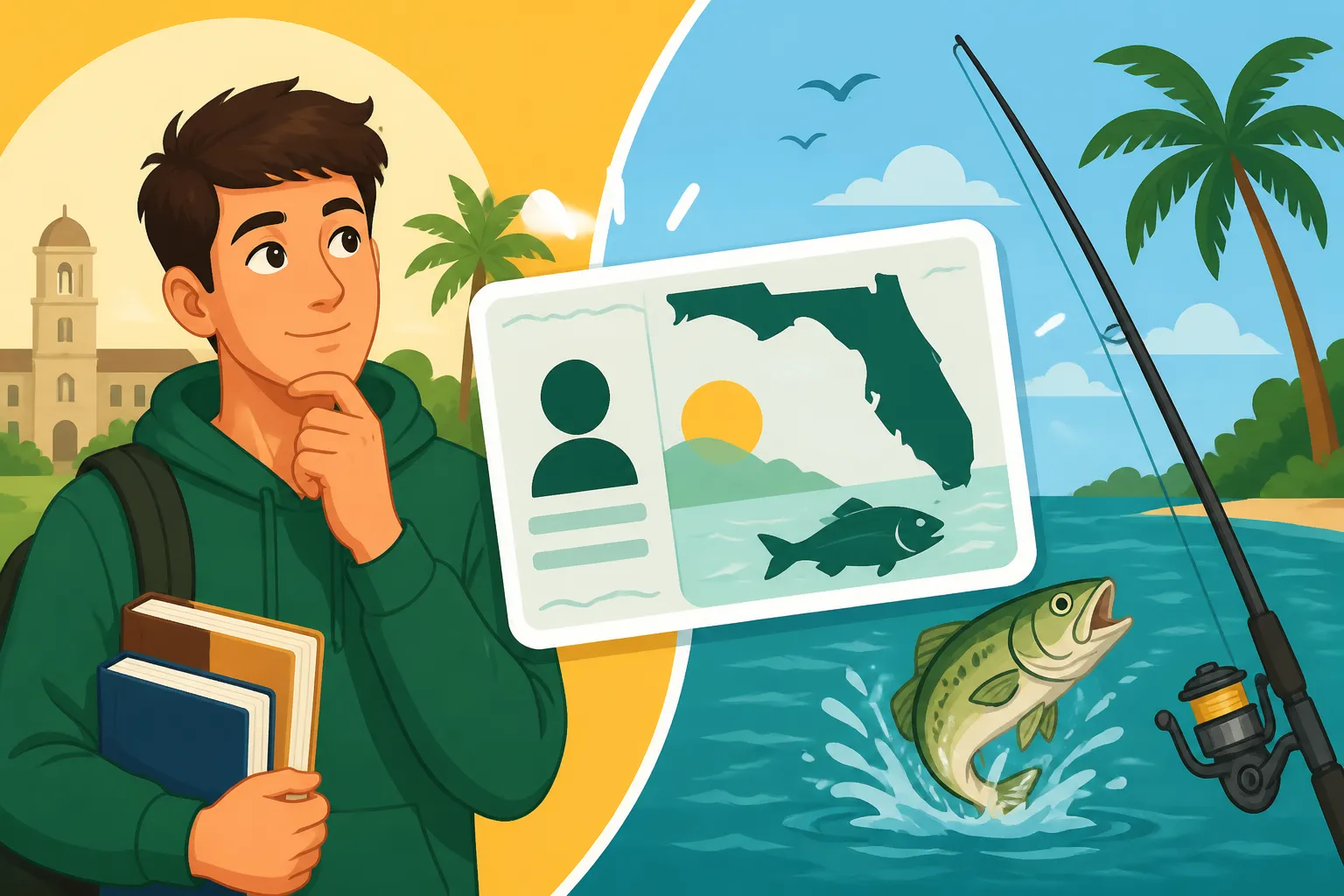
It can feel incredibly frustrating to be living in Florida, attending college, and yet still scratching your head about whether you actually qualify for a resident fishing license. You're here, you're paying tuition, you're part of the community, but the rules for establishing residency for something like a fishing license can feel like a labyrinth, especially when you're caught between your college town and your family's home state. This guide is here to untangle that confusion, offering clear, realistic advice on whether you, as a college student, can get a Florida resident fishing license and what you need to do to prove it.
Understanding Florida Residency for Fishing Licenses
When it comes to recreational licenses, Florida doesn't just look at whether you're physically present in the state. The Florida Fish and Wildlife Conservation Commission (FWC) has specific criteria for what constitutes a "resident," and it largely hinges on proving your intent to make Florida your permanent home, also known as establishing domicile. For college students, this often presents a unique challenge.
The General Rules for Establishing Residency
Generally speaking, to be considered a Florida resident for the purposes of obtaining a fishing license, you must have established a "domicile" in Florida and resided in the state for at least six continuous months immediately prior to applying for the license. This isn't just about crashing on a friend's couch or having an apartment for the school year. It's about demonstrating a clear intention to make Florida your principal home.
The FWC will look for objective proof that you've cut ties with your previous state of residence and set down roots here. This might include getting a Florida driver's license, registering to vote in Florida, or even filing for a homestead exemption if you were in a position to purchase property (though that's less common for students!). The idea is to prove that Florida isn't just a temporary stop, but the place you call home. Without this clear demonstration, even if you’ve lived here for years for school, you might still be considered a nonresident. You can find more comprehensive details on the general criteria in our Florida Resident Fishing License Rules guide.
The Specific Challenge for College Students
This is where it gets tricky for many college students. While you might live in Florida for eight or nine months out of the year, many students still maintain strong ties to their home states. Perhaps your parents claim you as a dependent in another state, you still have a driver's license from your previous state, or you return there for extended summer and winter breaks. These factors can make it difficult to prove Florida domicile for a fishing license.
The FWC understands that students are often in a transitional phase. They're looking for concrete evidence that your move to Florida wasn't just for educational purposes, but that you genuinely intend for Florida to be your permanent residence. If you can't provide that evidence, then even if you feel like a local, you might be required to purchase a Florida Nonresident Fishing License Types and Costs. The key is to avoid misrepresenting your residency, as doing so can lead to significant penalties, as detailed in our guide on What Happens If You Fish Without a License.
Key Factors for College Students to Prove Florida Residency
For college students aiming to secure a Florida resident fishing license, it’s all about accumulating enough verifiable proof that you genuinely consider Florida your permanent home. Think of it like building a case; the more compelling evidence you have, the stronger your position.
Florida Driver's License or ID Card
This is, without a doubt, one of the strongest indicators of Florida residency. If you've gone through the process of surrendering your out-of-state driver's license and obtaining a Florida driver's license or a Florida identification card, it sends a clear message that you intend to make Florida your home. The Department of Highway Safety and Motor Vehicles (DHSMV) has its own residency requirements for issuing these documents, which are often stricter than what some other states might require for certain benefits.
Getting a Florida driver's license shows commitment. It suggests you've taken steps to officially integrate into the state, rather than just being a temporary visitor. Many students hold onto their out-of-state licenses to avoid the hassle, but if your goal is a resident fishing license, this step is practically non-negotiable. It's a foundational piece of documentation that nearly all FWC agents will look for first.
Voter Registration in Florida
Another powerful piece of evidence proving your intent to establish domicile is registering to vote in Florida. By registering here, you are officially declaring that this is the place where you exercise your civic duties and intend to be a long-term resident. It signals that your political and community ties are now in Florida, rather than your previous state.
While not as tangible as a driver's license, voter registration is a strong statement of intent. It directly contradicts the idea that you are merely a transient student. If you haven't yet registered to vote in Florida, consider this a significant step in bolstering your residency claim for your fishing license. It's relatively easy to do at your local Supervisor of Elections office or through online portals.
Proof of Domicile in Florida
Beyond official government-issued IDs, demonstrating that you have a physical domicile—a real home—in Florida is crucial. This goes beyond just living in a dorm. Think about the tangible documents that show you've set up a household here.
- Rental Agreements or Property Ownership: If you have a lease agreement for an apartment or house in Florida in your name, that's excellent proof. It shows you're financially committed to residing here. If you're fortunate enough to own property, even better!
- Utility Bills: Bills for electricity, water, or internet in your name at your Florida address are solid evidence of your continuous physical presence and responsibility for a residence in the state.
- Vehicle Registration: If you own a car, registering it in Florida and getting Florida license plates further supports your claim. This ties another significant asset to the state.
- Bank Accounts: Having your primary banking accounts, especially checking and savings, with a Florida address and a Florida bank branch can also help.
The FWC is looking for a pattern, a collection of these documents, to paint a clear picture. If you're still using your parents' address in another state for many of these things, it weakens your claim to Florida residency. For example, if you rent an apartment but your car is registered in Georgia, and your bank statements go to an Ohio address, it's hard to argue Florida is your true domicile.
Financial Independence or Employment in Florida
While not always a strict requirement, showing financial ties to Florida can significantly strengthen a college student's residency claim.
- Florida Employment: If you have a job in Florida, whether it's part-time during school or full-time during breaks, this is compelling evidence. Pay stubs showing a Florida address and Florida tax deductions demonstrate a sustained economic connection to the state.
- Florida-Based Financial Accounts: Beyond just banking, if you have other financial dealings—perhaps a local credit union account, investments managed by a Florida firm, or even a local gym membership charged to a Florida address—these small details add up.
- Filing Florida Taxes (if applicable): If your income is significant enough to require state tax filing (though Florida has no state income tax, sales tax and other local taxes still apply), showing that your financial life is centered here can be helpful.
For many students, financial independence is still a work in progress. It's common to still be supported by parents out-of-state. This doesn't automatically disqualify you, but it means you'll need to rely even more heavily on other forms of documentation like your driver's license, voter registration, and housing agreements to prove your intent to stay.
When College Students Might NOT Qualify as Florida Residents
It’s crucial to be realistic about your situation. While you might feel like a resident, the FWC's definition is specific, and many college students, despite living here for school, simply won't meet the criteria for a resident fishing license. Trying to bend the rules can lead to legal trouble, so it's always better to be honest about your residency status.
Maintaining Out-of-State Ties
This is the biggest hurdle for most college students. If you still have significant connections to another state, Florida is unlikely to consider you a resident for fishing license purposes. Here are some common scenarios:
- Out-of-State Driver's License: If you still possess a valid driver's license from your home state, the FWC will almost certainly consider you a nonresident. This is often the first thing they check. Many students avoid changing their license to save time or hassle, but it's a critical piece of the residency puzzle.
- Voter Registration Elsewhere: If you're still registered to vote in your previous state of residence, it clearly shows your intent to maintain domicile there.
- Returning Home for Breaks: While not a disqualifier on its own, if you spend significant portions of your summer, winter, and spring breaks living at your parents' house out-of-state, it can contradict the claim that Florida is your permanent home. FWC looks for "continuous months" of residence, and prolonged absences can muddy the waters.
- Vehicles Registered Out-of-State: Driving a car with out-of-state plates, especially if you've been in Florida for more than a year, can indicate nonresident status. Florida typically requires vehicles to be registered within 10 days of establishing residency.
The FWC is looking for a comprehensive picture. If a majority of your official documentation and lifestyle choices still point to another state, then despite your physical presence in Florida, you're likely still a nonresident.
The "Temporary Presence" Rule
Florida law generally distinguishes between being "present" in the state and being "domiciled" here. Many college students fall under the category of temporary presence, meaning they are in Florida for a specific, temporary purpose (education) but do not necessarily intend to make it their permanent home.
Think of it this way: someone on a long vacation or a temporary work assignment is present in Florida, but they're not a resident. While college lasts longer, the principle can be similar. Unless you've actively taken steps to transition your entire life to Florida, demonstrating that it's no longer just a temporary stay for school, you'll likely be viewed as temporarily present rather than a permanent resident. For instance, if you plan to move back to your home state immediately after graduation, it’s hard to argue Florida is your permanent domicile. This is a common pitfall for students who haven't fully committed to making Florida their post-graduation home.
Navigating the Application Process and What to Expect
Once you've gathered your documents and feel confident in your Florida residency claim, the actual application process for a fishing license is relatively straightforward. However, being prepared for potential questions can make the experience much smoother.
Documents to Prepare
Having your documents organized is key. You'll want to present a clear and consistent picture of your Florida residency. Here's a table summarizing the essential documents you should have ready:
| Document Type | Why It's Important for Students |
|---|---|
| Florida Driver's License or ID Card | Primary Proof: This is usually the strongest single piece of evidence. It shows you've officially switched your primary identification to Florida, indicating a commitment to the state. |
| Florida Voter Registration Card | Proof of Intent: Demonstrates your intent to participate in Florida's civic life, which is a strong indicator of domicile. |
| Residential Lease Agreement/Deed | Physical Residence: Proves you have a dedicated residence in Florida in your name, establishing a physical presence. |
| Utility Bills (Electric, Water, Internet) | Ongoing Presence: Shows continuous use of a Florida address and that you are financially responsible for services at that location. |
| Vehicle Registration in Florida | Asset Tie-In: Ties a major asset to the state, supporting your claim of permanent residency. |
| Bank Statements with Florida Address | Financial Tie-In: Shows your financial life is rooted in Florida. |
| Employment Records (Pay Stubs) | Economic Tie-In: If employed in Florida, proves an economic connection and contribution to the state. |
| Declaration of Domicile (Optional) | Formal Statement: A legal document filed with the Clerk of Court, formally declaring your intent to establish Florida as your permanent residence. While not always mandatory for a fishing license, it can be powerful. |
Remember, the more of these documents you can provide that consistently show your ties to Florida, the better. One or two might not be enough if other evidence points elsewhere.
Where to Apply
Fortunately, getting a fishing license in Florida is very accessible. You have a few options:
- Online: The easiest and often quickest way is through the Florida Fish and Wildlife Conservation Commission (FWC) website, GoOutdoorsFlorida.com. You can purchase your license directly from their portal, and in many cases, print a temporary license immediately. This is a popular choice for busy students.
- In Person at a County Tax Collector's Office: Your local county tax collector's office is an excellent place to go, especially if you have questions or a complex residency situation. The staff there are usually well-versed in the requirements and can review your documents directly. This is often the best option if you're concerned about your residency documentation.
- Retail Agents: Many sporting goods stores (like Bass Pro Shops or even the fishing section at a larger Walmart) and bait and tackle shops are licensed agents that can issue fishing licenses on the spot. Just be aware that while convenient, they might not be equipped to delve into complex residency questions, and may defer to the FWC or tax collector if your situation isn't clear-cut.
For more detailed information on purchasing methods, check out our guide on Where to Buy a Florida Fishing License Near You.
Potential Questions and Clarifications
When applying, especially if your residency isn't immediately obvious, be prepared for some questions. FWC agents and tax collector staff are trained to verify residency, and they might ask about:
- Duration of Residence: How long have you continuously lived in Florida?
- Intent: Do you intend to remain in Florida after graduation, or do you plan to return to your home state?
- Other Ties: Do you have a driver's license from another state? Are your parents claiming you as a dependent in another state for tax purposes?
- Documentation: They will likely ask to see your Florida driver's license or ID, and potentially other supporting documents from the table above.
The best approach is always to be honest and provide as much supporting documentation as possible. Trying to obscure facts or misrepresent your situation can lead to more problems than simply purchasing a nonresident license. Remember, their goal isn't to deny you a license, but to ensure everyone is adhering to the regulations that help fund Florida's conservation efforts.
Alternatives for Non-Resident College Students
If, after reviewing the criteria, you determine that you don't quite meet the Florida residency requirements, don't despair! Florida is incredibly welcoming to visitors, and there are several convenient options for nonresident college students to enjoy its amazing fishing opportunities.
Nonresident Fishing License Options
Florida offers various nonresident fishing licenses that cater to different needs and durations. These are designed for out-of-state visitors, including students who haven't yet established full residency.
- Short-Term Nonresident Licenses: These are perfect if you only plan to fish during certain breaks or a few weekends. You can typically purchase a 3-day or 7-day nonresident license. These are cost-effective for short trips and ensure you're fully compliant with the law. For example, a student visiting the Florida Keys for spring break might opt for a 7-day saltwater license to target bonefish or snapper.
- Annual Nonresident Licenses: If you plan to fish frequently throughout the academic year, an annual nonresident license might be a better value in the long run. While more expensive than resident licenses, it provides a full year of fishing access without needing to worry about expiry dates for each trip. You can find detailed costs in our Florida Nonresident Annual Fishing License Cost guide.
These licenses are readily available online through GoOutdoorsFlorida.com, at county tax collector offices, and at authorized retail agents. They remove the stress of proving residency and allow you to focus on what you came to do – fish!
Fishing License Exemptions
Even if you're a nonresident student without a specific license, there are a few situations where you might not need one to fish in Florida. These exemptions can be a great way to enjoy some casual fishing without the full commitment of a license purchase.
- Licensed Fishing Piers: Many public and private fishing piers in Florida operate under a blanket pier license. If you're fishing from one of these specially licensed piers, you often do not need an individual fishing license. This is a fantastic option for a quick fishing outing with friends. Always look for signage or ask pier staff to confirm if they hold a valid pier license. Our article Do You Need a License to Fish From a Florida Pier? provides more context on this popular exemption.
- Charter Boats: When you book a fishing trip with a licensed Florida fishing charter, the charter boat itself holds a vessel-wide fishing license that covers everyone on board. This means you, as an individual angler, do not need to purchase a separate license for the duration of that trip. This is an ideal solution for students wanting to experience Florida's offshore or inshore fishing without the hassle of licenses or gear. Many charter companies, like those out of Destin or Key West, will handle all the licensing details for you. You can learn more about this in Florida Charter Boat Fishing License Rules.
- Florida Free Fishing Days: Florida also offers several "Free Fishing Days" throughout the year, typically two for freshwater and two for saltwater. On these designated days, residents and nonresidents alike can fish without a license. These are fantastic opportunities to try out fishing or introduce friends to the sport. Keep an eye on the FWC calendar for these dates! You can find more information about these special days in our Florida Free Fishing Days guide.
Remember, even when exempt from a license, all other fishing regulations, such as bag limits, size limits, and gear restrictions, still apply. Always stay informed about the local rules to ensure a legal and enjoyable fishing experience. You can easily find current regulations on the FWC website or by picking up a copy of their regulations handbook, often available at local bait shops or online retailers like Amazon.
Disclaimer
Please remember that fishing regulations and license requirements can change. While we strive to provide the most accurate and up-to-date information, it is always your responsibility to consult the official Florida Fish and Wildlife Conservation Commission (FWC) website or contact them directly to confirm current rules before engaging in any fishing activities.