Cruise Ship Passenger Fishing License Rules in Florida
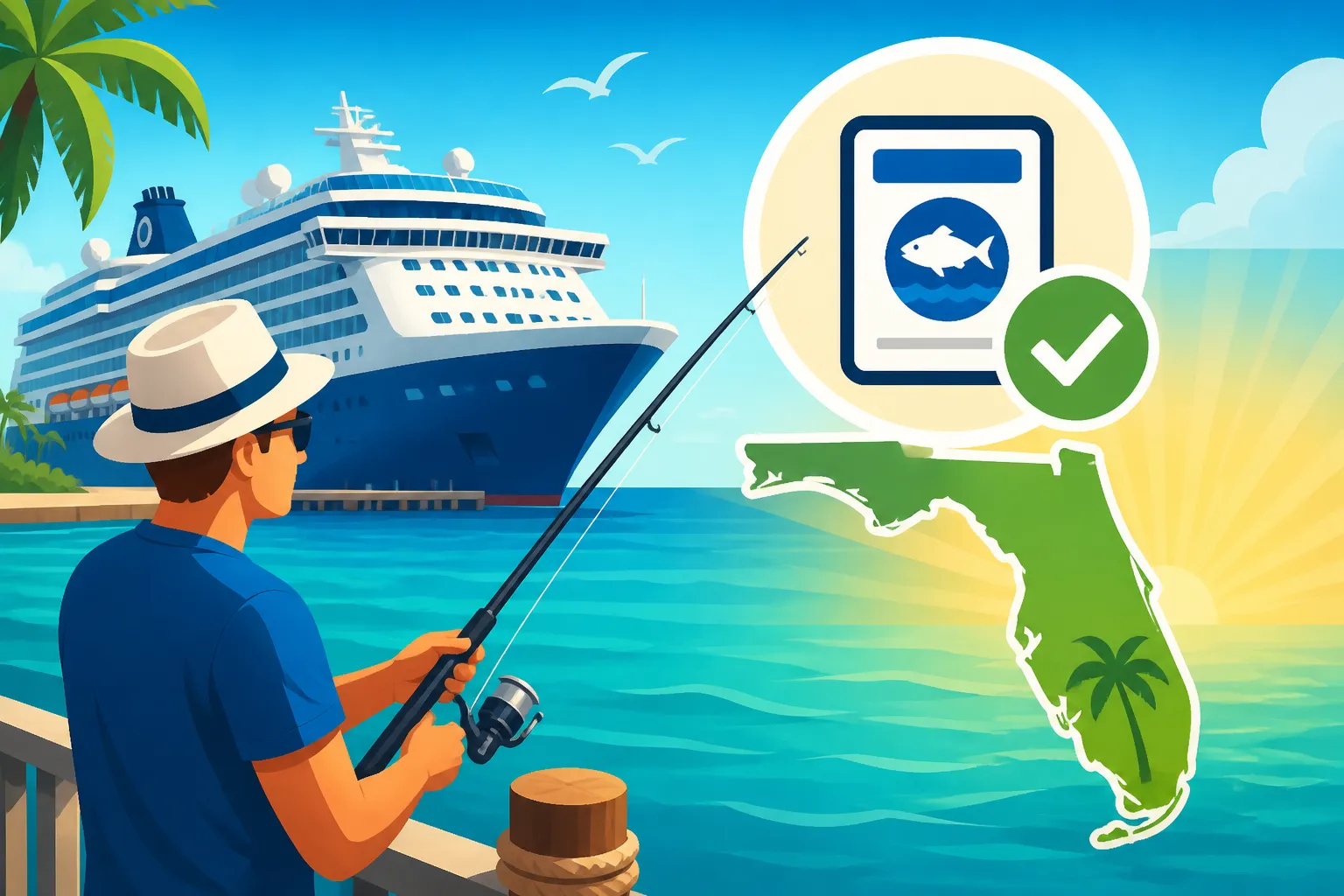
Ah, the excitement of a Florida cruise! You're dreaming of turquoise waters, warm sunshine, and maybe even a quick fishing trip during a port call. But hold on a minute—before you cast your line, there's a crucial detail that often catches visitors off guard: fishing licenses. Many cruise ship passengers assume they're exempt, or that their charter covers everything, but the reality can be quite different. This guide is here to untangle the specific fishing license rules for cruise ship passengers in Florida, ensuring your spontaneous angling adventure doesn't turn into an unexpected headache.
Setting Sail into Florida Fishing: Why Licenses Matter for Cruise Passengers
There's nothing quite like pulling up to a stunning Florida port, feeling that salty breeze, and thinking about dropping a line into the abundant waters. Whether you're docking in Miami, Fort Lauderdale, or Port Canaveral, the allure of Florida's fishing is undeniable. However, it's a common misconception that being a transient visitor, especially on a cruise, somehow exempts you from the state's fishing regulations. That's just not how it works, unfortunately.
The Unavoidable Truth: Licensing for Recreational Angling
Florida takes its fisheries seriously, and for good reason—they're a massive draw for tourism and a vital part of the state's ecosystem. The revenue generated from fishing licenses directly funds conservation efforts, habitat restoration, and enforcement programs by the Florida Fish and Wildlife Conservation Commission (FWC). This means that almost everyone engaging in recreational fishing, regardless of their residency or the duration of their stay, needs a license. This applies whether you're targeting big game fish offshore, trying your luck with snook in an inlet, or simply enjoying some catch-and-release from a pier. Even if you're only spending a few hours in port, the rules still apply. It's not about how long you're here, but what activity you're engaging in.
For a deeper dive into the general requirements, you might want to read our comprehensive guide on Who Needs a Fishing License in Florida. It clarifies many of the basic situations where a license is mandatory, helping you avoid any surprises during your vacation. The key takeaway for cruise passengers is that unless a very specific exemption applies—which we'll cover—you'll likely need your own license to legally fish.
Distinguishing Between Saltwater and Freshwater Needs
Florida is unique in that it requires separate licenses for saltwater and freshwater fishing, or a combination license that covers both. This distinction is crucial for cruise passengers because your fishing plans might vary greatly depending on the port and the type of excursion. Are you planning to hit the vast blue ocean for some offshore action, or are you hoping to try for bass in a nearby canal or lake during your port visit?
If your cruise takes you to a coastal city like Tampa or Key West, and your fishing dreams involve the ocean, bays, or estuaries, you'll need a Florida Saltwater Fishing License. This covers everything from redfish and trout in the flats to snapper and grouper offshore. However, if your port call in a place like Jacksonville somehow involves a quick trip to fish the St. Johns River for largemouth bass, then a Freshwater Fishing License would be your requirement. For many visitors, especially those who aren't quite sure which waters they'll be exploring, opting for the combination license is often the simplest and most stress-free solution, providing coverage for both environments. It removes the guesswork and ensures you're prepared for any opportunity that arises. You can learn more about this by checking out Florida Saltwater vs Freshwater Fishing License.
Navigating License Requirements for Cruise Excursions
So, you're off the ship and ready to explore! Your fishing plans might range from a dedicated charter to a casual cast from the nearest accessible spot. Each scenario comes with its own set of rules regarding fishing licenses, and understanding these nuances is key to a smooth, legal, and enjoyable experience.
When Your Charter Boat Covers the License
This is perhaps the biggest area of confusion for cruise passengers. Many visitors correctly assume that if they book a fishing charter, the captain handles all the licensing. And often, they're right! Licensed Florida fishing charter boats and party boats typically operate under a vessel-wide fishing license that covers all their paying customers. This means that if you're on a legitimate, FWC-licensed for-hire vessel, you usually do not need to purchase your own individual recreational fishing license. This is a huge convenience and one of the main appeals of booking a charter.
However, it's absolutely vital to confirm this with your charter captain before you book or embark. Don't just assume. A reputable captain will clearly state whether their vessel's license covers all anglers. This is particularly true for larger party boats that might take out dozens of people, like those found in Destin or Fort Myers Beach. They rely on their blanket license. For smaller, private charters, especially those operating more as guides than large commercial vessels, it’s still common but always worth double-checking. You'll find more details on this specific topic in our article Do You Need a License to Fish From a Charter Boat in Florida?, which can give you peace of mind.
Independent Angling: Piers, Shorelines, and Rental Boats
Now, if you decide to go rogue and embark on your own fishing adventure during your port stop, the rules change significantly. This is where most cruise passengers can easily run afoul of regulations without realizing it.
If you plan to fish from the shore, wade into the shallows, or cast from a bridge or an unlicensed pier, you absolutely will need your own Florida fishing license. There's no blanket exemption for visitors in these scenarios. Imagine spending a relaxing hour at a local beach near Port Everglades, casting a line into the surf – that requires a license. The same goes for fishing from a municipal pier that isn't specifically licensed as a "pier fishing license exemption" facility. Many public piers require individual licenses. Our guide, Do You Need a License to Fish From a Florida Pier?, offers valuable insights into pier-specific rules. Furthermore, if you decide to rent a small skiff, kayak, or paddleboard to fish the local waters, that rental vessel is not a licensed charter, and you, as the operator and angler, will need your personal license. This is a crucial distinction and a point of frequent misunderstanding.
Fishing from Private Boats or Rentals
Let's say you're visiting friends or family who live near your port of call, and they have their own private boat. If you're fishing from their private vessel, and that vessel isn't a licensed charter, then you, as an individual angler, still need your own Florida fishing license. The boat itself being registered doesn't cover the anglers on board. The same rule applies if you rent a boat from a marina for personal use (not a guided charter). You are responsible for your own licensing. It’s always better to be safe than sorry; a quick check of the regulations or a visit to the FWC website will clarify any doubts.
Your Guide to Obtaining a Florida Fishing License from Afar
Realizing you need a license during your cruise stop might feel like a last-minute scramble, but thankfully, Florida has made the process incredibly convenient, even for out-of-state visitors. You don't have to wait until you hit shore to sort this out; you can often handle it before your ship even sets sail.
The Convenience of Online and Mobile App Purchases
The easiest and most recommended way for cruise ship passengers to obtain a Florida fishing license is online. The Florida Fish and Wildlife Conservation Commission (FWC) has a dedicated licensing portal on its GoOutdoorsFlorida.com website. It's user-friendly and accessible 24/7. You can purchase your license weeks or even months in advance of your trip. All you need is internet access, a credit card, and some basic personal information. Once purchased, you'll receive a confirmation email, and you can print your license right then and there. Many anglers also find it convenient to save a digital copy on their phone, perhaps in an app like the Florida Fish and Wildlife Conservation Commission's "Go Outdoors Florida" app, which acts as a mobile license. This digital option is becoming increasingly popular. To help you navigate this, check out our guide on How to Buy a Fishing License Online.
It's a good idea to either print a physical copy or have the digital version readily available on your phone. Even if you store it digitally, having a backup printout or a screenshot in your photo gallery can be a lifesaver in areas with spotty cell service, which can certainly happen in some of Florida's more remote coastal areas or even just on a crowded pier. You can also slip a printout into a waterproof pouch you might have bought on Amazon for your phone and other essentials.
Locating In-Person Purchase Points During Your Port Call
While buying online is the most convenient, sometimes you might find yourself needing a license last minute, or perhaps you prefer the old-fashioned way. The good news is that Florida fishing licenses can be purchased in person at many locations throughout the state. During a port call, you might find these vendors within a reasonable distance from major cruise terminals.
Popular spots include local tackle shops, sporting goods stores like Bass Pro Shops or even Walmart locations that have a sporting goods department. These retailers are usually equipped to process licenses quickly. Additionally, many county tax collector's offices also sell fishing licenses. Just be mindful of their operating hours, as they're not typically open on weekends or holidays, which might coincide with your port day. Look for FWC license agent signs. If you're wondering Where to Buy a Florida Fishing License Near You, a quick online search for "Florida fishing license agents near [your port city]" should yield a list of nearby vendors. Remember to bring a valid form of identification and be prepared to provide some basic information.
Decoding Short-Term License Options for Visitors
For cruise ship passengers, flexibility is key. You're likely only in port for a day or two, so buying an annual license might feel excessive. Florida understands this, which is why they offer several short-term, non-resident options that are perfectly suited for visitors.
Non-Resident License Durations and Costs
Florida provides specific short-term recreational fishing licenses designed for non-residents. These are your go-to options for a quick port-of-call fishing adventure.
The most common short-term non-resident licenses are:
- 3-Day Non-Resident Fishing License: This is ideal for those planning a very brief fishing trip during a single port stop or perhaps two short stops on the same cruise.
- 7-Day Non-Resident Fishing License: If your cruise has multiple Florida port calls, or if you plan to extend your stay in Florida before or after your cruise, this option offers more flexibility.
These licenses can be purchased for either saltwater, freshwater, or a combination of both. As mentioned, the combination license is often the safest bet, covering all bases if your plans are a bit fluid. The costs are reasonable and designed to be accessible for short-term visitors. For current pricing, it's always best to check the official FWC website directly or consult our guide on Florida Fishing License Costs and Fees, which is regularly updated. Understanding these short-term options will save you money and ensure you're not overpaying for coverage you don't need, making your fishing experience more budget-friendly.
Special Exemptions and Common Misconceptions
While the general rule is "get a license," there are a few very specific exemptions in Florida that sometimes apply, though rarely to the typical cruise passenger scenario.
- Florida Free Fishing Days: Florida occasionally designates "free fishing days" where residents and non-residents alike can fish without a license. These are usually set dates, often a few days in April and June for freshwater and saltwater respectively. If your cruise happens to coincide with one of these days, you're in luck! However, these days are few and far between, so don't count on them. You can check the FWC website for upcoming Florida Free Fishing Days.
- Kids Under 16: Children under the age of 16 are generally exempt from needing a recreational fishing license in Florida. So, if your little angler is casting lines from the pier, they likely won't need one. However, specific permits for certain species (like snook or lobster) still apply regardless of age if those species are targeted. Our article on Florida Fishing License Age Requirements has more details.
- Shoreline Fishing License (Residents Only): Florida residents have access to a free shoreline fishing license for saltwater fishing from shore or structures attached to shore. This is NOT available to non-residents, so cruise ship passengers cannot utilize this exemption.
- Private Ponds: If you happen to fish in a private pond that is entirely enclosed and not connected to public waters, a license is generally not required. Again, this is an unlikely scenario for a cruise passenger on a short port call, but it's an exemption worth knowing about. Our guide Florida Private Pond and Farm Pond Fishing Rules provides more context here.
It's common for people to think that "catch and release" means no license is required. This is a significant misconception. In Florida, if you're actively engaging in fishing, whether you intend to keep the fish or release it, a license is mandatory (unless another exemption, like a charter, applies). The act of fishing itself, not the retention of fish, triggers the license requirement.
| License Type | Duration | Covers | Typical Use Case |
|---|---|---|---|
| Non-Resident Saltwater | 3-Day / 7-Day | Saltwater | Fishing oceans, bays, intercoastal during port calls. |
| Non-Resident Freshwater | 3-Day / 7-Day | Freshwater | Fishing lakes, rivers, canals inland from port. |
| Non-Resident Combination | 3-Day / 7-Day | Both | Most versatile option for any type of fishing. |
| Charter Vessel License (Varies) | Varies | Salt/Fresh | Covers all anglers on a for-hire licensed boat. |
Always confirm current costs and regulations on the official FWC website before purchasing.
Preparing for Your Port-of-Call Fishing Adventure
Even if you're just planning a short fishing excursion during a cruise stop, a little preparation can go a long way. You want to make the most of your limited time and avoid any unnecessary hassles.
Essential Gear and Supplies to Consider Packing
You're not bringing your full tackle box on a cruise, but for a quick shore or pier fishing trip, a few compact items can make a huge difference.
- Light Tackle: A collapsible or multi-piece spinning rod and reel combo is perfect. Many brands offer travel-friendly rods that break down into small sections. You can easily find these on Amazon before your trip.
- Basic Tackle: A small tackle box with essential hooks (circle hooks are often required or recommended for certain species), weights, a few lures or artificial baits (like soft plastics), and some leader material.
- Sun Protection: Florida sun is intense! A wide-brimmed hat, polarized sunglasses, and reef-safe sunscreen are non-negotiable, even for a short time outside.
- Pliers/Forceps: Essential for safely removing hooks.
- Small Cooler Bag: If you plan to keep any legal fish, a small, soft-sided cooler bag that can be collapsed for travel is useful. Remember to check your cruise line's rules on bringing fish back to the ship.
- Water Bottle: Stay hydrated! Florida heat, even near the water, can be dehydrating.
- License Printout/Digital Copy: As mentioned, have your license readily accessible. Consider a waterproof holder for your phone if you're using a digital license, especially if you picked one up on Amazon.
Remember to pack light, but smart. You don't want to be lugging heavy gear around during a port stop.
Understanding Local Regulations at Your Specific Port
While the state of Florida has overarching fishing license rules, specific local regulations, bag limits, and size limits can vary depending on where you are. A fish that's legal to keep in federal waters might have a different size or bag limit if caught in state waters near a particular port. Moreover, some specific areas, like certain state parks or wildlife refuges near your port, might have additional rules or even require different permits.
Before you arrive, take a few minutes to research the fishing regulations specific to your cruise port. For example, if you're stopping in Key West, the local FWC office or area bait shops can be great resources. If you're planning to fish from a particular pier in Fort Lauderdale, check if that pier has its own rules or if it's one of the Which Florida Piers Don't Require a Fishing License? designated facilities that cover anglers. Being aware of species-specific seasons and limits for the fish you might encounter is also crucial. For instance, snook have specific closed seasons, and keeping one out of season, even with a license, is a serious violation. You can always check the FWC website for the most up-to-date information on Florida Fishing Regulations and Bag Limits for your specific area.
The Serious Side: Penalties for Unlicensed Fishing
It might seem like a small detail in the grand scheme of a cruise vacation, but fishing without the proper license in Florida is no laughing matter. The state takes its natural resources and the funding for their conservation very seriously.
Financial Repercussions and Legal Ramifications
If you're caught fishing without a valid license in Florida, you're looking at more than just a slap on the wrist. The penalties can be substantial and definitely put a damper on your vacation budget.
- Fines: The most common consequence is a hefty fine. This typically starts around $50 (the base infraction amount), but then court costs, administrative fees, and additional penalties for specific violations (like keeping undersized fish or fishing during a closed season) can quickly escalate the total to hundreds of dollars. For non-residents, this can be particularly expensive, as they may also be subject to additional fees or requirements. Imagine having to pay a $200+ fine when a 3-day license might have cost you less than $20. It's a clear financial disincentive. Our article on How Much Is a Fishing Without a License Fine in Florida? delves into the specifics.
- Confiscation of Gear: In some cases, especially for repeat offenders or serious violations, law enforcement officers (like FWC officers or county sheriffs) have the authority to confiscate your fishing gear, including rods, reels, and even your catch.
- Court Appearance: While often handled with a payable citation, more serious infractions might require a court appearance, which can be an absolute nightmare for an out-of-state visitor on a cruise, potentially requiring you to return to Florida at a later date. This is one of those situations that can truly ruin a vacation and cause long-term headaches. You can even face jail time for severe or repeated offenses, as discussed in Can You Go to Jail for Fishing Without a License in Florida?.
Protecting Florida's Fisheries: Why Enforcement Matters
The reason for these strict penalties isn't just about revenue; it's fundamentally about protecting Florida's precious marine and freshwater ecosystems. Every dollar collected from fishing licenses goes back into managing and conserving these resources. This includes everything from stocking fish in freshwater lakes to monitoring fish populations in the ocean, restoring vital seagrass habitats, and conducting research to ensure sustainable fishing practices.
When someone fishes without a license, they're not just breaking a rule; they're essentially not contributing their fair share to the conservation efforts that benefit all anglers. Enforcement of license requirements and bag limits helps prevent overfishing, protects vulnerable species, and ensures that Florida's waters remain a vibrant and productive fishery for generations to come. So, while it might feel like a minor inconvenience to get a license for a short stop, it's a critical step in being a responsible angler and contributing to the health of the environment you're enjoying.
Disclaimer
Please note that fishing regulations, license requirements, and associated costs can change. While this guide provides comprehensive and up-to-date information based on the date of publication, it is always your responsibility to verify the most current rules directly with the Florida Fish and Wildlife Conservation Commission (FWC) or its official GoOutdoorsFlorida.com website before engaging in any fishing activities. This content is for informational purposes only and should not be considered legal advice.