Best Spots on Charlotte Harbor for Redfish
Navigating the expansive waters of Charlotte Harbor in search of redfish can sometimes feel like an overwhelming task, especially with its labyrinthine mangrove shorelines, countless oyster bars, and vast grass flats. Anglers often struggle to pinpoint where these elusive, bronze beauties congregate, leading to frustration and wasted time on the water. This comprehensive guide is designed to cut through the confusion, revealing the prime locations within Charlotte Harbor where redfish thrive, and offering actionable insights to help you land them consistently.
Understanding Charlotte Harbor's Redfish Habitat
Charlotte Harbor isn't just a body of water; it's a dynamic ecosystem, and understanding its various components is key to consistently finding redfish. These fish are highly adaptable but have clear preferences when it comes to their environment, especially concerning food, protection, and water conditions. Knowing these preferences allows you to "read the water" more effectively, even in areas you've never fished before.
The Dynamics of Tides and Water Flow
Tides are the lifeblood of Charlotte Harbor's inshore fishing. Redfish are extremely sensitive to tidal movements, as these currents dictate when and where their prey will be most accessible. During an incoming tide, baitfish, shrimp, and crabs are pushed into the shallower areas, like the edges of mangrove islands and over expansive grass flats, making these prime feeding grounds. The rising water also offers redfish more cover, allowing them to venture into areas that might be too shallow at lower tides. As the tide reaches its peak, known as high slack, the water movement slows, and redfish might spread out more, becoming a bit harder to pinpoint, though they'll often hold tight to structure like oyster bars or mangrove roots.
Conversely, an outgoing tide can be equally, if not more, productive. As the water recedes, it pulls baitfish and crustaceans out of the shallows, concentrating them in creeks, channels, and along drop-offs. This funneling effect makes it easier for redfish to ambush their prey. Look for areas where smaller creeks drain into larger bays or the main harbor, as these "choke points" are excellent places to intercept hungry redfish. The last two hours of an outgoing tide and the first two hours of an incoming tide are generally considered the most productive, offering predictable feeding patterns and concentrated bait. Understanding how to read a tide chart for fishing is crucial for planning your trips.
Importance of Mangroves and Seagrass Beds
The intricate network of mangroves and vast expanses of seagrass beds are the true nurseries of Charlotte Harbor and absolutely essential for redfish populations. Mangroves provide critical protection from predators and harsh weather conditions, acting as natural ambush points for redfish. Their roots create a complex underwater structure where small baitfish, crabs, and shrimp can hide, yet also become vulnerable to a lurking redfish. Fishing parallel to mangrove lines, especially those with deeper cuts or points, can be incredibly rewarding. Look for signs of life like jumping mullet or subtle disturbances in the water, indicating active feeding.
Seagrass beds, on the other hand, are the primary foraging grounds. These underwater meadows are teeming with marine life, offering a constant buffet for redfish. Healthy seagrass indicates a healthy ecosystem and typically means more bait and, consequently, more redfish. When fishing these flats, pay attention to potholes, sand spots, or slight depth changes within the grass. Redfish often patrol these edges, using them as highways to move from one feeding area to another, or to corner bait against the cleaner bottom. These areas also offer excellent opportunities for sight fishing, especially on calm, clear days, allowing you to spot cruising redfish before they see you.
Top Inshore Hotspots for Redfish in Charlotte Harbor
Charlotte Harbor is a vast and varied fishery, but certain areas consistently hold more redfish due to their unique ecological features and structure. Knowing these prime locations can significantly increase your chances of a successful outing, whether you're poling a flats boat or casting from a kayak.
Bull Bay and Turtle Bay
Bull Bay and Turtle Bay are two interconnected gems located on the eastern side of Charlotte Harbor, renowned for their productive grass flats and extensive mangrove shorelines. These bays offer a relatively protected environment, making them ideal for fishing in a variety of weather conditions, and they're particularly popular among anglers targeting redfish. The extensive shallow flats, often just a few feet deep, are carpeted with lush seagrass, providing abundant forage for redfish throughout the year.
Anglers often find success by focusing on the transition zones between the deeper channels and the shallower grass flats. As the tide moves, redfish will push up onto the flats to feed, retreating to the safety of deeper water or mangrove cover during low tide. Look for oyster bars scattered across these flats, as they are natural congregating points for bait and, consequently, redfish. Fishing the mouths of the small creeks that drain into Bull and Turtle Bay can also be incredibly productive, especially during an outgoing tide when bait is flushed out. Kayak anglers and those with shallow-draft boats find these bays particularly accessible, allowing them to explore areas that larger vessels cannot reach. You can often find guides familiar with these areas through platforms like FishingBooker, offering invaluable local knowledge.
Gasparilla Sound and Pine Island Sound North
Moving south, Gasparilla Sound and the northern reaches of Pine Island Sound offer another fantastic redfish fishery, characterized by a mix of pristine white sand flats, intricate mangrove islands, and deeper channels. Gasparilla Sound, especially around Placida and Boca Grande, is famous not just for its tarpon but also for its resident redfish populations. The multitude of small islands and oyster reefs within the sound create countless eddies and current breaks where redfish love to lie in wait.
Pine Island Sound North, stretching south from Gasparilla, continues this excellent habitat. Here, the challenge is often choosing where to start, as the options are seemingly endless. Focus on areas with strong tidal flow around points of land or islands, particularly those with deep cuts nearby. The key is finding areas where bait can be concentrated. Many anglers rely on local knowledge or charters booked via services like FishingBooker to navigate these complex waters effectively. These areas are also well-known for their Florida Tarpon Fishing Season Guide, so if you're visiting during migration, you might get a bonus catch!
Mouth of the Peace and Myakka Rivers
The Peace and Myakka Rivers, which feed into Charlotte Harbor, offer unique estuarine environments that redfish absolutely love. These river mouths and their associated delta systems provide a steady influx of freshwater, creating brackish conditions that are highly productive. Redfish are often found congregating where these river waters meet the saltier bay, benefiting from the rich nutrients and diverse forage that these transitional zones provide. The turbidity in these areas can sometimes make sight fishing challenging, but the concentrated populations often make up for it.
Focus your efforts around oyster bars, fallen trees, and rocky outcrops within these river mouths. These structures break up the current and provide ambush points. The deeper holes and channels in these areas also serve as excellent holding spots, especially during colder months or extreme low tides when redfish seek thermal refuge. Fishing the outgoing tide here is particularly effective, as the rivers flush out a constant supply of baitfish. Look for the distinct "redfish wake" or "tailing" activity along the shallow edges, indicating a feeding fish. These spots are often best explored with a knowledgeable guide, many of whom are listed on platforms like FishingBooker, ready to share their insights into fishing the St. Johns River Fishing Guide and other similar riverine systems.
Techniques and Tactics for Targeting Charlotte Harbor Redfish
Once you've identified the prime redfish real estate in Charlotte Harbor, the next step is to understand the most effective ways to coax them into biting. Redfish are generally aggressive feeders, but they can be surprisingly selective based on conditions, bait availability, and angler pressure.
Best Baits and Lures
When it comes to bait, live bait is often king for Charlotte Harbor redfish. Pilchards (also known as whitebait or scaled sardines) and live shrimp are consistently top producers. Pinfish, mojarras, and finger mullet are also excellent choices, especially for targeting larger redfish. When using live bait, focus on a natural presentation. A simple knocker rig or a popping cork with a short leader can be incredibly effective. Cast your bait close to mangrove roots, oyster bars, or into potholes on the grass flats, and let the natural movements of the bait do the work. Remember, fresh live bait is always preferred, so learning How to Cast Net for Live Bait is a valuable skill.
Artificial lures can be just as deadly, especially for anglers who enjoy a more active fishing style. Soft plastic jerkbaits, such as those from brands like D.O.A. Lures or Gulp!, rigged on a weighted weedless hook or a jig head, are incredibly versatile. Paddle tail swimbaits are also very effective, mimicking baitfish perfectly. For topwater action, which can be absolutely thrilling, walk-the-dog style lures or poppers work wonders, particularly in low light conditions or over shallow grass flats. Gold spoons are another classic choice, especially in areas with stained water, as their flash can attract attention from a distance. Experiment with colors and retrieve speeds to see what the redfish are keying in on that day. A detailed Best Bait for Redfish Fishing in Florida guide can provide even more specific recommendations.
Reading the Water and Approaching Schools
Successfully targeting redfish often boils down to keen observation and a stealthy approach. Redfish are often found in schools, especially larger ones, and spook easily. Look for subtle signs: a pushing wake across a shallow flat, the flash of a tail as a fish feeds, or even just a disturbance in the water that looks "fishy." On calm days, you might even spot their distinct bronze backs cruising just under the surface. Pay attention to bird activity too; diving pelicans or terns can indicate schools of baitfish, which often have redfish lurking underneath.
When you spot activity, the approach is critical. If you're in a boat, use a trolling motor on a low setting or, even better, a push pole to move silently. Avoid sudden movements or loud noises. Cast ahead of the fish's direction of travel, allowing your bait or lure to settle before the fish arrives. If fishing a school, try to cast to the edges first to avoid spooking the entire group. Once hooked, try to land the fish quickly and quietly to minimize disturbance to the rest of the school. Practicing Catch and Release Best Practices for Snook also applies to redfish to ensure the longevity of the fishery.
Fly Fishing for Redfish
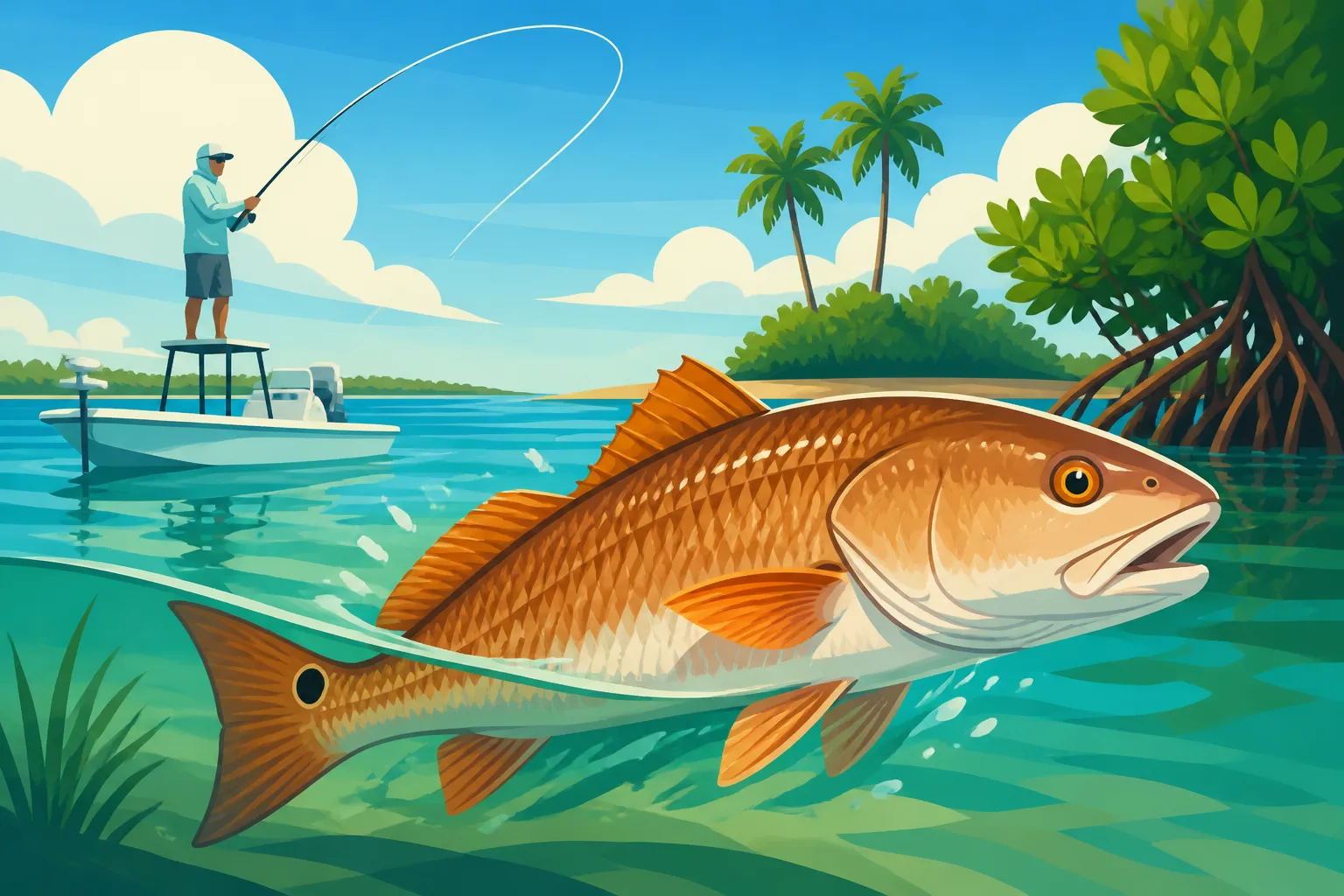
For the dedicated fly angler, Charlotte Harbor offers some of the best redfish sight fishing opportunities in Florida. The expansive clear flats of Bull Bay, Gasparilla Sound, and Pine Island Sound are perfect arenas for pursuing redfish with a fly rod. The key here is stealth, accuracy, and patience. You'll primarily be targeting individual fish or small groups spotted cruising the flats.
Your gear should consist of a 7-9 weight fly rod, paired with a matching reel and a floating line with a strong butt section to turn over larger flies in the wind. Leaders should be 9-12 feet long, tapering down to a 15-20lb fluorocarbon tippet. As for flies, crab and shrimp patterns are consistently effective, imitating the redfish's natural forage. Clouser Minnows and Gummy Minnows in natural colors can also work when redfish are chasing baitfish. Presentation is paramount: cast your fly a few feet in front of the cruising fish, allowing it to sink slightly, then impart short, subtle strips to bring the fly to life. Be ready for an aggressive take! Many experienced guides, often found via FishingBooker, specialize in Florida Fly Fishing Guide trips for redfish and can significantly shorten the learning curve.
Seasonal Considerations for Redfish in Charlotte Harbor
Redfish are present in Charlotte Harbor year-round, but their behavior and preferred locations can shift dramatically with the changing seasons, primarily influenced by water temperature and the availability of their favorite meals. Adapting your strategy to the time of year is crucial for consistent success.
Spring and Summer Patterns
As water temperatures rise in spring, redfish become more active and spread out across the shallower grass flats. This is a fantastic time for sight fishing, as the fish are actively cruising and feeding in the clear, warmer waters. Baitfish populations explode, providing a plentiful food source. Redfish will often be found in groups, tailing in extremely shallow water as they root for crabs and shrimp in the seagrass. Focus on the extensive flats in Bull Bay, Turtle Bay, and the protected areas of Pine Island Sound.
Summer brings even higher water temperatures, which can sometimes push redfish into slightly deeper water during the hottest parts of the day. Early mornings and late evenings often provide the best fishing during these months. As the sun beats down, redfish might seek refuge under the shade of mangrove canopies or along the edges of deeper channels. This is also when the big "bull" redfish, preparing for their fall spawn, become more prevalent in the main harbor and around the passes. While the heat can be intense, the fishing can be exceptional if you target the right areas at the right times. Remember that Florida Fishing Seasons Explained can offer a broader view of what to expect.
Fall and Winter Strategies
Fall is arguably the most exciting time for redfish in Charlotte Harbor. As water temperatures begin to cool, redfish become incredibly active, feeding aggressively in preparation for the upcoming cooler months. This is also the time of the "fall run," when large schools of adult redfish gather in the passes and main harbor for spawning. These large schools can offer incredible action, though they often require a different approach than targeting individual fish on the flats. Look for them around large submerged structures, deep channels, and the mouths of major passes like Boca Grande.
Winter presents its own unique challenges and opportunities. Cold fronts can significantly drop water temperatures, making redfish less active and prone to "huddling" in deeper holes or dark-bottomed canals where water temperatures are more stable. While they might be lethargic, they still need to eat. Slow presentations with live shrimp or cut bait are often most effective during these periods. Target areas like the deeper pockets within the river mouths, residential canals, or protected coves with dark mud bottoms that absorb sunlight. Always be mindful of potential cold stun events and adhere to any special regulations for Florida Snook Closed Season Dates which might overlap with cold weather redfish behavior.
Here's a quick reference for planning your Charlotte Harbor redfish adventure:
| Location | Best Season | Key Features & Tactics | Recommended Bait/Lure |
|---|---|---|---|
| Bull Bay & Turtle Bay | Spring, Fall | Shallow grass flats, mangrove edges, oyster bars. Ideal for sight fishing. Focus on tidal movement. | Live pilchards/shrimp, soft plastic jerkbaits, topwater. |
| Gasparilla Sound & Pine Island North | Spring, Fall | Mangrove islands, sand flats, oyster reefs, strong tidal flow. Look for current breaks. | Live pilchards/shrimp, gold spoons, paddle tail swimbaits. |
| Peace & Myakka River Mouths | Fall, Winter | Brackish water, deeper holes, fallen trees, oyster bars. Target outgoing tides and cold fronts. | Live shrimp/finger mullet, cut bait, soft plastic jigs. |
| Main Harbor (Deep Channels) | Summer, Fall | Deeper water, large submerged structures, passes. Target schooling "bull" redfish. | Live baitfish, large swimbaits, vertical jigs. |
Disclaimer
Please remember that fishing regulations in Florida, including bag and size limits for redfish, can change. Always consult the latest rules from the Florida Fish and Wildlife Conservation Commission (FWC) before heading out on the water. This guide is for informational purposes only and does not substitute for official regulations.