How Red Tide Affects Fishing in Florida
There's nothing quite like planning that dream Florida fishing trip, whether it's for big snook on the flats or tasty snapper offshore, only to hear those two dreaded words: red tide. This natural phenomenon can throw a serious wrench into your angling plans, causing widespread fish kills, impacting popular fishing spots, and raising real concerns about safety. This comprehensive guide will peel back the layers of what red tide is, how it wreaks havoc on Florida's waters and marine life, and most importantly, how you, as a dedicated angler, can navigate these challenging conditions to still find success and keep safe.
What Exactly Is Red Tide and Why Does It Happen in Florida?
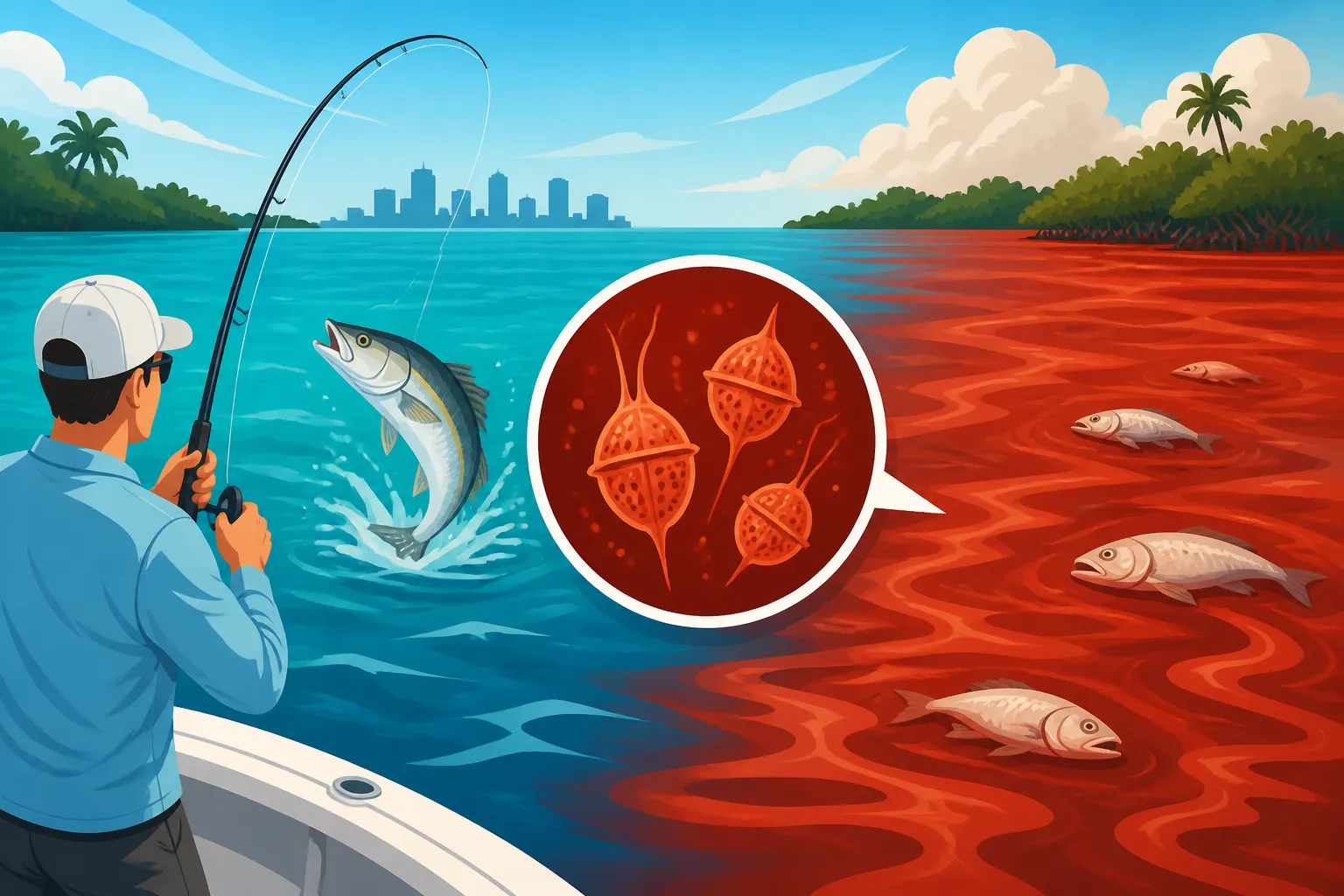
Ah, red tide. It’s a term that strikes fear into the hearts of Florida anglers and coastal residents alike, and for good reason. But what is it, really? It’s not actually a "tide" in the traditional sense, nor is it always red. It’s a harmful algal bloom (HAB) caused by a specific type of microscopic organism called Karenia brevis, a dinoflagellate that naturally occurs in the Gulf of Mexico. When conditions are just right (or, more accurately, just wrong for everything else), these tiny organisms multiply rapidly, creating dense concentrations that can discolor the water and produce potent neurotoxins.
The Science Behind the Bloom
Imagine millions upon millions of microscopic plants suddenly deciding to throw a massive party in the ocean. That's essentially what a red tide is. Karenia brevis thrives on certain nutrients, much like any other plant. While these dinoflagellates are always present in Florida's waters, it's when they reach extremely high concentrations—often referred to as a "bloom"—that they become problematic. These blooms typically originate offshore in the Gulf of Mexico, sometimes hundreds of miles out, before currents and winds push them closer to the coast.
Once nearshore, several factors can contribute to their persistence and intensity. Warm water temperatures, specific salinity levels, and an abundance of nutrients (both natural and human-derived) can act like a super-fertilizer, causing the bloom to grow exponentially. These blooms can last for weeks, months, or even over a year in severe cases, moving with the tides and winds, affecting vast stretches of coastline from the Panhandle down to the Keys. It's a complex ecological dance, and when Karenia brevis takes the lead, the marine ecosystem often suffers.
Natural Phenomenon with Human Influence
It's crucial to understand that red tides are a natural phenomenon. Historical records and sediment cores show evidence of Karenia brevis blooms occurring in Florida for centuries, long before significant human development. So, it's not entirely new, which can sometimes be a point of confusion for folks. However, there's a growing scientific consensus that human activities can exacerbate these natural blooms, making them more frequent, intense, and prolonged, especially once they reach the nearshore environment.
Nutrient runoff from agricultural lands, septic tanks, stormwater, and wastewater treatment plants—things like nitrogen and phosphorus—can fuel these blooms once they get close to the coast. While these nutrients might not initiate an offshore bloom, they can certainly act as a booster shot, transforming a moderate bloom into a widespread, devastating event. It's a tough pill to swallow because it means we, as a society, have a role to play in the severity of these events. Understanding this interplay between natural cycles and human impact is key to comprehending the challenges Florida faces.
The Devastating Impact on Marine Life
When a red tide takes hold, the immediate and most heartbreaking consequence is the impact on marine life. It's not just a minor inconvenience; it's a full-blown ecological crisis for the affected areas. The toxins produced by Karenia brevis are potent and can spread through the water column and into the food web, impacting everything from tiny invertebrates to large predatory fish, marine mammals, and even birds.
Fish Kills and Their Aftermath
The most visible and often shocking sign of a severe red tide is the massive fish kills. The neurotoxins, called brevetoxins, can paralyze the central nervous system of fish, causing them to suffocate. You'll see dead fish of all shapes and sizes, from small baitfish like mullet and pilchards to prized game fish like snook, redfish, and tarpon, washing up on beaches and floating in canals. It's a truly gut-wrenching sight for anyone who loves Florida's waters. These fish kills don't just happen to a few unlucky individuals; they can wipe out entire populations in localized areas.
The scale of these events can be enormous. Think about the countless hours spent fishing for a particular species, only to see them devastated by a bloom. The economic impact on fishing guides, bait shops, and coastal businesses is also immediate and severe. Beyond the immediate death, the lingering effects are profound. Decomposing fish consume oxygen in the water, creating hypoxic (low oxygen) or anoxic (no oxygen) dead zones, which further stress and kill marine life that might have survived the initial toxin exposure. The smell alone can be overwhelming, making beaches and waterways unusable for recreation.
Effects on Shellfish and Food Web
It's not just fish that suffer; shellfish are particularly vulnerable to red tide. Oysters, clams, and mussels are filter feeders, meaning they continuously pump water through their bodies to extract food particles. During a red tide, they inadvertently filter and accumulate brevetoxins in their tissues. While the toxins don't usually harm the shellfish themselves, they become highly toxic to anything that consumes them, including humans. This is why shellfish harvesting areas are immediately closed when red tide is detected, and consuming contaminated shellfish can lead to Neurotoxic Shellfish Poisoning (NSP), which can cause gastrointestinal and neurological symptoms.
The toxins also move up the food web. Small fish eat the dinoflagellates or contaminated plankton, larger fish eat the smaller fish, and so on. This bioaccumulation means that even animals higher up the food chain, like seabirds, sea turtles, and marine mammals (dolphins and manatees), can become sick or die from consuming contaminated prey. For example, manatees, which graze on seagrasses, can ingest brevetoxins from epiphytes (organisms growing on seagrass) or from inhaling aerosols. It’s a cascading effect that touches every part of the marine ecosystem. Monitoring these impacts helps scientists understand the broader ecological implications. You can usually find information on closures and warnings on the Florida Fish and Wildlife Conservation Commission (FWC) website.
How Red Tide Affects Recreational Fishing
For those of us who live and breathe Florida fishing, a red tide isn't just an abstract environmental issue; it directly impacts our passion and our plans. It creates a landscape of uncertainty, frustration, and sometimes, even health concerns. Anglers face unique challenges when trying to navigate waters affected by these blooms.
The Challenges of Fishing in Affected Areas
First and foremost, the obvious challenge is simply the lack of fish. If a red tide has caused significant fish kills in an area, the fish simply won't be there. Even if some fish survive, they're often stressed, lethargic, and not actively feeding, making them extremely difficult to catch. The water itself might be discolored, murky, or filled with dead organisms, which isn't exactly inviting for either fish or anglers.
Beyond the visible signs, even in areas with lower concentrations, fish can exhibit abnormal behavior. They might try to escape the affected zones, moving into deeper water or finding pockets of cleaner water, making them harder to locate. Casting your line into a beautiful flat only to pull up dead bait or see fish struggling at the surface is disheartening. It can be a real struggle to know How Red Tide Affects Where You Can Fish if you don't stay informed. Many anglers find themselves driving considerable distances, sometimes hours, in search of unaffected waters, leading to increased fuel costs and lost fishing time.
Then there's the gear. The decaying organic matter can cling to lines, lures, and even boats, leaving a foul odor and requiring extra cleaning. Imagine cleaning your boat of decaying fish smell after a day on the water – not exactly what you signed up for. Local bait shops often suffer too, as their live bait supply can be decimated or they simply have fewer customers. It's a ripple effect that touches every facet of the fishing community.
Health Concerns for Anglers and Seafood Safety
It's not just the fish that are affected; humans can experience health issues too. The brevetoxins can become aerosolized, meaning they can be carried in the air, especially when onshore winds blow across affected waters. People near the beach or on the water can inhale these toxins, leading to respiratory irritation. Symptoms often include coughing, sneezing, watery eyes, and a scratchy throat, similar to severe allergies or a bad cold. For individuals with existing respiratory conditions like asthma or emphysema, these symptoms can be much more severe and require medical attention. It's truly miserable to try to enjoy a day on the water when you're coughing uncontrollably.
Furthermore, there are serious concerns about seafood safety. As mentioned, shellfish become toxic. While finfish can also accumulate toxins in their guts and internal organs, the muscle tissue (the part we typically eat) generally does not retain enough brevetoxins to cause NSP if properly cleaned and filleted. However, the Florida Department of Health advises caution, especially for people with compromised immune systems. It's critical to know Florida Fishing Regulations and Bag Limits and any specific advisories regarding red tide-affected areas. Never consume shellfish from areas closed due to red tide, and always remove guts and clean finfish thoroughly. When in doubt, it’s always best to err on the side of caution. If you're really concerned, products like portable air quality monitors, which can be found on sites like Amazon, can give you some peace of mind by showing you local air quality data.
Strategies for Fishing During a Red Tide
So, you're faced with a red tide. Does that mean your fishing plans are completely sunk? Not necessarily! While it's certainly a challenging situation, there are strategies you can employ to minimize its impact and even find some decent fishing. It requires flexibility, diligent monitoring, and sometimes, a willingness to explore new areas or techniques.
Monitoring Conditions and Finding Clean Water
The absolute first step is to stay informed. The Florida Fish and Wildlife Conservation Commission (FWC) provides real-time updates on red tide conditions, including maps showing bloom concentrations, respiratory irritation reports, and fish kill observations. Their website and their Fish and Wildlife Research Institute (FWRI) pages are invaluable resources. They usually have a dedicated "Red Tide Status" page. You can also sign up for alerts. Local news outlets, county health departments, and fishing forums are also good sources of anecdotal information. Many anglers also rely on coastal weather apps that provide wind direction, as offshore winds can push aerosols away, while onshore winds bring them in.
Once you have the information, the goal is to find "clean" water. This often means driving to areas reported as having no or very low concentrations of Karenia brevis. Sometimes, moving just a few miles can make a world of difference. For example, if the Gulf coast is experiencing a bad bloom, the Atlantic coast might be completely unaffected. Or, if nearshore waters are problematic, going further offshore might get you into clean blue water. In some cases, canals and rivers, especially those with good freshwater flow, might offer a refuge for fish trying to escape the toxins. Always cross-reference multiple sources before making a decision. You can also check How to Check Red Tide Conditions Before a Trip for more detailed guidance.
| Red Tide Severity Level | Typical FWC Designation | Impact on Fishing | Angler Strategy |
|---|---|---|---|
| Absent | No K. brevis detected | No impact | Fish as usual |
| Very Low | < 10,000 cells/liter | Minimal impact | Fish as usual, monitor conditions |
| Low | 10,000 – 100,000 cells/liter | Some respiratory irritation possible, minimal fish kills | Fish further offshore or in freshwater, check for closures |
| Medium | 100,000 – 1,000,000 cells/liter | Moderate respiratory irritation, minor fish kills, some closures | Avoid affected areas, focus on alternative species/locations |
| High | > 1,000,000 cells/liter | Severe respiratory irritation, widespread fish kills, most closures | Avoid coastal fishing, consider alternative activities or destinations |
Alternative Fishing Opportunities
When your go-to spots are hit by red tide, it’s time to get creative and explore other options. Florida is a vast state with incredibly diverse fishing opportunities, so don't give up entirely!
- Freshwater Fishing: This is often the most reliable escape. Florida boasts some of the best freshwater fishing in the world, completely unaffected by saltwater red tides. You could target largemouth bass on legendary lakes like Okeechobee or Toho. Panfish like bluegill and crappie are always a blast. Even in urban areas, canals can hold excellent populations of peacock bass and various exotics. A basic freshwater setup from Amazon can get you started if you don't already have one. It's a great opportunity to explore a different side of Florida fishing. For instance, our Florida Largemouth Bass Fishing Guide has tons of insights.
- Offshore Fishing: If the red tide is concentrated in nearshore coastal waters, moving further offshore (beyond state waters, into federal waters) can often get you past the bloom and into clean water. Species like snapper, grouper, amberjack, and even pelagics like mahi-mahi or king mackerel might be biting. This usually requires a bigger boat and more specialized gear, but charter boats are an excellent option for this. Always confirm conditions with your captain before booking.
- Targeting Different Species: Some species might be more resilient or less affected by red tide than others. For example, some anglers report success targeting certain bottom fish that might be less impacted by aerosols or surface toxins. However, always verify regulations and safety advisories for any species you intend to keep and consume.
- Consider "Catch and Release" Days: If you find yourself in a marginally affected area but still want to cast a line, consider making it a purely catch-and-release day. This removes any concern about consuming potentially contaminated fish. Focus on the joy of the fight, the beauty of the fish, and the experience of being on the water. Just be extra mindful of fish health during release, as they might already be stressed by the environmental conditions.
It’s important to remember that even if you find clean water, you should still practice responsible angling. The ecosystem is under stress, and every effort to minimize impact helps. Our general guide on Best Time of Year to Fish in Florida also has tips that can help you plan around unpredictable events like red tide.
Long-Term Recovery and Conservation Efforts
Red tide events are cyclical, and while they can be devastating in the short term, Florida's ecosystems do have a remarkable capacity for recovery. However, the increasing frequency and intensity of these blooms underscore the importance of ongoing conservation efforts and our role in supporting them.
Ecosystem Resilience and Healing
After a severe red tide, the initial scene can be dire, but nature often finds a way to bounce back. Once the bloom dissipates, water quality improves, oxygen levels normalize, and fish and other marine life begin to repopulate the affected areas. This recovery process can take time, sometimes months or even years, depending on the severity and duration of the bloom. Populations of short-lived species might rebound relatively quickly, while longer-lived species like larger grouper or snook could take longer to recover from significant kills.
Scientists continue to study the long-term effects of red tide on populations and the genetic resilience of various species. It's a testament to the power of natural systems, but it's not a reason for complacency. Each major red tide event is a stress test for the ecosystem, and cumulative impacts from other environmental stressors, like habitat loss or pollution, can hinder recovery. Organizations like the Florida Fish and Wildlife Conservation Commission (FWC) and various universities are actively involved in research, monitoring, and developing mitigation strategies, from understanding bloom dynamics to exploring new technologies for detection and control.
What Anglers Can Do to Help
As anglers, we have a vested interest in the health of Florida's waters, and there are concrete steps we can take to contribute to long-term solutions and help during recovery periods.
- Reduce Nutrient Runoff: This is perhaps the most impactful action. Support initiatives that aim to reduce nutrient pollution from both urban and agricultural sources. At home, minimize fertilizer use on your lawn, ensure your septic system is well-maintained, and properly dispose of pet waste. Every little bit helps to starve future blooms of their fuel.
- Support Research and Conservation: Many non-profit organizations and government agencies are dedicated to studying red tide and protecting marine ecosystems. Consider donating your time or resources to groups like Mote Marine Laboratory & Aquarium or the FWC Fish and Wildlife Research Institute. Your support helps fund vital research and recovery efforts.
- Report Observations: If you encounter fish kills, discolored water, or respiratory irritation, report it to the FWC. Their reporting systems allow scientists to track the bloom and provide up-to-date information to the public. The more data they have, the better they can understand and respond to these events.
- Practice Catch and Release: During or immediately after a red tide, if you choose to fish, consider practicing catch and release. This gives stressed fish populations a chance to recover. If you do keep fish, always check current advisories and ensure proper cleaning to avoid any health risks. Our guides on Catch and Release Best Practices for Snook and How to Handle a Redfish for Release provide excellent tips for minimizing stress on fish.
- Stay Educated: Continue to learn about red tide, its causes, and its effects. Share accurate information with your fellow anglers and community members. Understanding the science helps dispel misinformation and encourages informed action. The more anglers understand Florida Fishing License Costs and Fees and how those fees support conservation, the more likely they are to engage.
By staying informed, adapting our fishing strategies, and actively participating in conservation, we can all help Florida's incredible marine environment weather the storm of red tide and emerge stronger for future generations of anglers.
Disclaimer
The information provided in this guide is for general informational purposes only and is not intended as professional advice. Red tide conditions, associated health warnings, and fishing regulations can change rapidly. Always consult the latest advisories from the Florida Fish and Wildlife Conservation Commission (FWC), the Florida Department of Health, and other official sources before making any decisions related to fishing or consuming seafood during a red tide event. Individual health conditions may also affect susceptibility to red tide toxins; if you experience respiratory symptoms, seek medical attention.