How to Approach Fish Without Spooking Them
There's nothing quite as frustrating as meticulously planning your approach to a promising fishing spot, only to have a subtle movement or sound send your target fish scattering like confetti in the wind. Many of us have experienced that sinking feeling when a prime snook, redfish, or bass vanishes in a flash, leaving behind only a ripple where it once held. This guide is all about equipping you with the knowledge and tactics to minimize your footprint and approach fish with the stealth of a seasoned predator, dramatically increasing your chances of a successful hook-up in Florida's diverse waters.
Understanding Why Fish Spook: Their World Through Their Senses
Before we can effectively avoid spooking fish, we first need to understand how they perceive their environment. Fish aren't just swimming around aimlessly; they are incredibly attuned to changes in their surroundings, relying on a sophisticated array of senses to survive. Think about it: in the wild, being surprised often means becoming someone else's dinner. So, their natural instinct is to be wary of anything sudden or out of place.
One of the most important senses for fish is their lateral line, a remarkable system of sensory pores running along each side of their body. This organ detects minute changes in water pressure and vibrations, essentially acting like an underwater ear. A heavy footfall on a boat deck, a dropped tackle box, or even the subtle hum of a poorly maintained trolling motor sends vibrations through the water, creating an alarm signal that fish can pick up from surprisingly far away. What might feel like a gentle tap to us can be a booming drum solo to a fish.
Beyond vibrations, fish also possess excellent eyesight, especially those in clear, shallow waters like the flats of the Florida Keys or the pristine spring-fed rivers. They can detect movement, changes in light, and even specific colors. A bright shirt, a sudden casting motion, or a silhouette against the sky can be instantly recognized as a threat. And let's not forget their sense of smell, which can detect unnatural scents from sunscreen, fuel, or even human hands that have touched bait. Understanding these sensory inputs is the first step in learning to become a ghost on the water.
Minimizing Your Visual Presence
Our eyes are perhaps our most direct line to detection when fishing, especially in Florida's often clear waters. Just as we can see a fish, a fish can certainly see us. Reducing your visual footprint is paramount, whether you're stalking the flats or working a shoreline. This isn't just about hiding; it's about blending in and avoiding any sudden, alarming signals.
Dressing for Stealth and Blending In
The clothes you wear can make a huge difference. Forget bright, contrasting colors. Think muted, earthy tones—greens, browns, grays, and even light blues that mimic the sky or water. Camouflage patterns aren't just for hunting deer; they work wonders on the water too, breaking up your outline. Beyond color, the silhouette you present is also critical. When wading or standing in a boat, try to keep a low profile. Bend your knees, crouch, and avoid standing tall against the horizon, especially if the sun is behind you, turning you into a distinct, threatening shadow.
Consider polarized sunglasses not just for seeing into the water, but also for obscuring your eyes. Fish can sometimes perceive direct eye contact as a predatory stare. A wide-brimmed hat can also help break up your head shape. The goal here is to make yourself as indistinct as possible against the natural background, blurring the lines between you and your surroundings. Remember, if you look like a giant, unfamiliar predator, fish will react accordingly.
Using the Sun and Shadows to Your Advantage
The sun is a double-edged sword when it comes to visual stealth. On one hand, it helps you spot fish; on the other, it can make you highly visible. Always try to approach fish with the sun at your back. This means the sun is shining on the fish, making it easier for you to see them by illuminating their scales. More importantly, it puts you in shadow from their perspective, reducing your silhouette and glare. Fishing Best Time of Day to Fish in Florida often means paying attention to these light conditions.
Conversely, never approach fish with the sun directly in their eyes or directly overhead unless absolutely necessary. A low sun in their face can blind them, true, but it can also create harsh, unsettling shadows that easily spook them. If the sun is high, use natural cover like mangrove shadows or bridge pilings to break up your outline. Even your shadow falling across the water can send fish fleeing, so be mindful of where your shadow is cast, especially in shallow water.
Controlling Noise and Vibrations
If visual cues are important, then noise and vibrations are equally, if not more, critical for fish detection. Water is an incredibly efficient conductor of sound and vibration, carrying disturbances much further and faster than air. What feels like a minor bump to us can send shockwaves through the fish's world.
Quiet Footwork and Gear Handling
Whether you're on a skiff, a kayak, or wading, your movements must be deliberate and gentle. When moving around in a boat, shuffle your feet rather than stomping. Avoid dropping anything – a tackle box, pliers, or even a can of soda hitting the deck sends a loud, sharp vibration through the hull and into the water. Consider using rubber mats on boat decks or soft-sided tackle bags to dampen sounds. Many experienced anglers even place small foam pads or carpet scraps in storage compartments to prevent gear from rattling.
If you're wading, pay attention to your footsteps. Don't drag your feet or stir up too much mud or sand. Each step should be soft and controlled, minimizing water displacement. Think of yourself as moving through liquid, trying to create as little disturbance as possible. Even the sound of a closing cooler lid or a loud conversation can transmit surprising amounts of vibration. Keep voices low and movements slow and fluid.
Minimizing Engine and Trolling Motor Noise
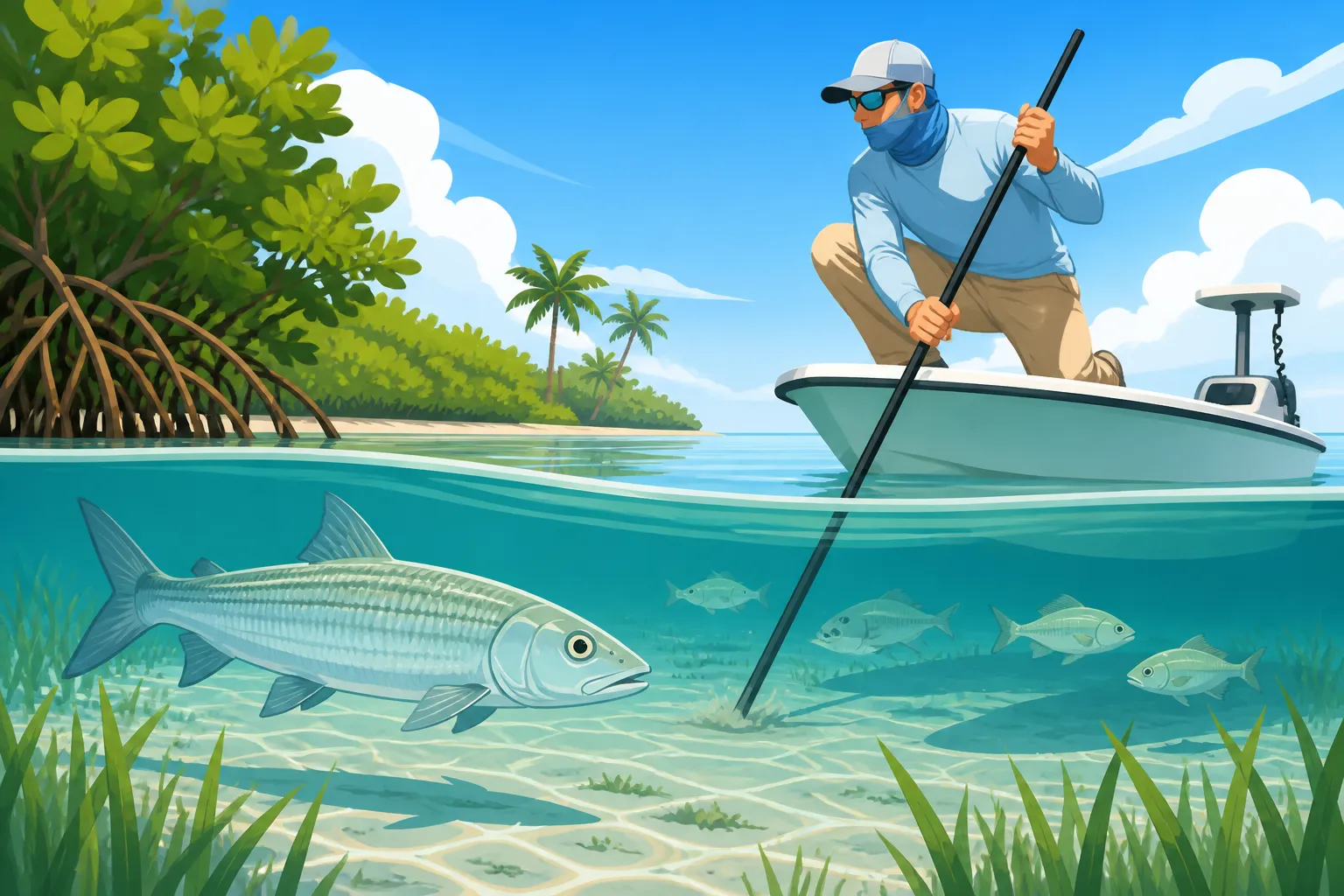
For boat anglers, the roar of an outboard motor is an obvious fish-spooker. But even electric trolling motors, while much quieter, can still emit subtle hums and vibrations that can put fish on edge. If you're approaching a known fishing area, cut your main engine well in advance and use a quiet trolling motor, if possible, on its lowest effective setting. Sometimes, poling a flats boat is the absolute quietest way to get around shallow water, allowing you to get incredibly close to unsuspecting fish. Check out How to Pole a Flats Boat Quietly for more insights.
Regular maintenance on your trolling motor can help ensure it runs as smoothly and quietly as possible. Loose props or worn bushings can create unnecessary noise. Furthermore, be mindful of how your anchor is deployed. Dropping a heavy anchor with a splash and a clank is a surefire way to clear out a spot. Instead, lower it gently, perhaps with a short chain to ensure it sets properly without excessive noise or disturbance. How to Anchor a Boat on a Flat Without Spooking Fish has more tips.
Strategic Approach Techniques
Beyond just being quiet and unseen, how you position yourself in relation to the fish and the environment is a game-changer. This involves understanding the dynamics of wind, current, and water clarity.
Working with the Wind and Current
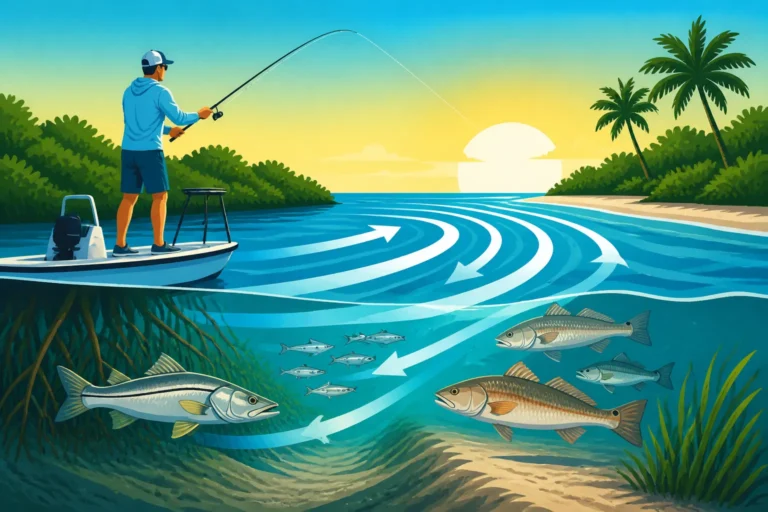
Always try to approach fish into the wind. This does a few things for you: it helps mask any subtle sounds you might make, and it also allows you to cast more effectively with the wind at your back, pushing your line and lure further. Similarly, when it comes to current, try to work into the current or cross-current. Fish typically face into the current, waiting for food to be delivered to them. Approaching them from behind means they are less likely to see you coming.
However, be adaptable. Sometimes, the best way to present a lure requires a down-current drift. In these situations, focus even more intensely on your stealth, ensuring your boat or body drifts naturally with the flow, not fighting against it. Understanding how fish orient themselves in different water movements, whether it's the tidal flow in an inlet or the steady pull of a river, is key.
Wading, Kayaking, and Poling for the Ultimate Stealth
For the ultimate stealth, wading, kayaking, or poling a shallow-draft boat are often your best bets. When wading, move slowly and deliberately, disturbing as little bottom as possible. Your legs breaking the water's surface can be seen by fish, so keep movements minimal. Use the natural contours of the bottom, such as deeper troughs or submerged grass, to hide your approach.
Kayak fishing offers incredible stealth due to its low profile and quiet propulsion. Paddling quietly and using a stakeout pole instead of a traditional anchor can make you almost invisible. Kayak Fishing Technique for Inshore Species dives deeper into this. If you're on a flats boat, poling allows you to silently glide across shallow water, keeping a high vantage point to spot fish without the noise of an engine. This is particularly effective for highly skittish species like bonefish or permit.
| Action That Spooks Fish | Stealthy Alternative |
|---|---|
| Stomping in a boat | Shuffle feet, use deck mats |
| Dropping gear | Place gently, use soft tackle bags |
| Loud talking | Whisper, use hand signals |
| Revving engine | Cut engine early, use trolling motor on low |
| Splashy casting | Smooth, low-trajectory casts |
| Standing tall | Crouch, kneel, keep low profile |
| Casting a large shadow | Approach with sun at your back |
| Fast boat movement | Slow, deliberate drifts or poles |
| Bright clothing | Muted, natural colors or camo |
Gear and Equipment for Stealthy Approaches
Believe it or not, some of your fishing gear can actually help you be more stealthy, while other pieces can inadvertently give you away. Choosing the right equipment and using it wisely is another layer of the stealth onion.
Polarized Sunglasses and Vision Aids
We've touched on polarized sunglasses already, but they're so crucial for stealth that they deserve a special mention. They don't just help you spot fish; they allow you to see obstructions, discern changes in bottom contour, and anticipate fish movements, all of which contribute to a more deliberate and quiet approach. Brands available on Amazon offer a wide range of options, from budget-friendly to high-end, providing essential eye protection and vision enhancement.
Beyond sunglasses, sometimes a good pair of binoculars or even a monocular can help you scout a spot from a distance before moving in. This allows you to identify fish, determine their direction of travel, and plan your exact approach without having to get too close and risk spooking them prematurely. The less time you spend directly over a potential fishing spot, the better.
Quiet Motors and Anchoring Systems
For boaters, investing in a quiet, efficient trolling motor can pay dividends in stealth. Newer models are designed with vibration-dampening technology, making them far less disruptive than older units. When you're trying to sneak up on wary Florida Snook Fishing Guide or Florida Redfish Fishing Guide in shallow water, every decibel counts.
As for anchoring, consider using a shallow-water anchor system like a Power-Pole or a Talon, which silently deploy into the bottom, securing your boat without a splash or chain noise. If those aren't in your budget, a simple stakeout pole or a push pole can offer silent boat positioning in shallower depths. Even when using a traditional anchor, ensuring your rope and chain are properly stowed to prevent clanking is a small detail that makes a big difference.
Appropriate Rods, Reels, and Line Selection
Your tackle can also play a role. Using an appropriate Best Rod and Reel Setup for Florida Inshore Fishing for your target species means you won't be overworking your gear, which can create unnecessary noise or splashes during casts and retrieves. For instance, an overly stiff rod might create a louder splash when a lure hits the water, while a too-light setup might require more forceful casting.
Line selection, especially fluorocarbon leaders, which are nearly invisible underwater, can also aid in stealth, making your presentation less apparent to sharp-eyed fish. While not directly about spooking fish with noise or movement, it contributes to the overall "unseen" aspect of your fishing. The goal is always to make your offering appear as natural and unthreatening as possible, and that starts with an undetectable approach. Florida Inshore Fishing Techniques often emphasize the importance of subtle presentations.
Practicing Patience and Observation
Ultimately, the best tool for not spooking fish is patience and keen observation. Rushing into a spot, making quick movements, or casting blindly will almost always lead to disappointment. Take your time. When you arrive at a potential fishing area, stop and observe for a few minutes. Look for signs of fish – wakes, nervous baitfish, subtle splashes. Pay attention to the wind, current, and sun direction.
Before making your first cast, visualize your approach. Where are the fish likely to be? What direction are they facing? Where is the best angle to cast without creating a disturbance? A well-planned, patient approach will almost always outperform a hurried, aggressive one. Sometimes, waiting for a cloud to pass over, or for the wind to pick up just enough to ripple the surface, can provide the perfect window for a stealthy presentation. Fishing is as much about strategy and patience as it is about skill.
Disclaimer
This article is for general informational purposes only and does not constitute professional advice. Laws, prices and regulations vary by location and change over time. Consult a qualified professional for guidance on your specific situation.